

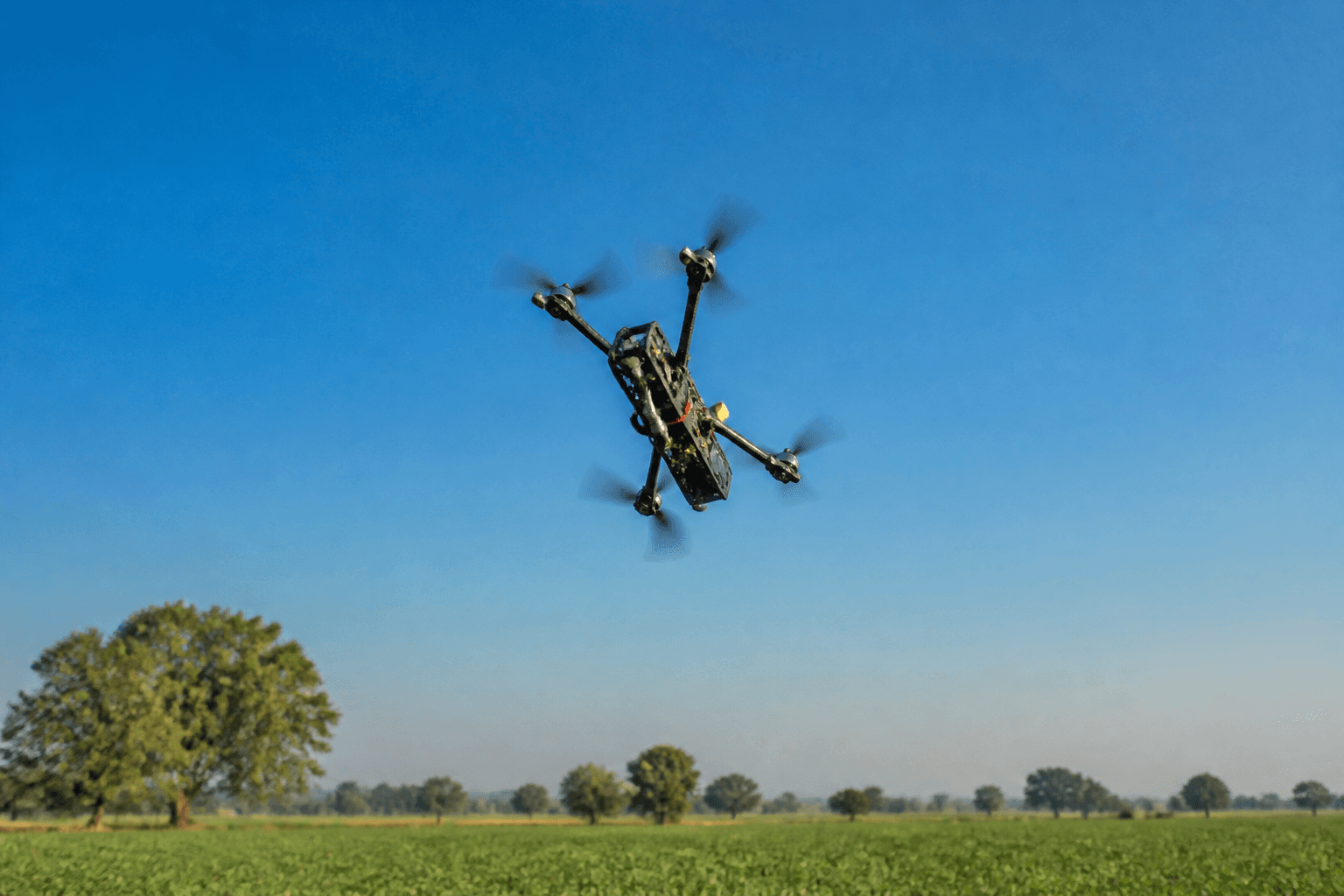
How to do flips in FPV

How to do flips in FPV without making a new crater: flips are optional, a clean Acro hover is not. Learn altitude, a throttle plan and recoveries first. Then a flip is just a controlled stick input with a known exit.
FPV Grind’s order: sim drill → whoop over a soft, open space → style last. Do it in Acro; Angle mode will not teach you a freestyle flip.
Prerequisites (honest)
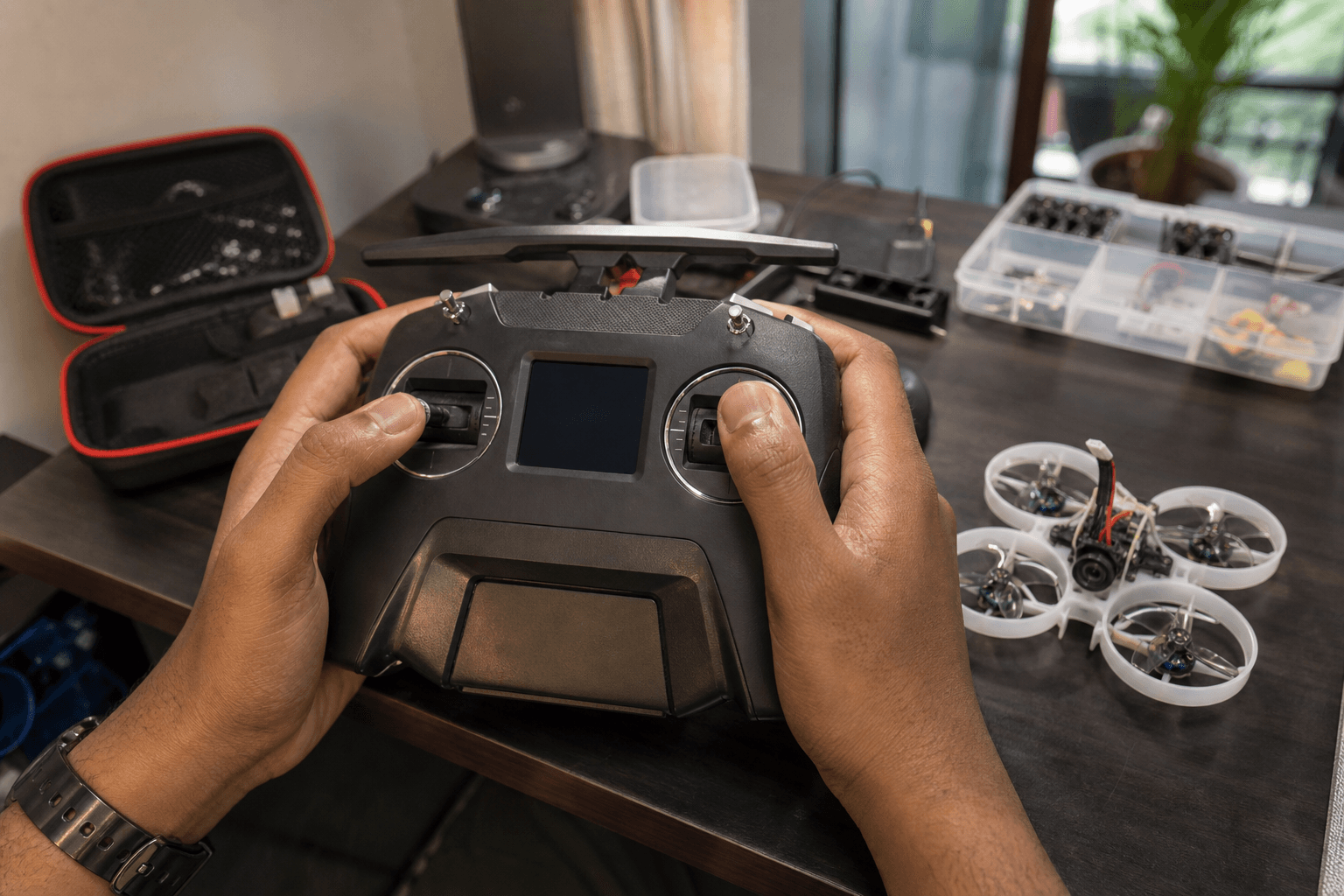
□ Solid Acro hover and soft landings
□ You can hold a height for most of a pack
□ Rates you can still catch mistakes on
□ Enough altitude to finish the rotation + recover
□ Soft / open practice area (not a crowded terrace edge)
Build the foundation: fly in Acro · what is Angle mode · hover · land · beginner rates · learn freestyle.
The flip model (keep it simple)
Think in three phases:
| Phase | What you do | Common error |
|---|---|---|
| Setup | Climb to safe height, level, stable speed | Flipping from two feet up |
| Flip | Decisive stick on one axis; commit | Half-inputs mid-rotation |
| Recover | Level the craft, add throttle, keep flying | Forgetting to catch with throttle |
You need a throttle plan. The usual pattern is a small punch up, throttle low through the rotation, then a firm catch with throttle as the craft comes level. Beginners often forget the catch and fall through the recovery window, so practise the recovery more than the flip itself.
Sim drill first
Use the free online FPV simulator until the motion is boring.
Sim flip drill:
1. Climb to a comfortable height
2. Flip on a known axis (start with one direction only)
3. Recover to level flight
4. Land soft
5. Repeat both directions
6. Only then add rolls / combinations
Related practice: practice without a drone · sim before first whoop · reduce crashes.
Moving to a real whoop
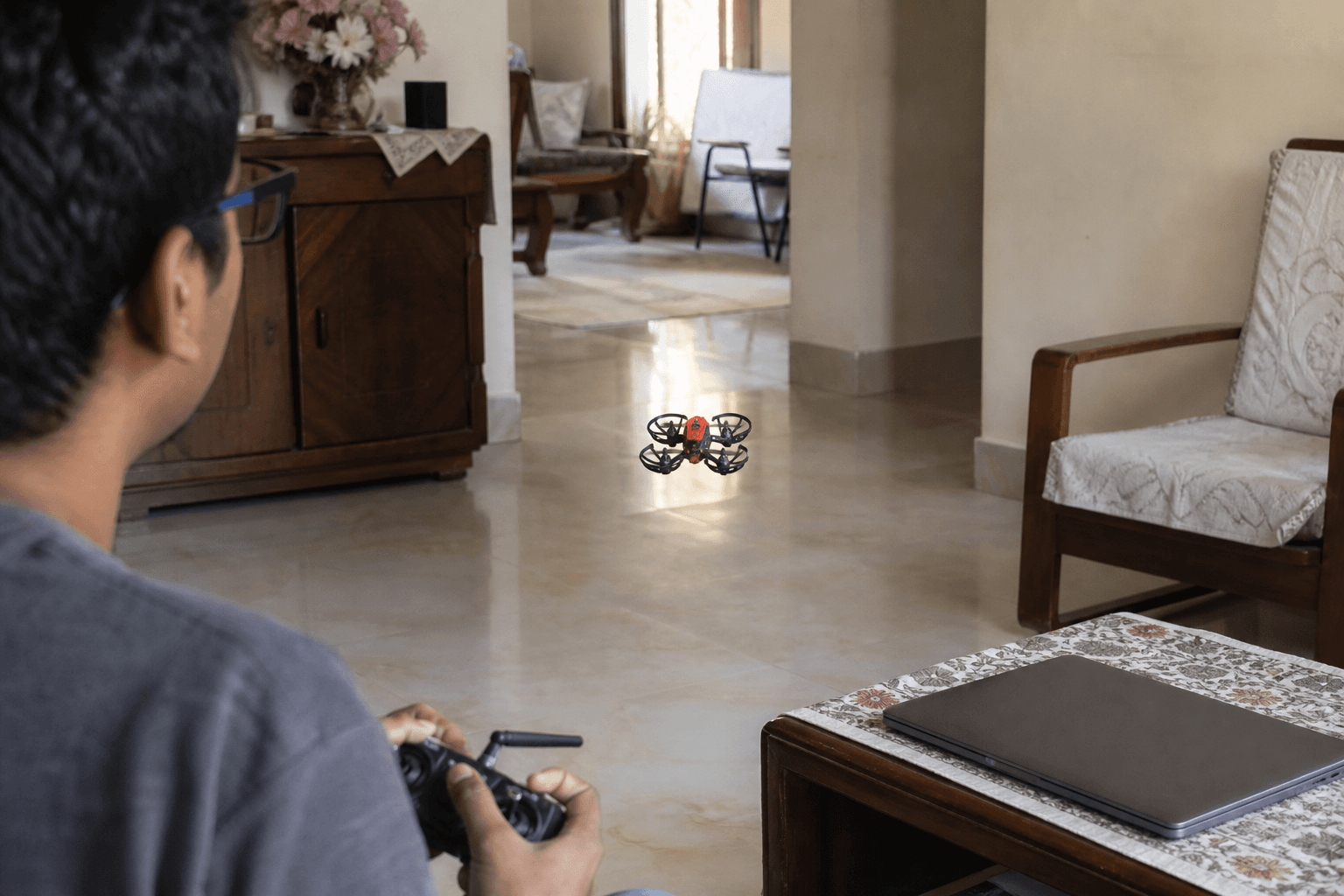
| Step | Detail |
|---|---|
| 1 | Soft open space, calm wind, no spectators close |
| 2 | Fresh props, healthy pack, known rates |
| 3 | Climb higher than feels necessary |
| 4 | One flip attempt per climb at first |
| 5 | Review DVR if you have it - fix the recovery, not the “style” |
On terraces and in flats, flips next to railings and glass are how whoops die and neighbours complain to the society. See apartments and terraces · kids, pets, spectators.
Size matters: whoops forgive mistakes, a 5-inch punishes them. Pick your classroom wisely (what size FPV drone).
Failure modes
| Mistake | Outcome |
|---|---|
| Too low | Flip becomes a ground loop |
| No throttle catch | Recovery turns into a dive |
| Angle mode “flip switches” as a crutch | Muscle memory does not transfer to freestyle |
| Rates maxed for Instagram | Uncatchable rotation |
| Power loops before basic flips | Crashes without learning |
After a hard hit: fix crashed whoop · change props · clean after crash.
Progression after basic flips
1. Forward / backward flips both directions
2. Rolls both directions
3. Flip to controlled line (exit with heading intent)
4. Low-risk combinations only when singles are clean
5. Bigger craft / freestyle sites when whoop flips are boring
Freestyle path: how to learn FPV freestyle · first 5-inch when field access exists.
Gear that helps
- Trainer whoop with cheap props
- 4–6 packs so you can drill - how many LiPos
- Radio with rates you trust - radio for beginners India
Parts and builds: the Bench · Grind Lab.
Bottom line
Flips are a recovery skill with a rotation in the middle. Get altitude, commit on one axis, catch with throttle, recover level. Drill it in /sim until it is dull, then take it to a whoop over soft open space. Style comes after survival.
See also
Fly with pilots near you
Every city page has an open FPV Grind group you can join with your account, plus where to fly, when the weather allows it and what the airspace rules say. Find FPV pilots near you.
Discussion
Comments aren't open on this post yet. Share it with your build group, or start a thread on X.