
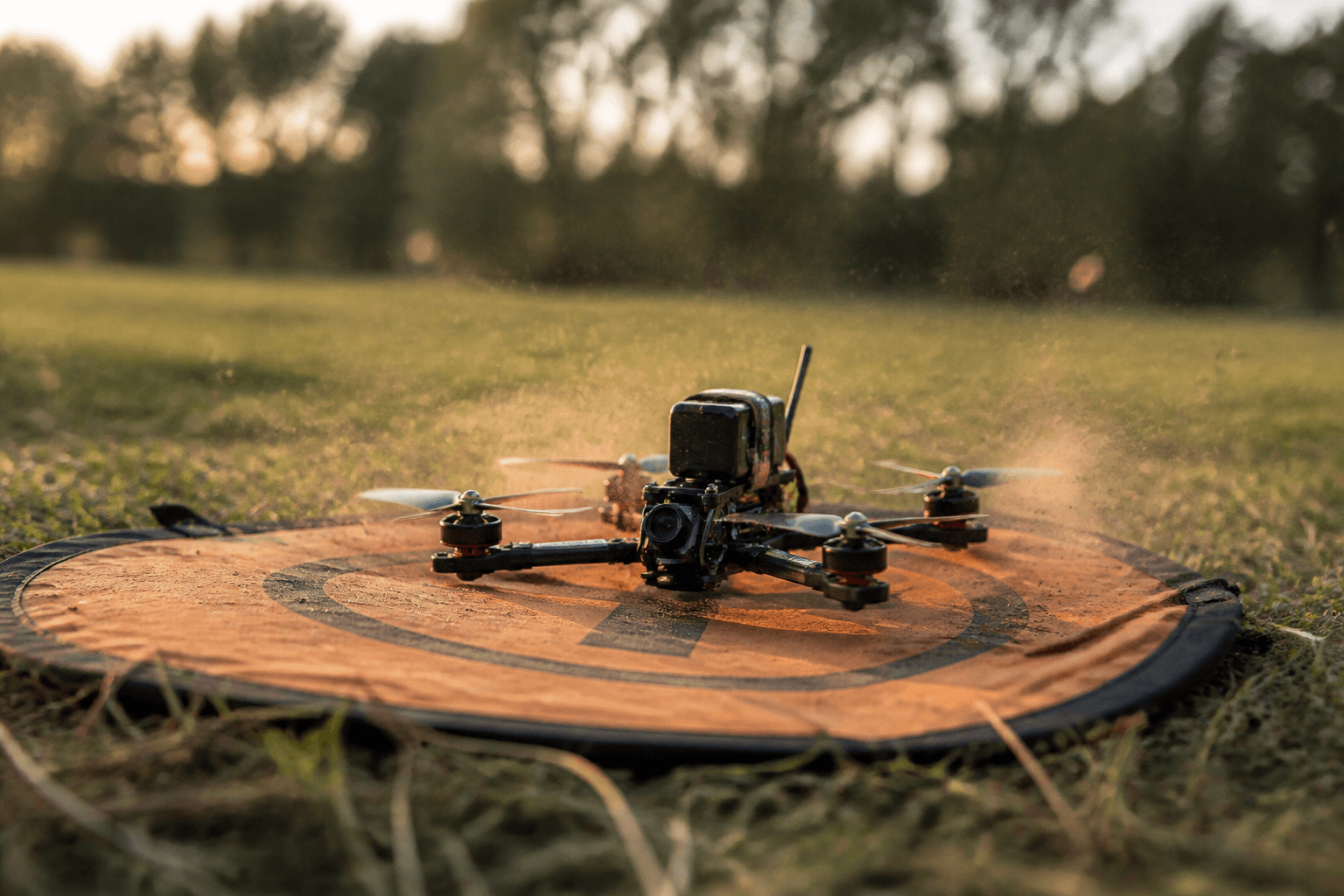

How to land an FPV drone is where beginners break props - not on punch-outs, on the last two metres. Soft landings are a skill. Train them on purpose or you will donate a prop set every session and blame “cheap motors.”
FPV Grind’s short version: kill forward speed, hover above the spot, bleed throttle until the craft settles level, then disarm on the ground before you walk over. Hover first if landings still feel like crashes: how to hover an FPV drone.
Soft landing steps (Angle mode whoop)
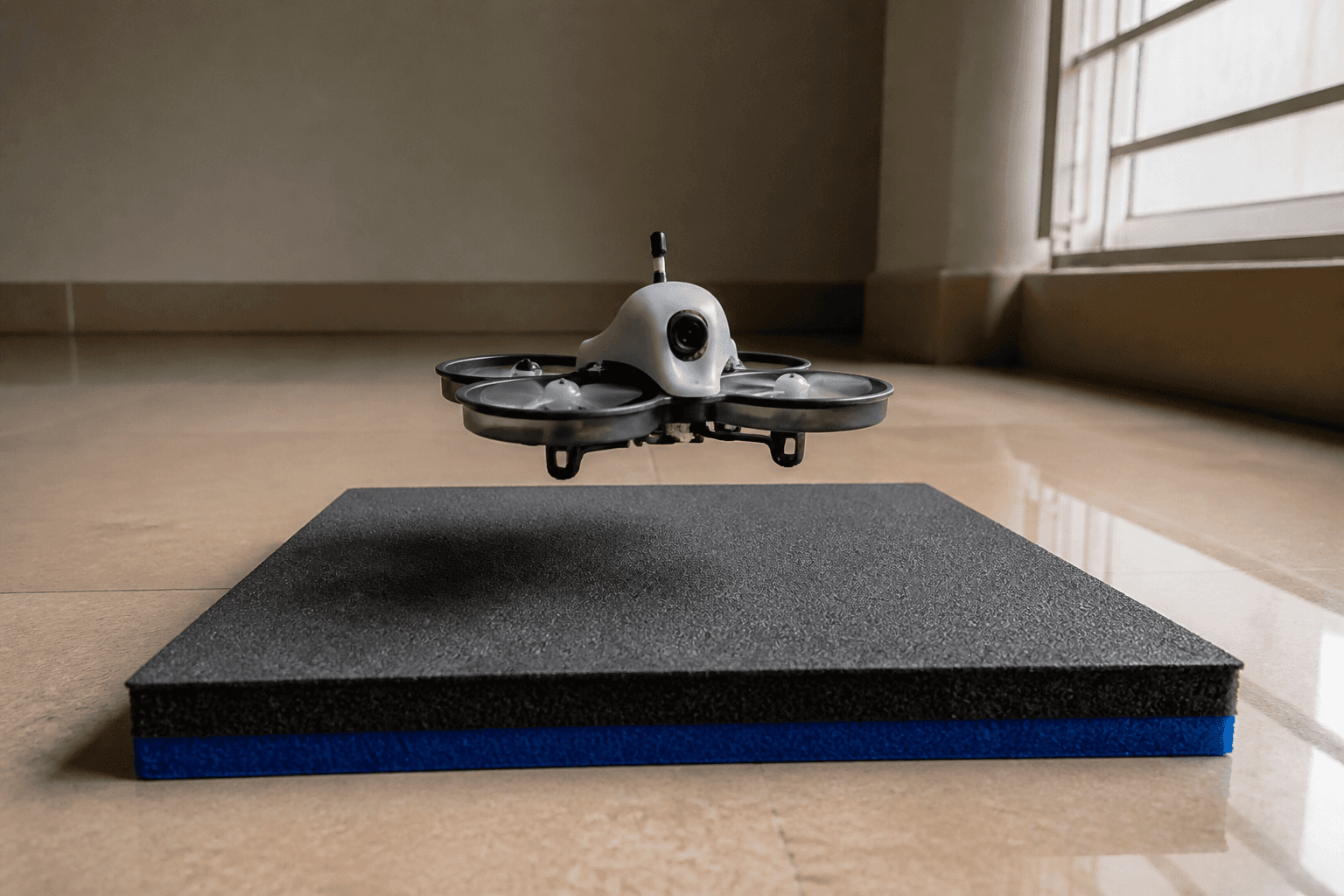
1. Pick a clear spot (carpet, gym mat, or calm grass - not a table edge)
2. Stop forward speed - hover above the spot
3. Keep attitude level with small stick inputs
4. Lower throttle slowly until the craft settles
5. Hold still for half a second on the ground
6. Disarm before you reach for the craft
7. Remove the pack only after disarm and props stopped
Acro landings use the same idea with more stick work: bleed energy, level with stick, settle, disarm. If acro landings are chaos, you are not ready for freestyle rates yet - how to fly FPV in acro mode · Angle mode explained.
Practice drill (sim → whoop)
In FPV Grind’s browser sim, land on the same spot ten times before you change maps. Count “good” landings (level, soft, no bounce), not flight minutes.
| Session | Goal | Pass when… |
|---|---|---|
| Sim day 1–2 | Spot landings | 8/10 soft settles |
| Sim day 3–4 | Land from slow figure-eight | No bounce / tip-over |
| Whoop carpet | Same drill indoors | Props stay unbent |
| Outdoor calm | Same drill on grass | Disarm habit automatic |
When soft landings are boring, you are ready for more speed. Broader path: how to fly FPV for beginners · how to learn FPV.
Whoop vs 5-inch: same skill, different stakes
| Factor | Tiny whoop | 5" freestyle |
|---|---|---|
| Prop cost of a hard landing | Low | Higher |
| Tip-over risk indoors | High near furniture | Field debris / grass |
| Disarm discipline | Still mandatory | Still mandatory |
| Turtle mode after tip-over | Useful | Useful if enabled |
Turtle after a tip-over is a recovery tool, not a substitute for landing practice: how to enable turtle mode on a whoop. Hard landing repairs: how to fix a crashed whoop · how to change props.
Failure modes
| Mistake | What happens |
|---|---|
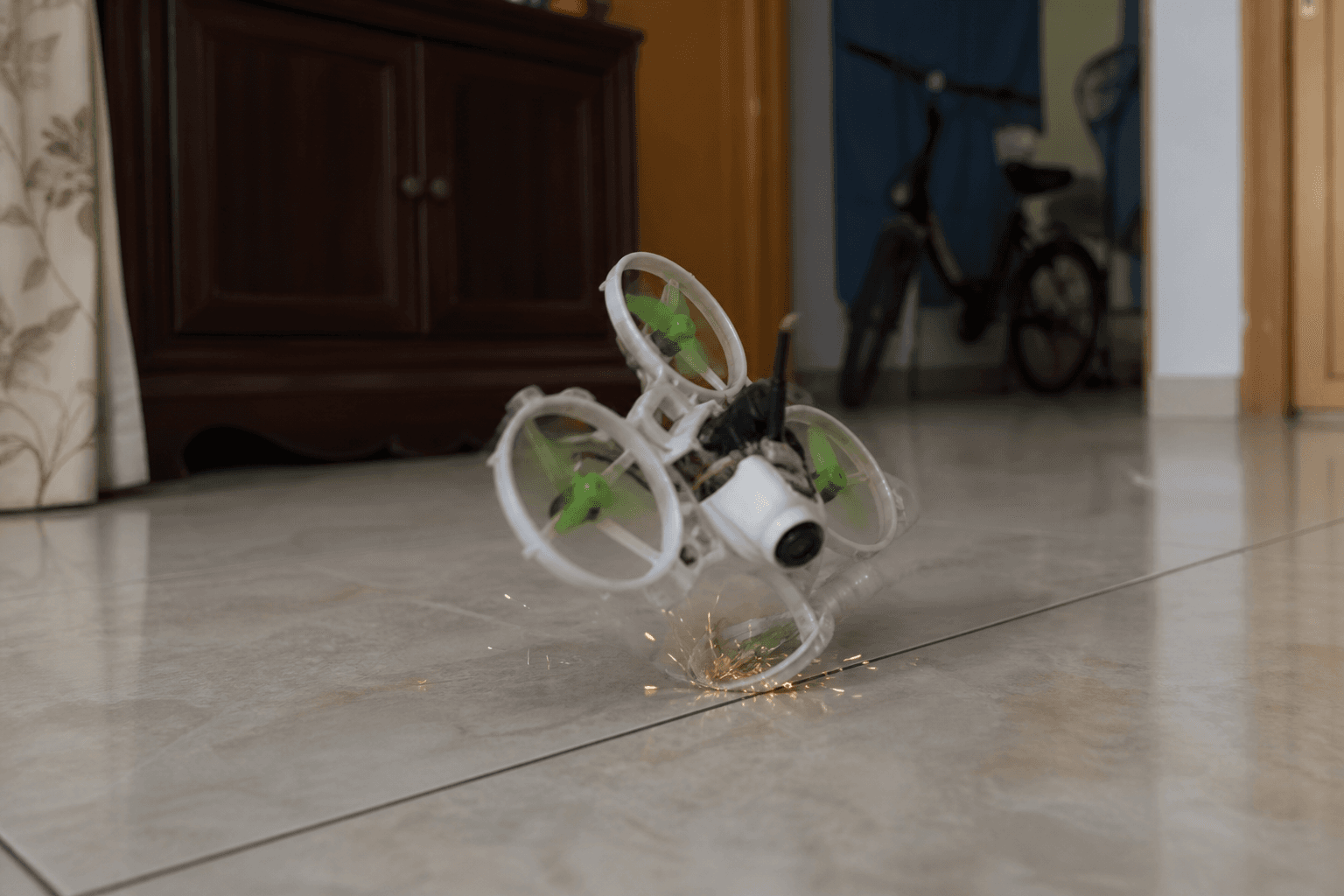
| Chopping throttle from altitude | Drop-in; bent shafts / cracked canopy |
| Landing while still flying forward | Tip-over into carpet or grass |
| Walking over while armed | Worst habit in the hobby |
| “Catching” a descending whoop | Props vs fingers - never |
| Ignoring bent props after a bounce | Vibration, then motor death |
| Hot motors after impact, fly again | Hidden damage escalates |
If landings keep tipping arms, go back to hover drills for a week. Crash cleaning: how to clean an FPV drone after a crash.
India notes
- Apartments: land on a mat away from fans, glass, and pets - apartment and terrace guide · kids, pets, spectators.
- Monsoon: wet grass hides sticks; soft landings on damp carpet indoors keep skills sharp.
- Society spaces: a hard landing that scatters a prop into a neighbour’s plant is how hobbies get banned.
Power-on and disarm habits belong with landing habits: how to power on safely · how to arm an FPV drone.
Landing checklist (print in your head)
□ Spot clear of people / pets / glass
□ Forward speed near zero
□ Attitude level
□ Throttle bleed, not chop
□ Settle, then disarm
□ Props stopped before hands near craft
□ Bent props replaced before next pack
Bottom line
Landing is a drill, not an afterthought. Hover, settle, disarm. Train ten soft landings in /sim before you blame the frame. Props are cheaper than motors - but the goal is to stop donating either.
Bench
Spare props and trainer whoops: the Bench. Practice while gear ships on /sim. Compatible builds: Grind Lab.
Discussion
Comments aren't open on this post yet. Share it with your build group, or start a thread on X.