
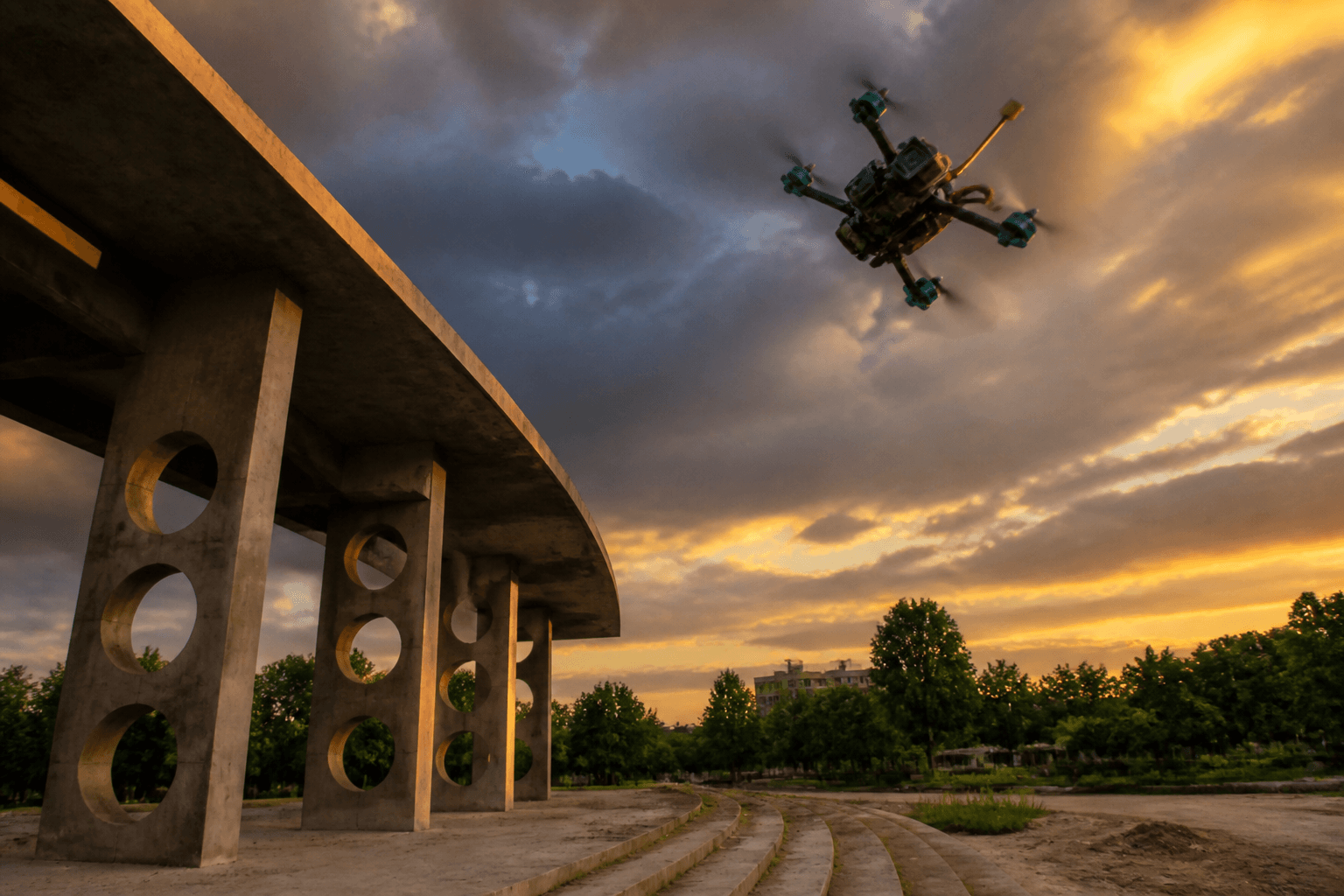

How to learn FPV freestyle without donating a crate of props: treat freestyle as Acro skill plus style, not as day-one power loops. Beginners skip the boring foundation, then wonder why every flip ends in grass.
FPV Grind’s progression is boring on purpose: hover and land cleanly, fly Acro without panic, then add flips, rolls, and bigger craft when recoveries are automatic.
What freestyle actually is
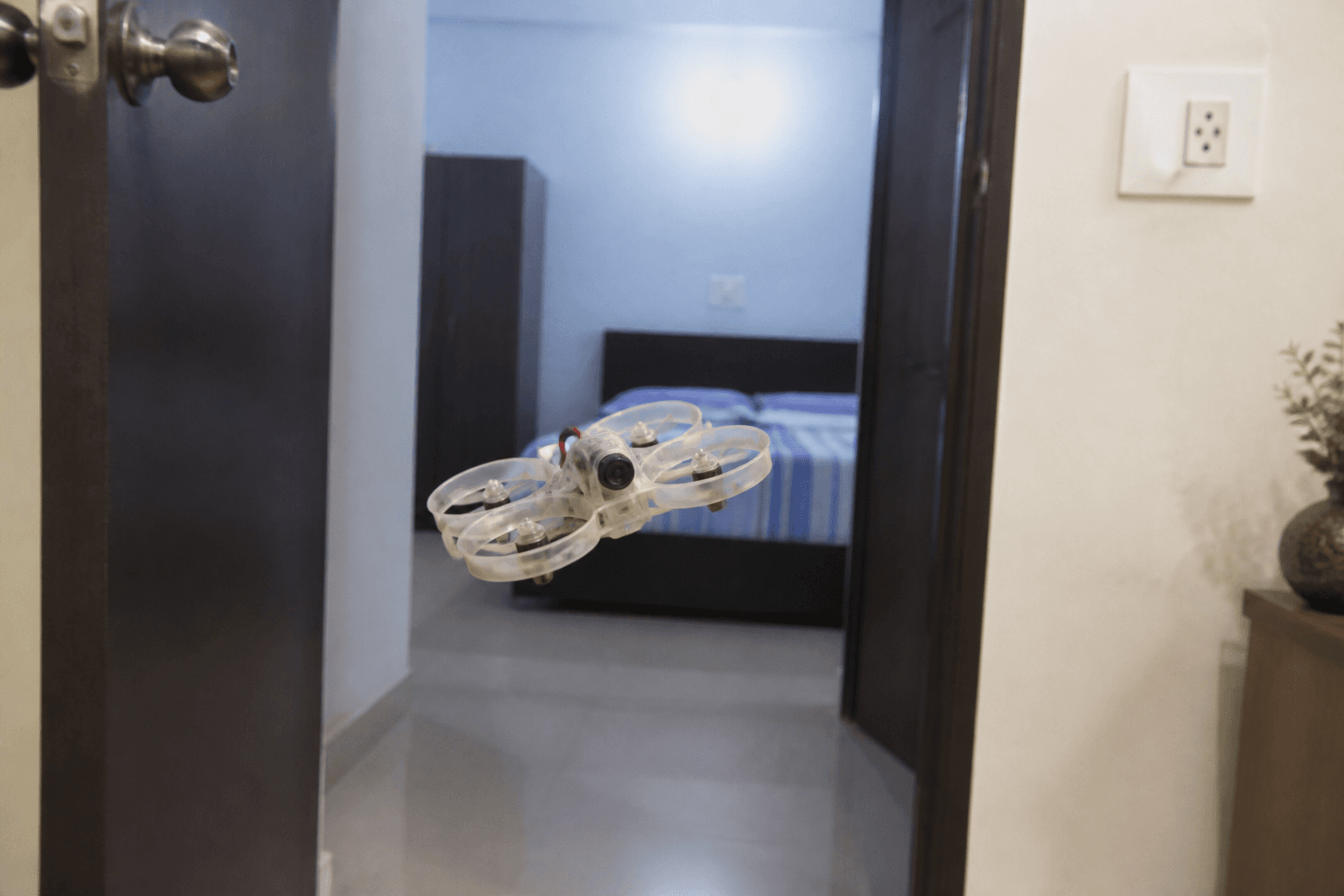
Freestyle is not “do a flip.” It is altitude control, coordinated turns, intentional throttle, and the ability to recover to level flight after a mistake. Style comes after those four are dull.
| Skill layer | Looks like | Skip cost |
|---|---|---|
| Hover / land | Soft touchdowns, no bounce | Broken props and confidence |
| Acro basics | Level flight without Angle crutch | Unrecoverable flips |
| Lines + altitude | Smooth figure-eights at set height | Mid-trick ground kisses |
| Tricks | Flips, rolls, power loops | Crash tax if layers above are weak |
Progression (do not reorder)
- Hover and land - how to hover · how to land
- Acro without panic - fly FPV in Acro mode · understand Angle vs Acro
- Coordinated turns and altitude hold - pick a height and keep it for a full pack
- Flips / rolls when recoveries are clean - how to do flips
- Bigger craft later - first 5-inch build only with field access
Rates matter early: start mild so you can still catch mistakes - beginner rates.
Daily sim habit (non-negotiable)
Use the free online FPV simulator before and between real packs. Sim is where you burn bad habits, not your motors.
Sim session (20–30 min):
□ 5 min hover / soft landings
□ 10 min figure-eights at one altitude
□ 5 min intentional mistakes + recoveries
□ Optional: one flip drill only if recoveries are clean
Broader learning map: how to learn FPV drone flying · practice without a drone · sim before first whoop.
Whoop first, freestyle later
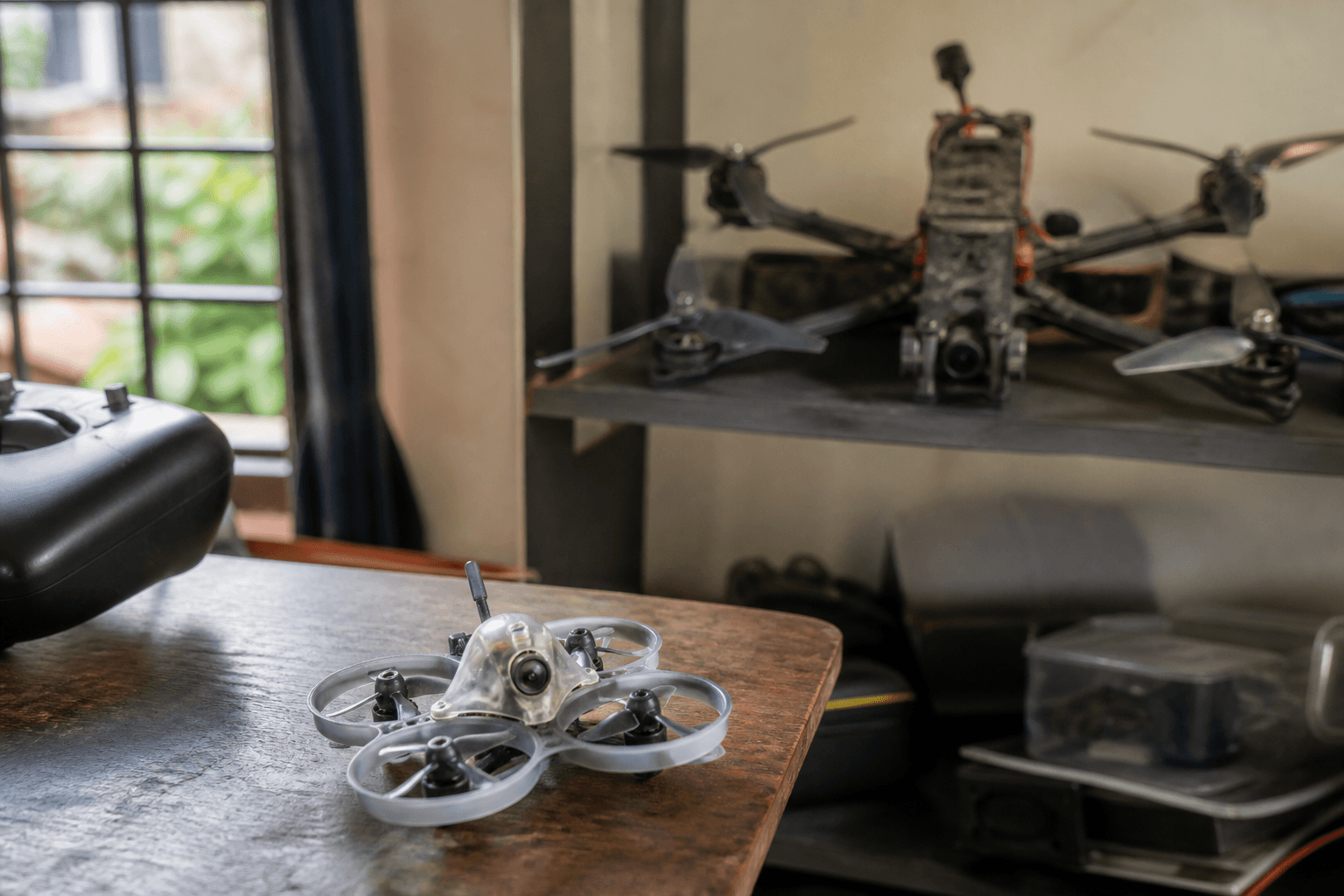
A tiny whoop is the cheapest freestyle classroom. Short flights, cheap crashes, and you can train in monsoon when fields are mud. Size and site reality: what size FPV drone · which build first.
| Platform | Freestyle role |
|---|---|
| Whoop indoors | Stick foundation, soft crashes |
| Whoop outdoors (calm) | First real lines and low tricks |
| 5" at a club | Power and style once Acro is boring |
Failure modes
| Mistake | Why it hurts |
|---|---|
| Flips before Acro hover is solid | Every trick becomes a coin flip |
| Jumping to 5" with no field | Noise + crash cost kills the hobby |
| Changing rates every pack | Muscle memory never settles |
| Only flying Angle forever | Freestyle never starts |
| No DVR review | You repeat the same crash pattern |
Crash reduction habits: how to reduce FPV crashes. After a hard hit: fix a crashed whoop.
Eight-week freestyle ramp (realistic)
| Weeks | Focus | Exit criteria |
|---|---|---|
| 1–2 | Sim + whoop hover/land | Soft landings 8/10 packs |
| 3–4 | Acro figure-eights | Hold altitude for a full pack |
| 5–6 | Low risk rolls/flips over soft ground | Recover level without panic |
| 7–8 | Style lines, optional bigger craft day | Mentor feedback or DVR review |
India note: apartment pilots should stay whoop-heavy and use club days for louder freestyle - apartments and terraces · communities by city.
Gear that supports learning (not ego)
- Radio you will keep: ELRS + Mode 2 - FPV radio for beginners India
- Pack fleet: 4–6 whoop packs so one charge cycle ≠ one flight - how many LiPos
- Spare props: freestyle is prop tax; stock them before you need them
Build/check parts in Grind Lab if you leave BNF land.
Bottom line
Learn freestyle by making recoveries boring. Hover → Acro → lines → tricks → bigger craft. Skip a layer and you are not “learning freestyle” - you are funding the prop industry.
Bench
Trainer whoops and radios on the Bench. Stick time on /sim. Recipe-style builds in Grind Lab when you outgrow the kit.
Discussion
Comments aren't open on this post yet. Share it with your build group, or start a thread on X.