

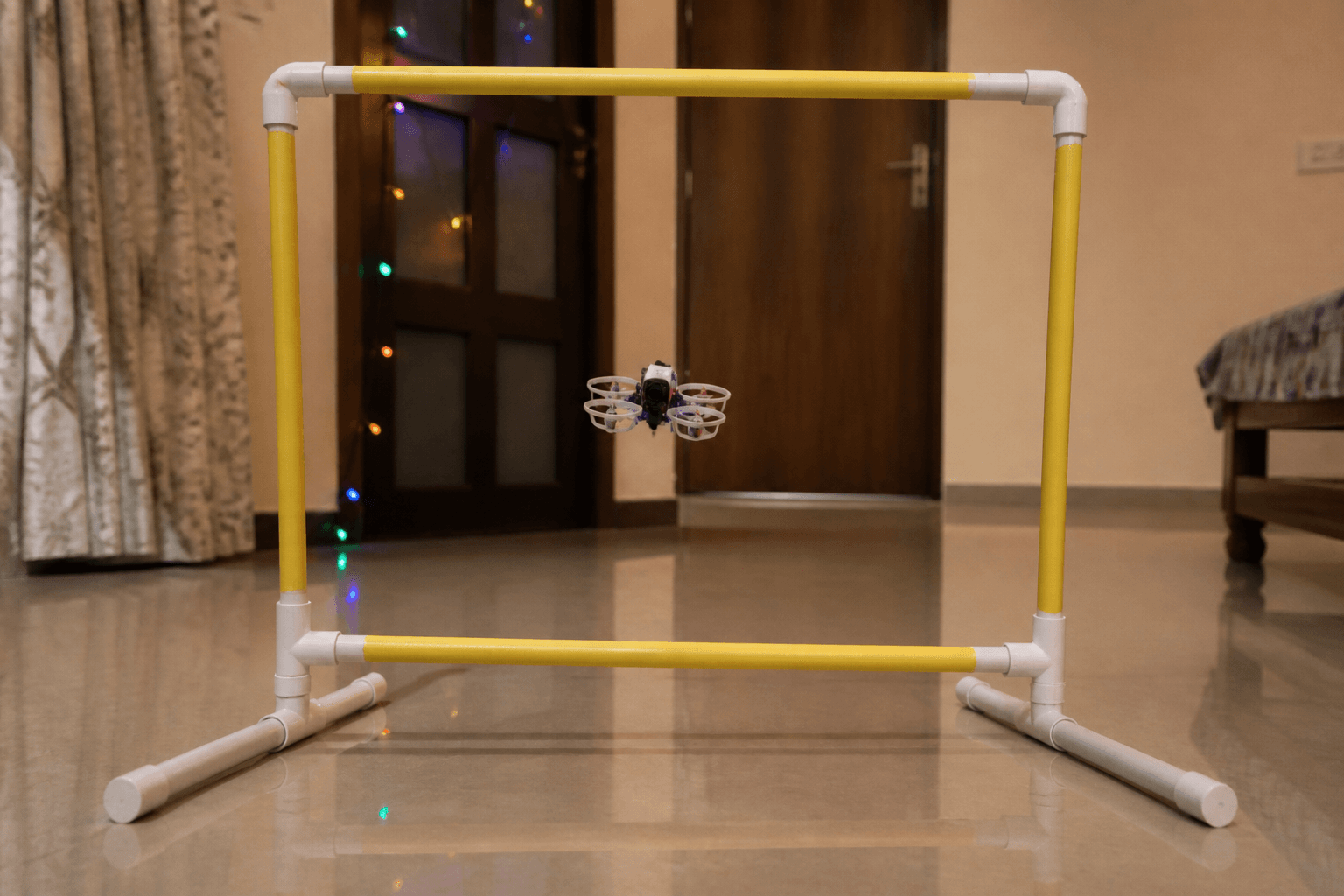
How to reduce FPV drone crashes

You will still crash. The goal is fewer avoidable crashes: the ones from fatigue, rates that are too high, no sim warm-up, and flying past your repair budget. Apartment and terrace pilots need a plan for crash costs too. Props and motors are cheap; three AIOs in a week are not.
Highest-leverage habits
| Habit | Why it cuts crashes | Start here |
|---|---|---|
| Sim before every session | Hands warm, rates feel familiar | /sim · best sim for beginners |
| Lower rates until hover is boring | Twitch crashes vanish | rates for beginners |
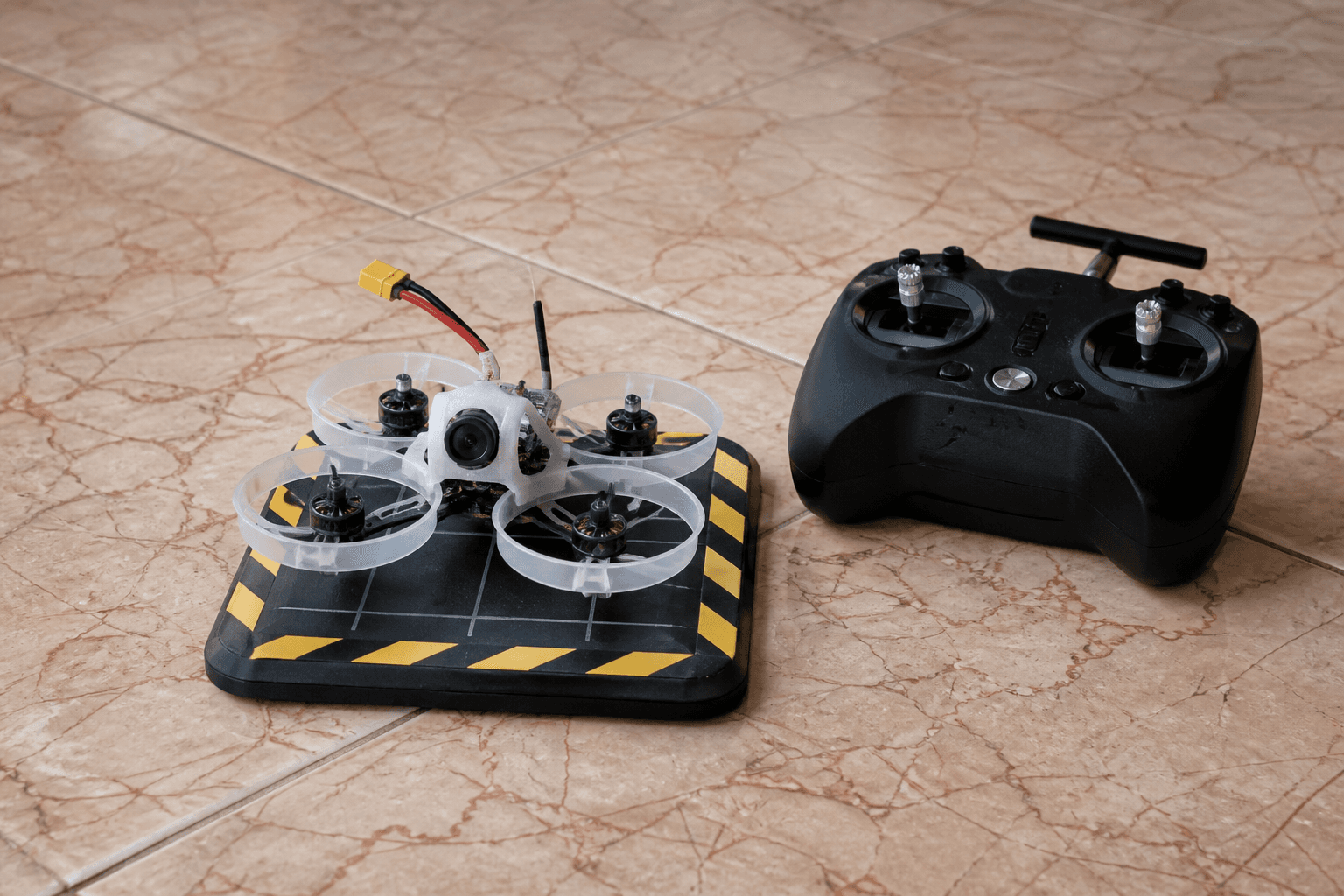
| Ducted whoop indoors | Softer furniture hits | fly indoors |
| Short sessions | Tired thumbs crash | Land with margin |
| Fix props before next pack | A chipped prop causes the next crash | change props |
Pre-session (5 minutes):
□ 2–3 minutes on /sim - hover + figure-eight
□ Rates not “YouTube freestyle” on day three
□ Props intact, motors spin smooth by hand
□ Spectators and pets out of the flying area ([kids & pets](/blog/kids-pets-and-spectators-near-whoops))
□ One clear goal (hover line, not “try the gap”)
Session design beats “talent”
| Session type | Duration | Crash risk if you ignore limits |
|---|---|---|
| First packs of the week | 1–2 short packs | High if you skip sim |
| Skill pack | One pack, one drill | Medium - good default |
| “Just one more” after dinner | Tired packs | Highest avoidable-crash rate |
| Terrace punch-outs | Any | Noise and a hard floor (apartments) |
Land when the pack sags or your thumbs get sloppy - whichever comes first. Whoop packs are cheap; AIO replacements are not.
Environment choices
| Spot | Crash profile | Mitigation |
|---|---|---|
| Living room | Furniture, fans, curtains | Ducts, gentle rates, cleared space |
| Gym / hall | People walking through | Spotter + scheduled empty time |
| Park grass | Soft landings, stems in motors | Clean after - post-crash clean |
| Club 5" field | High-speed, distant crashes | Mentor, same rates as your sim, spare arms |
The wrong first quad means more and costlier crashes: cinewhoop vs whoop vs 5".
Hardware that saves props
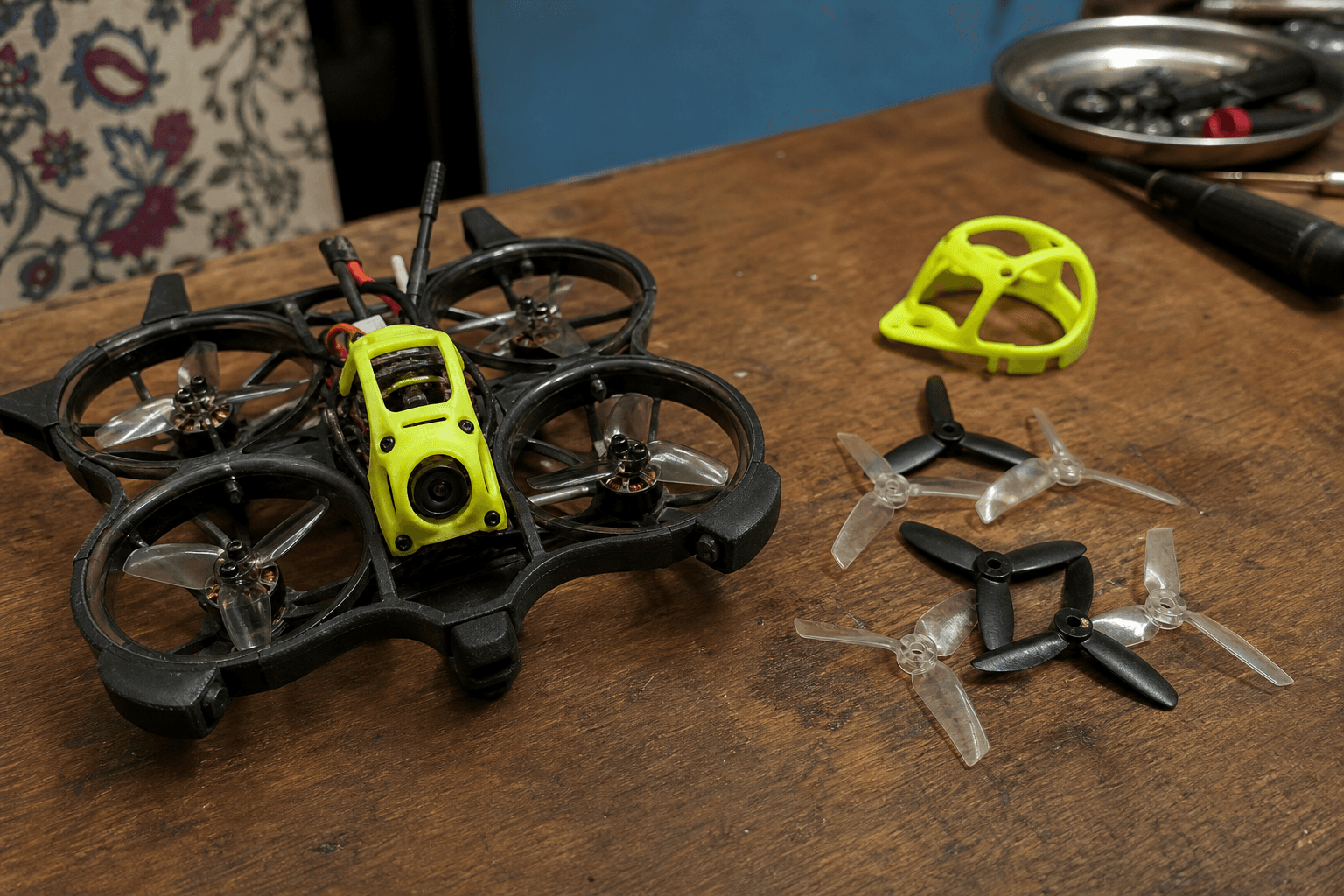
- Ducts reduce finger and furniture damage; they do not make you skilled.
- Spare props in the bag so you never fly a chip “just once.”
- Turtle mode when stuck inverted - enable turtle mode - still inspect after.
- A consistent radio setup: if switches change between models, you will hit the wrong one at the wrong time. Practise arm discipline: how to arm.
After you crash anyway
Triage order:
1. Disarm, unplug
2. Clean debris
3. Props / motors / screws
4. Short hover test
5. Only then try the same line again - or don't
Deep guide: how to fix a crashed whoop. If video died in the crash, no picture on goggles.
Mental failure modes
| Pattern | Fix |
|---|---|
| Raising rates to “feel pro” | Drop rates for a week |
| Skipping sim because “I know how” | Mandatory 2 minutes |
| Flying angry after a crash | Pack away; bag the whoop |
| Filming before hovering | Hover boring first |
| Ignoring society noise rules | Losing your flying spot, which is worse than a crash |
Monthly crash budget
Pick a rupee figure for props and motors for the month. When you hit it, fly sim only until next month. That constraint teaches throttle discipline faster than a lecture. Restock from the Bench; practice free on /sim; compare durable whoop recipes in Grind Lab.
Bottom line
Crash less by warming up, flying calm rates, ending sessions early and fixing hardware before the next pack. Skill is mostly session design. Freestyle comes after hover is dull.
See also
Fly with pilots near you
Every city page has an open FPV Grind group you can join with your account, plus where to fly, when the weather allows it and what the airspace rules say. Find FPV pilots near you.
Discussion
Comments aren't open on this post yet. Share it with your build group, or start a thread on X.