

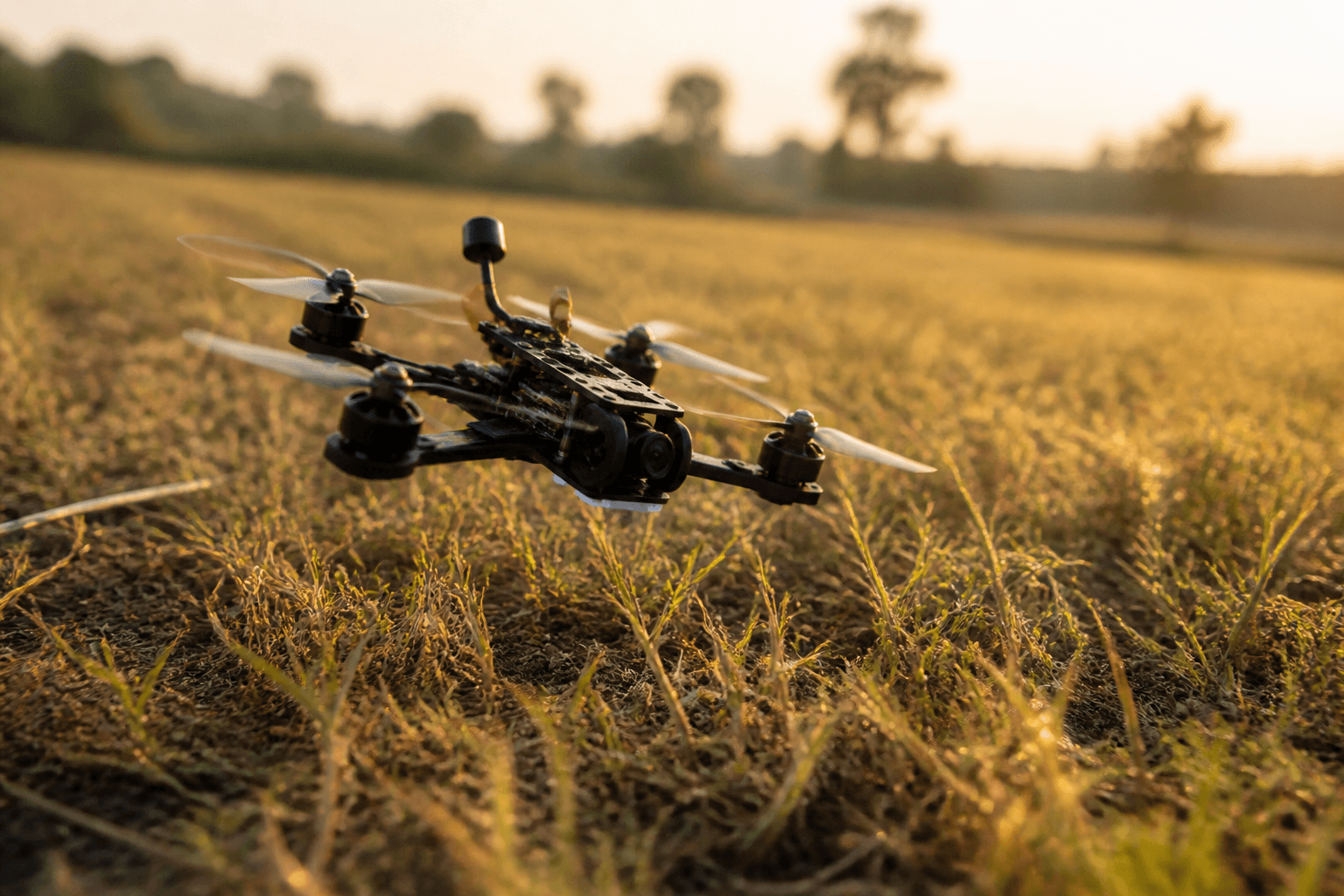
First 10 flights after a new build

Flight one is not the time for bando heroics. Ten deliberate flights catch more problems than ten chaotic packs. Whether the quad is scratch-built or a fresh BNF, treat the first ten packs as a structured shakedown, not a showcase.
BNF vs scratch: same ramp
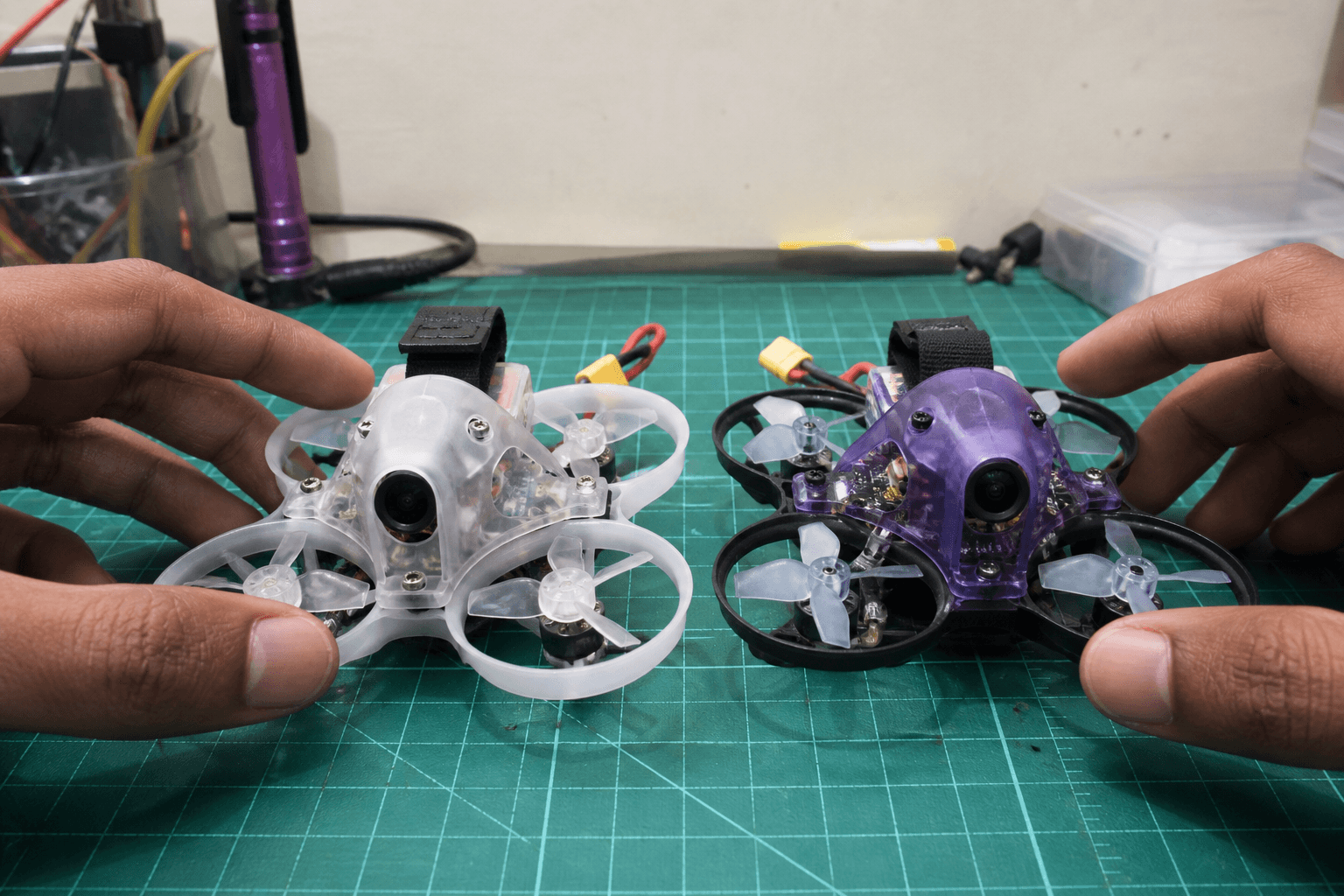
Scratch builders earn trust on the bench. BNF buyers skip the soldering but not the shakedown: a factory slip (a loose VTX screw, one motor spinning the wrong way) shows up in the same ten flights. BNF does not mean skipping the line-of-sight hover.
Why ten flights matter
New builds hide problems: a reversed motor, a loose camera screw, failsafe not configured, an ESC overheating at mid throttle. Chaotic flying hides all of it until something expensive breaks. A calm ramp gives you signal (a hot motor, an odd sound, voltage sag) before you add obstacles and ego.
Flights 1–2: bench to grass
- Props on, and the smoke stopper test already passed
- Line-of-sight hover at knee height
- Check motor direction, odd vibration and OSD voltage
Flight 1
Pick open grass with nobody under the flight path. Arm, hover at knee height for 15–30 seconds, disarm. Then check the quad: sniff the ESCs and feel the motors. They should all be about equally warm. If one is much hotter, diagnose it before flight 2.
Set up the OSD essentials before flight 1 if you can: voltage and timer at minimum.
Flight 2
Hover again with small yaw and pitch inputs. Listen for grinding: bearing and bullet connector problems show up early. Make sure the battery connector is fully seated; a half-inserted XT60 fails under load.
Flights 3–4: line-of-sight patterns
- Slow figure-eights
- Listen for motor grind
- Fly until the low-voltage warning to confirm your OSD alarm works
Without goggles you see the quad's attitude directly. Roll drift, pitch wobble or inconsistent yaw shows up here before you blame camera tilt. Stay low; trees and poles aren't invited yet.
Failsafe check
On flight 4, test failsafe once at a safe height over grass: switch off the radio (or follow your setup's test method). Centring the sticks does not trigger failsafe; only losing the link does. Know what the quad does before flight 50. See failsafe scenarios.
Flights 5–6: light FPV
Goggles on, same open field, no obstacles. Don't chase gaps yet; fly a low box pattern at gentle throttle. If the camera angle feels wrong, change it by about 5° between flights, not mid-pack.
If you fly HD, check the DVR. Spotting jello now saves tuning time later: fix mechanics first, PIDs later.
Flights 7–8: tune pass
- At most one change from Betaflight tuning basics
- Log if something feels off; Blackbox is optional
If flight 7 feels sloppy, make one PID or filter change for flight 8. Moving several sliders teaches you nothing. If it's still sloppy after checking props and mounts, stop tuning and work through the mechanical checks in tuning after a crash, even without a crash.
Flights 9–10: style begins
Bring in your normal lines gradually: gentle forward flight, low-power loops if there's room. Flight 10 is the last shakedown pack, not permission to full-send. Note anything that vibrates on punch-outs or smells hot after landing. Keep spare props in a field kit.
After flight 10:
1. Motor temps roughly equal?
2. Props chipped?
3. Arms cracked? Inspect the carbon
4. Stack screws tight?
5. DVR clean enough to proceed?
6. Failsafe confirmed?
After flight 10
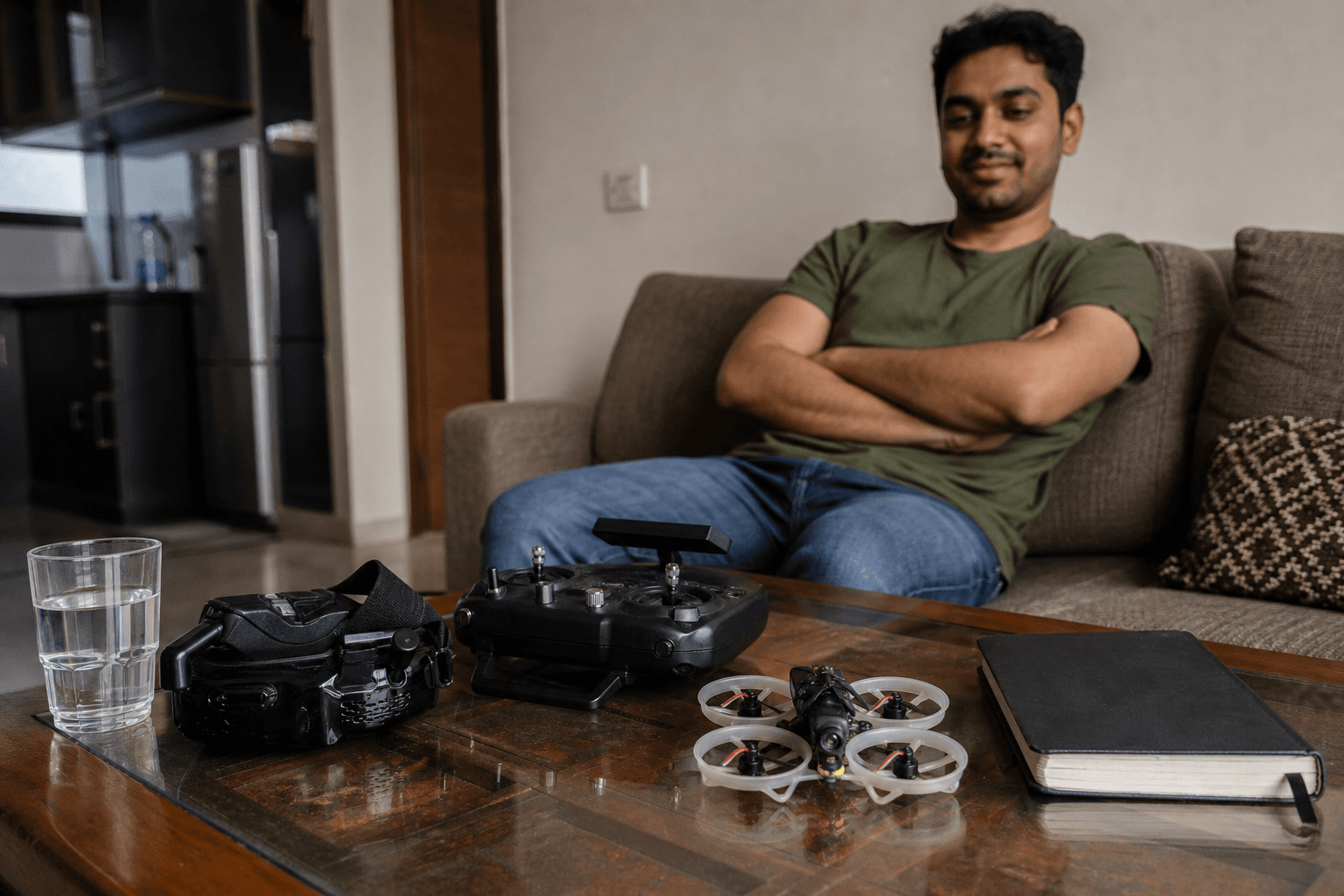
If motors run hot or vibration persists, stop and fix the mechanics before you film anything.
When to repeat the ramp
- New ESC or motor on one arm
- Major firmware flash, especially without a backup
- Replaced frame arm
- After any crash repair beyond a prop swap
When to end a session early
- Any electrical smell
- The same motor hot twice in a row
- One receiver link drop: fix it before continuing
- Rain on the way; see monsoon habits
- Gusty wind if you're new: wind hides trim problems and tempts you into too much throttle
India field notes
Early mornings beat the heat and the crowds. Carry water for yourself and shade for packs; see summer heat packing. Whoop pilots: ten flights indoors still count. Scale obstacles to your quad, as in apartment flying.
Spread it out
Ten flights can take two or three days. Three to five honest packs per session beat ten rushed packs in one tired hour; motor heat and your attention both fade when you chase numbers. The ramp still counts as long as the order holds.
| Session | Flights | Goal | Stop if |
|---|---|---|---|
| A: bench to LOS | 1–4 | Mechanical trust, failsafe check | Hot motor, RX drop, odd vibration |
| B: open FPV | 5–6 | Camera tilt, DVR baseline | Jello from a loose mount (not PIDs) |
| C: tune + style | 7–10 | One tune change, gentle lines | Vibration that persists after a prop swap |
Between sessions:
□ Store packs at storage voltage if the gap is over 48 h
□ Re-tighten stack screws if vibration appeared
□ Replace chipped props before session B
□ Re-read your notes
Keep notes in your phone: "Flight 6, rear-left motor warmer, slight jello, camera screw loose." Patterns show up across flights that memory misses. You don't need Blackbox on flight 3; you need honest notes.
Common shakedown mistakes
| Mistake | Why it bites |
|---|---|
| Skipping LOS because "I sim enough" | Motor direction and trim problems hide in goggles |
| Full-send on flight 3 | You crash before learning the baseline |
| Five PID changes before flight 8 | No idea which change helped |
| No failsafe test until the bando | Wrong time, wrong terrain |
| Assuming BNF means ready | Factory loose screws happen |
Flight ten is permission to start normal flying, not permission to ignore mechanics. If anything felt off on flight nine, flight eleven is for diagnosis.
Bench
Stock up on spares before flight ten; you'll need them. Check Propellers, Frames and the rest of the Bench.
See also
Fly with pilots near you
Every city page has an open FPV Grind group you can join with your account, plus where to fly, when the weather allows it and what the airspace rules say. Find FPV pilots near you.
Discussion
Comments aren't open on this post yet. Share it with your build group, or start a thread on X.