
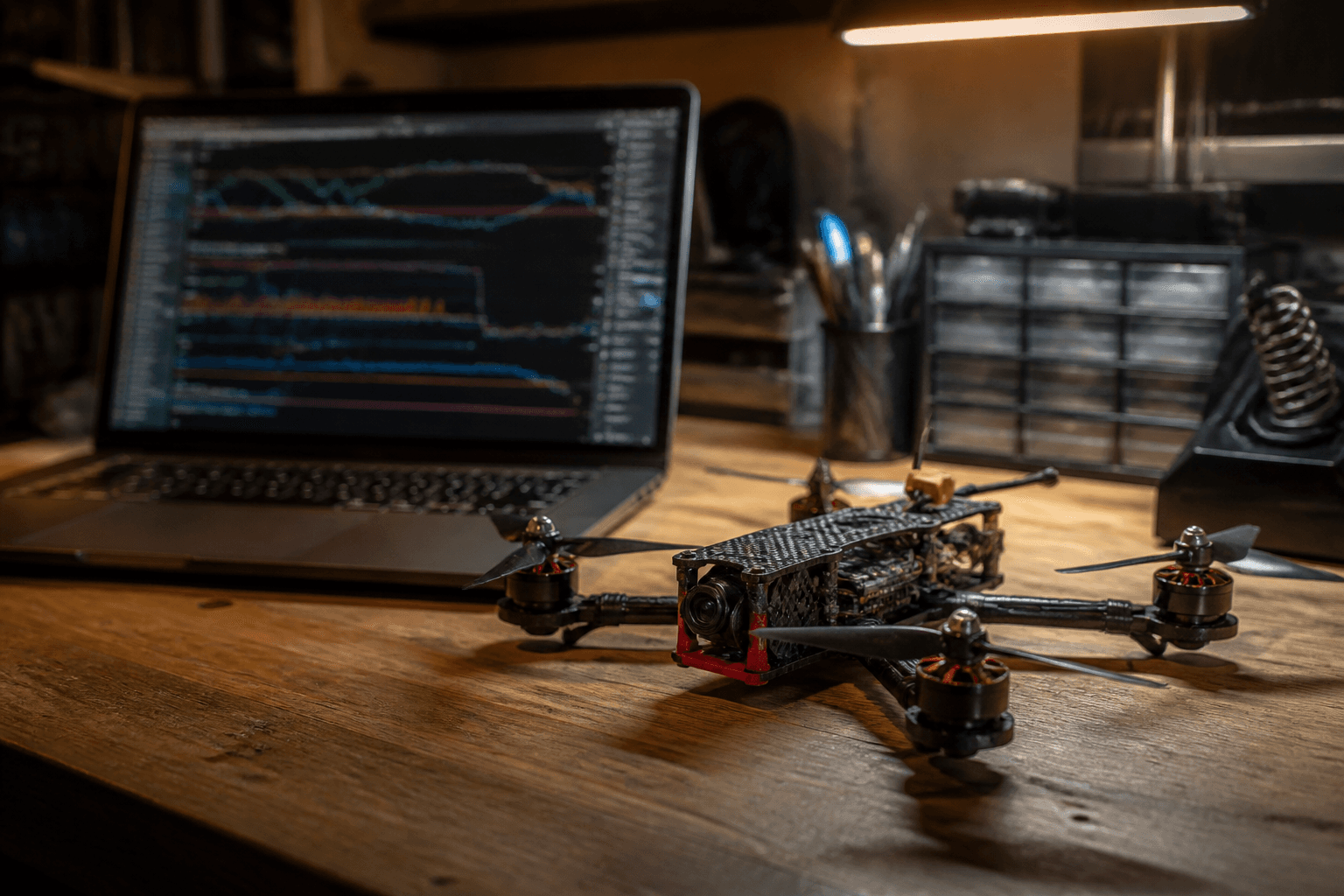
Betaflight tuning basics that actually move the needle

Modern Betaflight gives you powerful filters and PID tools, but the biggest wins come from doing things in the right order. This is not a substitute for Blackbox review, but it is a roadmap that works in the field. Most pilots who feel "stuck" are not missing a secret slider, they are tuning software over mechanical problems, or changing three things at once and losing the plot.
When NOT to tune
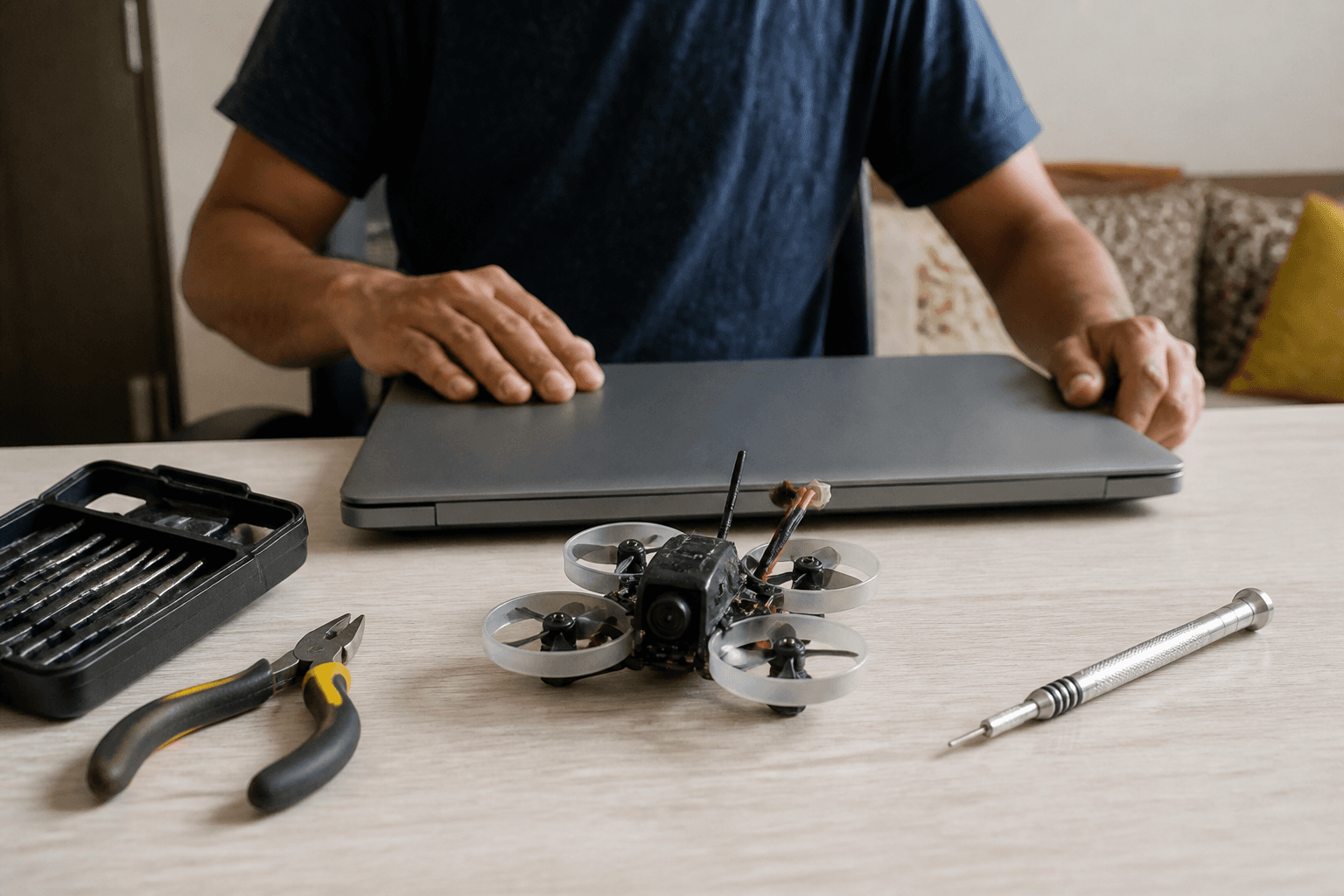
Before you open the configurator, ask whether tuning is even the right job:
| Situation | Better move |
|---|---|
| Bent prop, loose motor bolt, cracked arm | Fix hardware first, see crash repair triage |
| Motors too hot to hold after normal flying | Check prop load and ESC sizing, see motor KV and throttle headroom |
| First hover on a new build | Fly 3–5 packs stock tune, then log, see first 10 flights after a new build |
| 40 °C field, motors already heat-soaked | Land, cool, shade the quad, see filter tuning for hot climates |
| VTX jello, loose camera mount | Mechanical, PID will not fix footage |
Tuning is maintenance on a healthy quad. If something changed after a crash, inspect before you slide.
1. Mechanical setup first
Nothing in software fixes bent props, loose screws, or a vibrating frame. Gyro noise from bad mechanics looks identical to "needs more D" in the air, and you will pay for that mistake in motor heat.
Checklist before PIDs:
- Props: replace chipped or hub-cracked props; balance only if you have a reason (see prop balancing)
- Motor bolts: bell screws tight; no wobble when you spin by hand
- Frame: standoffs snug; no carbon stress cracks at arm roots
- Stack mount: soft mount vs rigid per frame design; crushed grommets pass vibe (see stack soft mount)
- Camera / VTX: tight mounts; flex adds noise the gyro reads as motion
Hover one pack in open grass. If it still buzzes at mid-throttle with a fresh tune, the problem is almost certainly not "P too low."
2. Gyro filters
Filters separate gyro noise (vibration, electrical hash, bearing grit) from real angular motion the PID should correct. Over-filtering feels mushy: the quad lags your sticks and washes out in turns. Under-filtering feels hot: fine oscillations, motor warmth, and D-term fighting noise instead of flight dynamics.
What you are filtering: raw gyro data passes through low-pass and dynamic notch stages before PID sees it. RPM filter (when enabled) notches motor harmonics, see RPM filter and bi-directional DShot.
| Symptom | Likely filter issue | Direction |
|---|---|---|
| Sloppy, delayed snap | Over-filtered | Reduce one filter step, re-test |
| Fine buzz, hot motors | Under-filtered | More filtering before cranking D |
| Good hover, bad on punch-outs | Throttle-dependent noise | Check props, then notch / RPM filter |
| Tune fine morning, sloppy afternoon | Heat + noise floor shift | Hot-climate bias |
Use Blackbox or your preferred logger to see noise peaks, then adjust conservatively. If you are new, prefer small changes and one axis at a time. A single filter tweak per pack is boring and effective.
Common mistake: copying a "4.4 filter preset" from a forum without matching ESC protocol, motor count, or logging rate. Presets are starting points for similar hardware, not gospel.
3. PID workflow
PID turns stick intent into motor commands. Betaflight adds feedforward (FF) for stick tracking, increasingly important for freestyle, covered more in propwash tuning.
| Term | What it does | Too high | Too low |
|---|---|---|---|
| P | Corrects error quickly | Oscillation, heat | Sloppy, lags setpoint |
| I | Holds attitude vs drift | Windup, bounce-back | Drift, trim fights |
| D | Damps rate of change | Noise amp, hot motors | Overshoot, propwash |
| FF | Anticipates stick motion | Twitchy, noisy | Sluggish flips / tracking |
Practical loop:
Field-friendly approach:
1. Fix mechanical issues
2. Validate filters (hover + one hard maneuver logged)
3. Tune P on roll/pitch, small steps until crisp without buzz
4. Adjust I only if you see drift or wind issues
5. Add D carefully, pair every D bump with filter sanity check
6. FF last for feel, not first for masking bad P
One change per pack. Write down what you changed. If you cannot remember the last three edits, revert to your last saved profile and start one knob at a time.
I-term note: windy days and heavy camera mounts expose weak I. Do not crank I to fix a quad that drifts because the accelerometer is poorly calibrated or the frame is flexing.
4. Rates and feel
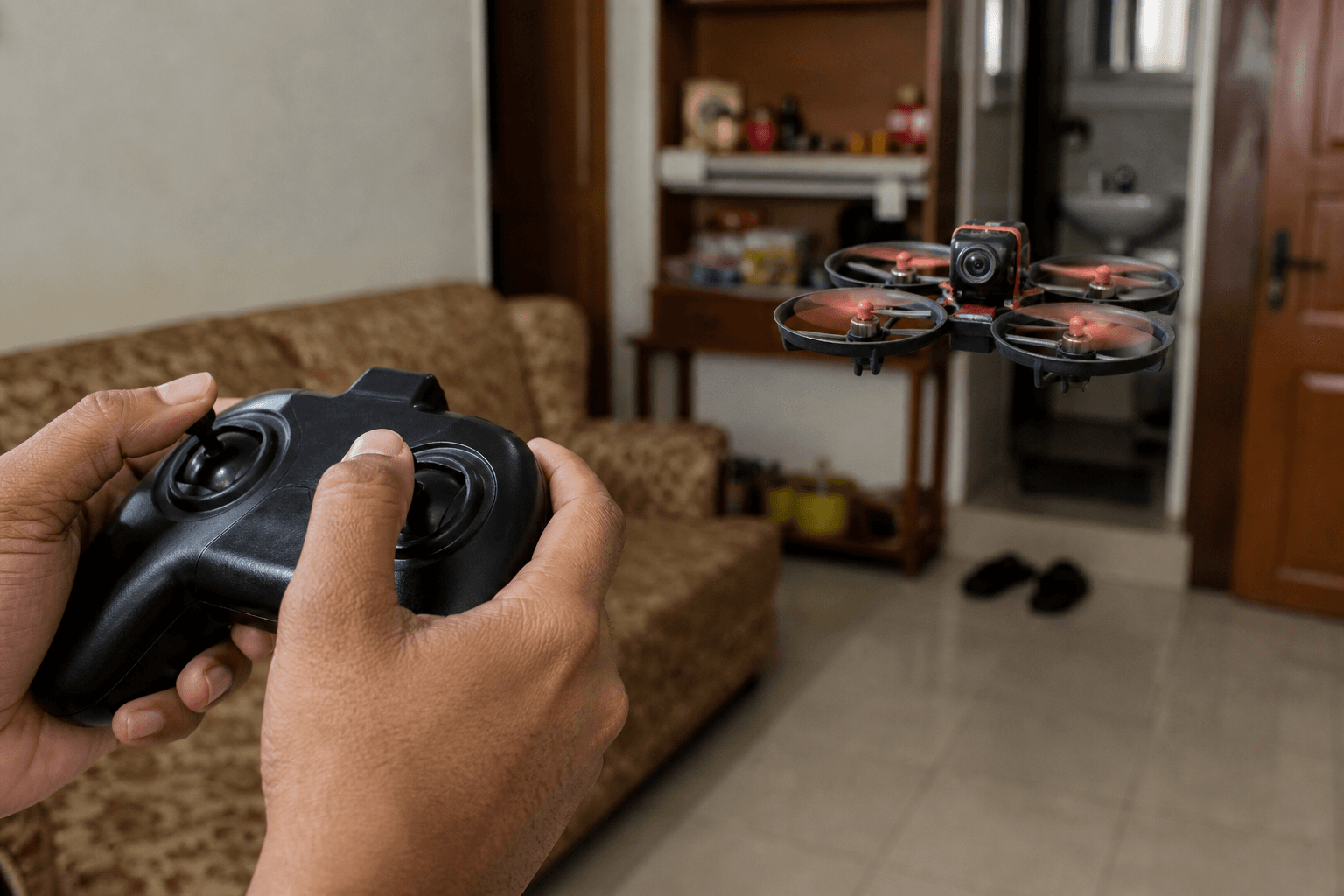
Rates are not "tuning" in the PID sense, but they change how errors feel in your hands. High super rates demand faster correction; mismatched rates make a good PID tune feel wrong.
Match your rates and expo to how you fly, freestyle smear vs tight snap, and only then judge whether the quad still needs PID changes. See rates and expo presets for A/B methodology.
India field note: grip sweat, battery sag, and 38–42 °C ambient change how the same rates feel by afternoon. Re-check rates seasonally, not just after crashes.
5. Logging discipline
Blackbox is how you stop guessing. You do not need to become a trace wizard overnight, start with gyro, setpoint vs actual, and throttle correlation. See reading Blackbox without drowning.
Minimum viable logging workflow:
- Enable logging at 2K or 4K if storage allows
- Log one bad maneuver per pack, not entire sessions of spaghetti
- Compare before/after a single change
- Land when motors are hot, tired hardware lies in logs
Saving profiles and baselines
Before a tuning session, save a backup in the configurator. Name it with date and prop type. When a tune goes sideways, restore and change one thing, not six.
Community tunes for your frame weight class are fine baselines, not destinations. Your ESC firmware, prop brand, and mount matter. Load a baseline, fly one pack, log, then adjust.
Session discipline: backup profile first; one change per pack written down; same battery class for comparisons; stop on smell or rising heat. No checklist discipline means fix hardware or fly, not slide.
Common mistakes (summary)
- Tuning over bent props or a wobbly motor
- Large D bumps without filter review
- Changing P, I, D, FF, and filters in one sitting
- Judging tune on the first pack when LiPo voltage is highest
- Ignoring throttle headroom, pinned throttle means undersized build, not "more P"
When in doubt, land, cool the motors, and review logs. Consistent process beats random slider moves, your future self (and your ESCs) will thank you.
See also
- Filter tuning for hot climates, when Indian summer heat and motor temps change the noise floor
- Motor KV, prop size, and throttle headroom, undersized builds fight tuning from the start
- Building your first 5" freestyle quad, mechanical setup before software
Discussion
Comments aren't open on this post yet. Share it with your build group, or start a thread on X.