
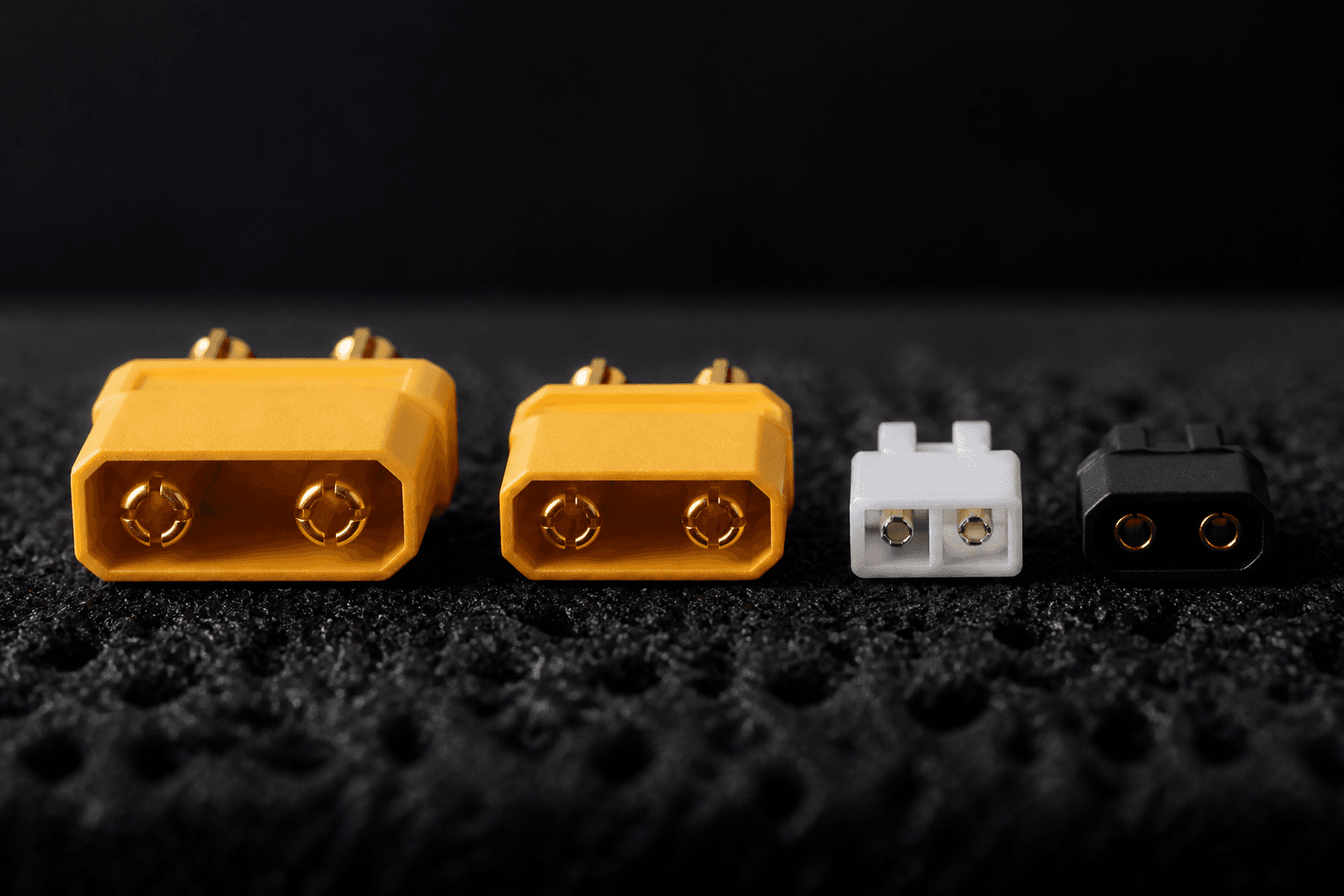
Connector guide: XT60, XT30, PH2.0, and BT2.0

Power connectors are boring until one melts, wobbles, or sparks on arm. Pick a standard per voltage class and stop collecting adapters. Connector failures look like "weird tune" or "RX brownout" until the housing turns brown.
Why standardization matters
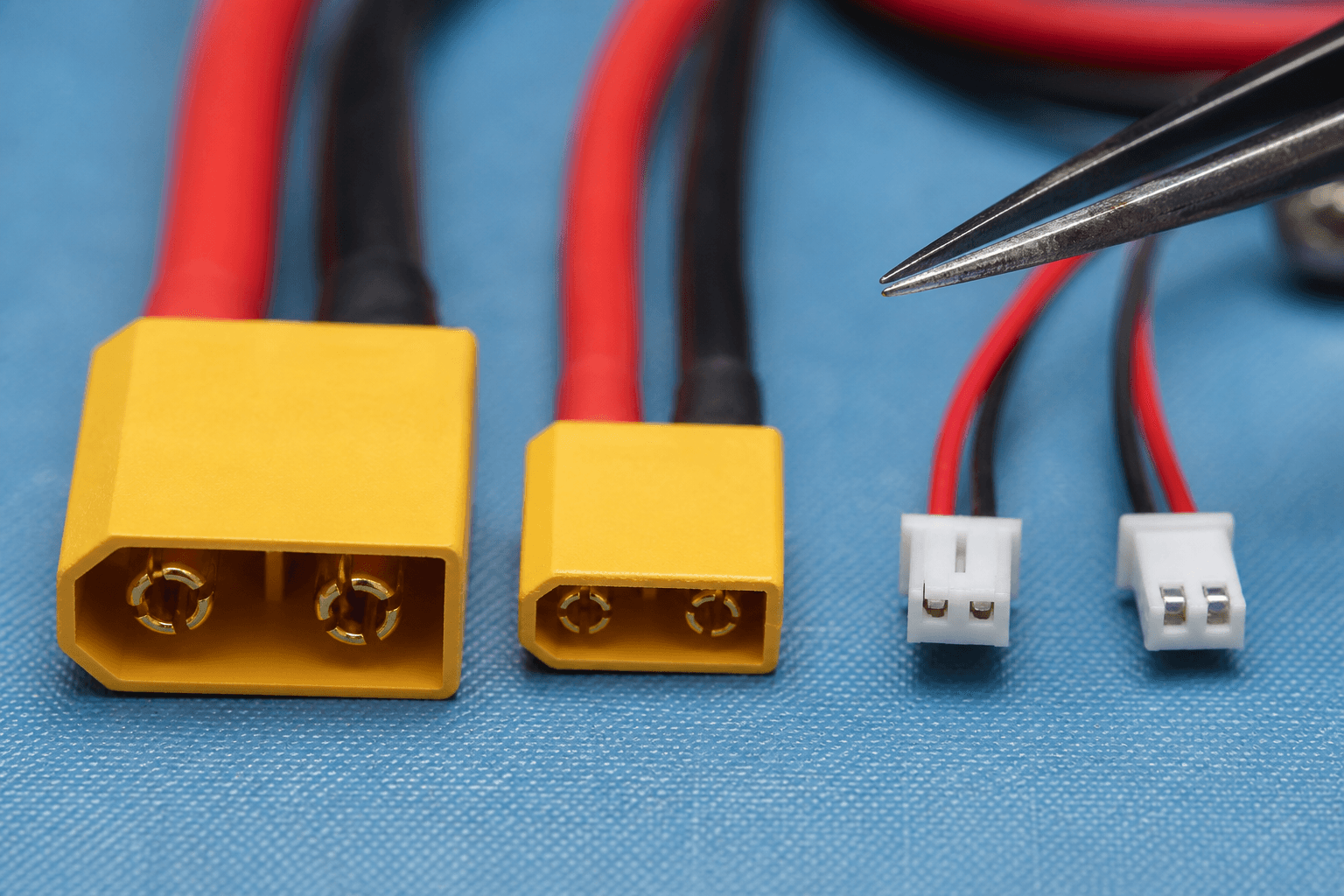
Every adapter is two extra joints and a failure mode. Fleets that mix XT60 packs, XT30 quads, and adapter cables spend field time debugging heat and looseness. Pick one connector per voltage class, 5-inch XT60, whoop PH2.0 or BT2.0, and align chargers, parallel boards, and quads.
XT60: 5-inch and up
Typical use: 4S–6S freestyle, larger cinewhoops, bench power.
Fails when: cold joints, partial insertion, arcing from worn housings, crash torque on stiff wire.
Habits: solder with heat on the pin, strain-relief wire to frame; replace housing if tabs are loose.
XT60 install notes
| Step | Detail |
|---|---|
| Solder | Heat pin, not plastic housing |
| Strain relief | Zip tie pigtail to frame standoff |
| Insertion | Click fully, half insert arcs |
| Inspection | Discoloration = replace housing |
5-inch freestyle draws high burst current, marginal XT60 joints heat in Indian summer sessions. See LiPo safety for parallel board discipline with XT60.
When XT60 is wrong
Light 3-inch builds on small packs sometimes use XT30 to save mass. Putting XT30 on a heavy 5-inch because the pigtail was in the drawer is a heat recipe, wire gauge and connector must match amp draw.
XT30: mid-size builds
Typical use: 3–4 inch and lighter builds, not primary whoop battery plugs (those are PH2.0 / BT2.0).
Same failure modes as XT60 at lower current, still match wire gauge to amp draw.
XT30 fleet tip
If you run 3-inch and 5-inch, separate bags and label chargers. Accidentally plugging a 5-inch quad into an XT30-only parallel board teaches fast lessons.
PH2.0: 1S whoops (some 2S micros)
Typical use: 1S tiny whoop batteries; occasional 2S micro builds with the same connector, light current only.
Fails when: insertion wear, bent pins, cheap batteries with soft housings, crash pulls on pigtail.
Habits: inspect pins before every session; retire packs with loose fit; do not yank by the wire.
PH2.0 wear signs
- Pack falls out inverted hover
- Pin pushed back into housing
- Heat on plug during charge
- Intermittent motor cut on punch
Replace pack connector or entire pack, do not fly loose.
BT2.0: newer whoop standard
Typical use: 1S whoops seeking firmer retention than worn PH2.0.
Reality: ecosystem split, match charger, quad, and batteries. Adapters exist; they add failure points.
PH2.0 vs BT2.0 decision
Pick one for your whoop fleet. BT2.0 retention helps aggressive indoor flying; PH2.0 dominates legacy packs. Converting everything costs more than choosing at purchase, see whoop upgrades.
Standardize on purpose
| Fleet type | Sensible default |
|---|---|
| One 5" freestyle | XT60 on quad + packs + parallel board |
| Indoor whoop | PH2.0 or BT2.0, pick one, not both |
| Mixed whoop + 5" | Separate bags; label chargers |
Adapter cables (XT60 → XT30, etc.) are fine for bench; in flight, prefer native plugs.
Parallel charging alignment
Your parallel board connector must match pack connector. Mismatch chains adapters, resistance and heat at every junction. Standardize at purchase, not with adapter spaghetti.
Soldering pigtails to boards
Whoop PH2.0/BT2.0 pigtails on FC boards lift pads if you linger, same rules as ESC soldering. Pre-tin, fast joint, strain relief on wire.
After a crash
Check connectors before re-arming:
- Housing cracked?
- Pin recessed or bent?
- Solder joint on PCB pad moving?
Connector damage often pairs with frame repair, fix power path before tuning.
Post-crash workflow
Power connector check:
1. Unplug pack, inspect both sides
2. Wiggle test, any play?
3. Look at pigtail solder on ESC/FC
4. Meter: no short from damaged housing
5. First re-arm via smoke stopper if electrical hit
Wire gauge pairing
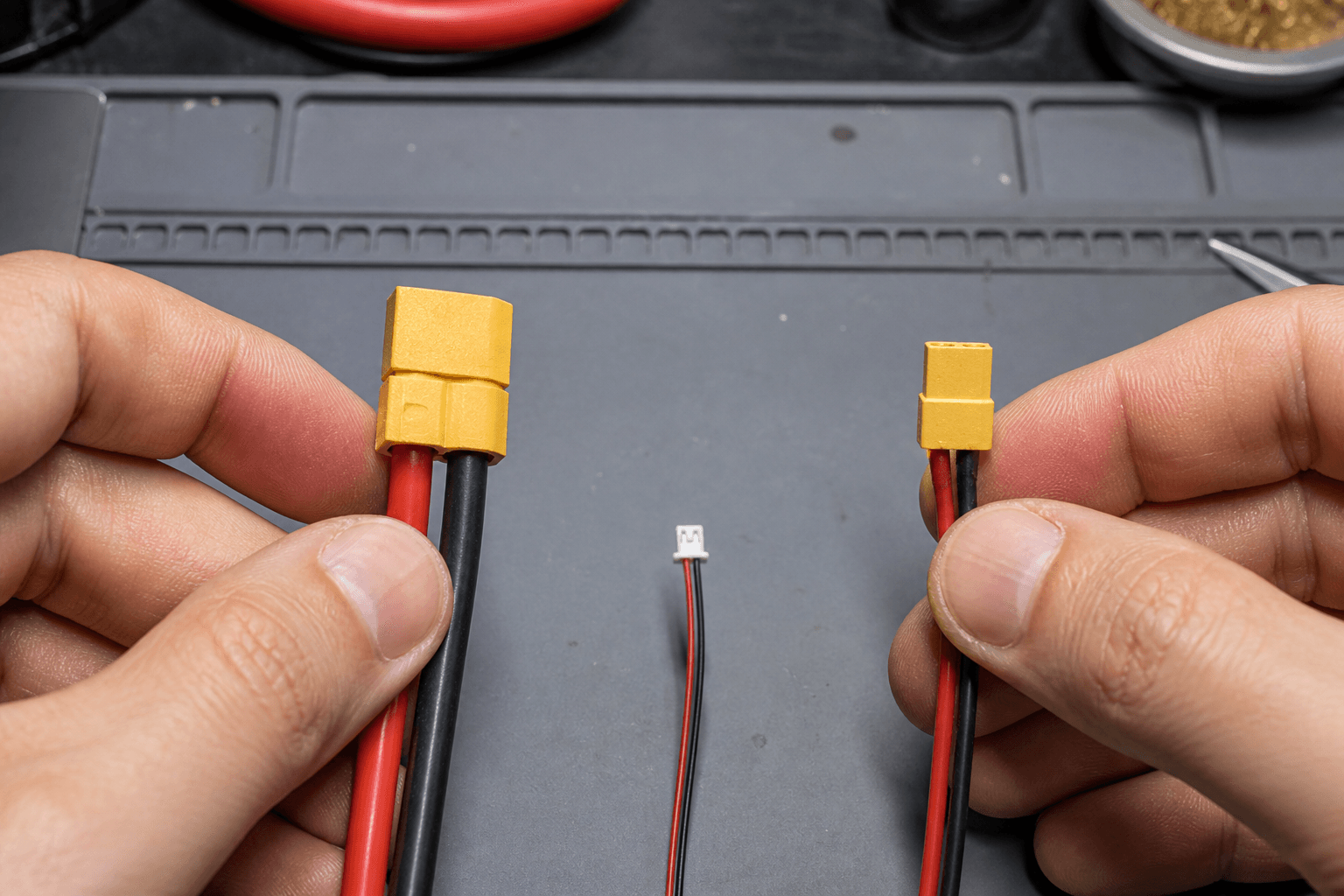
Connector rating means nothing if wire is too thin. 5-inch freestyle on 4S/6S wants adequate gauge on pigtails, skinny wire heats at the solder joint before the XT60 housing complains. When replacing pigtails, match or exceed factory gauge.
Parallel board discipline
XT60 parallel boards multiply pack risk. Same cell count, similar voltage, healthy packs only. A bad cell in parallel affects the group, see parallel charging workflow before your first multi-pack session.
Bench and field tools
Carry spare XT60 housings and pins for field pigtail repair on 5-inch. Whoop connectors are smaller, spare packs often beat field solder. Stock heat shrink in field repair kit.
India notes
Cheap connectors abound, buy name-brand or proven domestic sellers for high-amp XT60. PH2.0 wear accelerates in dusty parks, wipe pins, retire worn packs before monsoon humidity corrosion.
When to stop flying on connector doubt
If plug feels warm after hover, if you smell ozone, or if pack wobbles, stop. Replace housing or pack. Connector fires are rare until they are not.
Fleet labeling system
Mixed fleets cause charger mistakes. Label at three points:
Label scheme:
- Pack tape: mAh, cell count, connector (4S-XT60)
- Quad arm: cell count + connector in marker
- Charger profile name matches tape exactly
Colour zip ties per voltage class help at dawn field days. Red for 6S, blue for 4S, pick a system and teach anyone who borrows your charger.
Crimp vs solder (whoop pigtails)
Some whoop batteries ship crimped PH2.0; FC pigtails are soldered. Do not tug crimp joints, replace housing. Soldered board pads need fast joint technique. Field repair on 5-inch XT60 is often solder; whoop power is usually swap pack or swap board.
Resistance and heat (why adapters fail)
Every adapter adds milliohms. At 100 A burst, small resistance becomes watts at the joint, brown housing, soft plastic, intermittent RX brownout. Native match wins in flight; adapters are bench compromises only.
Travel and borrow risk
Borrowing a pack at the field without checking connector and cell count causes more damage than forum drama. Ask before plugging, "4S XT60?" out loud. Adapters in a shared club box should be labeled and inspected monthly; melted housing gets thrown out, not returned to the bag.
Bench
Batteries, adapters, and Propulsion / 5" Prop bags ship from the Bench, standardize connectors per fleet.
See also
- LiPo safety: charging, storage, and field habits, charge plugs and bag discipline
- Crash repair triage, power path inspection after hits
- Building a field repair kit, spare straps and heat shrink
Discussion
Comments aren't open on this post yet. Share it with your build group, or start a thread on X.