
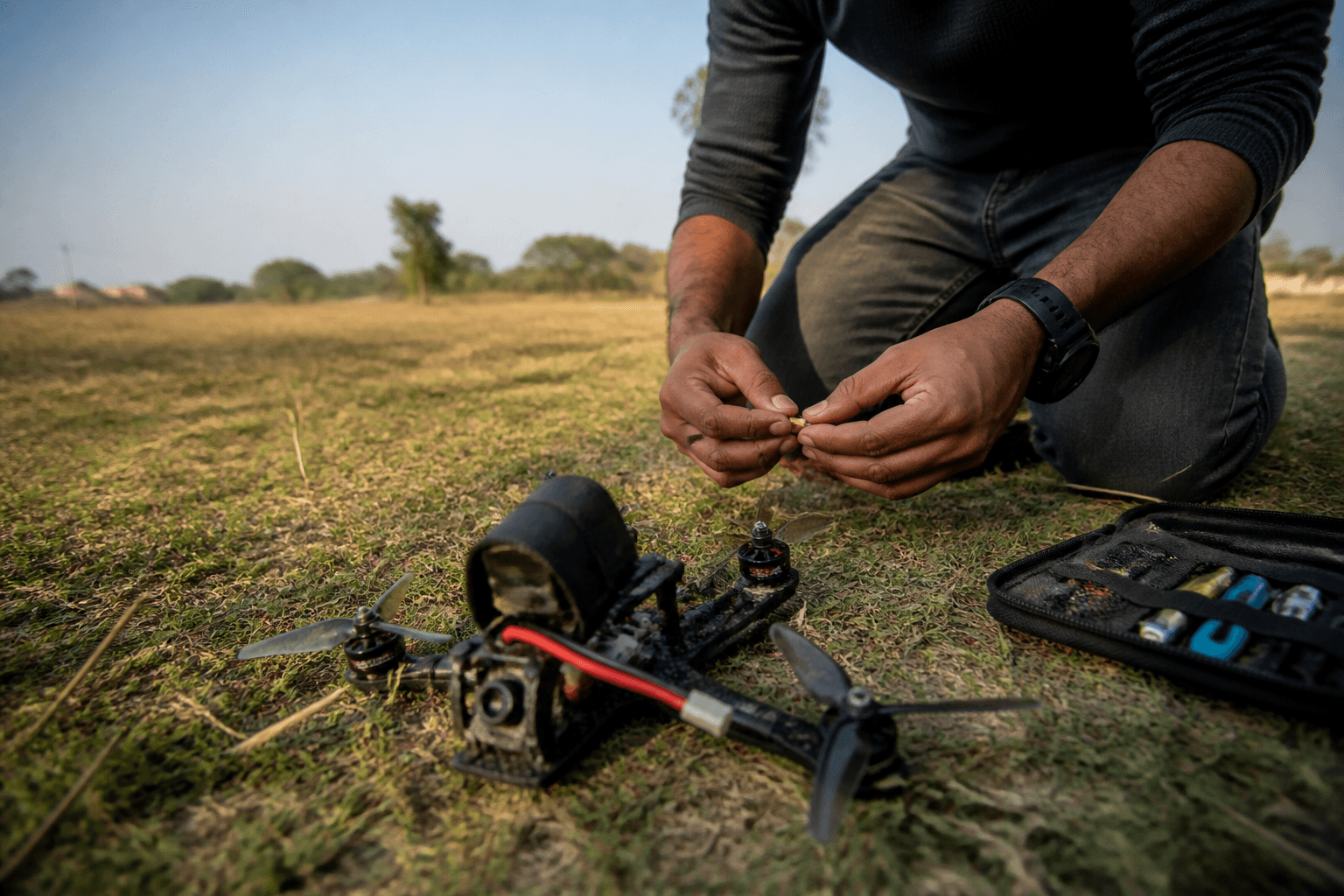
Crash repair triage, fix now vs bench later

Every freestyle pilot eats dirt eventually. The goal after a crash is not heroics, it is triage: fly again safely if you can, or stop before a small problem becomes a vtx fire. Good triage is a decision tree, not optimism.
First 30 seconds
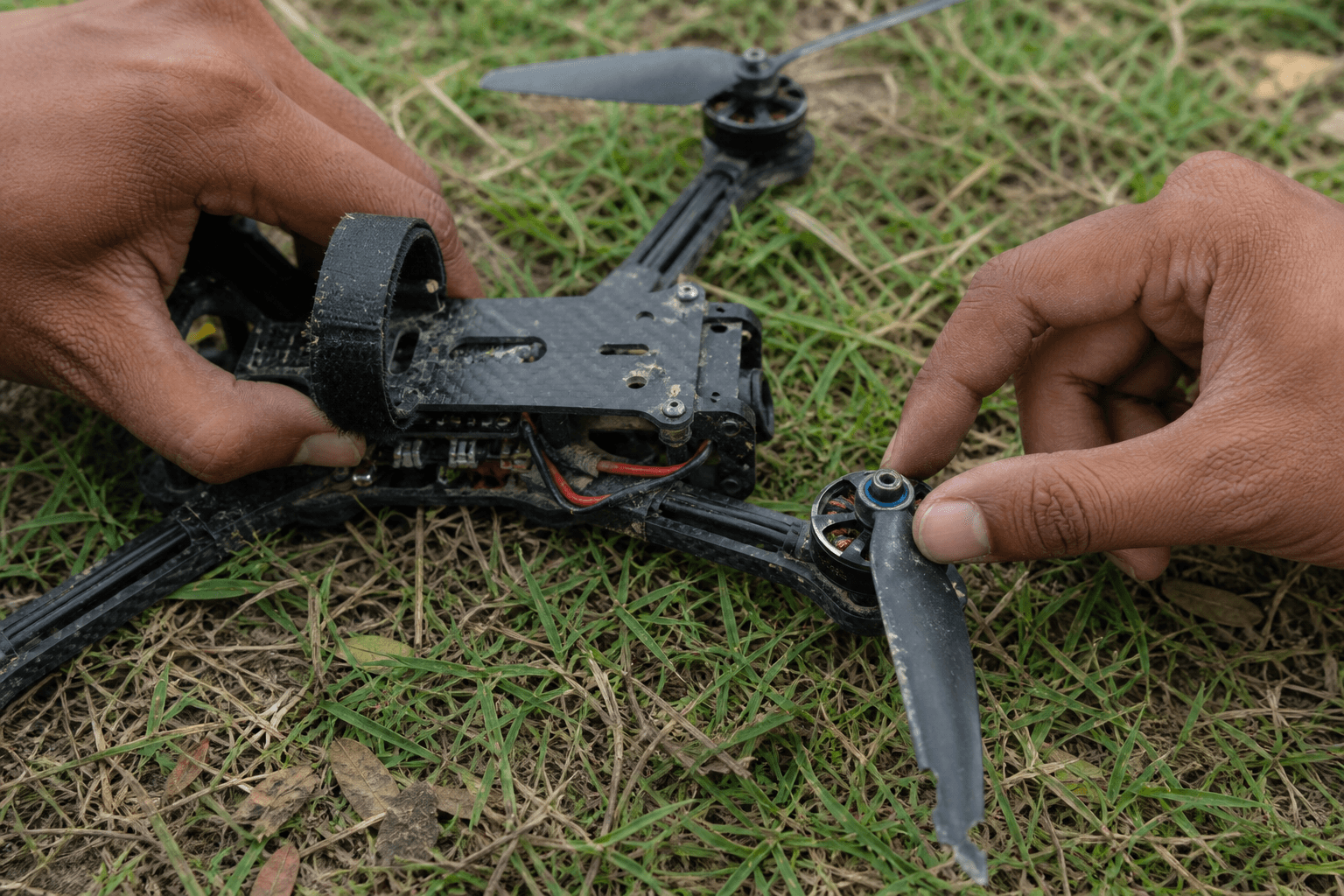
- Disarm and kill power if the quad is still twitching.
- Props off before you pick it up, bent blades cut fingers.
- Sniff test: sweet/hot electronics smell means stop; do not “one more arm.”
- Visual scan: cracked arm, vtx antenna snapped, camera dangling, battery puncture.
If the pack is puffy, torn, or warm and angry, retire it. See LiPo safety.
Adrenaline discipline
Your quad might be fine. Your finger might not be if you grab props first. Disarm, props off, then pick up. Teach spectators the same if they help retrieve.
Field fixes (usually worth it)
| Damage | Field fix? | Notes |
|---|---|---|
| Bent prop | ✅ | Swap blade; spin motor by hand after |
| Loose camera angle | ✅ | Re-tighten, check lens for cracks |
| vtx antenna bent | 🔶 | Straighten gently; replace if core exposed |
| Arm crack (hairline) | ⬜ | Tape for walk-back only, replace arm |
| Motor bell wobble | ⬜ | Bent shaft, bench later |
| Stack screw pulled out | 🔶 | Nylon standoff swap if you carry spares |
Carry props, zip ties, hex keys, and a multimeter in your field repair kit.
Prop swap nuance
Match rotation direction when swapping singles. Spin motor by hand after, grinding means bullet or bearing damage, not another prop.
vtx antenna triage
Gentle straighten if coax not kinked. If internal wire exposed at tip, replace antenna before re-arm. A vtx without load can burn, do not transmit into a snapped stub.
Bench-later list
- Motors that grind, stutter, or wobble when spun by hand
- ESC that smells hot after a hover test on the bench
- FC with lifted pads or cracked USB, soldering repair needs calm lighting
- Frame with delaminated carbon or multiple arm cracks
- RX / vtx with intermittent link after antenna stress
Carbon and structure
Hairline arm cracks are not field fixes except walk-back once. Read carbon splinters and stress cracks, flying a cracked arm is how stacks get buried.
Electrical bench signs
| Symptom | Likely cause |
|---|---|
| One motor stutters | ESC, motor, or bullet |
| All motors twitch | FC or power path |
| vtx no image after hit | Connector, vtx, camera ribbon |
| Link drops at certain angle | RX antenna or coax |
Power path inspection
Crashes stress connectors and pigtails. Before re-arm:
- XT60 fully seated?
- Pigtail solder joints at ESC moving?
- Battery strap twisted into props?
Connector damage often pairs with frame repair, fix power before tuning.
Hover test discipline
After any field repair:
1. Props on, battery out of bag
2. Arm on bench, motors spin correct direction
3. Short hover at knee height, listen for vibe
4. Check motor temps after 30 seconds
If something feels wrong in the first pack, land. Tuning will not fix a bent motor.
Hover test limits
Hover test confirms basic function, not airworthiness for bando. If hover vibe is new, bench before style returns.
When to retire the session
- Repeated same-arm breaks, frame may be done
- Electrical smell that returns after cooling
- Rain / mud inside the stack, dry fully before power
Session stop vs pack stop
One bent prop, swap, hover, continue maybe. Two electrical smells, session over. Mud in stack, dry 24 hours minimum per monsoon habits.
Triage after minor vs major hits
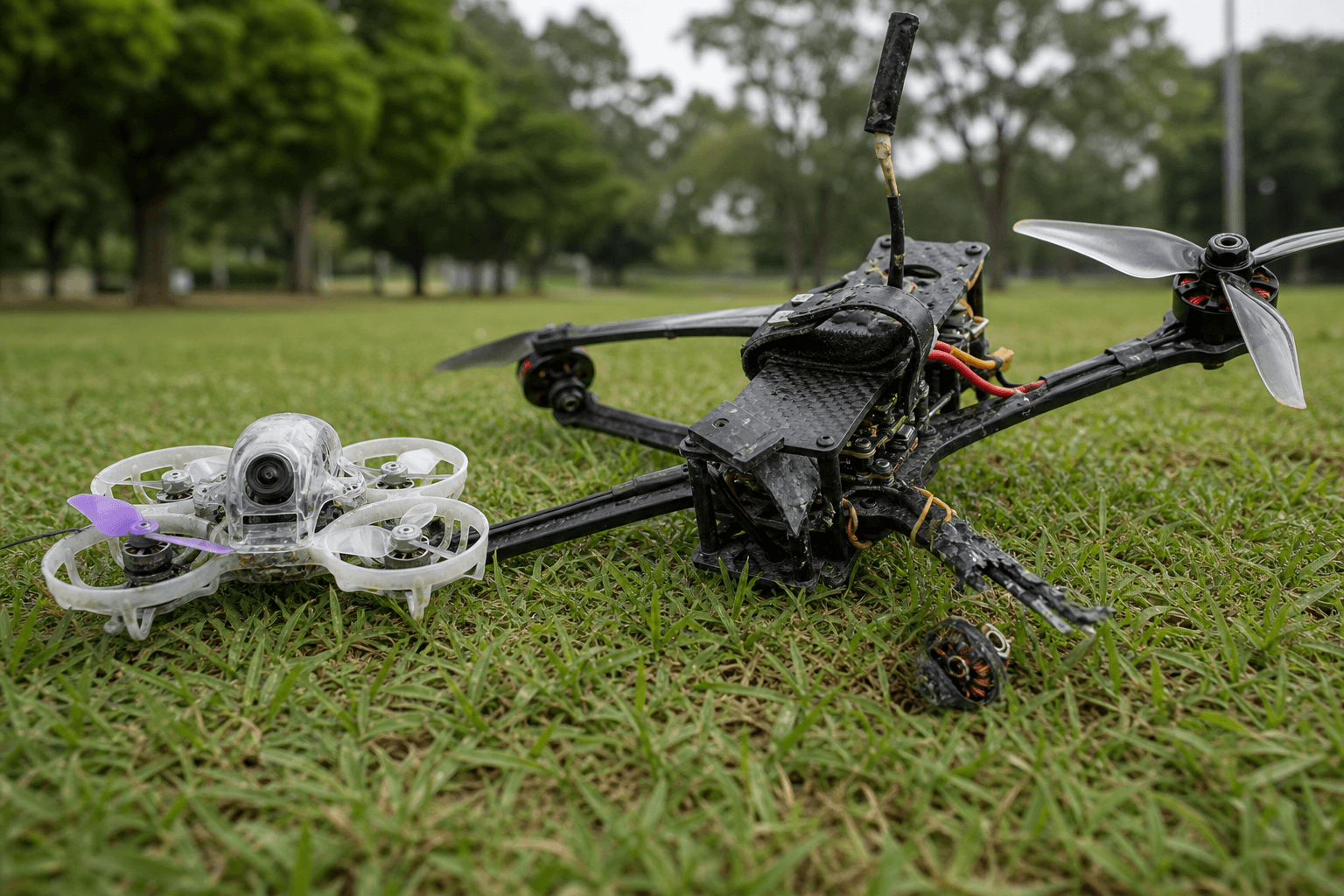
| Hit type | Typical safe path |
|---|---|
| Grass cartwheel | Props, inspect arms |
| Tree catch | Antenna, arms, motor bells |
| Concrete / metal | Retire session, full inspect |
| Battery puncture | Retire pack immediately |
Emotional triage
Adrenaline makes you re-arm too fast. Sit down, drink water, run the 30-second checklist. The quad can wait; fingers and spectators cannot be undone. Pilots who rush triage fly on cracked arms, then blame luck.
DVR and blackbox after crash
If the quad still flies, pull DVR before next arm if camera survived, impact footage shows which arm hit first. Blackbox optional but valuable for electrical hits that felt like "weird desync." Log file naming with date saves spring debugging.
Logging for next time
Note what broke: arm, motor, vtx, connector. Patterns reveal frame weak points and whether you need spares in bag. Crash repair is a skill. Log what broke, fix mechanicals before PID, and restock the bag before the next weekend.
India field notes
Hard sun on parked quads after repair, let ESCs cool before hover retest. Summer heat exaggerates marginal ESCs. Domestic spare arms in the car beat import wait, stock from the Bench during week.
When to stop and not "send it"
If you are debating whether the arm is fine, it is not fine enough for freestyle. Replace or bench. Social pressure to keep flying is how vtx fires happen.
Decision tree (field use)
Crash → disarm, props off, sniff test
├─ Battery damaged? → retire pack, inspect quad
├─ Sweet electrical smell? → session over, bench power path
├─ Bent prop only? → swap, hover test, maybe continue
├─ Arm crack visible? → walk-back or replace arm
├─ Motor grind by hand? → bench motor, do not hover hard
└─ All clear + hover clean? → easy pack, then normal flying
Log what broke, patterns over a season reveal frame weak points. If feel drifts over the next two packs after hover pass, run tuning after a crash before PID.
Field kit minimum
| Carry | Why |
|---|---|
| Spare props | First swap on any hit |
| Hex keys | Motor and camera bolts |
| Zip ties | Temporary vtx or arm hold |
| Multimeter | vtx coax continuity when image dies |
No props in the bag means triage ends at carry-to-car, valid, but plan shorter sessions.
Bench
- Propulsion / 5" Prop, first field swap after any hit
- Airframe / 5" Freestyle, arms when hairlines show
- the Bench, vtx antennas and consumables
See also
- Building a field repair kit, what to carry for real field days
- Soldering ESCs and pads without lifting traces, bench repairs after a bad hit
- Connector guide: XT60, XT30, PH2.0, BT2.0, power joints that fail in crashes
Discussion
Comments aren't open on this post yet. Share it with your build group, or start a thread on X.