
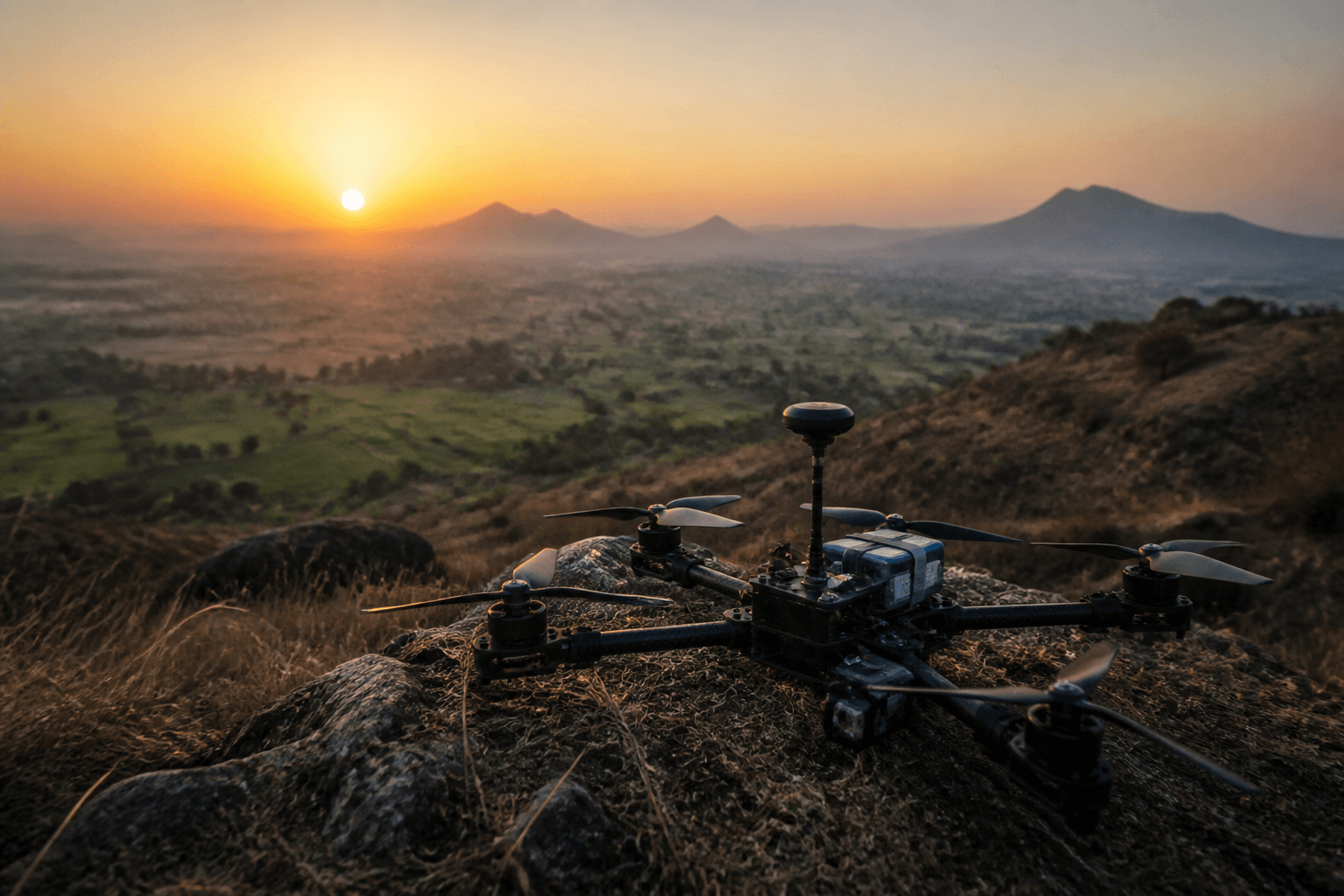
Building a long-range 7" explorer

7-inch explorers trade freestyle snap for efficiency, stability, and minutes in the air, if you respect prop disc physics and link budget. A 7-inch is not a scaled-up 5-inch freestyle quad. It is a system design problem where prop efficiency, antenna placement, and battery chemistry matter more than acro rates.
Design priorities
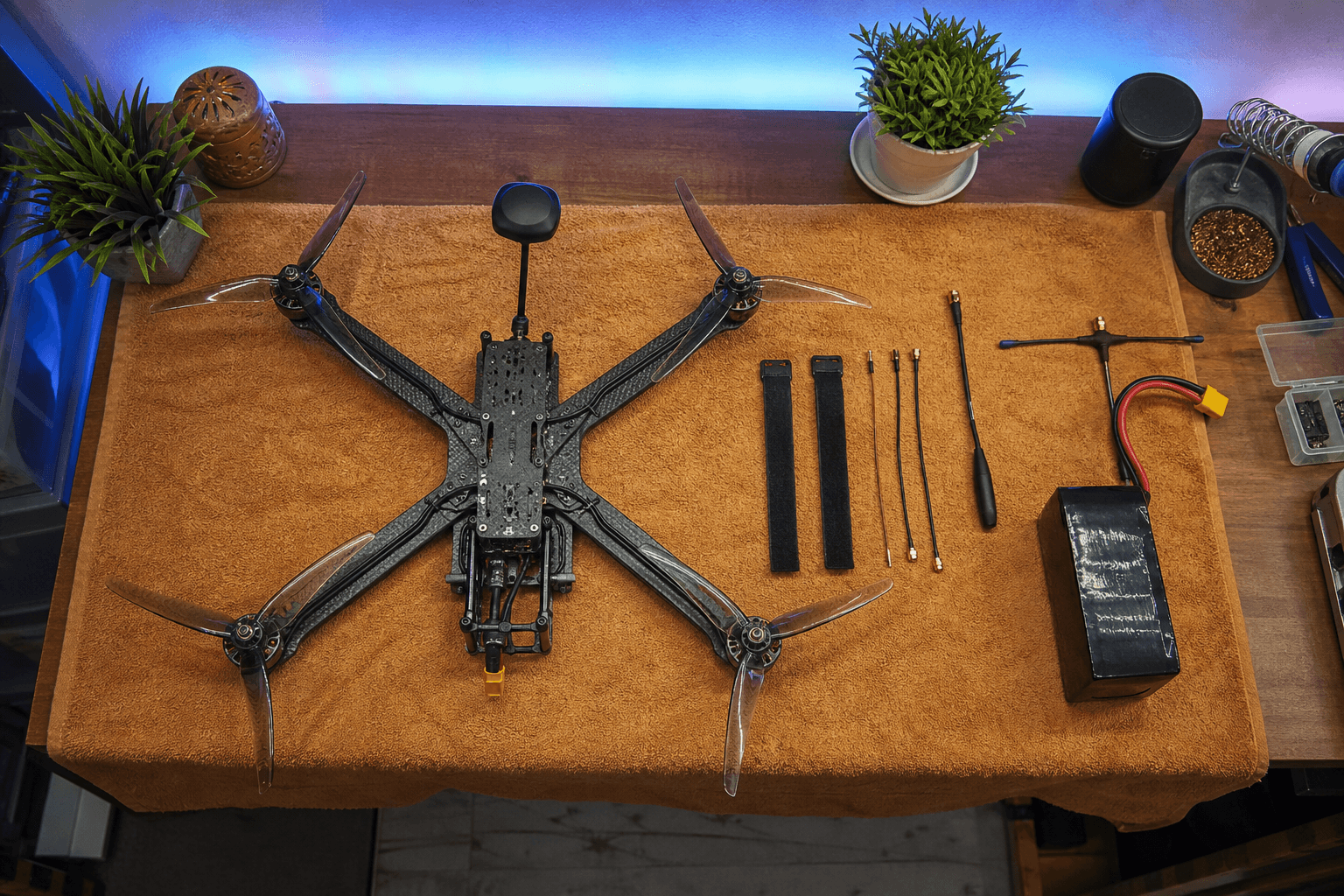
| Priority | Why |
|---|---|
| Efficient props | Lower amp draw = smaller ESC heat, longer flight |
| RX + vtx placement | Long coax runs hurt; keep antennas clear of carbon |
| GPS / compass | Optional but common for return paths |
| Battery | Li-ion or large LiPo, see Li-ion rules |
All-up weight budget
7-inch builds swing from 600 g lean explorers to 1.2 kg+ cinematic rigs. Weight drives motor choice, prop pitch, and whether your ESC stays cool on sustained cruise throttle. Weigh the bare frame with vtx and GPS before picking motors, guessing leads to pinned throttle or overheating ESCs.
Frame geometry
Longer arms mean more flex unless the frame is engineered stiff. Look for:
- 7–8 mm arms on heavy builds
- Top and bottom plate stiffness for stack protection
- Battery tray suited to your pack size (Li-ion packs are long)
- Antenna and GPS mast mounting without coax stress
Motors and KV
Lower KV, larger stator, lighter disc load than freestyle 5-inch. Copy community 7-inch long-range recipes for your cell count, do not port 5-inch motor tables blindly.
Cell count and KV pairing
| Typical setup | Notes |
|---|---|
| 6S + low KV 7" motors | Common long-range recipe |
| 4S + moderate KV | Lighter builds, lower top speed |
| High KV 5" motors on 7" | Usually wrong, heat and efficiency loss |
Use motor KV math with cruise amp draw as the metric, not peak punch. You want headroom at 40–60% throttle, not max throttle hover.
ESC and cooling
Long flights hold moderate current for minutes. ESCs that survive 5-second freestyle bursts may still overheat on summer cruise in India. Adequate airflow, honest current rating, and filter tuning in heat matter.
Props and efficiency
Long-range props favour lower pitch and lighter disc loading than freestyle 5-inch triblades. Buy two profiles, efficient cruise and slightly more aggressive, and log flight time per pack.
Common mistake: Putting freestyle 5-inch props on 7-inch arms because they were in the bag. Efficiency tanks and motors run hot.
Link and antennas
900 MHz ELRS often gets discussion for open terrain; 2.4 can work with clean install. Antenna placement beats module power, HD/antenna hygiene applies to RX too.
RX install rules
- Keep RX antennas away from carbon, use side mounts or standoffs
- Minimize coax length, long runs add loss
- Do not zip-tie antennas against Li-ion packs
- Test link walking before you commit to a long crossing
For open-field India flying, verify local rules and spot permissions before range tests, DGCA awareness.
GPS and navigation
Many explorers run GPS for rescue or iNav. Hardware install follows GPS module basics. On 7-inch, mast placement is easier than 5-inch, use that advantage for clean sky view.
If missions matter more than freestyle backup, consider iNav for wings and cruisers from the start.
Build workflow
7-inch explorer build order:
1. Frame + motor mount pattern confirmed
2. Stack dry-fit, vtx, GPS, RX antenna paths
3. Motors + ESC, rated for sustained cruise amps
4. Props, efficient set first, log watt-hours
5. Battery, Li-ion or LiPo per flight time goal
6. Failsafe + GPS rescue tested open field
7. Link walk test before distance ambition
Follow first 10 flights discipline, a heavy 7-inch on first hover demands respect.
India
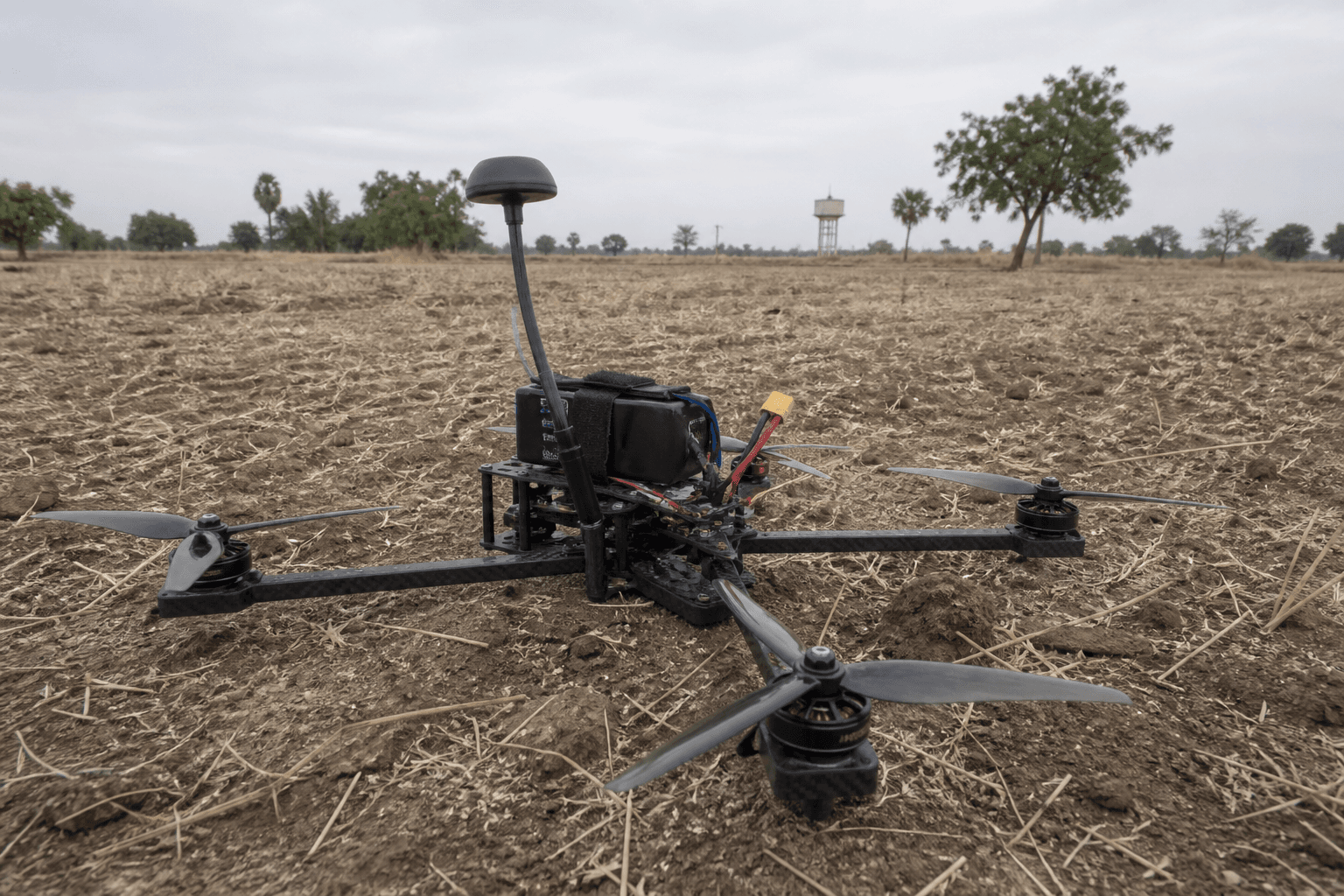
Long-range spots may intersect DGCA awareness, fly open land with permission, not random highway pulls.
Practical India notes
- Import timelines hurt on 7-inch niche frames, domestic vs import matters for arms
- Summer heat reduces Li-ion and LiPo performance, shade packs, watch voltage sag
- Monsoon ends many open-field seasons, use the pause for off-season maintenance (bench work, not winter-specific)
Crash and repair
7-inch crashes are expensive. Carbon arms, long props, and GPS masts transfer energy. Carry a field repair kit with arms sized for this frame, not your 5-inch bag. Crash triage, hairline arm cracks are retire-before-freestyle items.
VTX and video for explorers
Long flights mean you watch signal quality for minutes, not seconds. vtx overheat on cruise throttle is real on sealed canopies, airflow matters. Analog long-range often pairs with efficient vtx and sensible antenna gain; HD adds weight and heat budget. Antenna placement is not optional on 7-inch coax runs.
Carrying gear to the field
Seven-inch kits are bulky. A dedicated bag with battery fire pouch, tool roll, and spare arms beats improvising. Field repair kit scaled for 7-inch, longer props, larger arms, GPS mast spares.
When to stop building and start flying
If you are iterating motor-prop pairs without logging flight time per pack, you are decorating. Pick efficient props, confirm cool motors at cruise, verify link, then fly distance modestly. Range ambition grows with data, not forum screenshots.
Maiden day checklist (7-inch)
Open field only, no distance ambition day one:
□ [First 10 flights](/blog/first-10-flights-after-a-new-build) discipline, heavy quad
□ GPS home set if installed, [GPS basics](/blog/gps-module-install-return-to-home-basics)
□ Failsafe tested low, [failsafe scenarios](/blog/failsafe-scenarios-drop-land-gps-rescue)
□ Link walk test full planned path at 10 m height
□ Li-ion or LiPo, know sag profile, [Li-ion rules](/blog/li-ion-packs-for-long-range)
□ Spare arms and long props in bag, [field kit](/blog/building-a-field-repair-kit)| Milestone | Pass criteria |
|---|---|
| Hover | Equal motor heat, no weird vibe |
| Cruise 3 min | ESC cool enough to touch, voltage stable |
| Link walk | LQ acceptable at farthest planned point |
| GPS rescue | Tested once open sky, not first use over trees |
| Distance day | Only after above, add distance in increments |
Common 7-inch build mistakes
| Mistake | Fix |
|---|---|
| 5" motor table on 7" arms | Use community 7" recipes |
| Freestyle props for efficiency | Buy cruise profile, log minutes |
| Long coax run for clean aesthetics | Shorter run, side mount RX |
| GPS under stack plate | Mast with sky view |
| Skipping weight on scale | CG wrong, remount battery |
Seven-inch crashes cost more than 5-inch bumps. Inspect carbon after every hard hit, stress cracks end long-range days early.
Bench
- the Bench, 7" frames, larger stator motors (e.g. 2408–2812 class), and 7" cruise props, not 5" freestyle part numbers
Discussion
Comments aren't open on this post yet. Share it with your build group, or start a thread on X.