
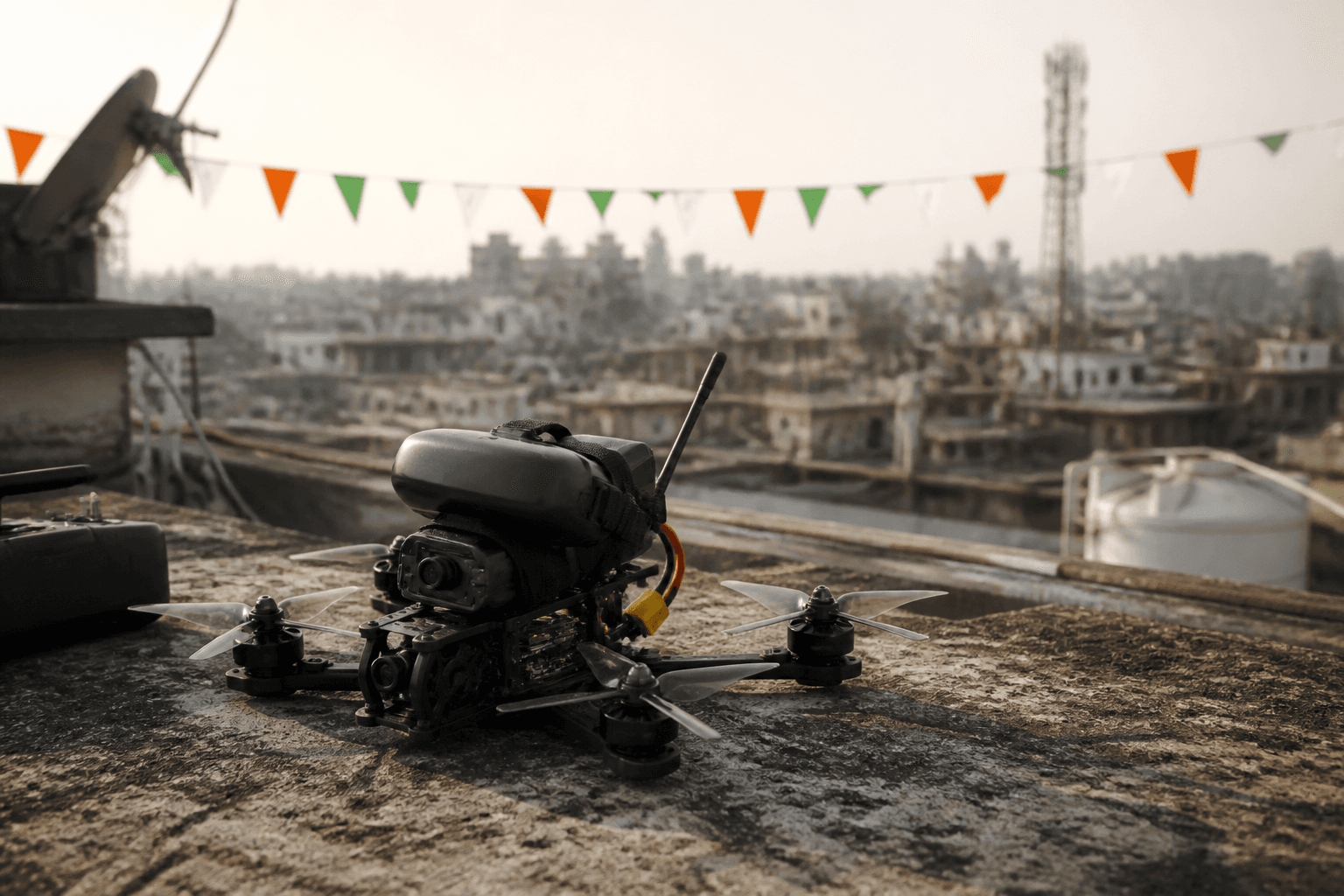
DGCA and drone rules pilots should know

This is not legal advice. Rules change, enforcement varies by state and venue, and FPV toy-class quads sit in a gray zone next to commercial and nano categories. Use this as a map to official sources, not permission to fly anywhere.
When in doubt, fly at organized club fields with landowner permission, not because clubs are magically exempt, but because predictable sites beat rooftop guesswork.
Why hobby FPV pilots should care
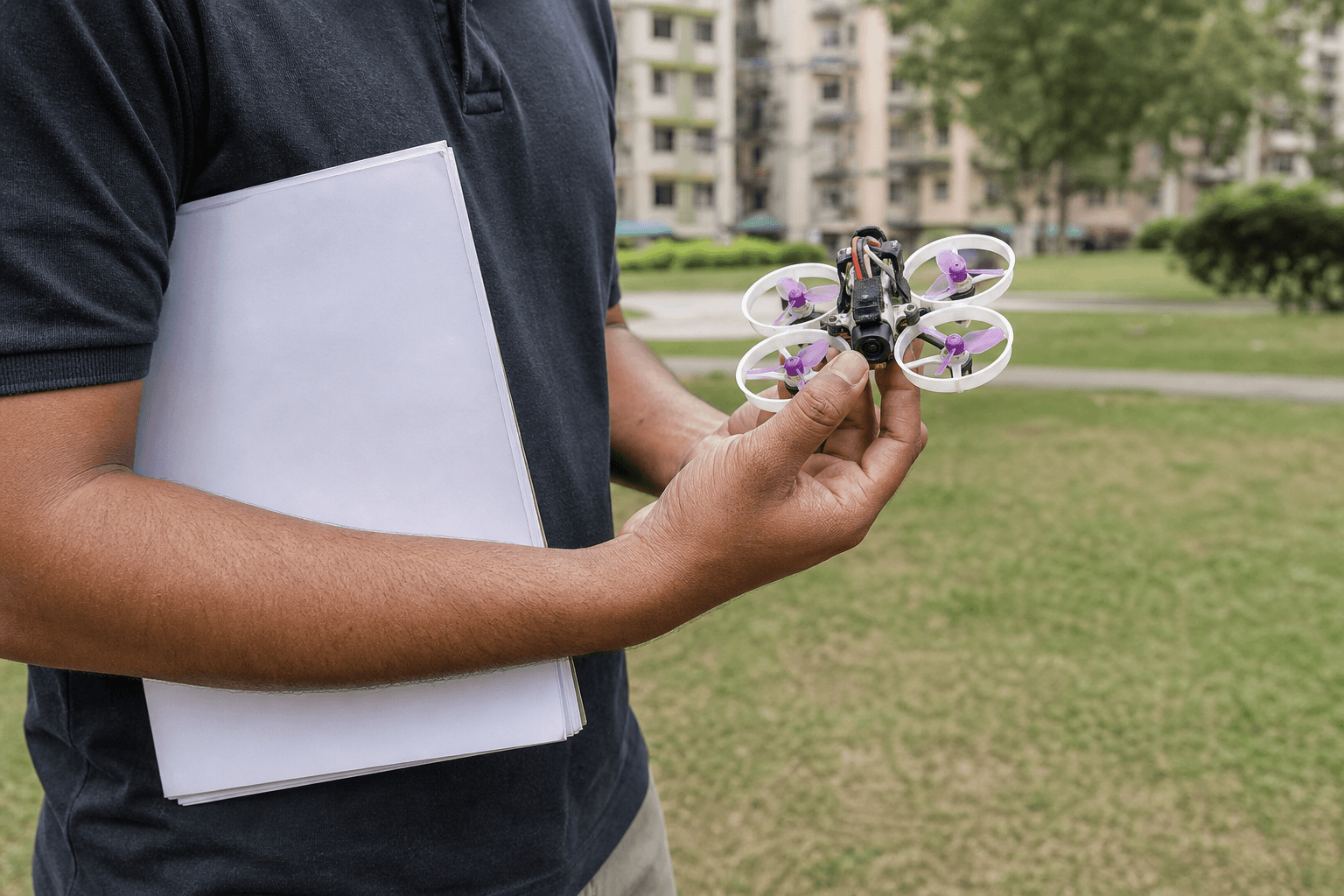
India's drone framework (under DGCA: Directorate General of Civil Aviation) covers registration, no-fly zones, operator categories, remote pilot requirements, and type certification for certain classes of operations. Even if your 5-inch feels like a toy, location, weight class, and whether money changes hands matter more than forum opinions.
Enforcement stories range from “nobody cared at the farm” to “security stopped a terrace flight.” Plan for the stricter outcome.
Official starting points (verify current versions yourself):
- DGCA drone section, portal home
- Digital Sky platform, registration, airspace maps, and permission workflows where applicable
- eGCA: pilot certification and UIN workflows (consolidated with several DGCA processes in recent years)
- Published civil aviation requirements (CAR) for unmanned aircraft, read the actual PDFs, not screenshots in chat
Bookmark the portal; re-read yearly. WhatsApp forwards age badly.
Concepts that show up in pilot discussions
| Topic | Hobby pilot takeaway |
|---|---|
| Registration | Thresholds by weight and use case change, read current CAR; do not assume all whoops are invisible |
| No-fly / red zones | Airports, sensitive areas, apps and maps exist; assume restrictions near military and airport corridors |
| NPNT | “No permission, no takeoff” on Digital Sky: applies to registered / type-approved drones sold for compliant ops; typical DIY Betaflight builds are not NPNT hardware, still read airspace rules |
| Visual line of sight | Many frameworks assume VLOS; FPV goggles change how you see, not how regulators classify risk |
| Commercial work | Paid shoots need a different compliance path than backyard whoops |
| Import / serial records | Overlaps with invoices, buying checklist |
Weight categories (Drone Rules 2021: verify current CAR)
Indian rules classify drones by maximum all-up weight (quad + battery + payload). Categories are not the same as “toy” vs “pro” in hobby chat: weight on the scale is what matters.
| Category | Weight (typical) | Hobby takeaway (not legal advice) |
|---|---|---|
| Nano | ≤ 250 g | Lightest tier, most 1S whoops land here; many 5-inch freestyle builds do not |
| Micro | 250 g – 2 kg | Typical 5-inch HD / freestyle range, registration and Digital Sky workflows often apply |
| Small+ | 2 kg+ | Uncommon for FPV freestyle; stricter pilot/ops rules |
FPV reality: a naked 5-inch with 4S/6S and GoPro-class weight usually exceeds 250 g. Do not assume “hobby FPV” automatically equals nano exemption, read current rules for your all-up weight and use case.
Pilots debate whether a sub-250 g whoop is “exempt.” Exempt from what is the question, UIN registration, pilot certificate, NPNT permissions, and where you fly are separate layers. A light quad on a terrace near an airport is still a bad idea even if registration is unclear.
Hobby heuristic (not legal): lighter, slower, open land, no payment, no crowds, fewer eyebrows. Heavier, HD, urban, paid, move toward formal compliance research.
No-fly awareness (practical)
Before traveling to a new field:
□ Check airport proximity on map
□ Ask local pilots about police / security habits
□ Note festival / VIP visit days, ad hoc restrictions
□ Avoid government compounds, refineries, stadium events
□ Do not fly over crowds, regulation and morality align
Apps and Digital Sky maps help; local knowledge from FPV communities fills gaps.
FPV-specific wrinkles
| Practice | Regulatory lens (general) |
|---|---|
| Goggles only | VLOS debates, spotter culture helps safety and perception |
| Long range | Beyond visual line of sight rules may apply in commercial world |
| Night flying | Often restricted for certified ops; hobby night = extra risk |
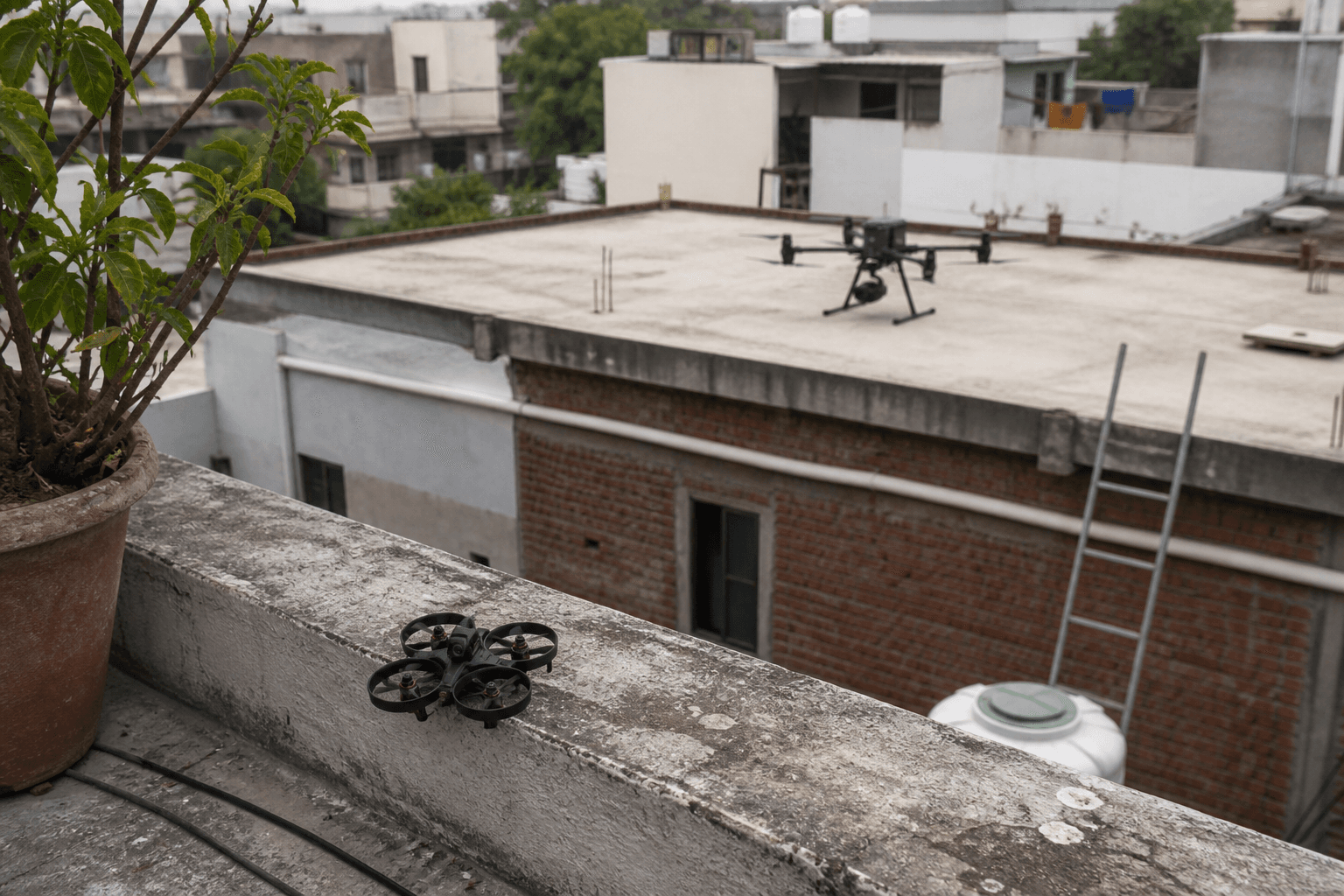
| Terrace urban | Property + privacy + local police, not just DGCA |
Read apartment and terrace context alongside DGCA, society bylaws can stop you even when weight is small.
Commercial vs hobby (bright line)
| Hobby | Commercial |
|---|---|
| No payment | Payment or value exchange |
| Personal practice | Client deliverable |
| Your risk | Client may ask for certificates |
Wedding clips, real-estate reels, and paid lessons are not hobby because the quad is small. Research operator categories and insurance separately, insurance orientation.
Practical habits (compliance-friendly)
- Fly at approved club fields or open private land with owner permission
- Avoid airports, crowds, and government installations: obvious, still violated weekly
- Do not assume terrace flight is fine because the quad is small
- Keep invoice / serial records for gear, warranty documentation
- Brief spectators on boundaries, kids and pets
- Charge batteries safely, fire draws authority attention fast, LiPo safety
Club field first flight:
□ Who owns the land?
□ Club rules posted?
□ Emergency contact?
□ Where not to fly on property (roads, crowd lines)
When someone in uniform asks
Stay calm. Land. Do not argue specs.
"I am hobby flying with [club / owner permission] at [location].
Happy to land and show registration if required."
Carrying printed club permission or society email helps de-escalation. Arguing “it's just 1S” rarely helps.
What this post does not do
- Interpret law for your specific city or building
- Replace a lawyer for commercial operations
- Stay current automatically: re-read DGCA notices yearly
- Tell you NPNT applies or does not to your exact quad, read CAR
Bottom line
Regulations feel heavy when you want a quick terrace hover. They feel lighter when you pick legal sites, fly small over empty ground, and keep commercial work out of hobby gear. Organized flying is easier to defend than random rooftop hops.
Common misconceptions (forum vs reality)
| Myth | Reality check |
|---|---|
| "Sub-250 g = fly anywhere" | Location, privacy, and society rules still apply |
| "FPV goggles = exempt from VLOS debates" | Regulators care about risk, not how you see |
| "Club field = automatically legal" | Landowner permission and local police habits matter |
| "Hobby = no registration ever" | Read current CAR for your weight and use case |
| "Import gear = no records needed" | Invoices help if gear or flight is questioned |
Annual compliance hygiene (15 min):
□ Re-open DGCA portal, any new notices?
□ Check Digital Sky if you registered anything
□ Review club permission status
□ File serial photos with invoices, [buying checklist](/blog/buying-fpv-gear-in-india-checklist-for-pilots)
□ Confirm commercial work stays off hobby gear
Paid work bright line (repeat because it matters)
Wedding B-roll, real-estate reels, and paid lessons trigger a different compliance path than backyard whoops, even on the same quad. If money or deliverables change hands, stop assuming hobby rules cover you. Research operator categories, insurance, and client expectations separately, insurance orientation.
When uniformed staff ask questions, land first, talk second. Calm beats spec sheets every time.
See also
- Flying in apartments and terraces in India, noise, society rules, neighbors
- Insurance and liability for hobby pilots, what policies may or may not cover
- Buying FPV gear in India, invoices and domestic purchasing
Discussion
Comments aren't open on this post yet. Share it with your build group, or start a thread on X.