
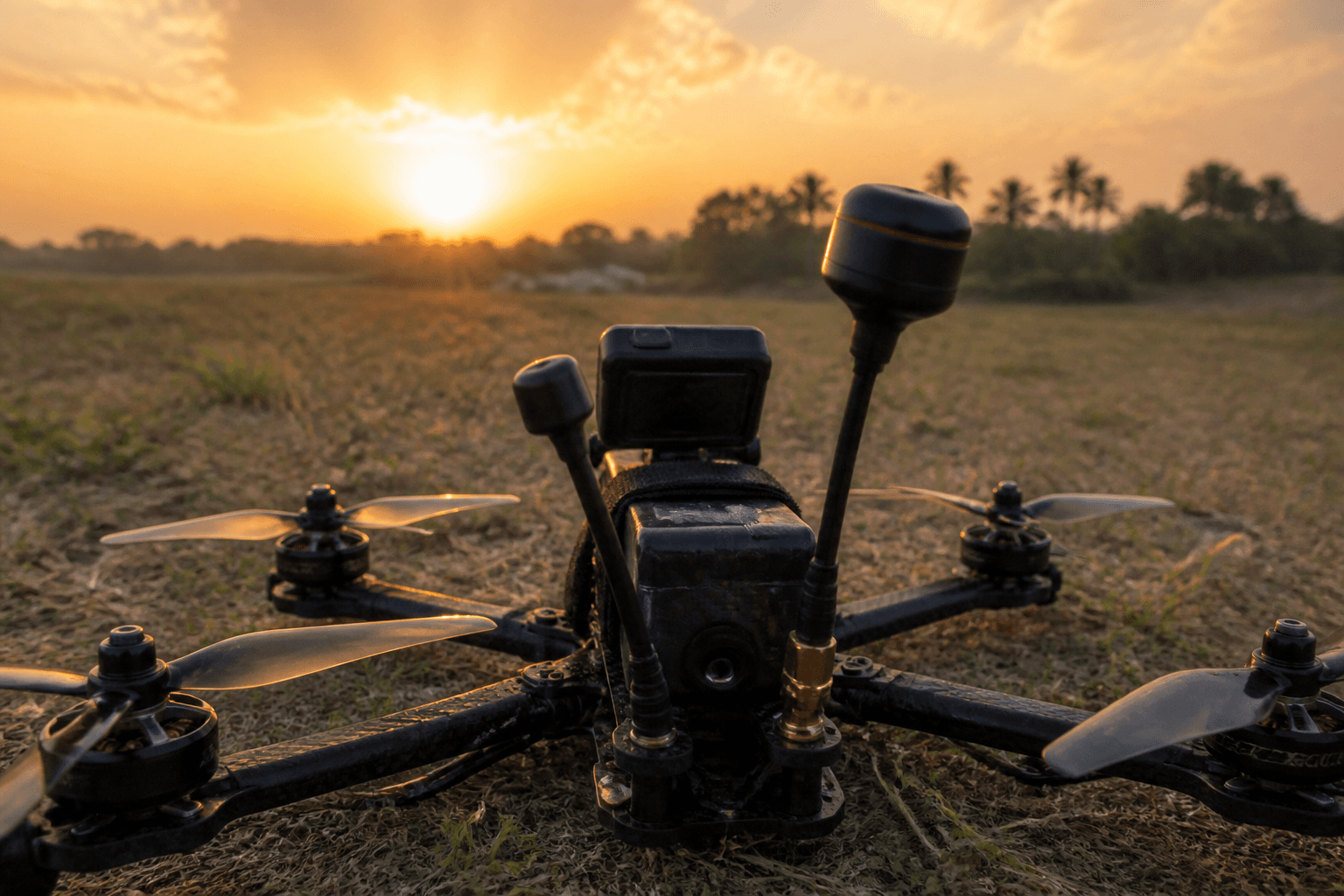
Antenna placement for HD and analog

Antennas are passive until they are not: bent pigtails and carbon shadowing kill range faster than vtx wattage fixes. Video link and control link share the same physics: orientation, clearance, and mechanical strain matter more than forum debates about brands.
Treat antennas as consumables in crash-heavy classes. A five-minute swap beats a whole afternoon wondering why range died after a medium tumble. For control-link hygiene on ELRS, see ELRS link budget and setup checklist. For vtx channel culture on analog, see analog VTx tables and power in India.
Quad vtx placement
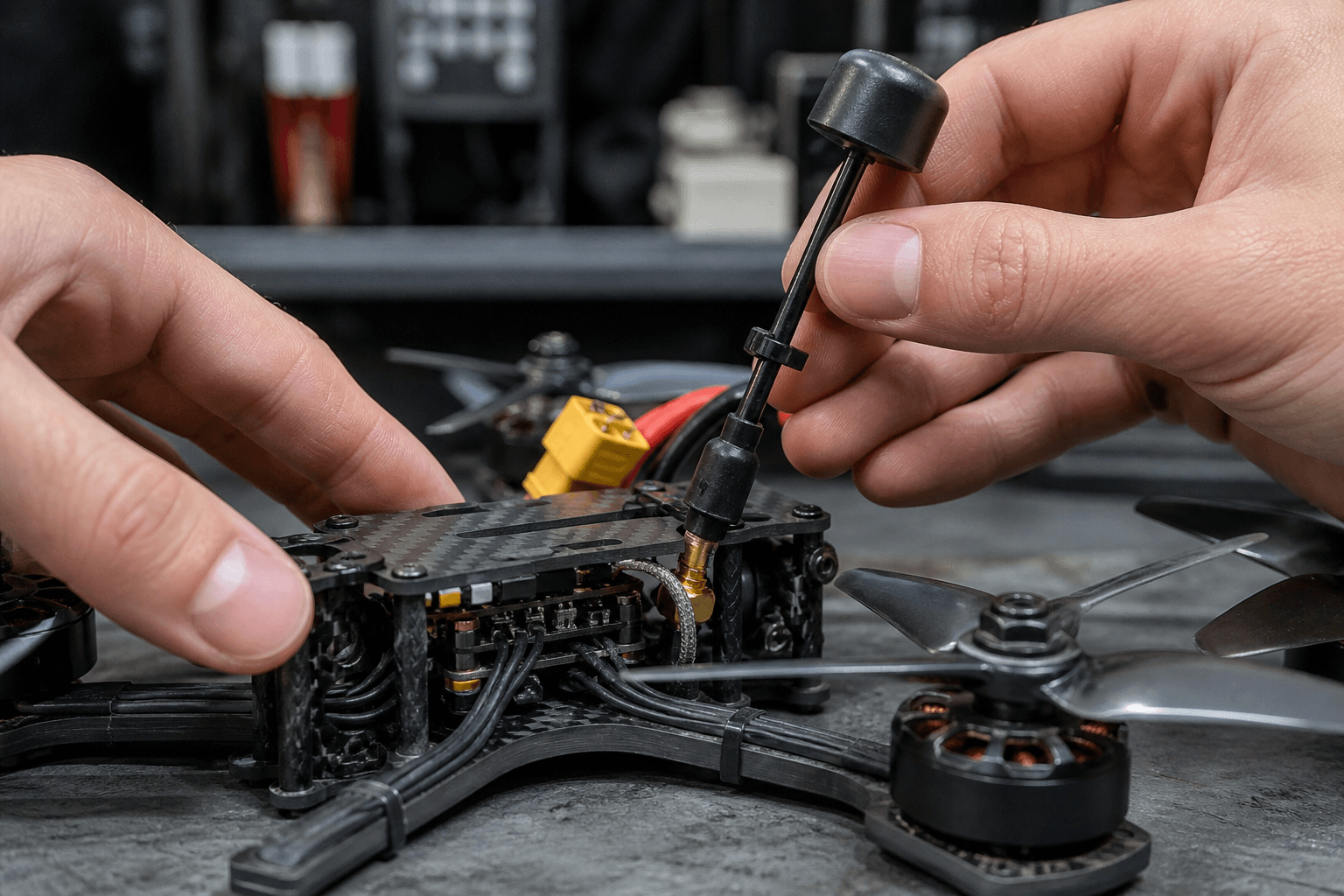
The vtx antenna wants clear space and a stable mechanical path to the outside world.
Rules of thumb:
- Clear carbon: carbon conducts and shadows RF. Mount with standoff extension if the vtx sits under a plate.
- U.fl connections: rated for limited mate cycles, strain relief mandatory. Route pigtail so frame flex does not tug the connector.
- Analog RHCP/LHCP must match goggle antennas, mixed polarization looks like "bad vtx."
- HD vtx boards often need airflow, Indian summer heat softens pigtail glue and vtx pads; see summer heat habits.
| Mount style | Pros | Watch for |
|---|---|---|
| SMA stub upright | Simple, replaceable | Snags on landing; bend = silent range loss |
| TPU mount / tilt | Crash isolation | Heavy mounts oscillate |
| Frame-integrated vtx | Clean build | Harder to swap; heat under plate |
Common mistake: vtx antenna parallel to a carbon arm: classic shadowing. If range improves when you yaw 90°, suspect placement before power.
Goggle diversity
Two receiver antennas help when you turn your head, but only if both see the sky and neither stabs your face. Goggle fit matters for antenna aim: slim sets with tight IPD sometimes force antenna angles that work on bench and fail when you tuck your chin in a split-S.
Field habits:
- Adjust goggle antennas once per session, they migrate in bags.
- If one antenna is removable, carry a spare in field repair kit Tier 2.
- Wipe sweat off connectors in humidity, monsoon storage applies to face foam too.
Pigtail failures: the wiggle test
Intermittent static when vtx heats? Wiggle test cold vs hot:
- Hover at low altitude with known-good channel
- Gently flex pigtail near u.fl while hovering (briefly, over safe ground)
- If video snaps when flexed, replace pigtail before replacing entire vtx
Pigtails die from vibe, heat, and one too many crash compressions. HD boards with integrated fragile pigtails are a common post-crash repair, stock one if you fly bando.
RX antenna on the stack (control link)
Video is only half the link. ELRS or Crossfire RX antennas on the stack need the same discipline:
- Keep vtx coax away from RX pigtail, cross-talk causes mysterious failsafes
- Do not zip-tie RX antenna to vtx antenna "for neatness"
- After crash repair triage, verify both video and RX antennas before the confidence pack
See receiver UART vs SPI for placement differences on whoops vs 5-inch stacks.
HD vs analog antenna notes
| System | Antenna note |
|---|---|
| Analog 5.8 | Polarization match; cheap stubs fail in crashes |
| DJI O3/O4 | Use vendor-approved stubs; camera/vtx combo mounts vary |
| Walksnail | Module-specific; confirm vtx antenna before field day |
| HDZero | Board size dictates stub; whoop vs 5" not interchangeable |
Digital stacks are less forgiving of "close enough" 5.8 GHz leftovers from an analog bin. Buy the stub the vendor documents.
Setup checklist (new build or post-crash)
□ Vtx antenna has full rotation on SMA, no wobble from stripped threads
□ U.fl clicked, gentle tug does not pop off
□ Pigtail strain relief zip-tied to frame, not to vtx coax mid-span
□ RX antenna exits frame with clearance from props
□ Goggle antennas tightened; diversity angles not parallel to ground only
□ Bench test walk-behind before bando
India field realities
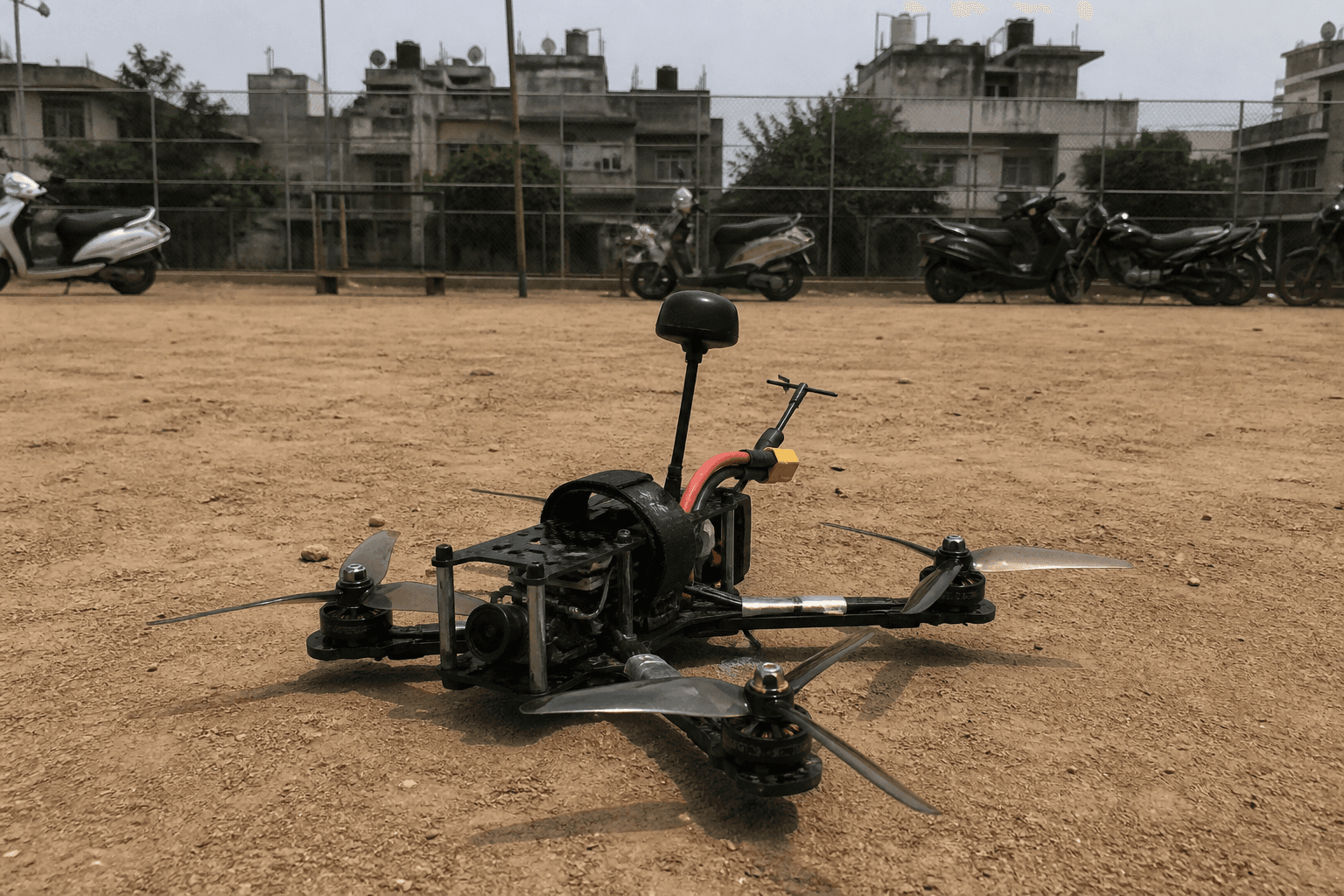
Urban multipath, terraces, concrete, metal railings, punishes marginal installs harder than open club grass. 2.4 GHz vs 900 MHz is control link, but video multipath behaves similarly: fix mechanicals before blaming the city.
Dust during dry season: grit in SMA threads causes poor ground, wipe before screwing stub. Monsoon: water in SMA connections looks like vtx death until you dry and reseat.
Ecosystem spares
When choosing HD, antenna standards tie to Walksnail vs HDZero vs DJI O3, stock stubs that match your stack, not "whatever the shop had."
Link budget starts at antenna, milliwatts are the last knob, not the first.
Post-crash antenna triage
After any tumble that touches the antenna:
- Visually straighten stub, if it does not spring back, replace
- Check SMA washer crushed or cross-threaded
- Spin prop by hand, antenna tip should clear by margin
- Bench range walk before sending a confidence pack into bando
Skipping step four is how pilots blame vtx firmware for a bent ₹200 stub.
Long-range and 7-inch note
Larger frames tempt pilots to mount vtx antennas low for aesthetics. Low mount plus bank angle equals carbon shadow at the worst moment. Long-range builds often carry redundant control link margin, video does not get the same forgiveness. If you fly 7-inch explorers, treat vtx antenna height as seriously as motor size.
Pre-session antenna workflow (60 seconds)
Before first pack:
1. Goggle antennas, tight, angled, not folded on strap
2. Quad stub, straight, SMA seated, no wobble
3. RX antenna, vertical-ish, clear of props
4. Quick spin, prop clearance at full tilt
5. Known channel / HD link check on bench| Symptom in flight | Likely mechanical cause |
|---|---|
| Static when yawing one direction | Carbon shadow, remount vtx |
| Good close, bad at same spot | Multipath + bent stub |
| Video dies when vtx hot | Pigtail u.fl, wiggle test |
| Control failsafe, video OK | RX pigtail near vtx coax |
Spares worth carrying
Stock one vtx stub and one RX antenna in field kit Tier 2 if you fly bando or travel far from shops. ₹200 stub beats a wasted afternoon blaming firmware. HD stacks need vendor-correct stubs, ecosystem guide.
Monsoon note: dry SMA threads before every session, moisture looks like vtx death until you reseat the stub. Keep a dry microfiber in your bag next to the spare.
Discussion
Comments aren't open on this post yet. Share it with your build group, or start a thread on X.