
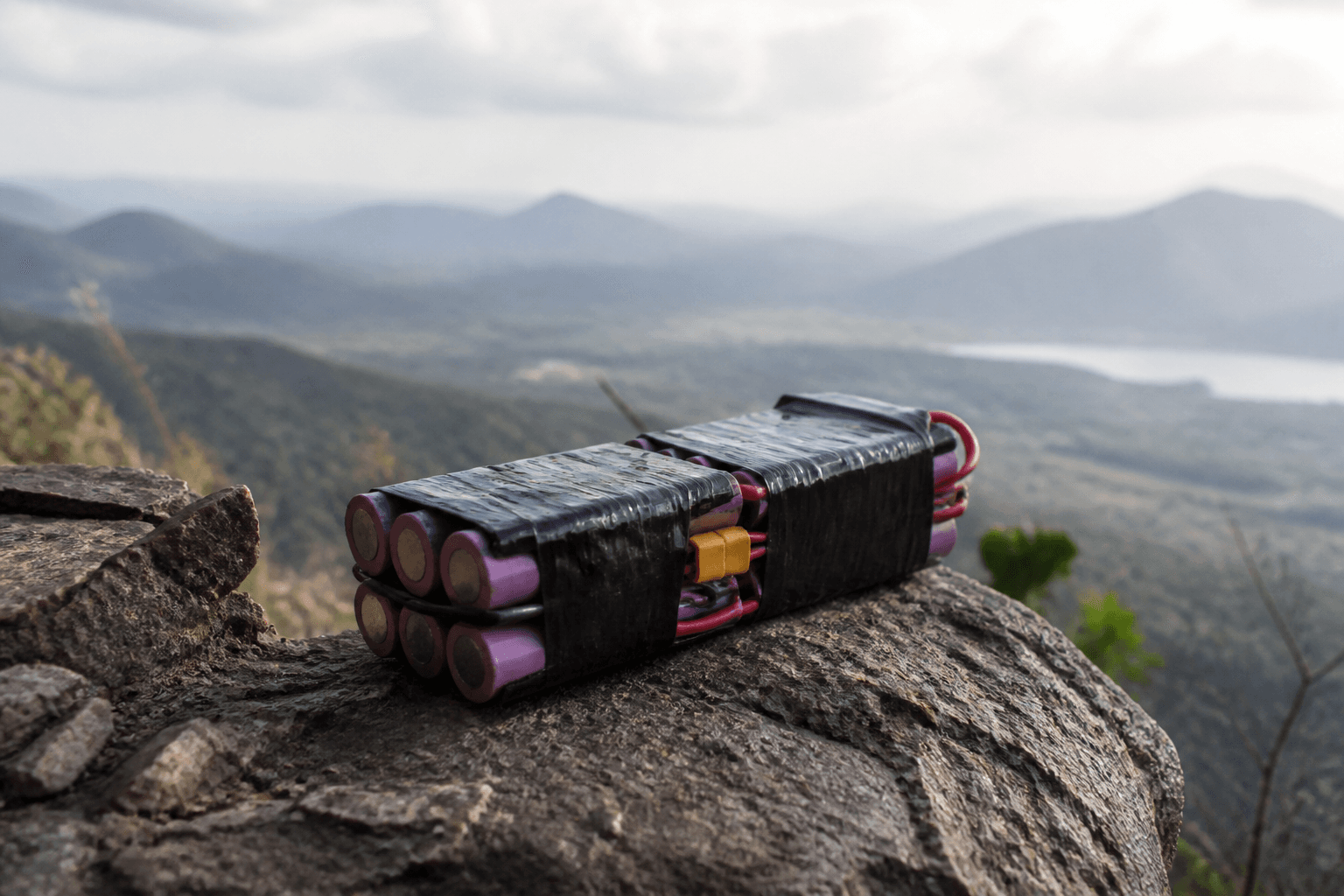
Li-ion packs for long-range

Li-ion packs (often 18650 or 21700 cells in a welded pack) trade burst current for energy density and longer cruise. They are the right tool for 7-inch explorers and efficient cruisers; they are the wrong tool for aggressive 5-inch freestyle where punch-outs demand amps Li-ion does not like to deliver.
Confusing Li-ion with LiPo charging assumptions is how pilots damage cells or get disappointed with sag on the first climb.
Li-ion vs LiPo (honest comparison)
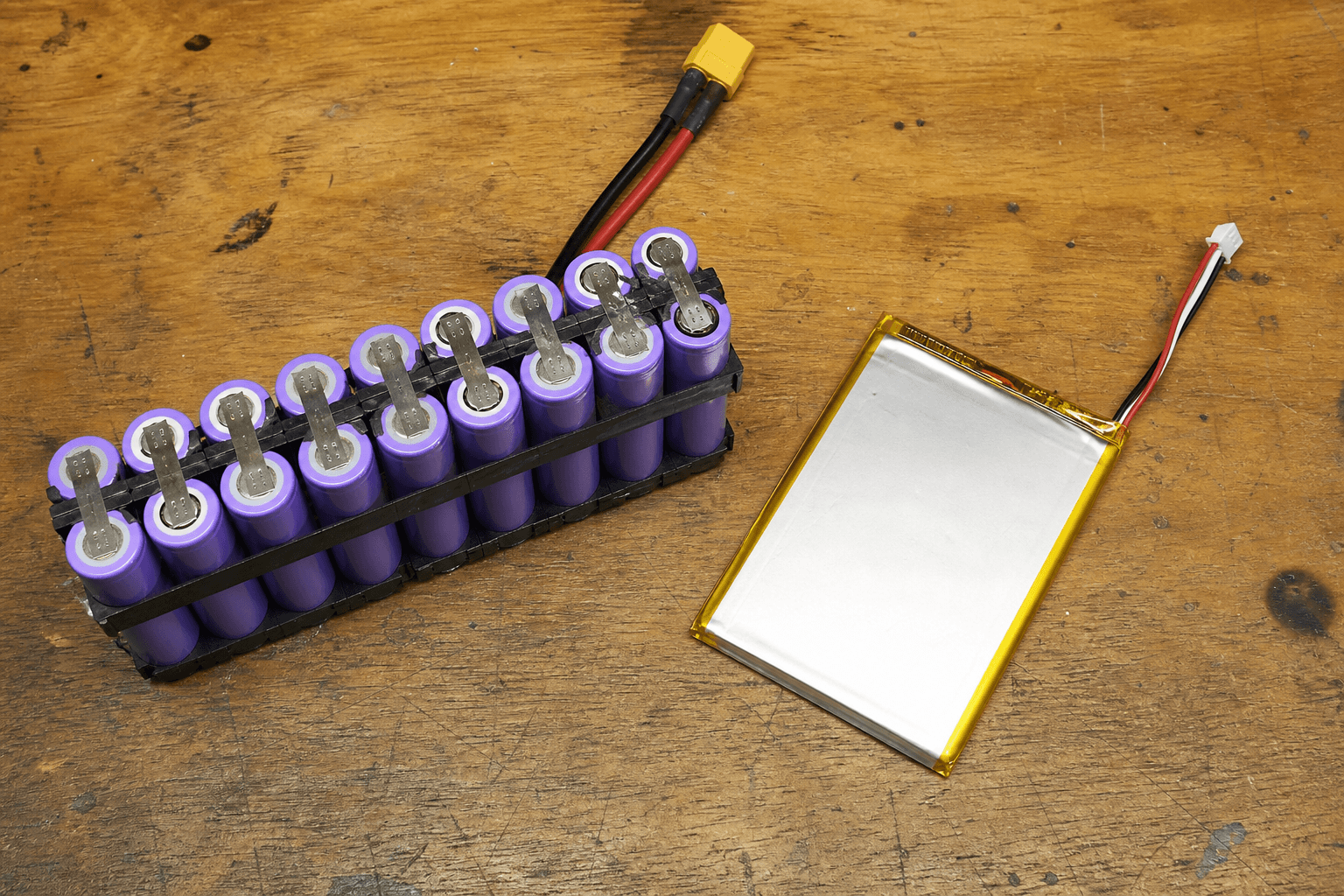
| Factor | LiPo (hobby pack) | Li-ion (welded pack) |
|---|---|---|
| Burst current | High, built for FPV punches | Lower, cruise-oriented |
| Energy density | Good | Often better per gram for long flights |
| Cell format | Pouch | Cylindrical (usually) |
| Crash tolerance | Poor, pouch damage | Still serious, dented cell = retire |
| Charger profile | LiPo balance | Li-ion / LiPo settings per charger, read manual |
| Typical use | Freestyle, racing | Long-range, cinematic cruise |
Same respect applies: no puffy cells, no crash-and-fly, no hot car storage.
When Li-ion wins
- Long-range 7-inch with efficient props and conservative throttle
- Fixed-wing and platforms that draw steady current
- Pilots who measure success in minutes aloft, not snap rolls
When to stay on LiPo
- 5-inch freestyle, bando, heavy HD rigs with punch
- Whoops and micros, different ecosystem entirely
- Any build where you regularly hit 100% throttle to recover
Charging Li-ion safely
Use a charger that supports Li-ion (or the specific profile your pack vendor documents). Do not assume “balance LiPo” covers everything.
Charging checklist:
1. Cell count correct in charger
2. Charge rate conservative on first cycles
3. Balance leads connected if pack has them
4. Fire-safe surface; never leave room
5. Stop if cell gets hot vs siblings
Parallel rules still apply, same cell count, similar voltage, healthy packs only. See parallel charging.
Storage and India climate
Storage voltage follows Li-ion guidance from your charger vendor, not LiPo 3.8 V folklore copied blindly without checking.
- Monsoon humidity, corrosion on balance leads and XT connectors
- Summer heat, never store charged packs in closed cars
- Dry terminals before bag storage
DIY 18650 packs: extra caution
Forum-sold packs without cell spec sheets and fuse/BMS discussion are a gamble. If you build:
- Use verified cells from reputable sources, reclaimed laptop cells are not a long-range plan
- Understand welding vs spot-weld service, user-built series mistakes start fires
- Add appropriate fusing per design community standards, not “just solder and hope”
If that sentence scares you, buy a vendor pack designed for UAV use.
Field charging
Long-range days may use car charging between sessions. Li-ion prefers gentle charge after packs cool, same as LiPo discipline.
Integration with airframe
- Weight and CG shift vs LiPo, remount and retune
- Voltage sag under climb, tune expectations, not just PIDs
- ESC and motor limits, undersized ESC still burns on sustained current even if burst label on LiPo math “worked”
Common mistakes
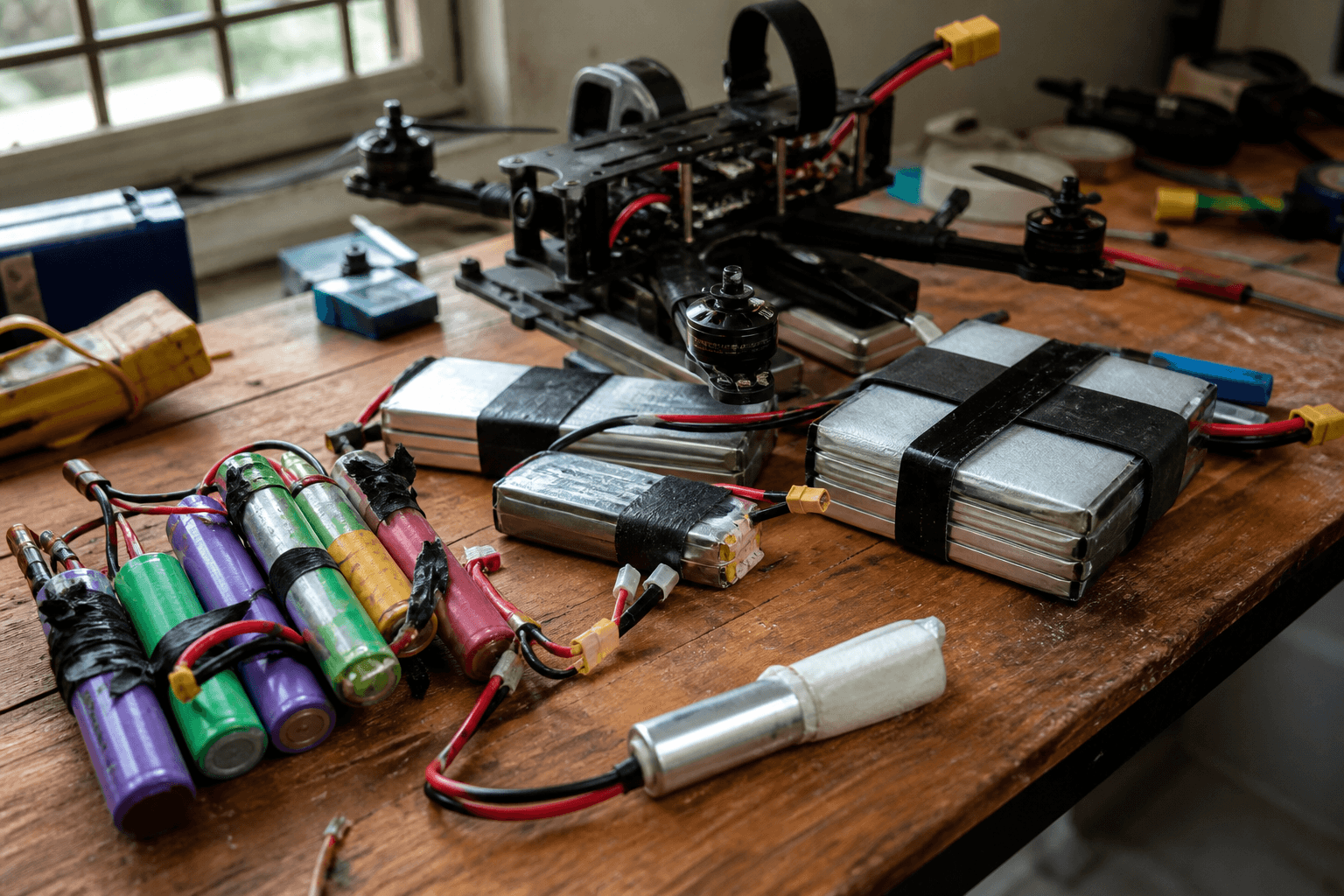
- Running Li-ion on a freestyle 5-inch and blaming “bad batteries.”
- Charging with wrong chemistry selected once, damages cell.
- Ignoring dented 18650 after crash, internal short risk.
- Expecting GPS rescue to save a sagging pack on climb, physics still applies.
Bottom line
Li-ion is a cruise fuel, not freestyle fuel. Match pack chemistry to mission, charge with the right profile, and retire damaged cells without negotiation.
India sourcing table (directional)
| Source type | Pros | Cons |
|---|---|---|
| UAV vendor pack | Known draw limits | Price; ship time |
| Domestic hobby shop | Fast DOA path | Limited SKU |
| DIY 18650 | Custom mAh | Safety on you |
| Unnamed import pack | Cheap | No spec; no RMA |
GST invoice on cells matters when a whole parallel group fails, warranty docs.
Long-range flight day timeline
Pre-dawn: storage-voltage packs loaded; cool car
06:00–08:00: cruise packs, log sag per climb
08:00–09:00: packs cool; gentle car charge if needed
09:00+: retire any pack that sagged early, do not push Li-ion like LiPo freestyle
Pair with iNav wings discipline, smooth throttle beats hero C-rating.
Weight and GST on big packs
Heavier Li-ion packs cost more to ship domestic surface: factor freight into budget tiers. Invoice with cell count and brand helps if a batch arrives out of balance, same DOA habits as LiPo vtx.
Retire criteria (Li-ion specific)
□ Any dented 18650 casing
□ Cell voltage diverges > 0.05 V at rest repeatedly
□ Pack heat uneven between cells after cruise
□ BMS or fuse nuisance trips, do not bypass
When in doubt, retire, Li-ion energy density is not worth fire rehearsal.
Bench first flight on Li-ion
□ Weigh ready-to-fly, CG marks on frame
□ Hover 30 s, log resting voltage before and after
□ One climb to typical cruise, note sag vs LiPo baseline
□ Touch each cell area if pack design allows, heat imbalance = stop
Skipping bench on a new 7-inch Li-ion build is how pilots discover sag over trees instead of over grass.
Cruise throttle habits (Li-ion specific)
Li-ion rewards smooth throttle more than LiPo freestyle. Punch-outs pull amps the pack was not built to repeat.
| Habit | Li-ion | LiPo freestyle |
|---|---|---|
| Climb to altitude | Gradual, watch sag on OSD | Punch acceptable |
| Recovery maneuver | Plan altitude early | Punch to recover |
| Landing approach | Stable throttle, no yo-yo | More forgiving |
| Rest between packs | Longer cool-down | Shorter often OK |
First month with new Li-ion pack:
□ Log resting voltage after each cruise pack
□ Note any cell divergence at home charger
□ Compare flight minutes vs vendor claim, realistic, not forum
□ Retire early if one climb sags harder each session
Common Li-ion fleet mistakes
| Mistake | Outcome |
|---|---|
| Same charger profile as LiPo | Wrong chemistry, cell damage |
| Freestyle 5" on Li-ion "for longer time" | Sag, hot ESC, disappointed pilot |
| Ignoring dent after arm strike | Internal short risk |
| Bypassing BMS "just once" | Fire risk, never |
| No invoice on grey import pack | No RMA when group fails |
Match chemistry to mission. Long-range 7-inch builds and iNav cruisers are the natural home for Li-ion, not your bando quad.
Discussion
Comments aren't open on this post yet. Share it with your build group, or start a thread on X.