
Cetus Pro vs Mobula6: choosing a first whoop kit in India

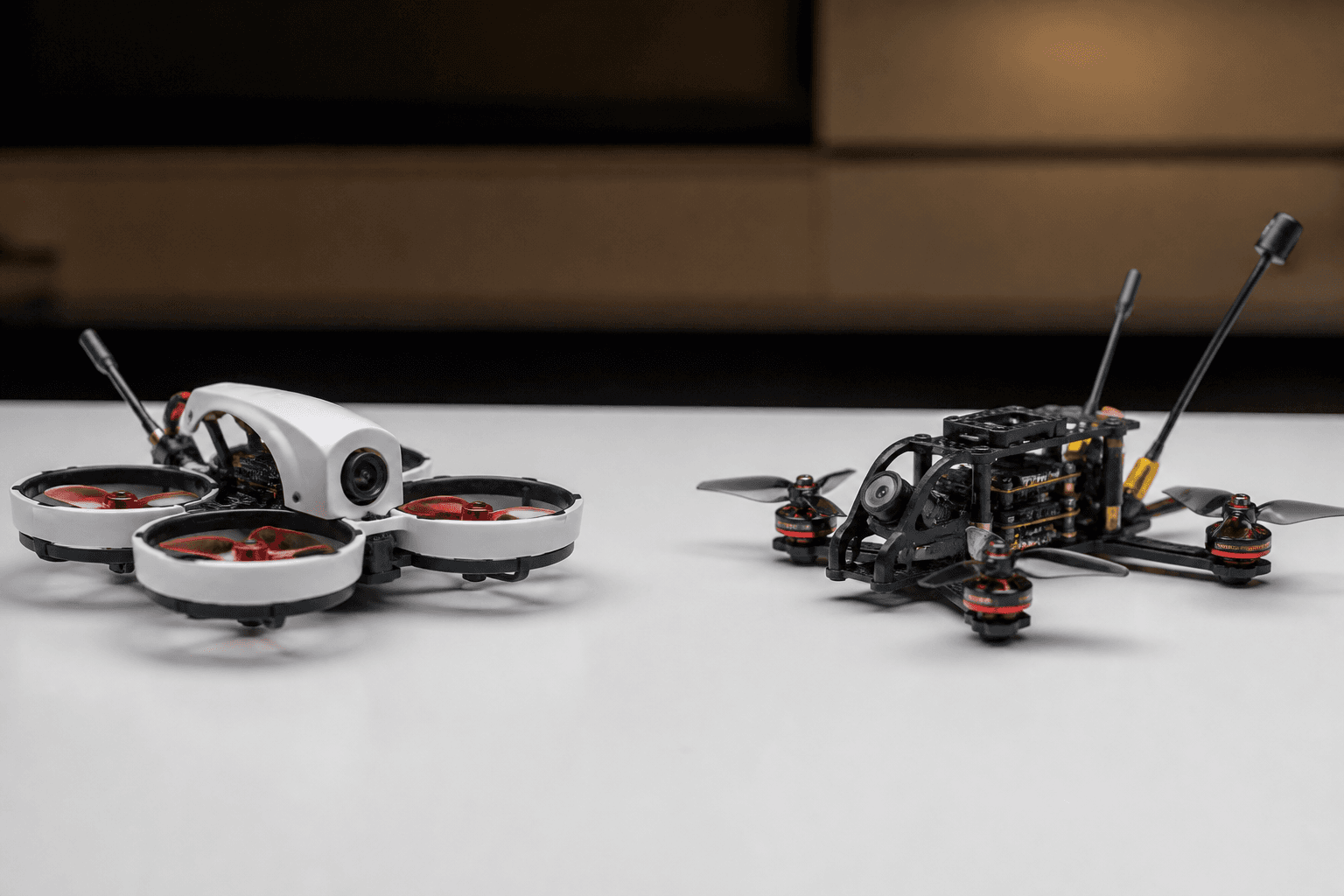
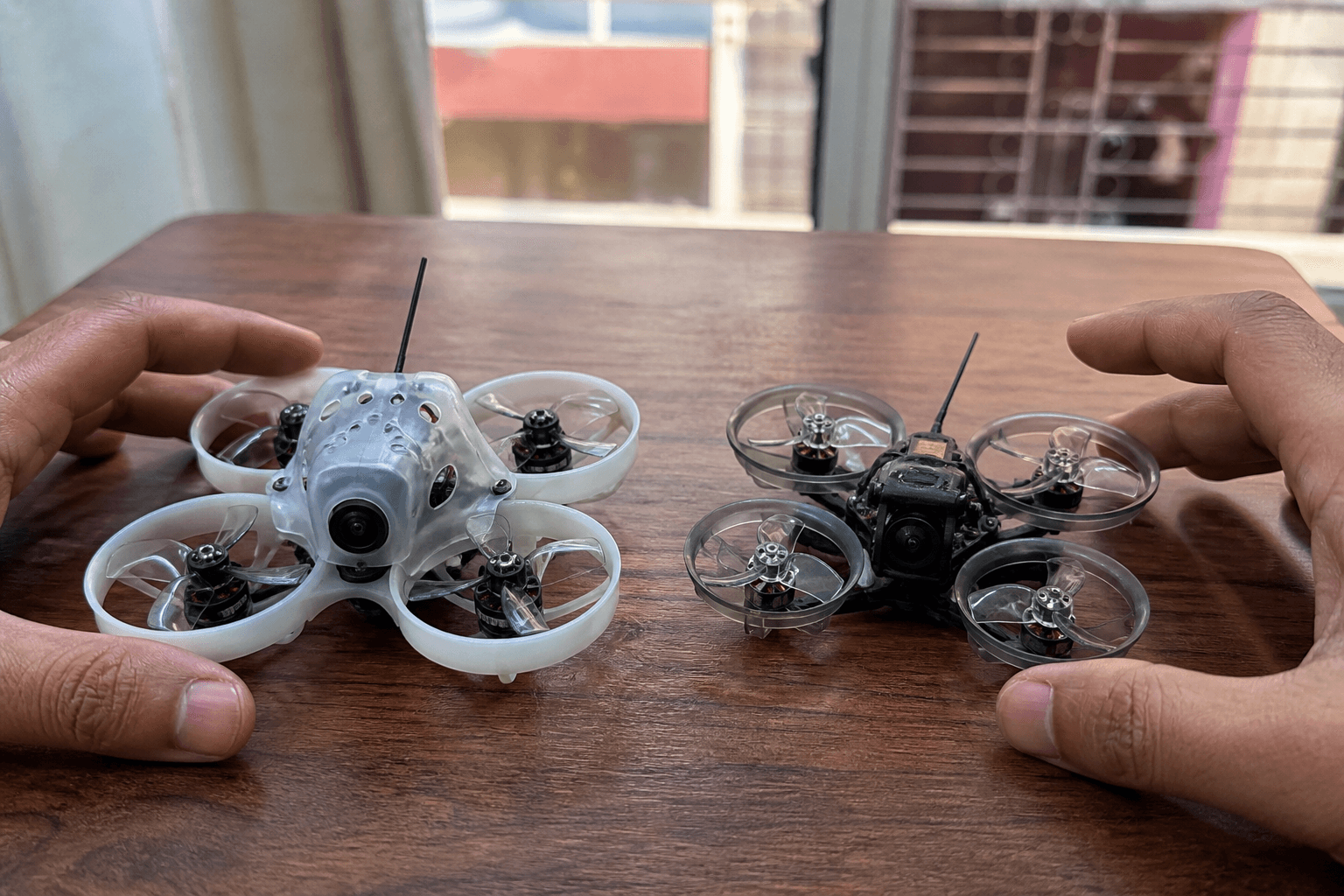
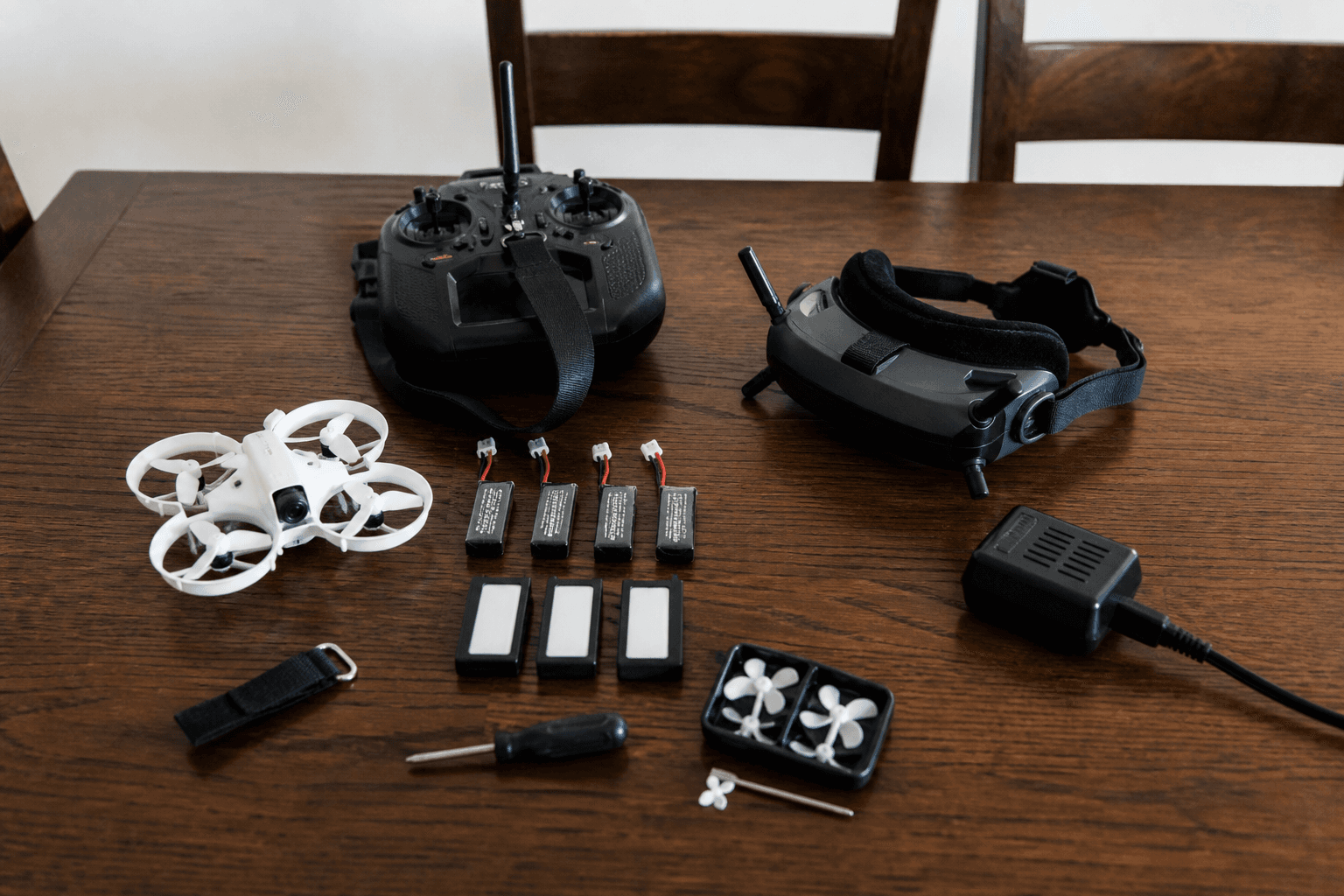
Two products answer "what should my first whoop be?" for almost everyone: an all-in-one kit (Cetus Pro class, quad, radio, goggles, charger in one box) or a BNF whoop (Mobula6 class, just the quad, bind to your own radio). The right answer depends on one question: do you already own a radio and goggles?
The decision in one table
| Kit (Cetus Pro class) | BNF (Mobula6 class) | |
|---|---|---|
| You own radio + goggles | Redundant, skip | Buy this |
| You own nothing | Buy this | Needs +radio +goggles first |
| Radio/goggle quality | Entry-level, kit-locked | Whatever you choose |
| Upgrade path | Replace everything eventually | Quad only; gear carries over |
| Total first-day cost | Lower | Higher (gear included) |
| Cost over 2 years | Higher (re-buy gear) | Lower |
The kit path: fastest to first hover
A kit's job is to get you hovering today with zero decisions. Everything binds out of the box, the radio is pre-configured, and beginner flight modes catch early mistakes.
The honest trade: kit radios and goggles are the parts you outgrow first. Kit gear typically is not what you would choose as standalone equipment, the goggles buyers guide explains what you give up. Treat the kit as tuition: it teaches you what to want, then the quad becomes the travel/loaner whoop when you upgrade.
Kits shine for:
- Total beginners who want zero research before flying
- Gifts, the recipient needs nothing else except more batteries
- Testing whether FPV sticks before deeper investment
The BNF path: better gear, carried forward
A BNF whoop assumes you bring your own radio and goggles, which means those can be good ones that serve every future quad. A proper ELRS radio and standalone goggles outlive five airframes.
The catch: receiver protocol must match your radio. In India in 2026 that means buy the ELRS version of whatever BNF you pick, the ELRS receiver guide covers version-matching between radio and quad.
BNF shines for:
- Pilots with any existing FPV gear
- Sim graduates who already bought a radio for practice
- Anyone planning a second quad within a year (most of you)
The hybrid most people should actually consider
Buy a real radio + BNF, and defer goggles by starting with the radio in a simulator. Sim hours are the cheapest flight time in the hobby - start with the free online FPV simulator (browser, no install), then graduate to desktop sims if you want. Radio-first purchases carry forward perfectly, and by the time you add goggles you will know analog vs HD preferences instead of guessing, see HD vs analog in 2026.
India notes
- Both paths need more batteries immediately, the included 1–2 packs are a demo, not a fleet. Order packs with the quad, because batteries ship surface-only and arrive on truck timelines.
- Kits and BNFs are air-eligible parcels (their installed pack allowances differ by courier, but vendors handle that), the batteries you add are the slow part.
- Warranty: video-record the unboxing per the DOA documentation guide, bind issues on arrival are the most common first-whoop complaint.
After the first month
Whichever path you chose, the upgrade sequence is the same: batteries → props → spare ducts, in that order, per the BNF upgrades guide. When you outgrow the airframe, graduate to a scratch build with the 65mm build guide, repairing what you built is the skill BNFs never teach.
Bench
Both starter paths are stocked at the Bench, kits, ELRS BNFs, radios, and the battery 4-packs you will want on day one. Compare full-build alternatives in Grind Lab.
See also
- FPV simulator before your first whoop, free browser stick time before you buy
- 1S vs 2S whoops explained
- Tiny whoop parts in India: buyers guide
- Flying in apartments and terraces in India
FAQ
- Cetus Pro vs Mobula6 - which first whoop kit?
- Pick the path that matches what you already own. A complete kit path (Cetus-class) wins if you need radio and goggles together. A Mobula-class ELRS BNF wins if you already have a Mode 2 ELRS radio and want a tougher ducted trainer airframe.
- What should I check before buying either?
- Confirm ExpressLRS (or accept the kit’s radio story), cell count (prefer 1S to start), battery connector standard, and that you can buy matching spare packs and props in India without mixed PH2.0/BT2.0 chaos.
- Can I upgrade later either way?
- Yes. Kits get you flying fast; BNF plus a good ELRS radio ages better. Either path still needs spare props, multiple packs, and sim practice before aggressive freestyle.
Discussion
Comments aren't open on this post yet. Share it with your build group, or start a thread on X.