
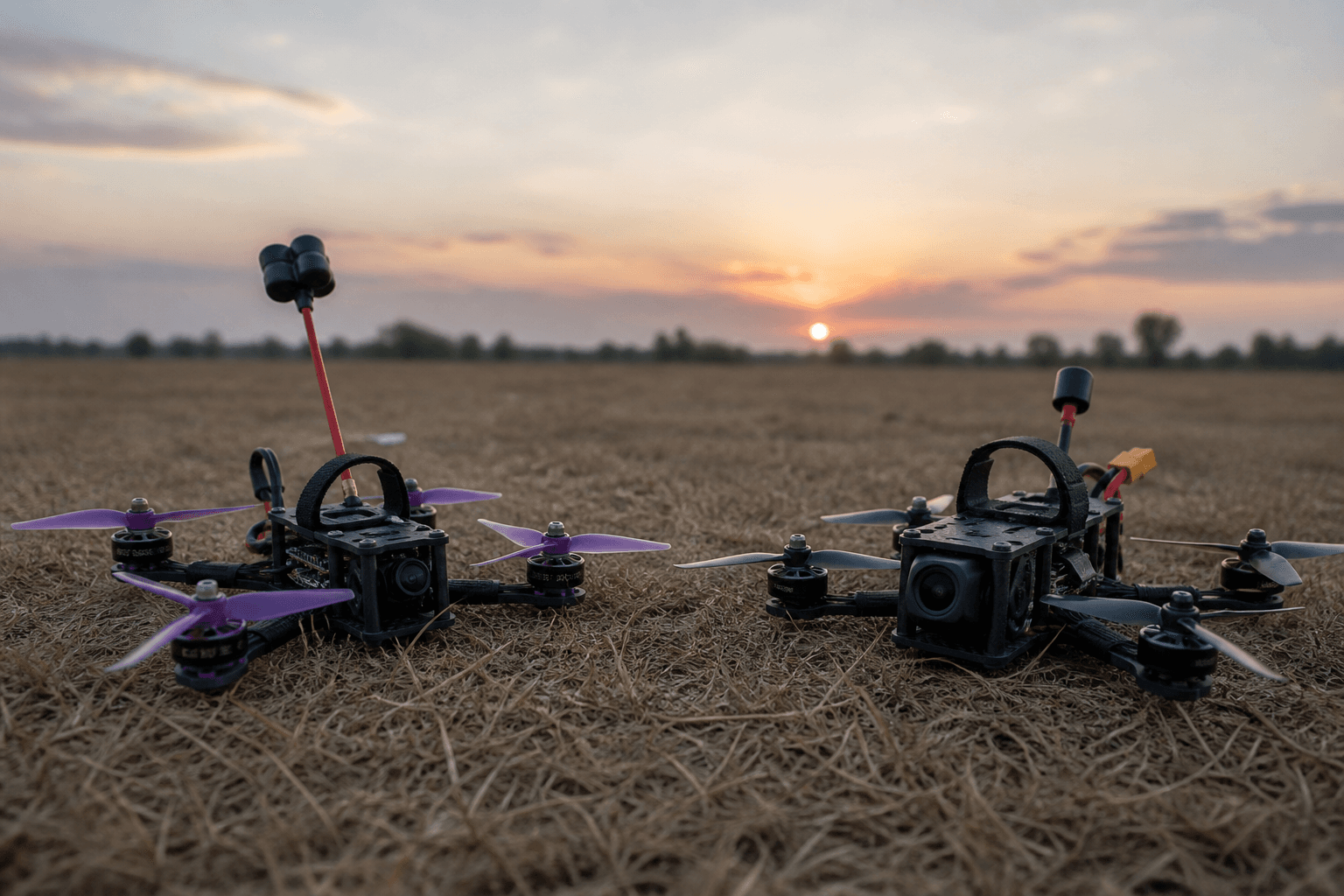
HD vs analog in 2026: what pilots still argue about

The debate never really ends, it just gets more nuanced as HD systems improve and analog stays stubbornly affordable. In 2026, most new pilots still ask the same question: should my first real goggles feed be digital or 5.8 GHz analog? The honest answer depends less on forum screenshots and more on where you fly, what you can service locally, and how much latency you can feel on your lines.
This guide is the top-level fork. Once you lean HD, the next decision is ecosystem, Walksnail, HDZero, or DJI O3 each carry different spare-part trees. For that map, see Walksnail vs HDZero vs DJI O3: ecosystem lock-in.
Image quality and confidence
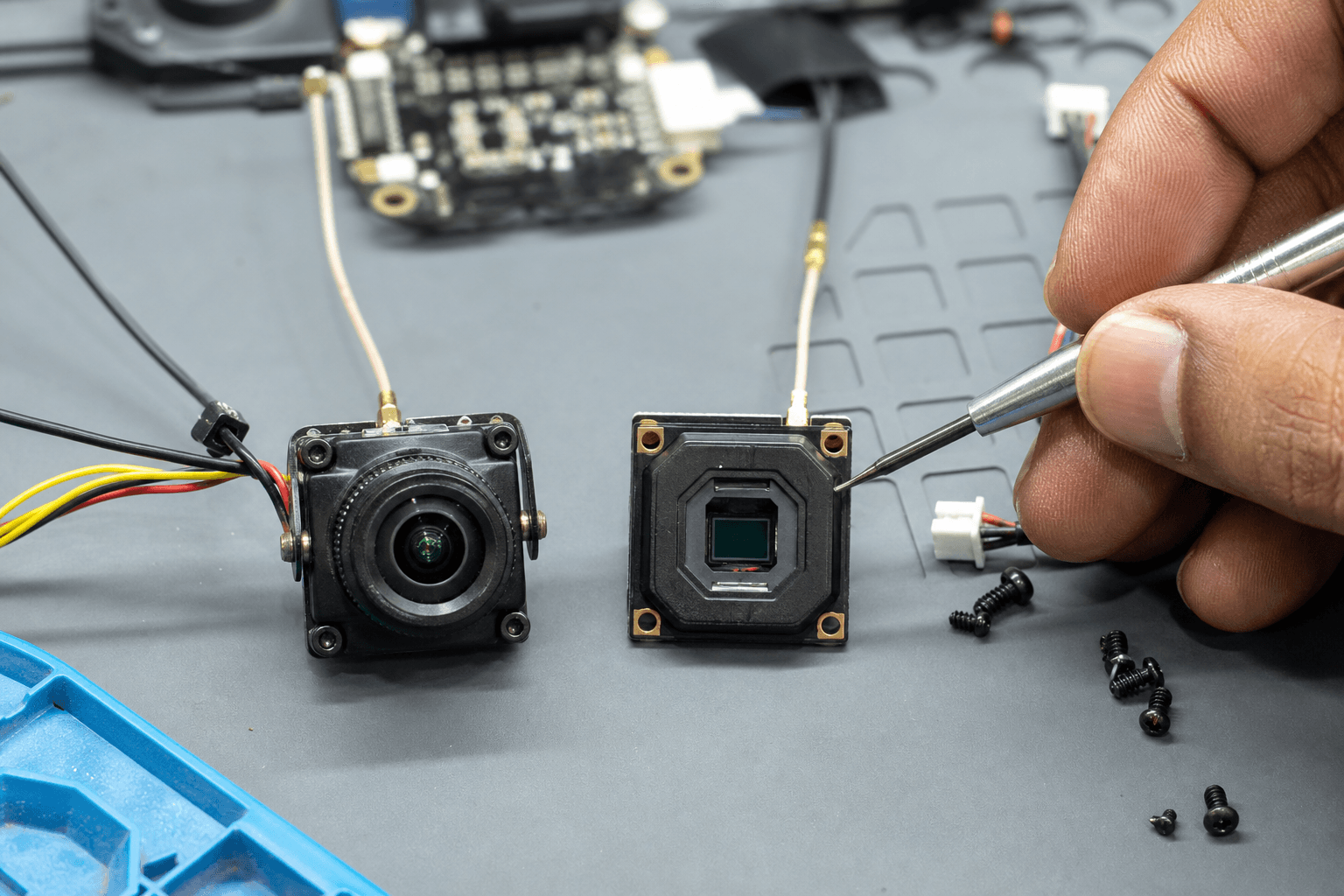
HD wins for clarity: branches, ground texture, reading OSD at a glance, and spotting power lines you would rather not meet. Pilots who fly exploration, cinematic lines, or tight bando gaps often describe HD as buying back mental bandwidth, you spend less energy guessing what the blur ahead actually is.
Analog can still look good enough in many spots, especially with a clean vtx, proper antenna work, and goggles you have dialed for brightness. Side-by-side on a bench, HD is the obvious upgrade. In the field, a well-tuned analog link on an open patch of grass can feel perfectly flyable until you turn into shadow, dust, or multipath-heavy urban edges.
| Factor | Analog 5.8 | HD digital |
|---|---|---|
| Fine detail in shade | Good vtx + cam dependent | Generally stronger |
| OSD readability | Large fonts help | Smaller, sharper overlays |
| Night / low light | Often grainy early | Varies by stack |
| "Can I see the gate?" | Adequate at many clubs | Easier at distance |
Latency and flying style
Analog remains the reference for minimum glass-to-glass latency. Racing pilots who chase gates on tight lines still have a point, depending on the exact HD stack, encoding pipeline, and goggle firmware. The gap has narrowed on several systems, but feel is personal. Some pilots adapt in a session; others never stop noticing.
Freestyle and cinematic pilots often trade a few milliseconds for image confidence. Whoop pilots frequently stay analog for weight, cost, and vtx simplicity. None of that is wrong, it is class matching.
Common mistake: buying HD for "pro feel" without budgeting a second vtx or confirming India stocking on your chosen ecosystem. A gorgeous first flight followed by three weeks waiting on a replacement module is not pro, it is idle.
Latency is encode → transmit → decode → display on your exact stack, not one spec-sheet number. Racers feel gate rhythm; freestyle pilots often feel confidence in shadow and gaps. Give any new HD stack three sessions before calling it too slow.
Cost and ecosystem reality
| Path | Pros | Trade-offs |
|---|---|---|
| Analog | Budget-friendly, huge vtx choice, easy spares | Resolution ceiling, band coordination at busy fields |
| HD | Immersive feed, growing ecosystem | Higher entry cost, ecosystem lock-in |
Reality check: The best system is the one you can maintain. Spares, antennas, and vtx policies at your local spots matter as much as spec sheets.
Price the second vtx before you celebrate the first. Crashes do not read marketing copy. If your club has a power and channel culture, analog discipline still applies even when your main quad is HD, many pilots keep an analog whoop in the bag for rainy-day indoor sessions.
Purchase decision tree
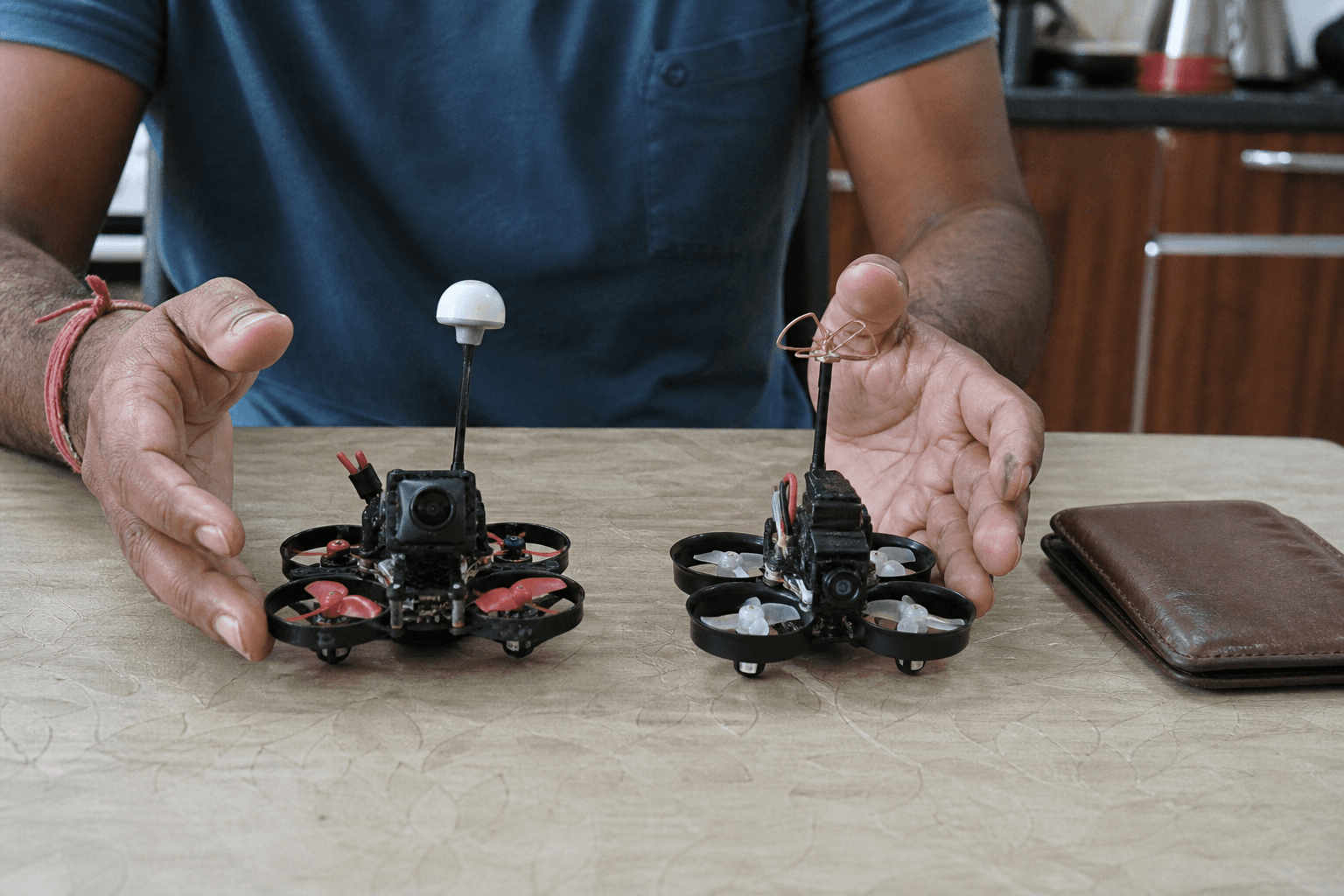
Start here: What is your primary flying?

├─ Gates / budget racing on club turf
│  └─ Lean analog + good antennas + [goggle fit](/blog/fpv-goggles-box-and-slim-fit-buyers-guide)
│
├─ Freestyle / bando / cinematic
│  └─ Lean HD, pick ecosystem next (see lock-in guide)
│
├─ Tiny whoop only
│  └─ Analog usually wins on weight/cost; HD whoop boards exist but check spares
│
└─ "I want both"
   └─ Valid: analog whoop + one HD 5" is a sane two-stack life
India-aware note: Summer heat affects vtx and goggle brightness habits, max backlight in April sun is not free. See summer heat field day packing for the human side of long HD sessions. Monsoon humidity punishes pigtails on any system; mechanical care beats bitrate.
Field habits that matter more than the logo
- Coordinate video channels at analog meetups; HD has its own pairing rituals, know yours before arming in a group.
- Configure OSD essentials on every quad regardless of feed type, voltage and link quality do not care about your goggles price.
- Test DVR or download workflow once at home, DVR and Wi-Fi habits save flight time when you are not fumbling cards in dust.
- If you wear glasses, solve fit before blaming the feed, goggle foam and diopters end more days than codec choice.
Which HD stack?
Analog vs HD is one decision; which HD ecosystem is another. Walksnail, HDZero, and DJI O3 each lock you into different goggles, vtx modules, and spare-part paths, and India availability varies by vendor and import channel.
| If you want… | Start reading… |
|---|---|
| Minimum fiddling, polished image | DJI O3 path in ecosystem guide |
| Module-bay goggles today | Walksnail section |
| Low-latency racer mindset | HDZero section |
| One upgrade step, not five | Goggle buyer's guide module bay section |
Bottom line
If you fly for cinematic or exploration, HD is easy to love. If you chase gates on a tight budget, analog plus good antennas remains a strong play. Many pilots run both: analog for tiny whoops, HD for freestyle, and that is a perfectly sane setup.
Fly what makes you want to charge packs, that is the metric that matters. Just make sure you can service what you buy before the next group invite lands in your chat.
Before HD purchase: read ecosystem guide, price a spare vtx, confirm India stocking, solve goggle fit. Analog whoop plus HD 5" is a sane two-stack life.
Mixed meetup habits
At fields with both analog and HD pilots, briefing covers two coordination layers, 5.8 channel tables for analog, plus vendor-specific pairing for digital. Arrive early, ask who is on which system, and pit vtx when working on the bench. A ten-second channel check prevents a ten-minute static argument.
| Your rig | Ask before arming |
|---|---|
| Analog 5" | Band + channel assignment |
| HD freestyle | Goggle/vtx bind status |
| Whoop analog | Channel + power cap |
See also
- Walksnail vs HDZero vs DJI O3: ecosystem lock-in, goggles, vtx, spares, and India stocking
- FPV goggles: box, slim, and modular, fit and module bays before you commit
- Cinewhoop, micro whoop, or 5" freestyle, which build first?, HD carry potential by quad class
Discussion
Comments aren't open on this post yet. Share it with your build group, or start a thread on X.