
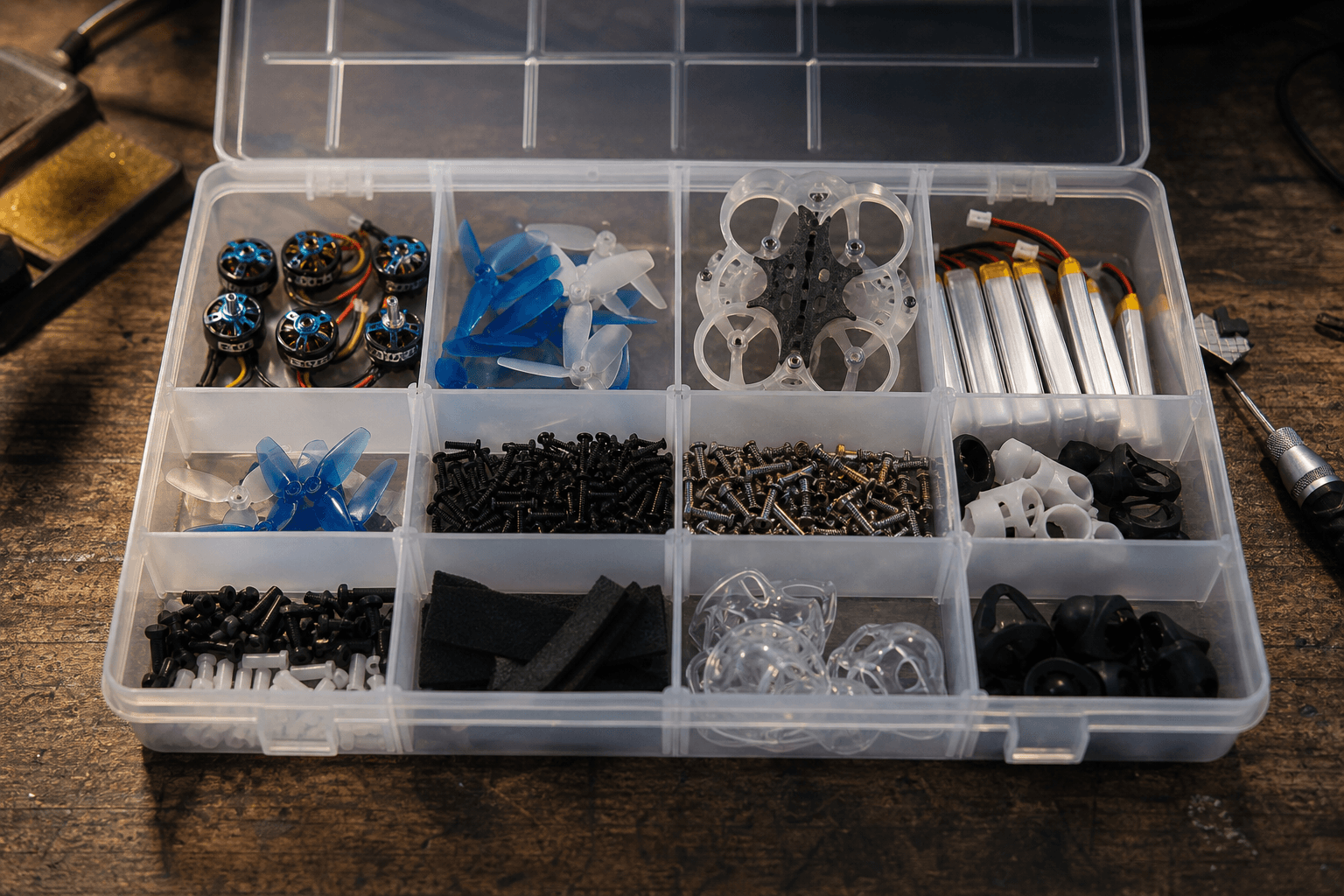
Tiny whoop parts in India: what to buy where, and what to keep in stock

Tinywhoop parts are the friendliest corner of Indian FPV logistics: everything except batteries is a small, light, non-restricted packet. The problem is not availability, it is knowing which parts are consumables you should keep domestic and stocked, and which are one-time buys you can afford to wait on.
The two-bucket rule
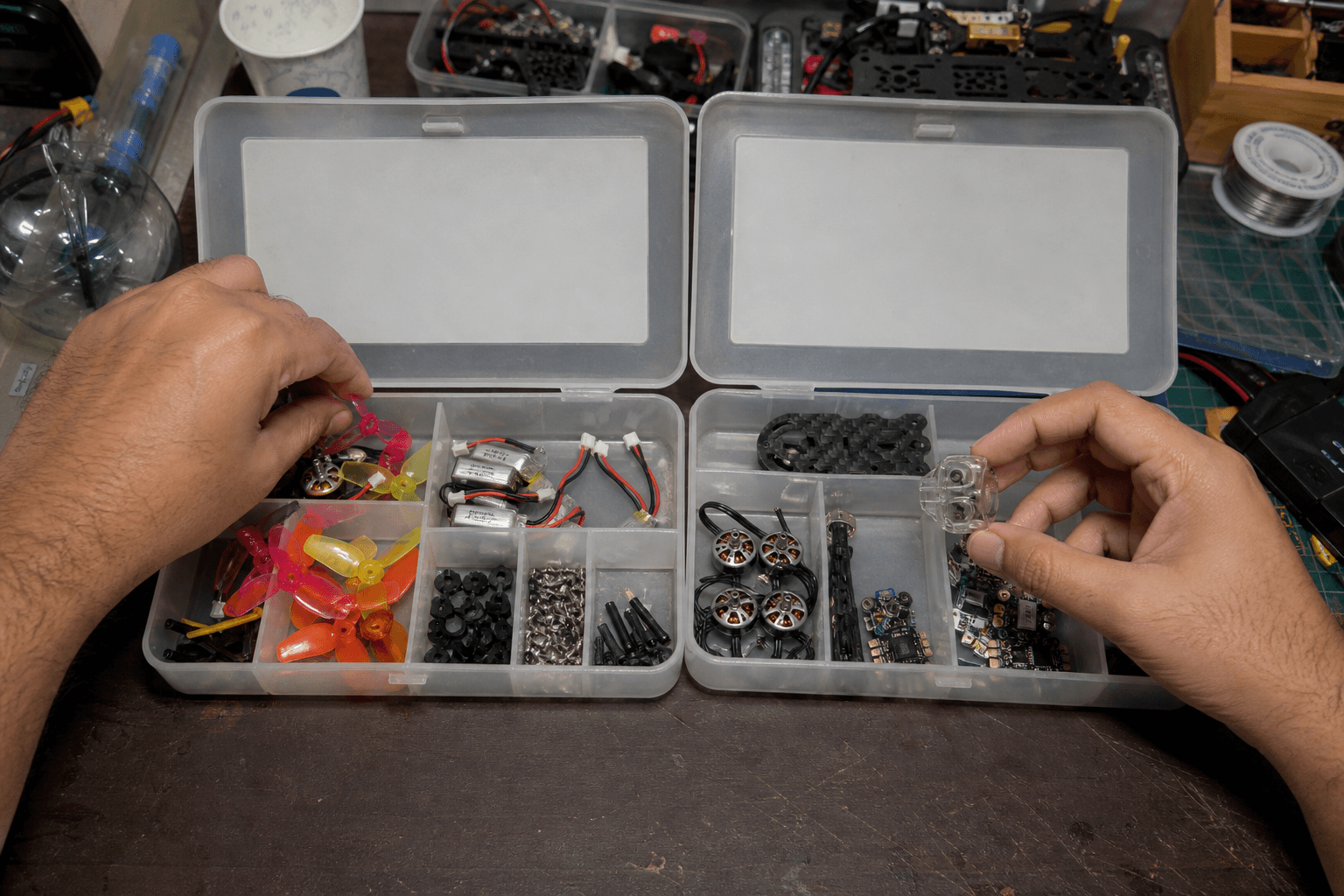
Split every whoop shopping list into consumables and durables:
| Bucket | Parts | Buy where |
|---|---|---|
| Consumables | Props, 1S/2S packs, ducts, screws, connectors | Domestic, always in stock at home |
| Durables | Frames, motors, AIO FCs, cameras, receivers | Domestic if available, import if the wait is acceptable |
A grounded weekend waiting for ₹300 of props teaches this lesson exactly once. Order consumables before you run out, from stock that ships inside India, customs holds on a prop bag are rare but a two-week battery import is normal.
Frames and ducts
Whoop frames are nearly indestructible until they suddenly are not. Ducts crack at the motor mounts first, the impact point of every wall kiss. Keep one spare frame or duct set per quad you fly regularly.
- 65mm class: Mobula6, Meteor65, AcroBee65-style frames. The default indoor size in Indian apartments.
- 75mm class: Meteor75, DarkStar75. More punch, still terrace-friendly; see the 75mm park cruiser recipe.
- Ducted vs open-prop: ducted for indoors and shared spaces, open props for outdoor grass. Kids and pets tips apply either way.
Motors
0802 motors around 19,000–25,000KV dominate the 65mm 1S class. Buy motors in sets of four plus one spare: a single dead motor with no spare grounds the quad, and single-motor orders cost nearly as much in shipping as the motor.
Match motor mount pattern to your frame before ordering (most 65mm frames are 3-hole). The Grind Lab builder checks this for you.
Props: the cheapest experiment in FPV
31mm props for 65mm frames, 40mm for 75mm. Buy two profiles, a grippy tri-blade and an efficient bi-blade, and fly them back-to-back in the same room. Props change feel more than motor swaps for beginners, at a tenth of the cost.
Batteries: the domestic-only bucket
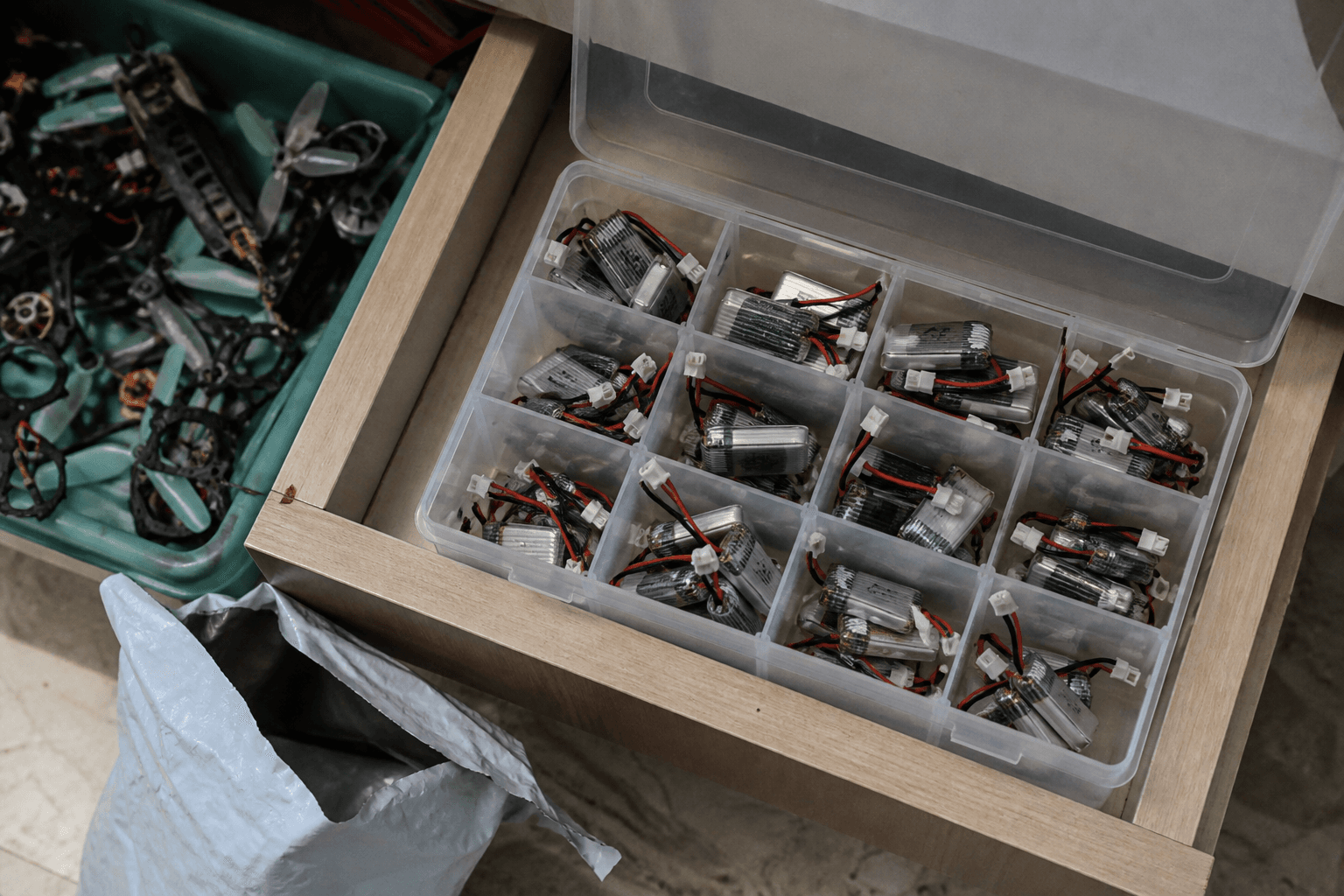
LiPos are the one whoop part where import is genuinely painful: lithium batteries move by surface transport only within India and most international couriers will not carry loose packs at all. Read the LiPo shipping rules before planning a battery order around a weekend.
Practical habits:
- 6–10 packs per quad for a real session. Charging mid-session kills momentum.
- Pick one connector (BT2.0 or PH2.0) for the fleet and stop buying adapters.
- Storage-voltage discipline per the LiPo safety guide.
Receivers and radios
ELRS has won the whoop receiver argument in India, cheap receivers, strong link, wide local stock. If you are choosing a receiver, the ELRS whoop receiver guide covers the SPI-vs-UART trap and antenna handling on tiny frames.
The shelf: minimum spares list
Whoop pilot's shelf (per active quad):
- 8x props (two profiles)
- 6+ packs, one connector standard
- 1 spare duct set or frame
- 1 spare motor
- M1.4 screw kit + prop tool
- Spare battery connector pigtails
This list costs less than one BNF and converts crash nights into five-minute repairs instead of two-week waits, the field repair kit guide covers the portable version.
Import vs domestic, whoop edition
The general import vs domestic logic compresses nicely for whoops: import only durables you cannot source locally (specific cameras, HD VTX kits), keep every consumable domestic, and never import batteries. GST invoices and warranty questions from the buying checklist still apply, a ₹2,500 AIO FC deserves the same paperwork as a ₹25,000 radio.
Bench
Whoop frames, motors, props, packs, and ELRS receivers ship domestic from the Bench, or spec a full parts list in Grind Lab and add the build to cart in one click.
See also
- Free online FPV simulator, practice Mode 2 before you order parts
- FPV simulator before your first whoop
- 1S vs 2S whoops explained
- 65mm whoop build guide for India
- Tiny whoop BNF upgrades worth doing
Discussion
Comments aren't open on this post yet. Share it with your build group, or start a thread on X.