
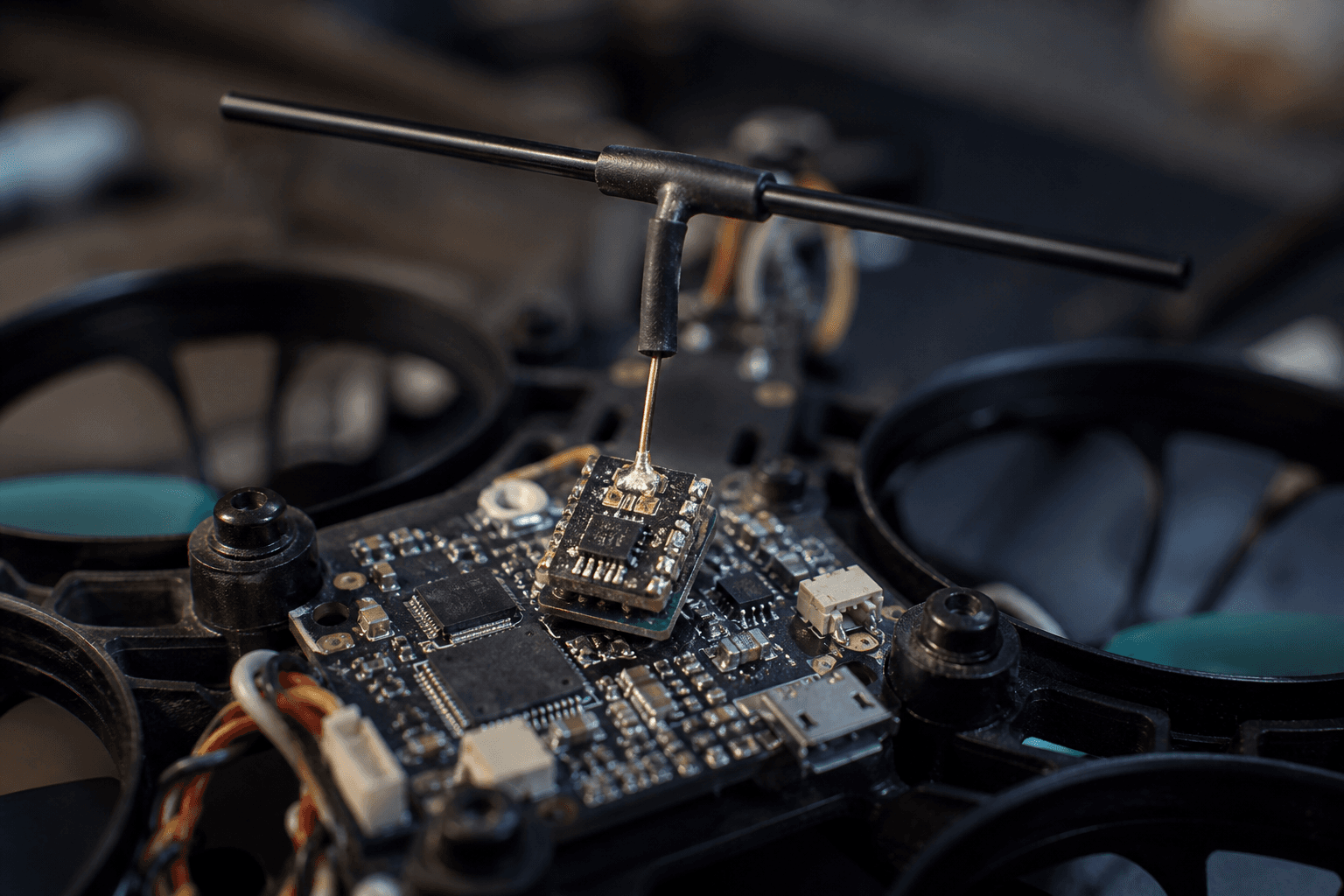
ELRS receivers for whoops in India: SPI vs UART, antennas, and what to buy

ELRS is the default control link for whoops in India, receivers cost less than a set of props, domestic stock is good, and the 2.4GHz link is more than any indoor pilot needs. The real decision is not "ELRS or not"; it is SPI-integrated vs external UART, and it is worth getting right before you buy an AIO FC.
SPI vs UART: the one decision that matters
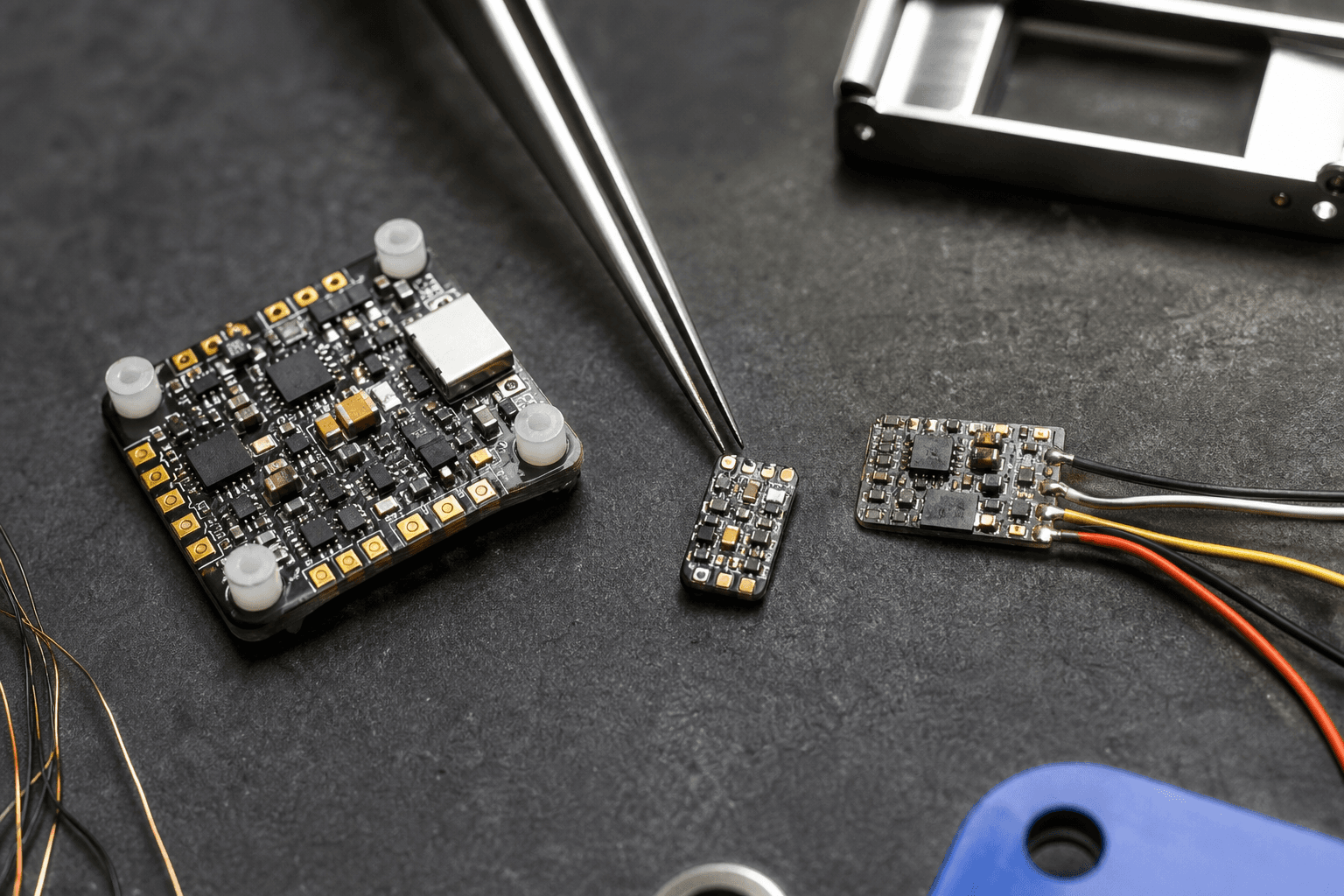
| SPI (integrated on FC) | UART (external RX) | |
|---|---|---|
| Weight & wiring | Zero extra grams, zero solder | ~1g + 4 solder joints |
| Firmware updates | Tied to Betaflight releases | Independent ELRS updates |
| Feature lag | Behind mainline ELRS | Current |
| Replaceability | Dead RX = dead FC | Swap the RX alone |
For a first whoop, integrated SPI ELRS on the AIO FC is the pragmatic pick, one less thing to solder and break. Pilots who update ELRS versions aggressively or fly in RF-noisy urban environments tend to migrate to external UART receivers on the second build. The general SPI vs UART receiver post covers the firmware politics in depth.
Antenna handling on a 65mm frame
The receiver antenna is the most fragile part of a whoop build:
- Route the antenna away from the battery bay: packs sliding in and out shear antennas over weeks.
- Never let the tip sit against carbon or the canopy screw posts; carbon shadows the link.
- Heat-shrink a small loop rather than leaving a straight whisker into the props.
- After every hard crash, check the antenna before blaming the link, a nicked coax shows up as failsafe at ranges that used to be fine.
Whoop range needs are tiny, but link budget still decides whether the quad failsafes behind one concrete pillar or three.
Binding and packet rates
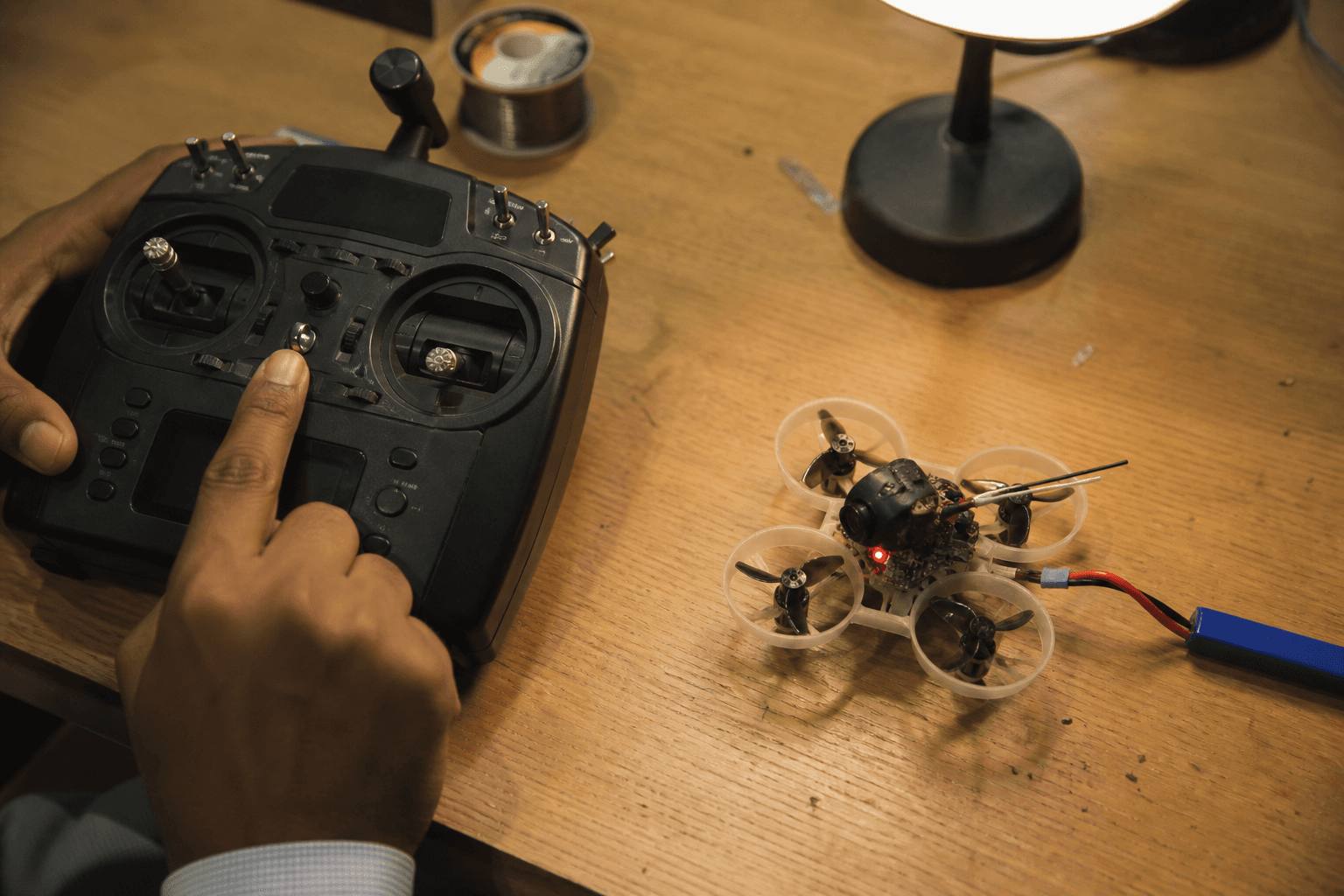
- Use a bind phrase flashed into both radio and receiver, button binding works but does not survive firmware reflashes.
- 250Hz packet rate is the whoop sweet spot: lower latency than 50Hz, less RF airtime than 500Hz+, kind to shared 2.4GHz apartment airspace, relevant if you fly where Wi-Fi is dense.
- Match ELRS major versions across radio and receiver. A 3.x radio will not talk to a 2.x receiver.
Failsafe: test it on the bench
Set failsafe to drop on a whoop, not GPS rescue, not hold. Props off, arm, power off the radio, watch the motors stop. The failsafe scenarios post explains why drop is correct for anything flown near people.
India buying notes
- Receivers are light, unrestricted packets, safe to buy domestic or import. Domestic stock of the popular nano receivers is consistently good, and at whoop prices, shipping dominates cost: bundle receivers with a consumables order.
- Buy a spare. A ₹800 receiver on the shelf converts a dead-link mystery into a ten-minute swap test.
- Radios: one good ELRS radio serves every quad you will ever own, see gimbals and EdgeTX basics before buying.
Bench
ELRS nano receivers, ELRS-integrated AIO FCs, and radios are stocked at the Bench, or start from the Grind Lab builder, which pairs receivers with compatible FCs automatically.
Discussion
Comments aren't open on this post yet. Share it with your build group, or start a thread on X.