
LiPo shipping in India: why batteries move surface-only and how to plan around it

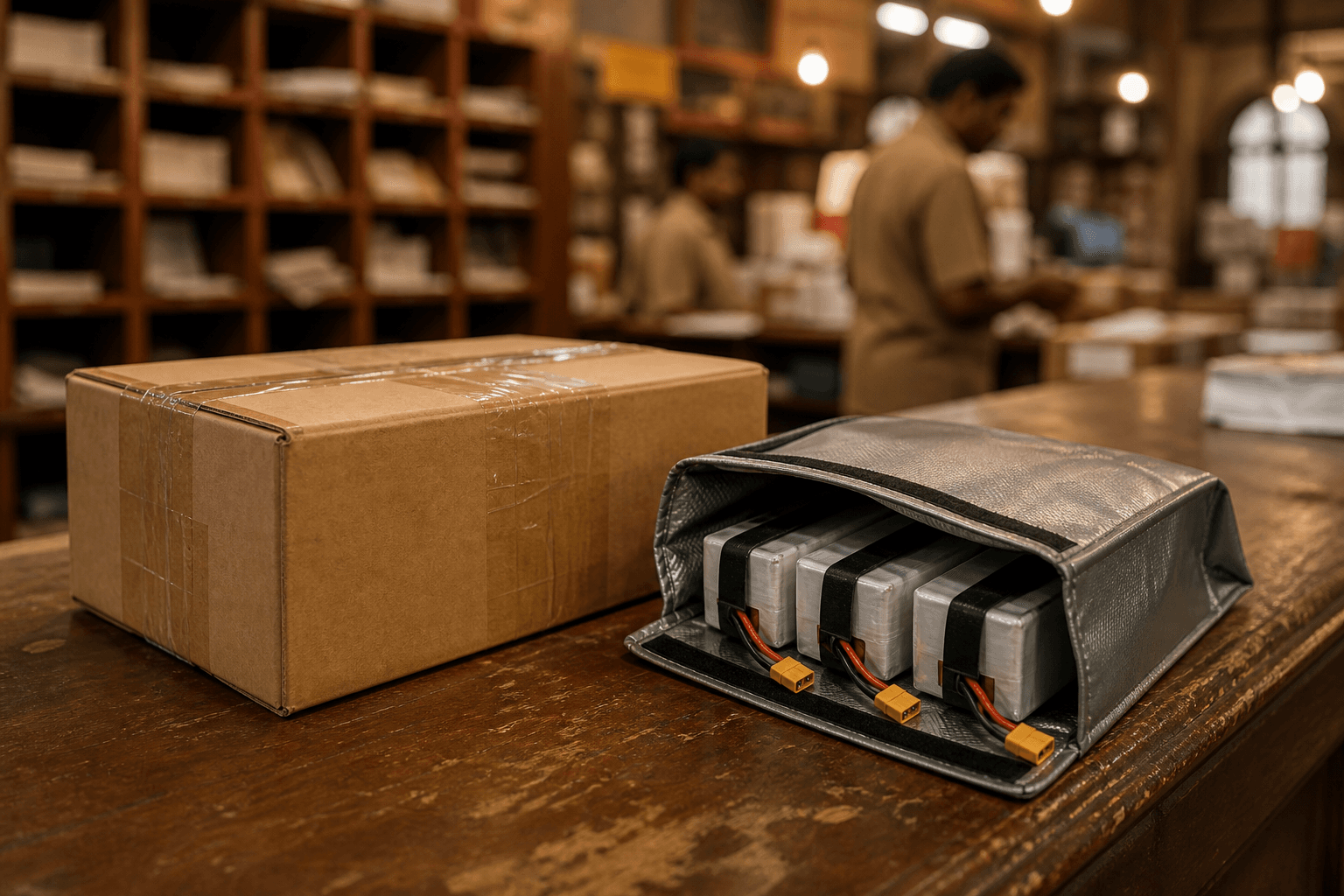
Every Indian FPV pilot eventually asks why the props arrived in three days and the batteries took twelve. The answer is simple and unchangeable: lithium batteries are dangerous goods for air transport, so domestic couriers move loose LiPo packs by surface (road) transport only. This is not a vendor being slow, it is how the packs legally travel.
This is practical guidance, not legal advice; courier policies change, the physics does not.
Why surface-only
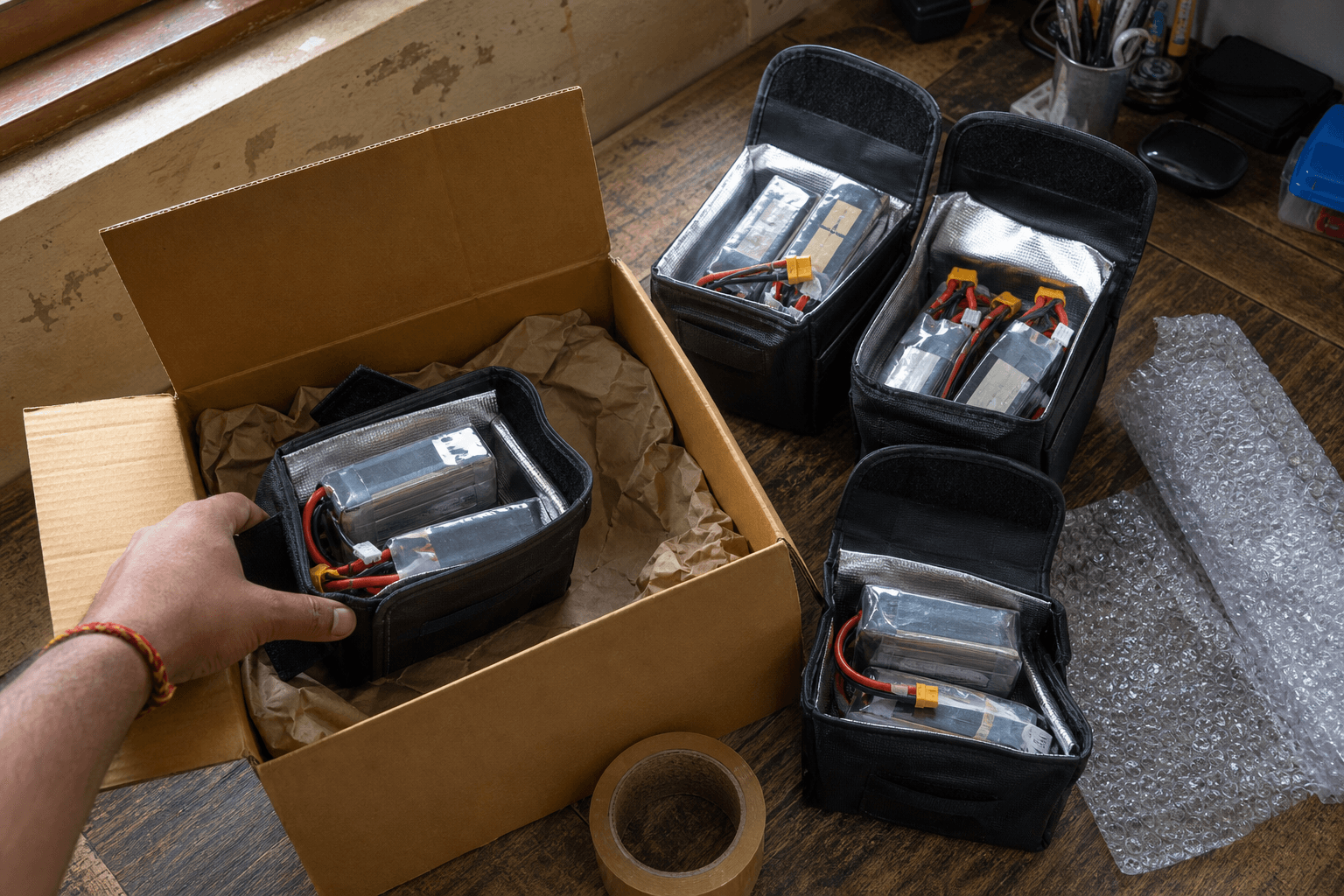
LiPo cells in thermal runaway cannot be extinguished with cabin fire suppression, so aviation rules restrict lithium batteries on aircraft, loose hobby packs fall on the wrong side of those limits. Domestic ground shipping has no such constraint, which is why battery orders quietly split from the rest of your cart and arrive on truck timelines.
Practical consequences:
- Battery delivery is distance-priced in days: metro-to-metro can be under a week; metro-to-remote pincode can be two.
- Vendors ship packs separately from air-eligible parts. Two tracking numbers for one order is normal.
- International import of loose packs is effectively closed for hobbyists, most cross-border couriers refuse them outright. Batteries are the one FPV consumable you should always buy domestic, per the import vs domestic split.
Planning around it
The rule of thumb: order batteries when the fleet drops below one session of healthy packs, not when it hits zero.
| Habit | Why it works |
|---|---|
| Keep 6–10 packs per active quad | One saggy retirement never grounds you |
| Order packs a week before you need them | Surface transit absorbed by buffer |
| Batch battery orders with battery orders | One surface shipment beats three |
| Track pack age and cycles | Predict re-orders instead of reacting |
Whoop pilots feel this most, 1S packs age fast under daily indoor sessions. The whoop parts buyers guide treats packs as the top consumable for exactly this reason.
Receiving day: check before you charge
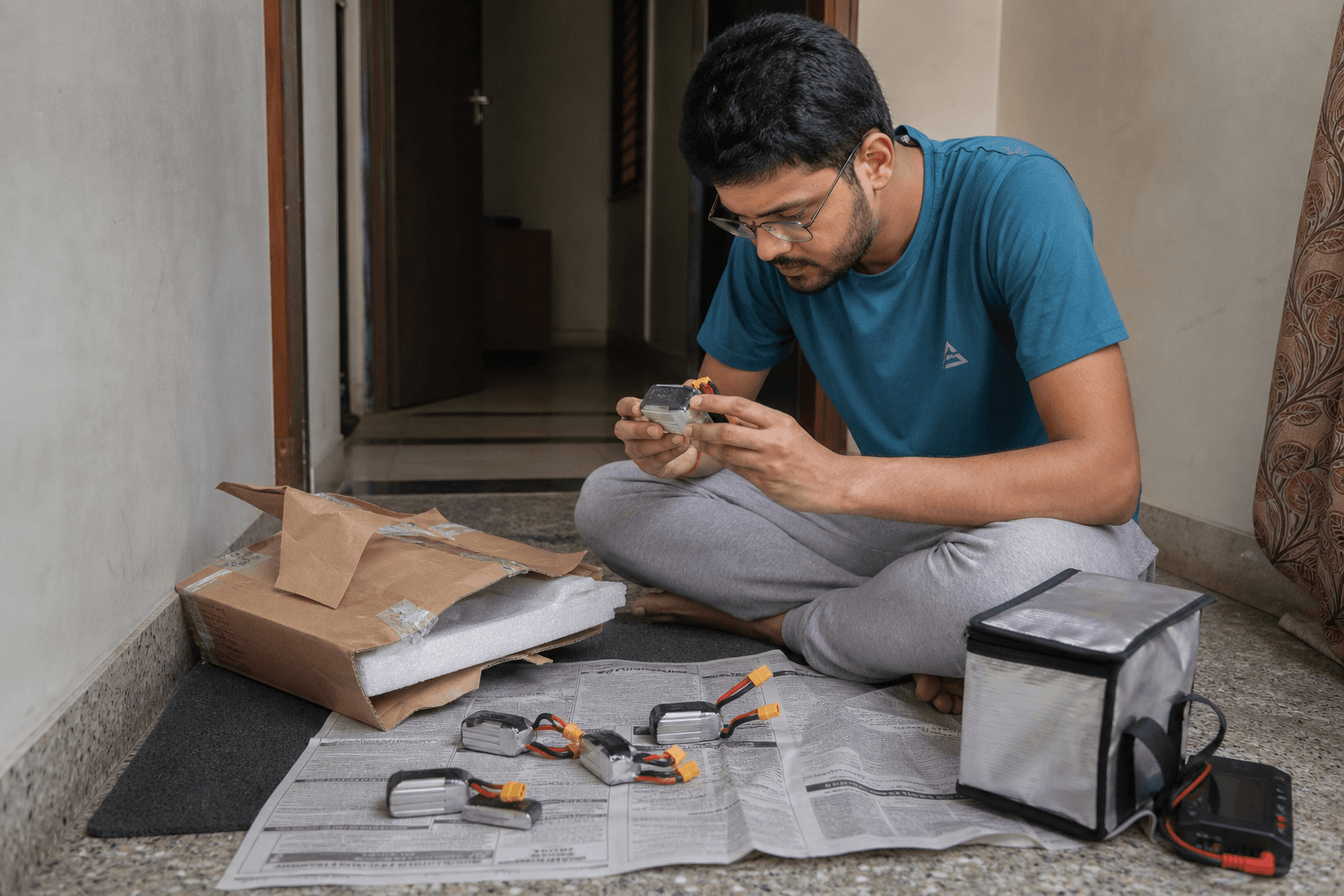
Surface freight means more handling. When packs arrive:
- Inspect: no dents, no puffing, no damaged wrap, connector pins straight.
- Voltage-check every cell: storage charge (~3.8V/cell) is healthy on arrival; a pack at 3.0V has a story you were not told.
- First charge supervised, on a LiPo-safe surface, per the LiPo safety guide.
- Document before first use if anything looks off, the warranty and DOA guide applies doubly to batteries because vendors scrutinize battery claims hardest.
At FPV Grind checkout
Orders containing battery items at the Bench show a surface-shipping notice at checkout and ask for an acknowledgement, so the longer battery timeline is agreed before payment, not discovered in tracking. Non-battery items in the same order are not held back by the packs.
Storage between orders
Surface lead times reward pilots who store packs properly: storage voltage between sessions, cool spot away from sunlight, and a parallel charging workflow that tops the fleet the night before a session rather than trickling all week. Packs stored full die young, and dead packs put you back on the truck timeline.
Discussion
Comments aren't open on this post yet. Share it with your build group, or start a thread on X.