
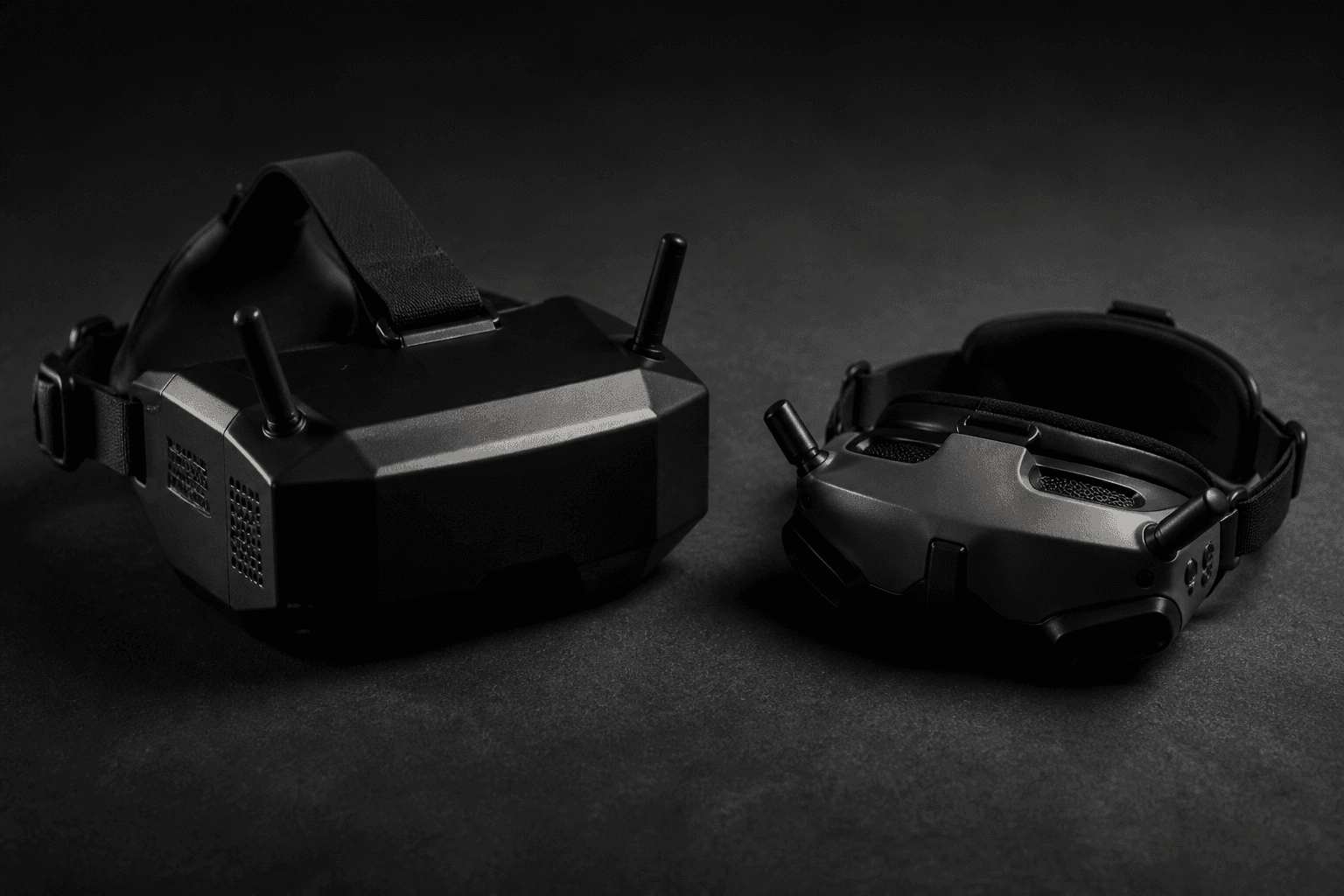
FPV goggles: box, slim, and modular, what to buy first

Goggles are where immersion meets comfort. The "best" pair is the set you will actually wear for a full pack without jaw pain or fogging. Spec sheets sell headsets; your face vetoes them.
This guide navigates form factors, analog vs digital-ready purchases, and India-realistic upgrade paths, without pretending one SKU fits every pilot.
Form factors
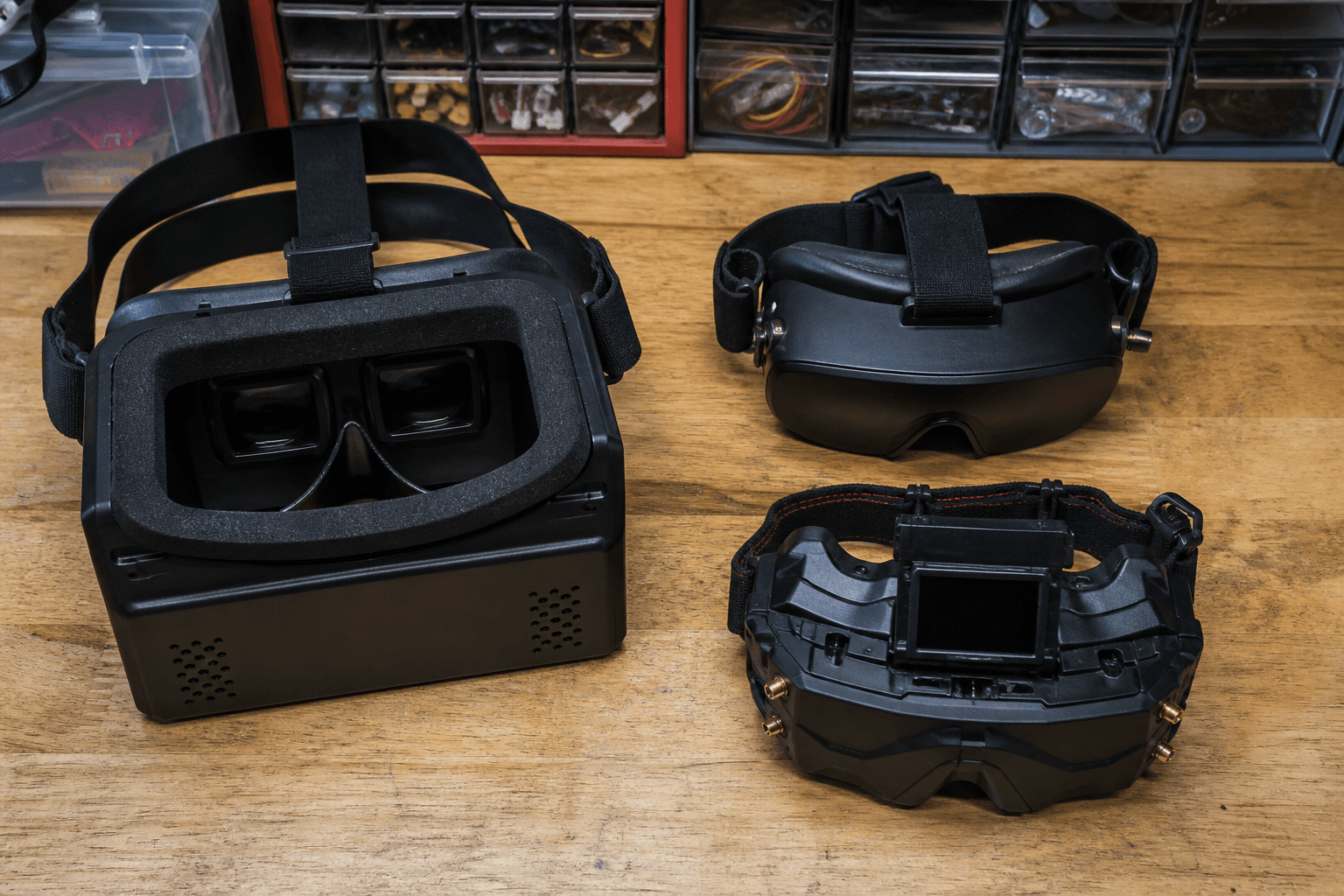
Box goggles: Big single screen, often budget-friendly, great for glasses in many designs. Bulkier in the bag, sometimes less IPD refinement, often excellent first analog set.
Slim goggles: Twin displays, usually lighter on the face; IPD adjustment matters more here. Popular upgrade path for pilots who outgrow entry box sets.
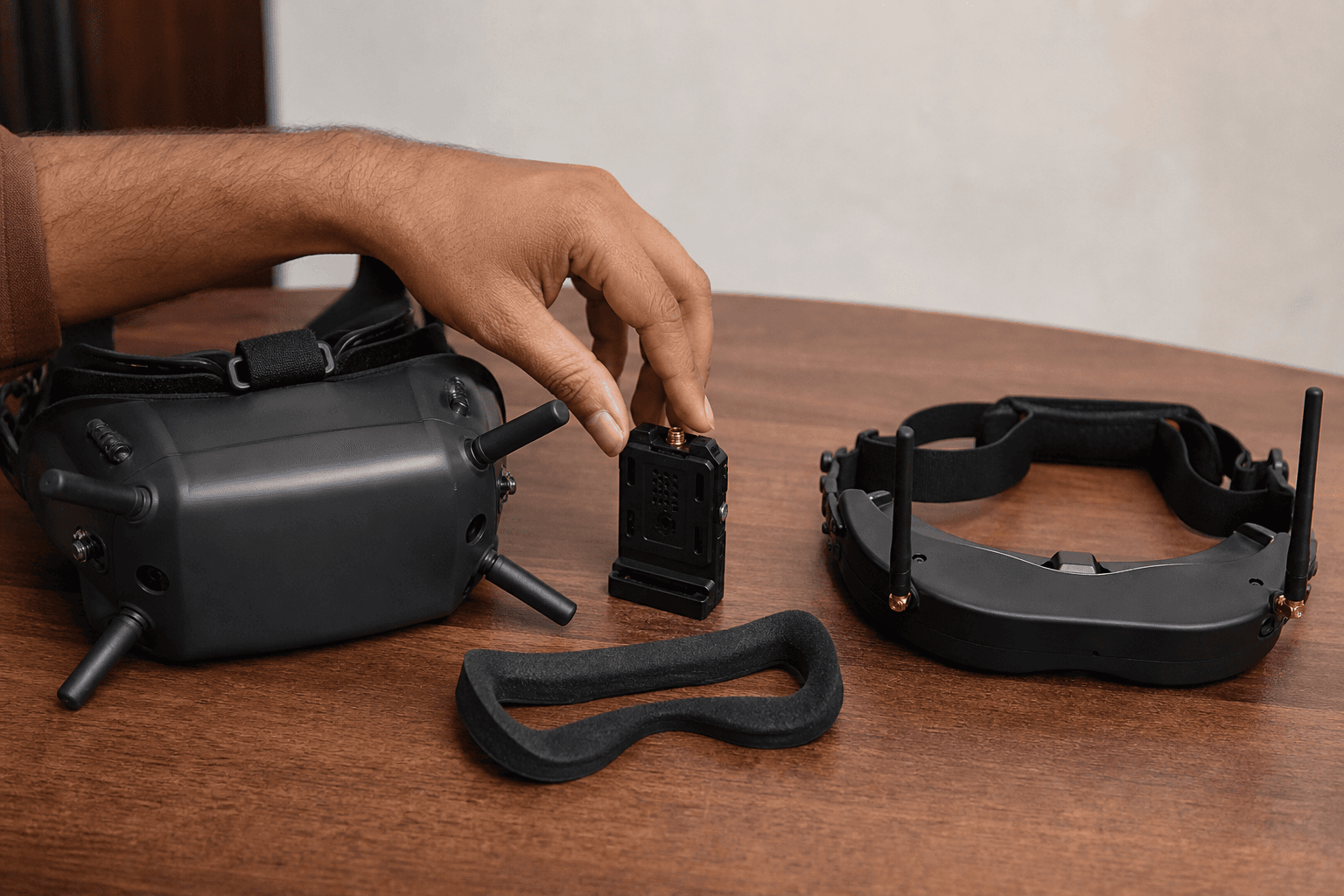
Modular / header style: Separate screen module from head mount; flexible for some studio and travel workflows. Digital module ecosystems (Walksnail, HDZero, some DJI paths) often land here, see ecosystem lock-in.
| Type | Bag size | Glasses | Upgrade path |
|---|---|---|---|
| Box | Larger | Often OK | New goggles common |
| Slim | Smaller | Check temples | Diopters or tight fit |
| Modular | Module-dependent | Varies | Swap module, keep strap |
Analog vs digital-ready
If you are analog today but might go HD digital later, favor goggles with a module bay that matches the ecosystem you intend to grow into. Bay sizes and vendors change, read current fitment before you buy, not a two-year-old thread.
Honest take: buying the absolute cheapest box set and expecting a painless path to top-tier digital is possible, but often you pay again in receiver and mounting friction. Plan one upgrade step, not five half-steps.
Decision tree:
Budget one purchase only?
├─ Analog for 12+ months → solid box + diversity analog receiver
├─ HD within 6 months → module-bay digital-ready + budget module/vtx path
└─ Unsure → analog box now; accept possible full swap later

Already chose HD stack?
└─ Read ecosystem guide before goggles, vtx and goggles are one chain
For Walksnail, HDZero, and DJI O3 stocking in India: Walksnail vs HDZero vs DJI O3.
For image/latency philosophy: HD vs analog in 2026.
Receiver and diversity
Analog goggles may have built-in receivers or external modules. Diversity: two antennas, helps when you turn your head. Antenna aim ties to antenna placement habits: antennas that poke your forehead are antennas that do not work.
Field habit: Adjust receiver antennas every session; they migrate in transit.
Fit checklist
Work through this on bench 15+ minutes before committing:
- IPD range matches your eyes (slim sets), glasses wearers see flying with glasses
- Foam you can replace or wash, Indian heat destroys foam faster than spec sheets admit
- Enough forehead clearance for your face shape
- Strap balances weight, not only top-of-head pressure
- Nose gap acceptable with or without glasses
- Fan noise tolerable if equipped
Common mistakes:
- Buying for resolution numbers without wearing them
- Ignoring module bay compatibility until vtx arrives
- Skipping warranty clarity on import, buying checklist
Brightness, DVR, and summer
- Carry microfiber; anti-fog discipline (vents, fan, or realistic sweat management)
- Balance brightness with heat, brutal summer sun and max backlight are not friends, summer heat packing
- If you clip for social, verify DVR workflow, card slot location and button access vary
Analog channel coordination
When flying analog at clubs, goggles must match VTx tables and power etiquette. Good goggles with wrong band selected look like a dead vtx.
Upgrade without buying twice
| Step | Smart move |
|---|---|
| 1 | Borrow at meet if possible |
| 2 | Pick ecosystem if going HD |
| 3 | Buy goggles with correct bay / receiver |
| 4 | Price second vtx before celebrating |
Domestic shops and communities help when modules need swap under warranty, DOA documentation before you mod.
Start comfortable, then chase spec sheets. Fatigue ends more flight days than bitrate ever will.
Budget tiers (India-realistic framing)
| Tier | Typical path | Upgrade note |
|---|---|---|
| Entry | Analog box, diversity | Whole-goggle swap to HD later |
| Mid | Better box or entry slim | Module bay if HD planned |
| HD-native | Ecosystem goggles + vtx | Lock-in, price second vtx early |
See building on a budget for how goggles fit against radio and quad spend. Goggles are not the place to cheap out if everything else is mid-tier, you stare through them every pack.
Used goggles caution
Second-hand goggles can be fine for analog entry. Check: foam condition, fan noise, screen burn-in on box sets, module bay pins bent, missing diopter mounts. Meet in person when possible, warranty and DOA habits apply less on used, so inspect like an adult.
Receiver module upgrades
Some analog goggles accept external receiver modules for better sensitivity. If you fly busy race events, diversity and quality receiver modules matter as much as vtx power, pair with analog vtx etiquette.
First-week ownership workflow
Day 1, bench:
□ IPD / diopter set; wear 15+ min
□ Fan noise acceptable?
□ Module bay pins straight (if applicable)
□ DVR test clip, card format at home

Day 2, field:
□ Diversity antennas adjusted
□ Match vtx band, [analog channels](/blog/analog-vtx-channels-and-power-india)
□ One pack only, comfort before content

Week 1:
□ Wash or replace foam if sweat-heavy, [glasses guide](/blog/flying-with-glasses-goggle-foam-and-dioptors)
□ File invoice + serial, [DOA docs](/blog/warranty-and-doa-how-to-document-unboxing)
Common buyer mistakes (India)
| Mistake | Cost |
|---|---|
| HD goggles without vtx budget | Goggles sit while you save for module |
| Wrong module bay size | Adapter friction or no upgrade path |
| Ignoring summer foam rot | Replacement foam unavailable for obscure SKU |
| Import with no local RMA | One dead pixel = long email thread |
| Buying resolution, skipping fit | Jaw pain ends sessions before bitrate matters |
Borrow at a meet when possible. Ten minutes on your face beats ten YouTube reviews. Comfortable goggles get worn; spec-sheet winners collect dust.
India shipping note: heavy box goggles cost more to return if DOA, photograph unboxing before first wear. Domestic sellers with clear RMA beat import savings when fit is uncertain.
See also
- HD vs analog in 2026, latency, image quality, and when each path still wins
- Walksnail vs HDZero vs DJI O3: ecosystem lock-in, module bays and spare-part reality
- Buying FPV gear in India, warranty and import timing on expensive goggles
Discussion
Comments aren't open on this post yet. Share it with your build group, or start a thread on X.