
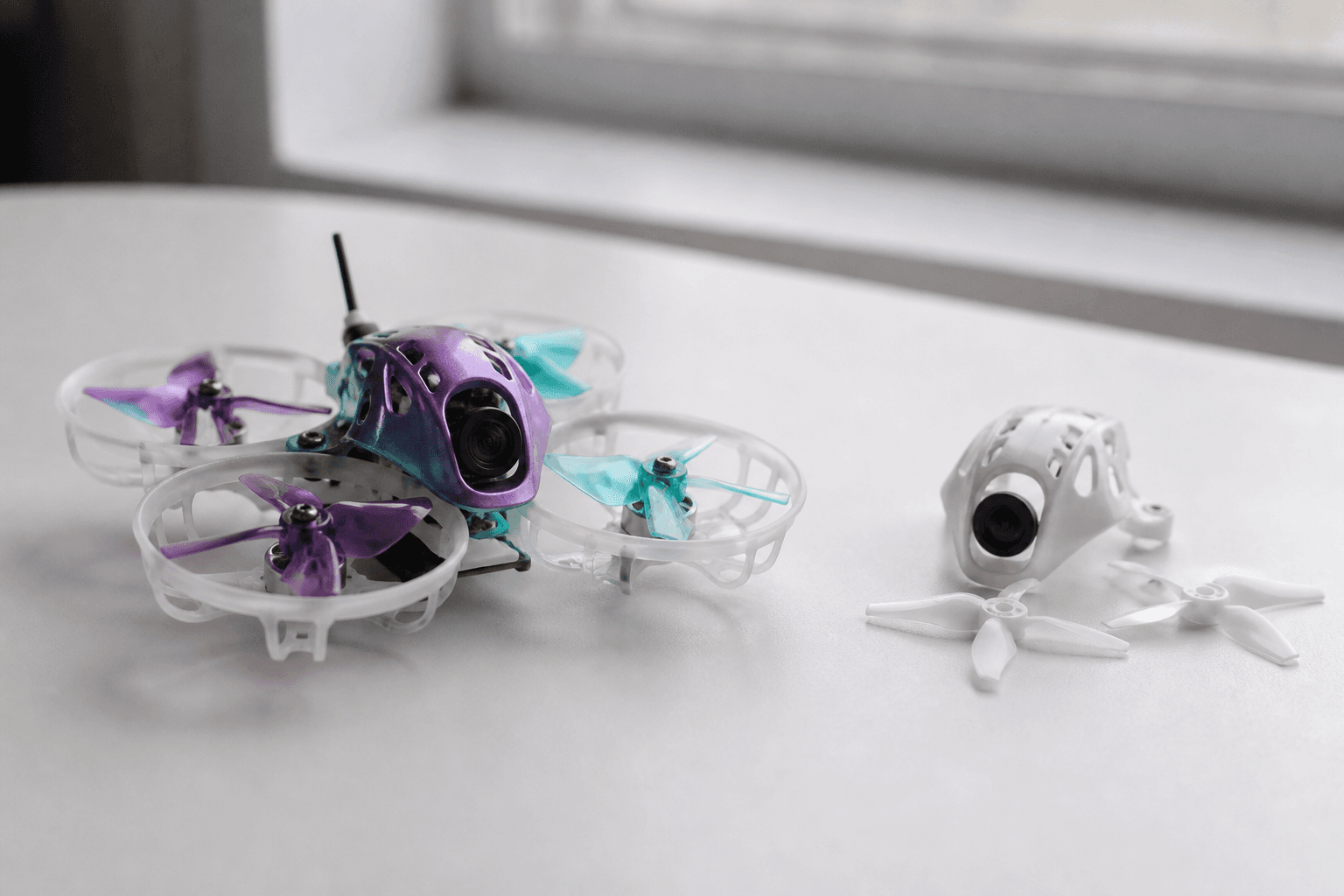
Tiny whoop BNF upgrades worth doing

Stock BNF whoops fly out of the box; a few upgrades multiply flight time per dollar, a few others are wasted money. The goal is more packs per evening, not a science project that never leaves the bench.
Philosophy: flight count first
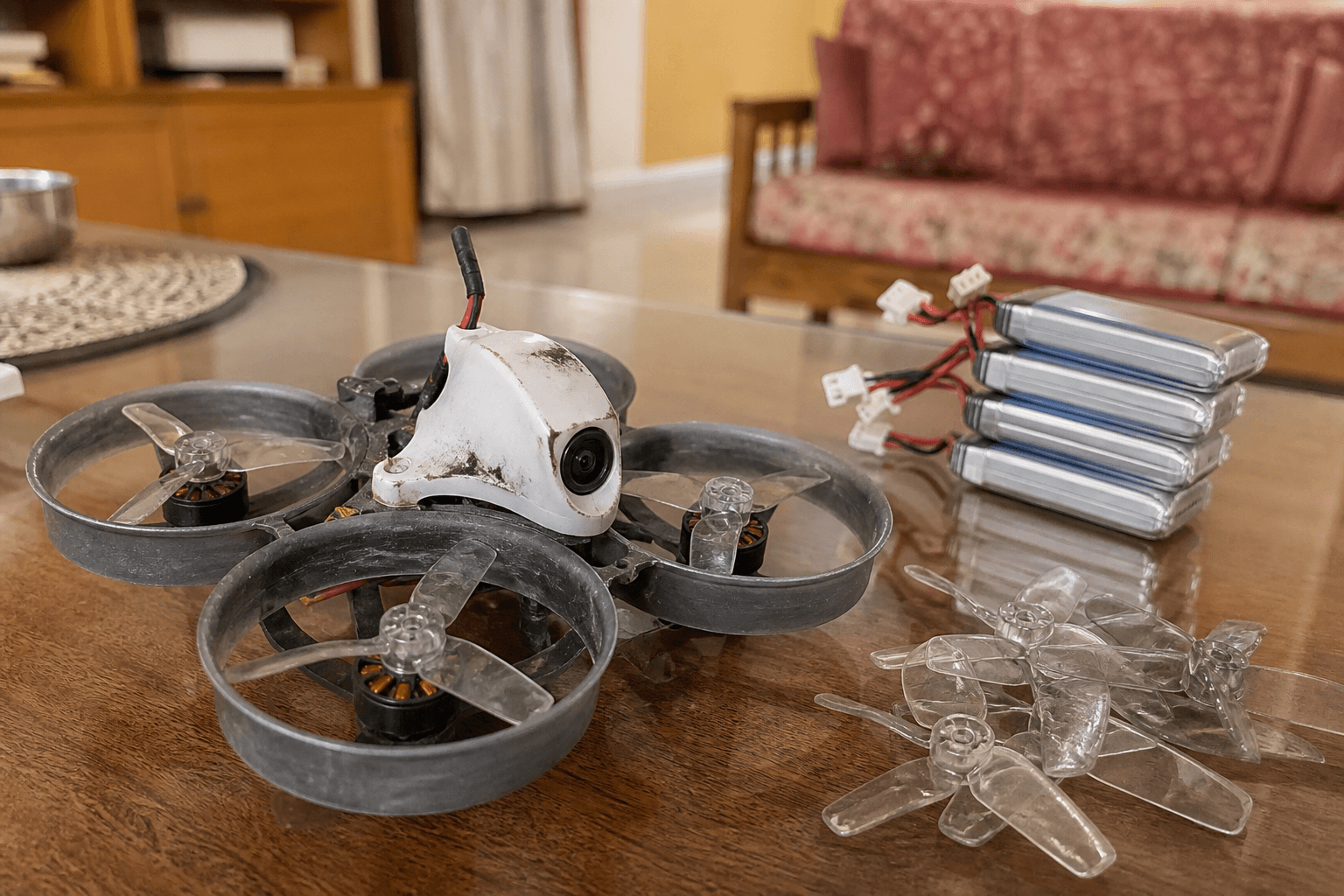
Whoop learning is repetition. Batteries and props beat exotic motors for the first month. Upgrade when you have a specific problem: voltage sag, duct cracks, props you hate, not because a build video swapped everything day one.
Worth it
| Upgrade | Why |
|---|---|
| Extra batteries | More packs beats faster motors |
| Props you actually like | Cheap bulk; tune feel fast |
| BT2.0 / PH2.0 consistency | Match charger and quad, connector guide |
| Ducts / frame braces after crashes | Restore protection cheaply |
Batteries: the real upgrade
Buy more 1S packs before faster motors. Whoop sessions die when the third pack sags and you wait to charge. Match connector type across fleet, mixing PH2.0 and BT2.0 without intent creates adapter failure points.
| Pack habit | Benefit |
|---|---|
| 6–10 packs for a session | Actual practice time |
| Label capacity and age | Retire saggy packs early |
| Storage voltage discipline | LiPo safety |
Props: cheap experiments
Props change feel more than motors for beginners. Buy two profiles, slightly more grip vs more efficient, and fly them back-to-back in the same room. Note which survives your crashes longer.
Connector standardization
Pick PH2.0 or BT2.0 for the whoop fleet. Adapters work on bench; in flight, native match wins. Inspect pins weekly, worn whoop connectors arc and brown out mid-hover.
Maybe later
- Motors: when stock bearings die or you want more punch in a gym
- FC swap: only if you need specific firmware features
- HD vtx: whole new thermal and weight budget
When motors make sense
Swap motors when:
- Bearings grind after crash triage
- You moved to a larger indoor space and stock lacks punch
- You have spare motors anyway from a dead quad
Do not swap motors to fix pilot mistakes, that is what props and practice fix.
FC swap triggers
- USB port damage
- Need specific UART features for accessories
- Stock FC genuinely dead
Otherwise, learn Betaflight on what you have, tuning basics transfer across quads.
Skip early
- Heavy “race” motors on 1S that sag voltage
- Random camera swaps without weight balance
- Full frame migration before you know where you fly, which build first
HD vtx on whoop (caution)
HD adds weight and heat. Indoor whoops already struggle with voltage sag. If HD is the goal, consider cinewhoop class instead of forcing vtx onto a 1S whoop that was not designed for it, see HD vs analog for ecosystem lock-in costs.
Upgrade workflow
Whoop upgrade order:
1. Six more batteries (connector matched)
2. Two prop types, fly both
3. Spare ducts / frame after first crashes
4. Field kit: props, batteries, charger, tape
5. Motors, only with a stated goal
6. FC / HD, last
Flying environment upgrades (free)
- Fly when the room is empty, kids and pets
- Tape loose carpet edges
- Mark battery landing zone away from walk paths
Better flying space beats motor KV debates.
India
Whoop parts are import-friendly small packets but domestic props save a flight weekend when you need bags now.
Order props and batteries from local stock before motors from overseas. A grounded weekend waiting for PH2.0 packs teaches the value of domestic consumables.
Charger and parallel habits
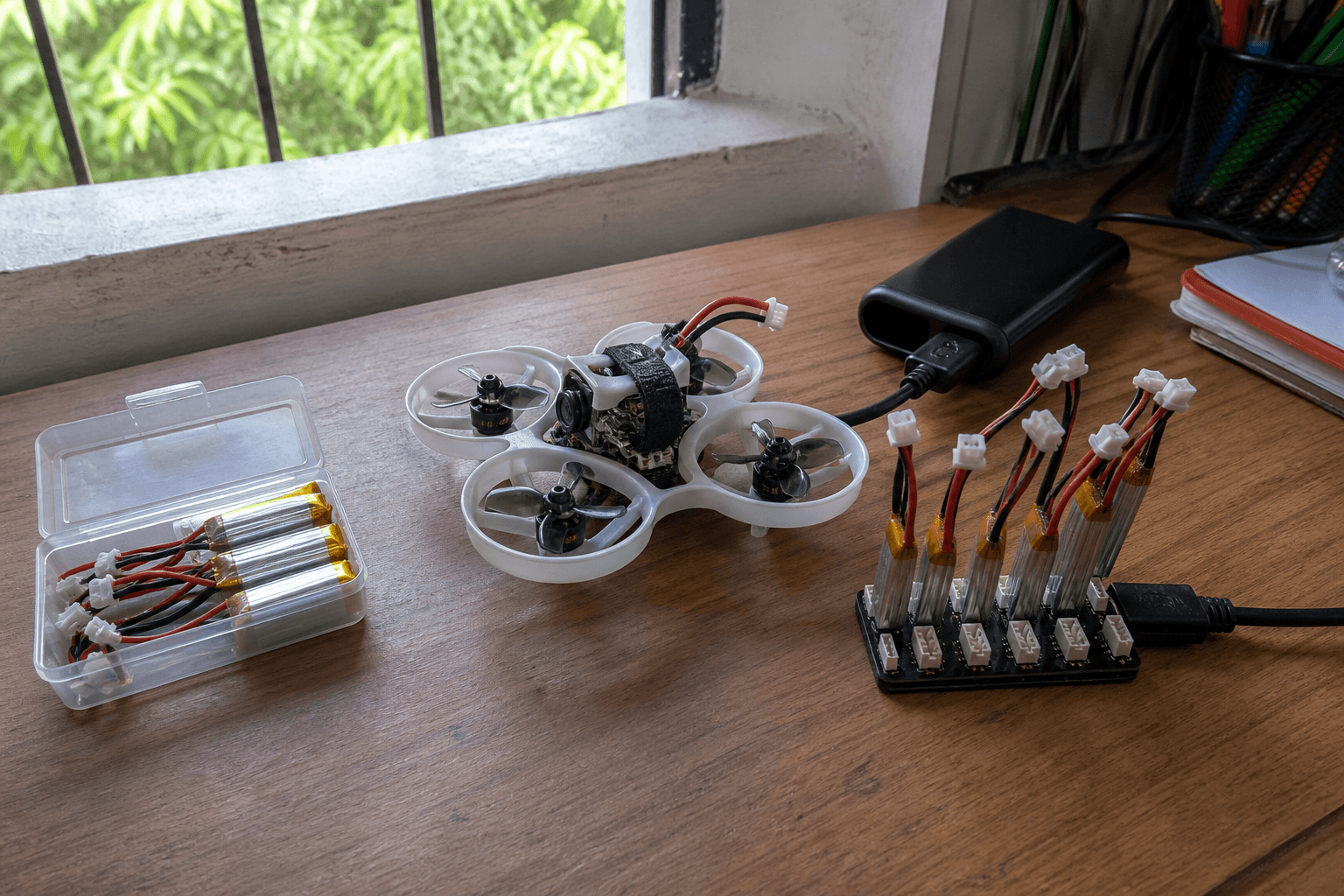
Whoop batteries charge fast, that is good and dangerous. Use a charger you trust, never leave packs unattended on first use, and retire any cell that puffs after a gentle charge. Parallel boards exist for PH2.0, only parallel packs of matching age and health. One bad cell in a parallel group affects everyone.
Label chargers in mixed fleets so a housemate does not plug your 1S whoop board into a 4S profile. Sounds obvious until it happens.
Radio and whoop tune
Whoops benefit from sane rates and a switch for turtle mode if your FC supports it. Upgrade radio firmware before swapping FC for features you might already have. Radio gimbals and EdgeTX matter as much as motors for indoor precision.
Frame and duct maintenance
Ducts crack at motor mounts first, the impact point on every wall kiss. Keep spare ducts in the bag, not in a drawer at home. A cracked duct lets props hit furniture and walls harder, which transfers shock to motors and FC. Five-minute duct swap beats motor swap on Sunday evening.
When to stop upgrading and fly
If you have not flown fifty packs on stock hardware, you do not yet know what you need. Log what breaks and what sags. Upgrade from data, bent ducts, dead motors, connector wear, not from forum FOMO.
Weight budget on 1S
Every gram on a whoop costs punch and flight time. HD cameras, metal hardware, and thick vtx pigtails add up faster than motor KV debates suggest. Before swapping parts, weigh the quad with your typical pack, compare to stock photos for your model.
| Add-on | Typical cost |
|---|---|
| Metal camera mount | +2–4 g, often not worth it indoors |
| Longer vtx pigtail | Snag risk + balance shift |
| Heavier props | More thrust, more sag |
| Tape and mods | Count it, stacks |
If voltage sags on stock motors, batteries or connectors are the usual fix, not heavier motors that sag harder.
Off-season whoop shelf
Whoops stored with ducts on compress props over months. Remove props, storage-voltage packs, and inspect PH2.0 pins before Diwali indoor season. A whoop that sat humid on a balcony needs connector wipe-down per monsoon storage even if you only fly in AC rooms.
Camera and vtx on stock BNF
Most stock whoop cameras are adequate for learning. Swapping vtx for range you do not need indoors adds heat. If video is snowy, check antenna first, pigtail damage from ceiling kisses is more common than "bad vtx" on month-one builds.
Bench
Stock props and whoop spares from the Bench, more packs beat premature motor swaps.
Discussion
Comments aren't open on this post yet. Share it with your build group, or start a thread on X.