

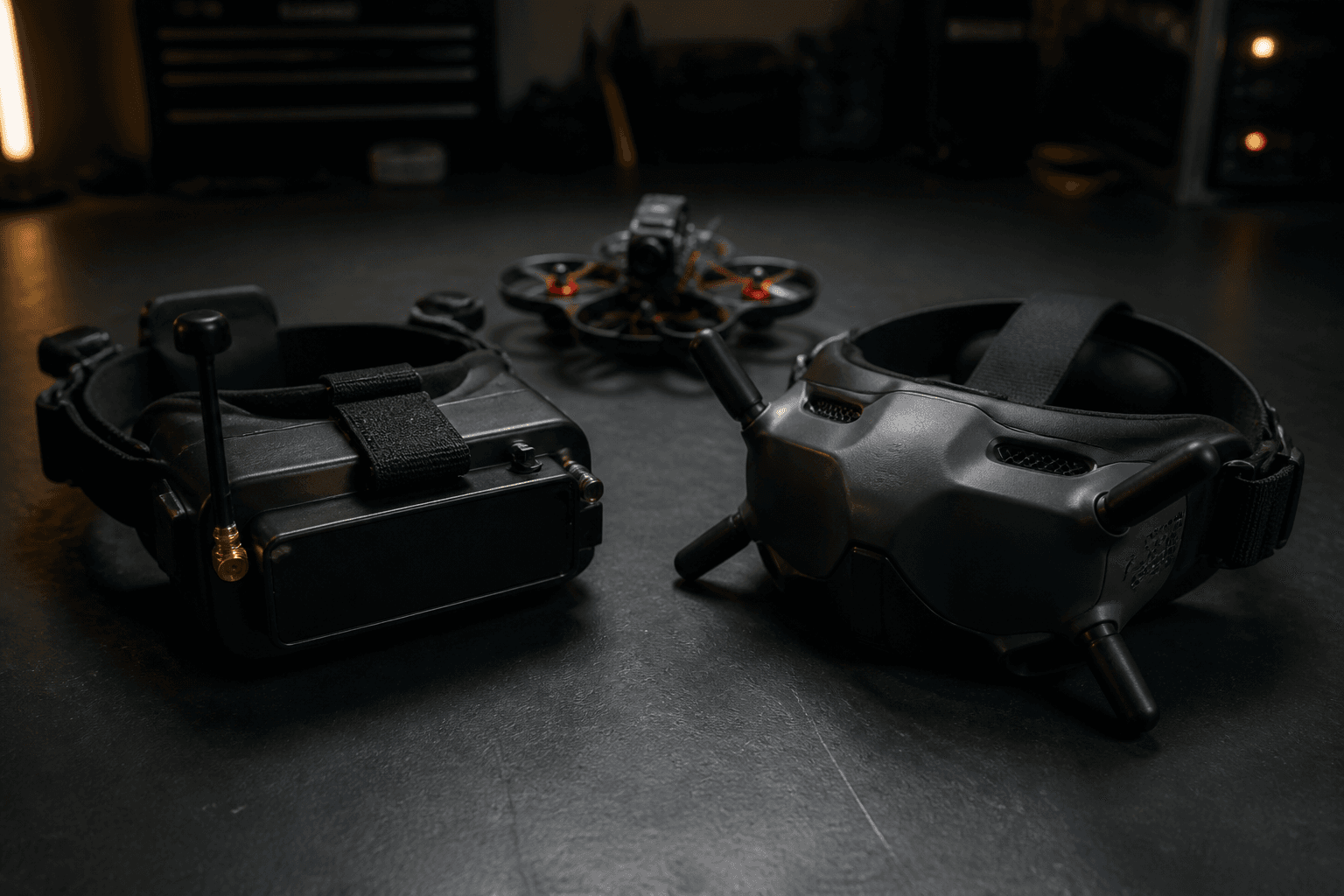
Analog vs digital FPV for beginners

Analog vs digital FPV is a video choice, not a flight-controller choice. Both put a camera picture in your goggles. They differ in look, cost, weight, and how locked in your next goggle purchase becomes.
FPV Grind’s beginner rule: start with whatever your kit or BNF already uses. Don’t buy premium HD goggles before you can hover. Practise in the sim first; save the ecosystem deep dive for later (HD vs analog in 2026).
Simple comparison
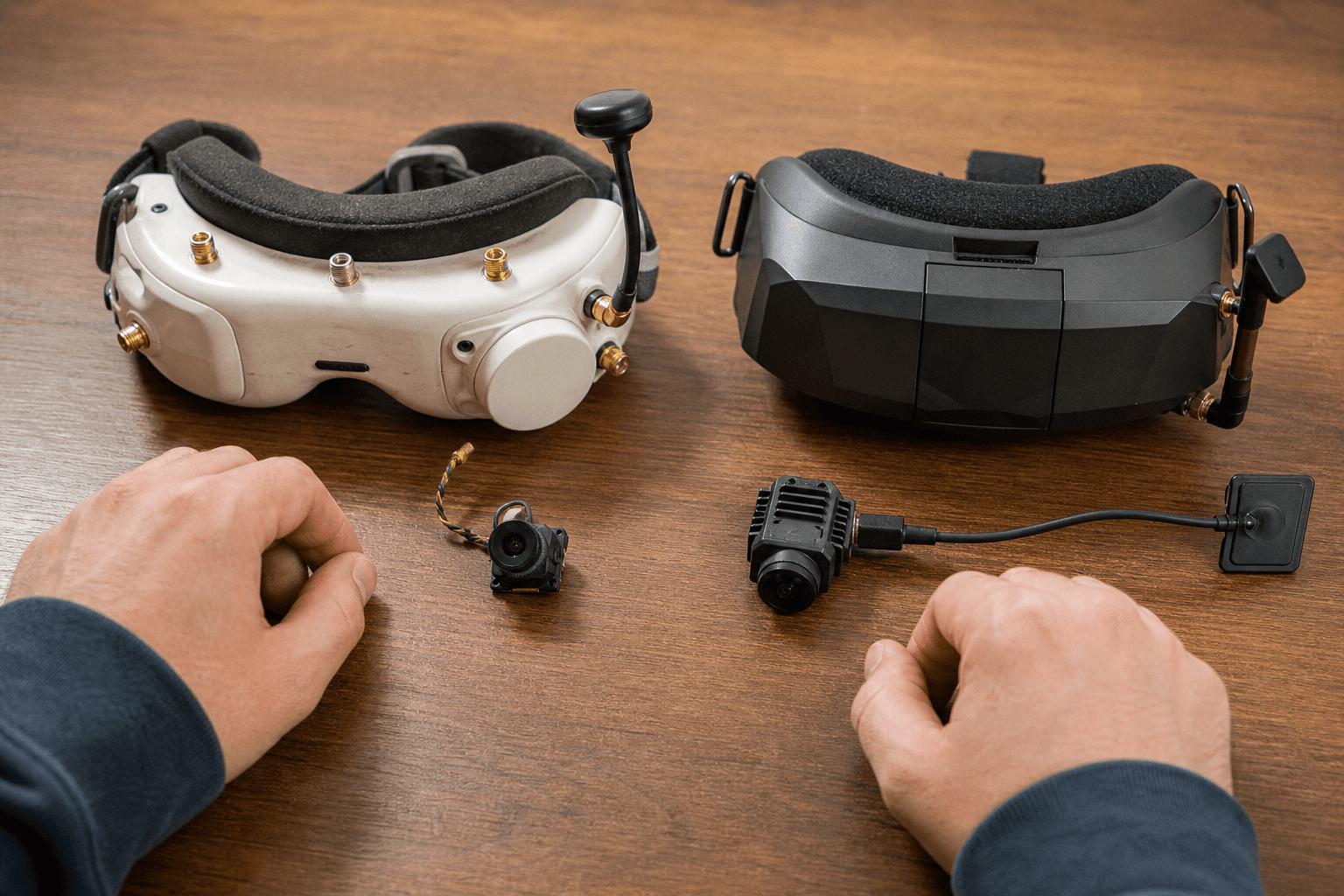
| Analog | Digital / HD | |
|---|---|---|
| Look | Soft, noisy, classic FPV snow | Cleaner image, fewer “static storms” |
| Cost | Usually cheaper entry | Higher goggles + air unit / VTX |
| Weight | Friendlier on tiny whoops | Harder on 65mm trainers |
| Latency feel | Immediate and “raw” | Very good on modern systems; varies by ecosystem |
| Lock-in | Brands mix freely | Ecosystem matters (DJI, Walksnail, HDZero) |
| Spare / repair | Cheap cameras and VTXs | Air units cost real money |
Lock-in explained: Walksnail vs HDZero vs O3. Goggle shopping: how to choose FPV goggles and the box vs slim buyer’s guide.
Decision matrix
| Factor | Prefer analog | Prefer digital |
|---|---|---|
| First whoop / kit budget | ● | ○ unless kit includes it |
| 65–75mm indoor trainer weight | ● | ◐ (HD whoops exist; heavier) |
| Want clean reels day one | ◐ | ● |
| Friends all fly one HD system | ◐ | ● (borrow gear, share advice) |
| Hate buying goggles twice | Buy once, with a plan | Same: pick the ecosystem deliberately |
● = strong fit · ◐ = workable · ○ = poor default for most beginners
Beginner recommendation (India)
1. Own nothing → buy a kit with working video (usually analog or entry HD)
2. Own analog goggles → buy analog BNFs until you outgrow them
3. Own HD goggles → match that ecosystem on the quad
4. Still learning to hover → don’t upgrade video yet
Apartment pilots care more about noise and repair costs than 1080p. A soft analog picture you fly three times a week beats an HD freestyle rig that sits on a shelf. See what size FPV drone and what FPV drone to buy first.
Analog channel and power habits in India: analog VTX channels and power. Later: antenna placement for HD and analog.
Failure modes
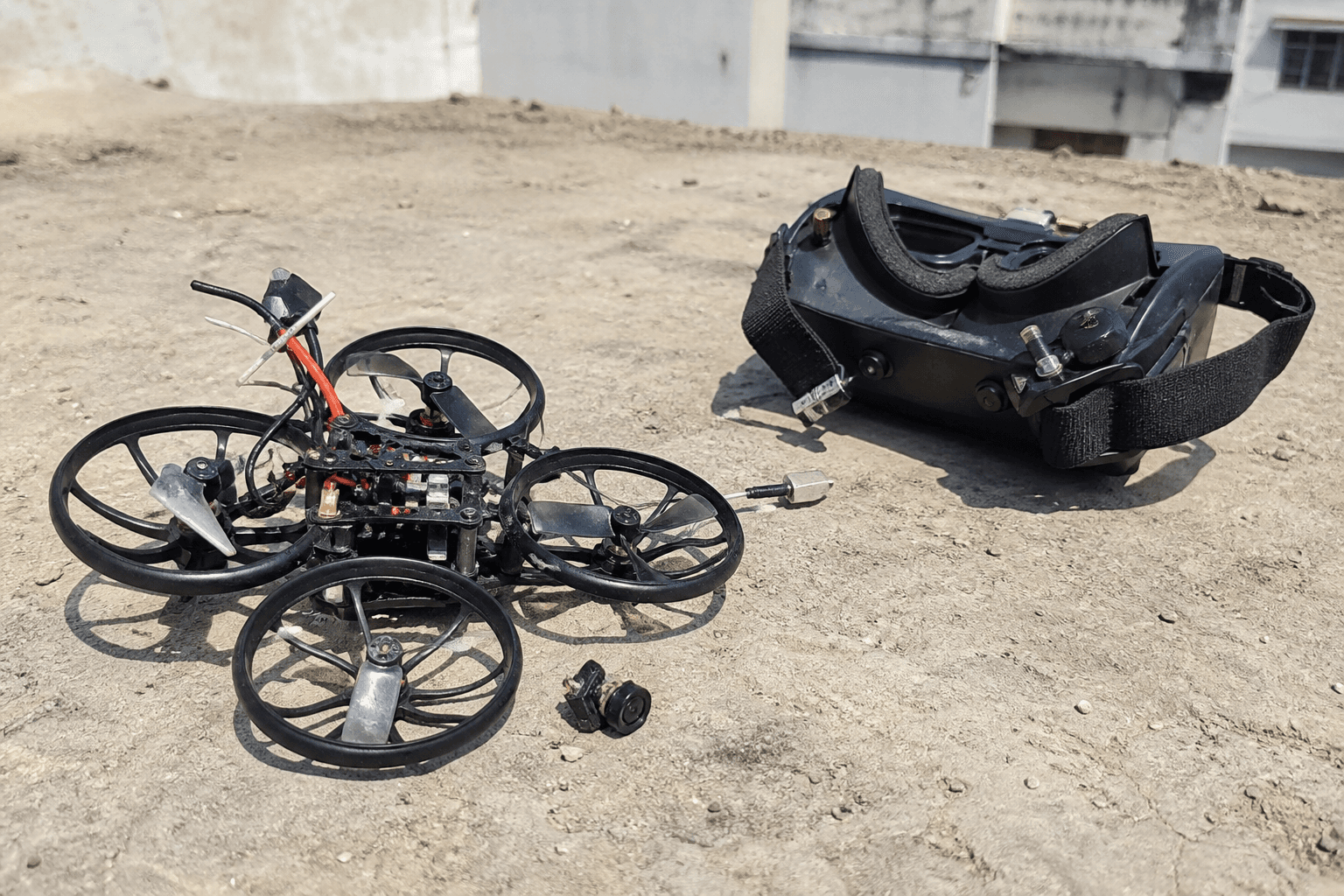
| Mistake | What happens |
|---|---|
| Premium HD goggles before hover | Money gone; skill unchanged |
| HD air unit on first 65mm | Weight, cost, broken mounts |
| Mixing ecosystems “just this once” | Wrong cable, unused VTX, wasted money |
| Judging FPV by Instagram clarity | You buy cinema gear and skip stick time |
| Ignoring friends’ goggles | Nobody can help you bind or troubleshoot |
Workflow: pick in 10 minutes
□ What video does my intended kit/BNF ship with?
□ Do I already own goggles? Match them.
□ Is my first quad a whoop? Prefer light, kit-default video.
□ Am I buying goggles once for 2+ years? Read the ecosystem guide first.
□ Have I practiced sticks on /sim yet?
Kit comparison if you are choosing a first whoop: Cetus Pro vs Mobula6.
When to upgrade later
Upgrade video when hovering and soft landings are boring, you have a real outdoor or cinematic goal, and your budget can absorb a crashed air unit. Until then, analog (or kit HD) is not outdated; it is the right tool. Choosing a freestyle class: cinewhoop vs micro vs 5".
Bottom line
Analog vs digital is not a personality test. Match the video system to your first quad and the goggles you already own. Learn on the picture you have; buy prettier video when your skill and flying spots justify it.
Bench
Kits and whoops: the Bench. Practice before you upgrade goggles: /sim. Compatible builds: Grind Lab.
See also
FAQ
- Analog vs digital FPV - which should beginners choose?
- Prioritise flying time over picture quality. Analog, or whatever video your kit includes, is enough to learn hovering and orientation. Digital HD looks better but costs more and usually adds weight.
- Can I switch from analog to digital later?
- Yes. Many pilots learn on analog whoops, then move to HD on a later quad. Treat HD goggles and their ecosystem as a second purchase, once you can fly.
- Is digital always better outdoors?
- Digital looks clearer, but range, latency, weight and lock-in still matter. On indoor whoops, picture clarity is rarely the limit; crashes and pack count are.
Discussion
Comments aren't open on this post yet. Share it with your build group, or start a thread on X.