
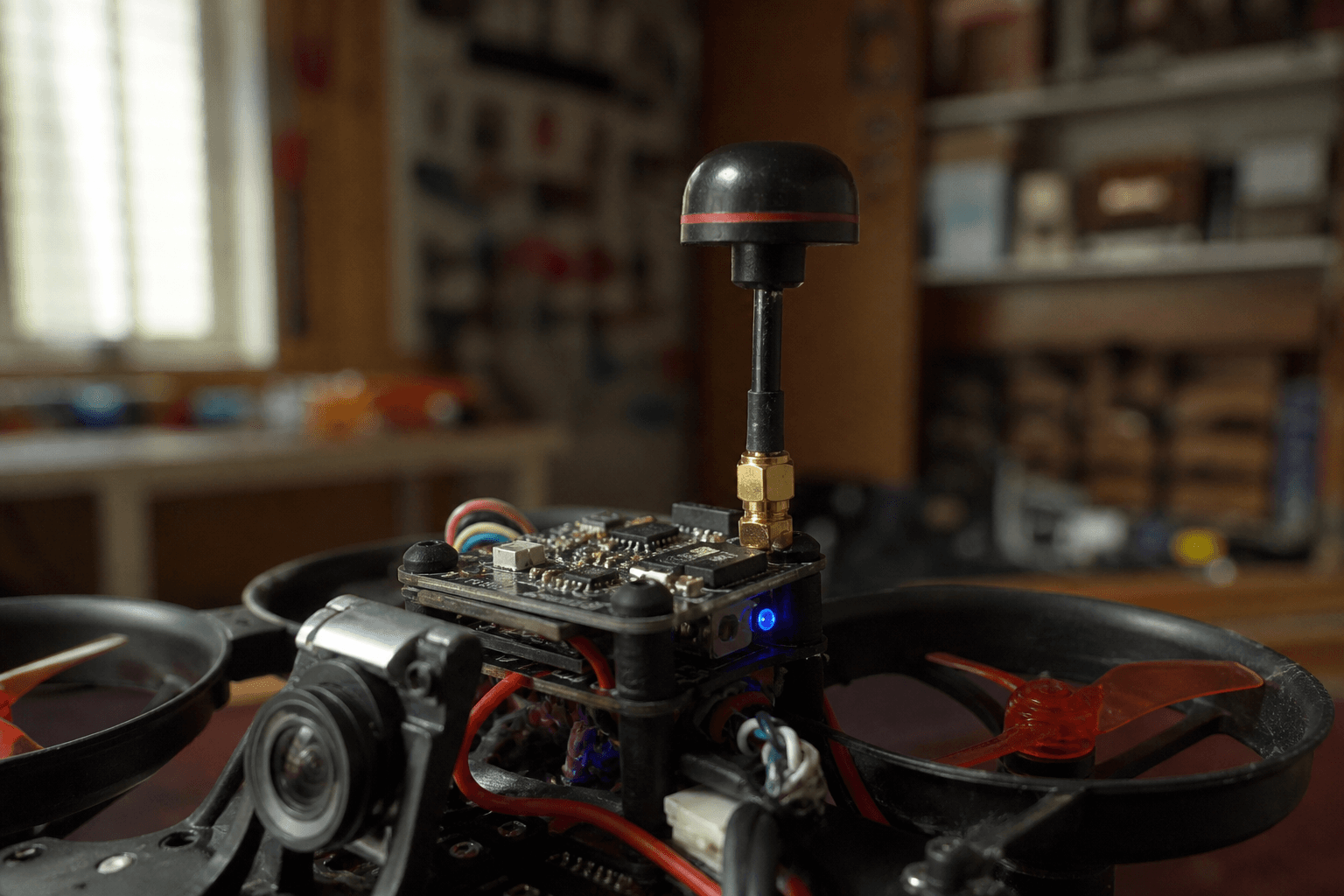
Analog VTx tables and power in India

Analog VTx tables look archaic until you fly with six other pilots on overlapping channels, then they are survival. In India, add dense Wi-Fi, terrace testers, and club fields with informal rules, and channel discipline becomes social technology as much as RF engineering.
This guide is practical etiquette and setup, not legal advice. For regulatory context on drones broadly, see DGCA rules pilots should know. For antenna work that matters more than milliwatts, see antenna placement for HD and analog.
Tables and bands: the minimum literacy
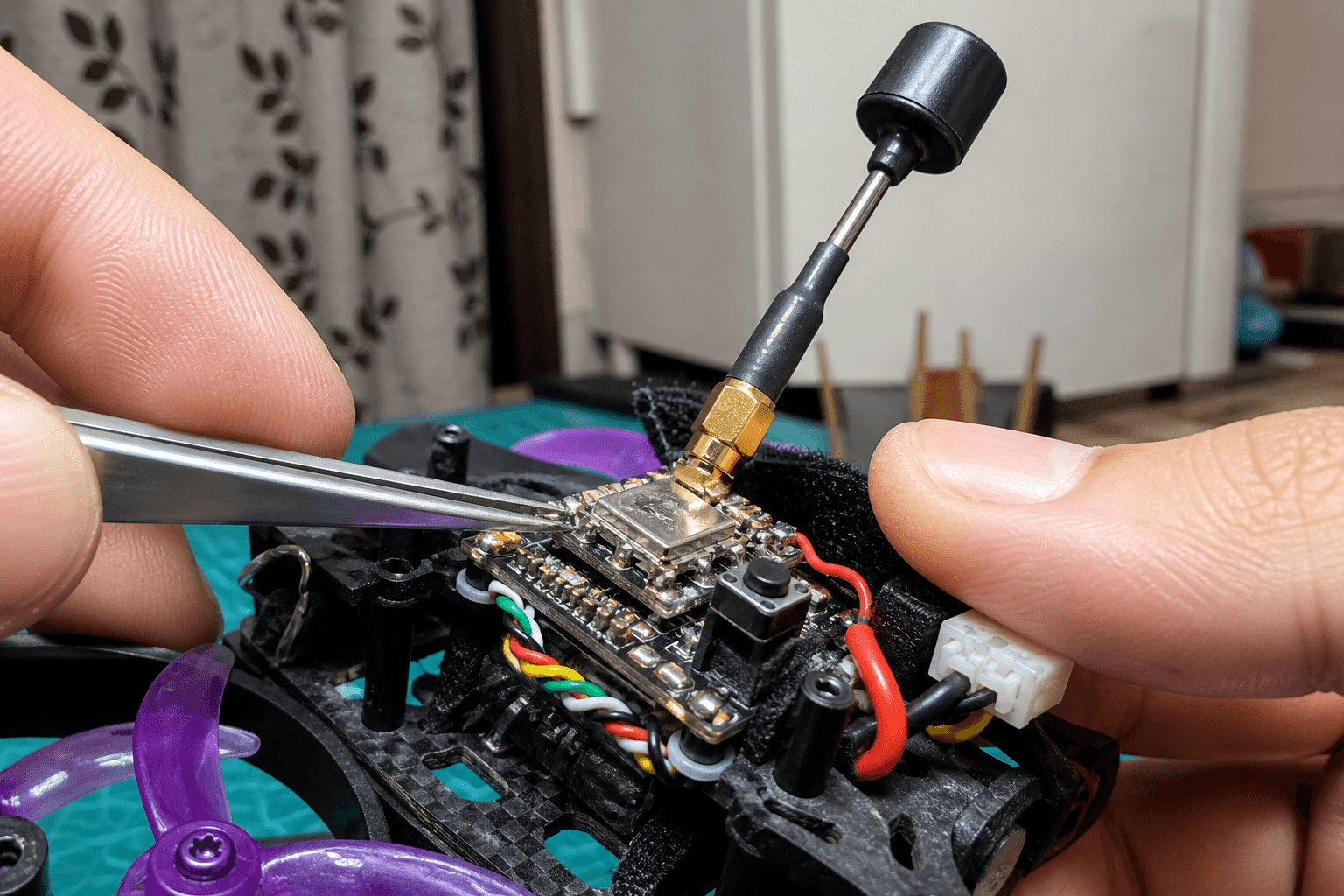
Analog 5.8 GHz vtx units organize output into bands (common labels: R, L, A, F, E, exact naming varies by manufacturer) and channel indices within each band. Your goggle receiver must be on the matching band and channel to see your feed.
Field habits:
- Write your channel on the quad, sharpie on an arm beats memory after three coffees.
- Confirm with voice before arming: "I'm on Raceband 4" not "I'm on channel something."
- When joining a new group, ask for the organizer table: do not invent your own if others are already flying.
| Mistake | Why it hurts |
|---|---|
| Same channel as neighbor | Both feeds degrade; someone gets blamed unfairly |
| Adjacent channel bleed | Still messy on some vtx/goggle pairs |
| Wrong band selected on goggles | Looks like vtx failure; wastes a pack |
Pit mode / unplug rule: Use pit mode or unplug vtx when working on the bench next to powered goggles, protects receivers and friendships. A vtx blasting next to someone's diversity receiver while you solder is how club drama starts.
Raceband is common at Indian club meets, ask the organizer before you pick a channel.
Power levels: context beats max mW
High power does not fix bad antennas or a vtx buried in carbon. It can annoy neighbors, heat your vtx, and drain packs faster, without buying meaningful range in open field if your link was already antenna-limited.
| Context | Habit |
|---|---|
| Solo open field | Lowest power that holds image at your flying distance |
| Club race | Organizer table, obey |
| Urban testing | Minimum power; shortest test; know your spot's tolerance |
| Long range exploration | Increase only after antenna placement is correct |
Setup checklist before raising power:
1. Antenna screwed firm, not cross-threaded
2. Pigtail not kinked; u.fl seated if applicable
3. Vtx clear of carbon shadowing
4. Goggle antennas positioned, not folded against your head
5. Only then step mW if needed
India-specific etiquette
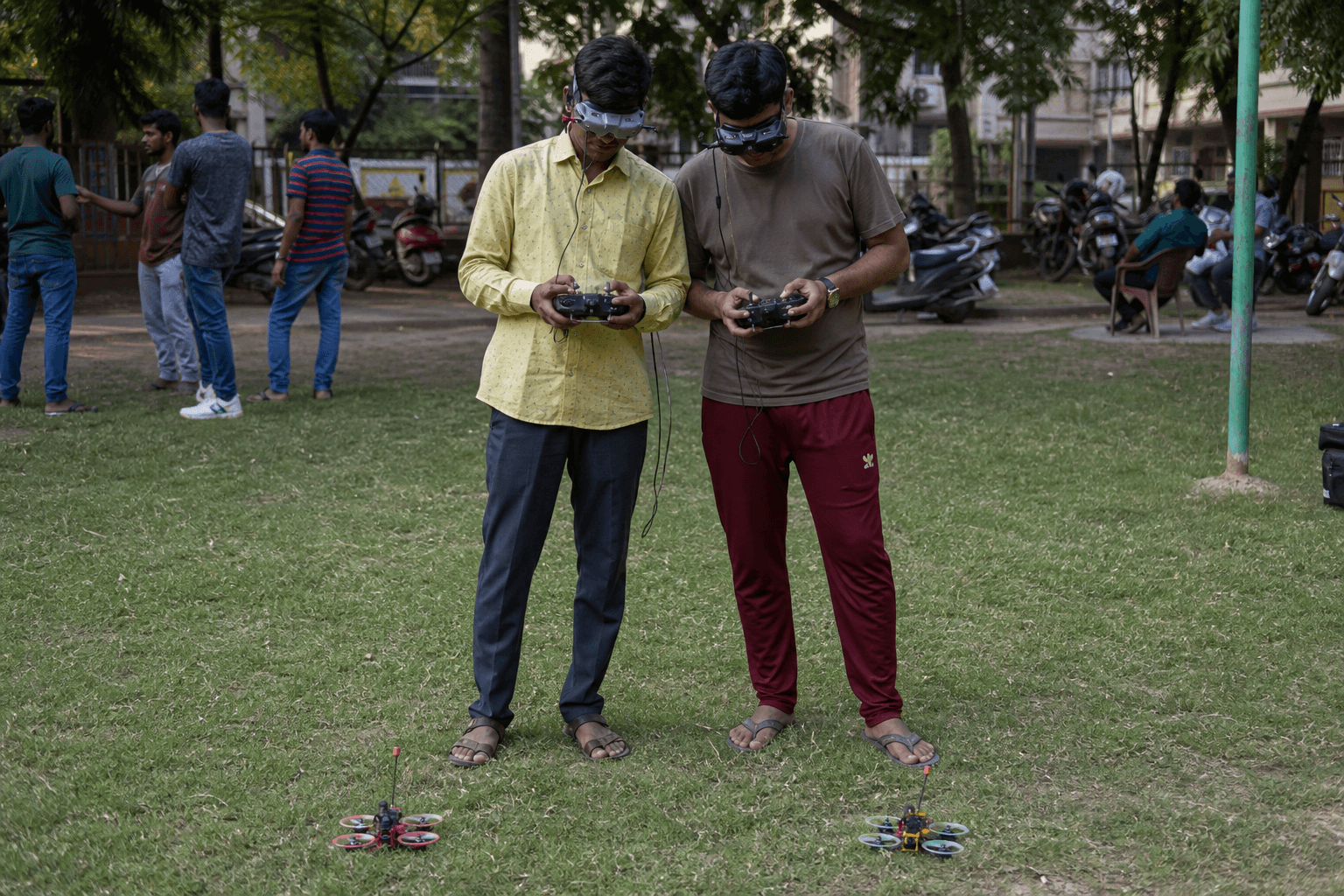
Indian flying spots span open club fields, semi-urban parks, and apartment terrace culture that is convenient and RF-hostile. None of those reward a vtx turned to "because I read a forum."
- Dense housing means more interference and more annoyed non-pilots if you run high power casually, coordinate with locals who know the spot's history.
- Terrace tests at high mW are a fast way to create complaints, see flying in apartments and terraces for the human side, not just RF.
- Summer heat: vtx on max power runs hotter; airflow matters on hot field days.
- Not legal advice: some venues and events publish power caps; DGCA hobby rules are separate from analog vtx culture, know which document applies to your situation.
Race mode and smart audio
Many modern vtx units support pit mode, table switching, and telemetry-style control from the FC. Worth configuring once:
- Map a switch to pit mode for bench and pit lane
- Document your default race channel in the model notes on your radio, EdgeTX basics help here
- After a crash, check vtx SMA integrity before assuming channel issues
Analog vs HD at mixed meetups
Clubs increasingly have both analog and digital pilots. Analog channel coordination still matters for the 5.8 crowd. HD pilots have separate pairing concerns, see Walksnail vs HDZero vs DJI O3. Do not assume one briefing covers everyone.
| System | Coordination question |
|---|---|
| Analog 5.8 | Band + channel table |
| DJI / Walksnail / HDZero | Goggle link / vtx bind per vendor |
| ELRS | Separate from video, still coordinate 2.4 vs 900 |
Common mistakes
- Max power as first fix for static, replace bent antenna first; check field kit spare stub.
- Flying without asking at a new urban spot, one complaint can close a terrace for everyone.
- Forgetting goggle band after lending goggles to a friend, verify before arming.
- Skipping OSD voltage: OSD essentials matter even on analog; vtx heat correlates with saggy packs.
Purchase decision (analog vtx)
Need vtx today for 5" analog?
├─ Club races → raceband-compatible, pit mode, known brand for spares
├─ Freestyle solo → reliable SMA, sane heat sink, don't chase mW
└─ Whoop → board-mounted vtx matched to your FC footprint

India: buy from seller who stocks SMA antennas and replacements
If you are choosing first goggles, analog vtx table support is built into most receivers, pair with goggle buyer's guide for diversity and fit.
Group flying briefing template
When you arrive at a spot with other pilots, a thirty-second briefing prevents channel chaos:
1. Who is already on which band/channel?
2. Any HD pilots pairing separately?
3. Power cap for today?
4. Pit lane / bench vtx-off rule?
5. Write your assignment on the quad
Experienced clubs do this automatically. New pilots should ask, nobody minds the question; everyone minds surprise static on their line.
When to retire a vtx
Intermittent snow, heat shutdown, or stripped SMA threads are vtx retirement signs. Repairing a ₹800 vtx is rarely worth more sessions than replacing it, especially if you have already burned a day on channel myths. Spend the afternoon tuning OSD warnings on the new unit instead.
Troubleshooting static (channel vs hardware)
| Symptom | Check channel/power first | Check hardware |
|---|---|---|
| Snow on one channel only | Neighbor overlap, wrong band | Antenna, vtx heat |
| Snow everywhere | Goggle band, vtx table reset | SMA, pigtail, camera |
| Good on bench, bad in air | Power too low for range | Antenna in carbon shadow |
| Image returns when vtx cools | Power / thermal throttle | Airflow, vtx mounting |
Workflow: confirm channel assignment → swap known-good antenna → then raise power one step. Skipping straight to max mW in a dense terrace annoys everyone and rarely fixes a loose SMA.
Urban India: morning tests beat evening Wi-Fi noise; pit vtx when spectators pass; coordinate ELRS separately, see 2.4 vs 900 MHz.
Discussion
Comments aren't open on this post yet. Share it with your build group, or start a thread on X.