
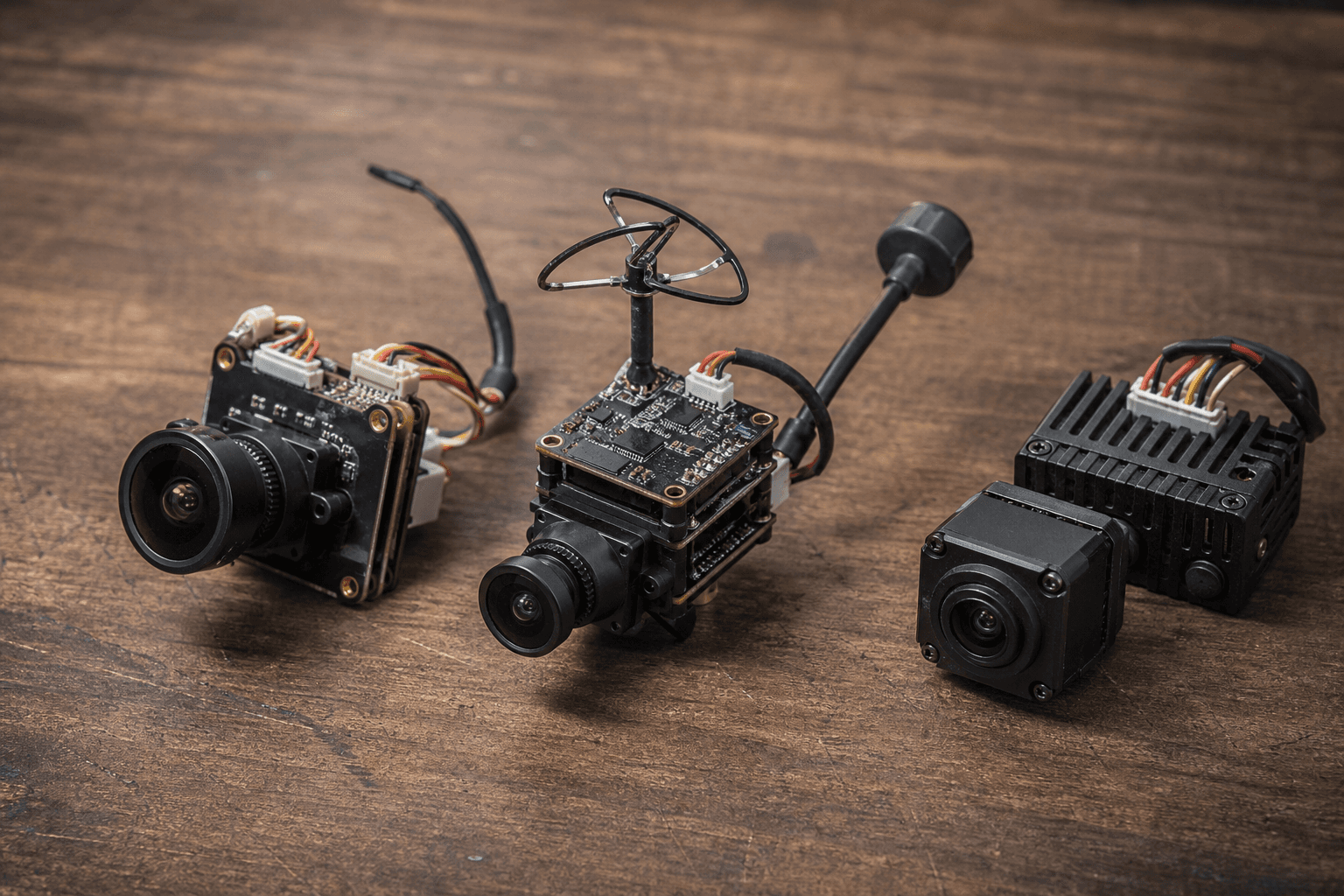
Walksnail vs HDZero vs DJI O3: ecosystem lock-in

HD vs analog is one decision; which HD ecosystem is another. Walksnail, HDZero, and DJI O3 each bundle goggles, vtx, antennas, and firmware culture differently. Pick wrong and you rebuy half the chain six months later when your first vtx meets a tree.
This is not a spec-sheet shootout, it is a maintenance and upgrade map. For latency and image quality basics, start with HD vs analog in 2026. For goggle form factors and module bays, read FPV goggles: box, slim, and modular.
Why ecosystem lock-in hurts
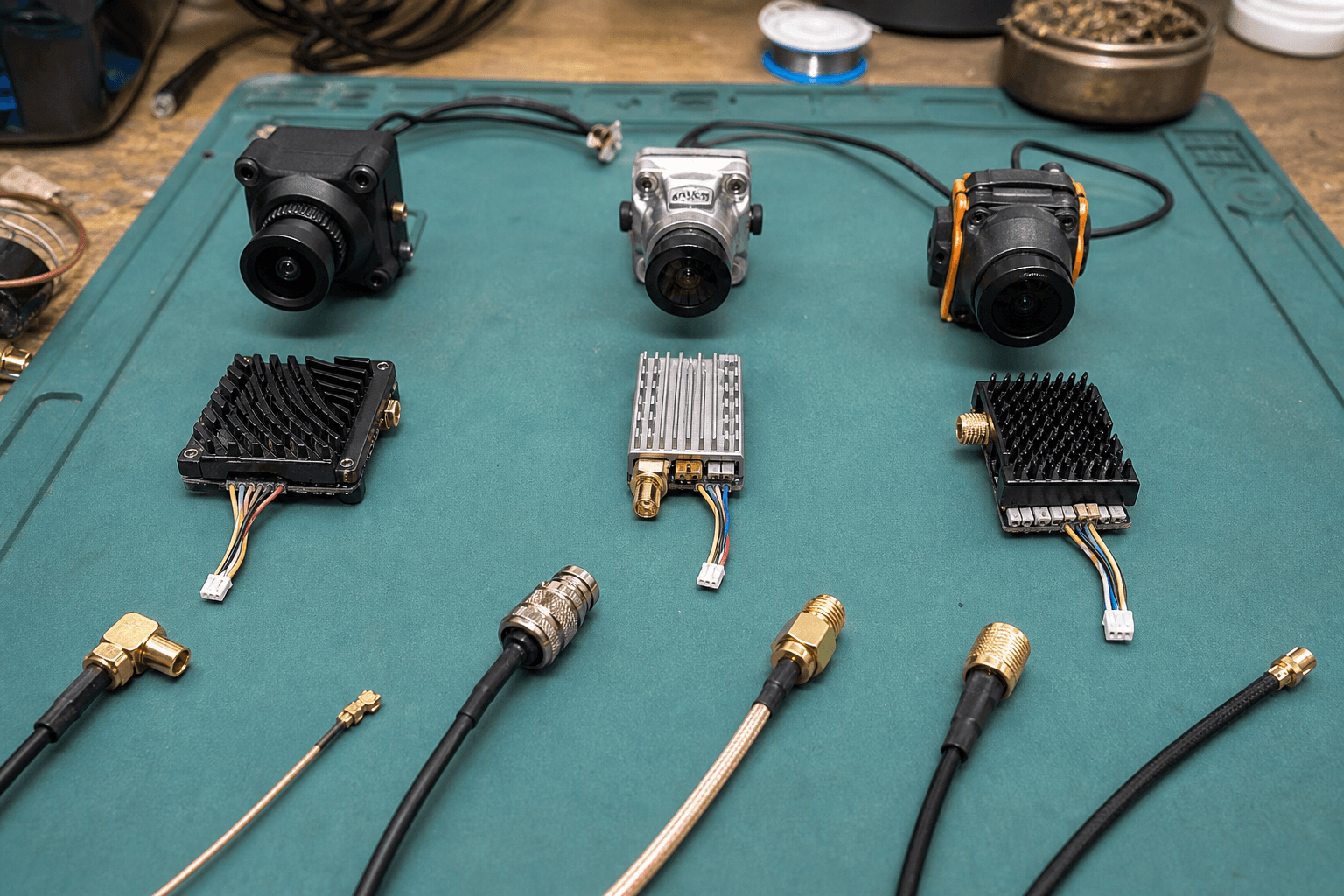
Digital FPV is not one interchangeable cable. Each stack pairs air unit firmware, goggle receiver firmware, antenna standards, and often mounting patterns that do not cross-shop cleanly. A vtx you cannot replace in two weeks is a paperweight with ambition.
Common mistakes:
- Buying goggles for aesthetics before confirming whoop vtx board availability in your size class
- Assuming your friend's spare vtx fits your stack because both say "HD"
- Ignoring DOA return windows on import orders, document unboxing before you solder
DJI O3 / O4 class (integrated air unit)
Strengths: Polished image, strong ecosystem, huge pilot mindshare. O3 Air Unit and compatible goggles are a known quantity for cinewhoop and freestyle HD. Setup is closer to consumer electronics than solder-party, appealing if your hobby time is scarce.
Lock-in: DJI goggles and vtx pair tightly; third-party mounts exist but you are still in DJI's lane for firmware and accessories. Upgrades tend to mean next DJI generation, not mixing odd modules.
India angle: O3 units move through import and domestic channels; verify warranty handler before you pay flagship money. Spares (camera modules, antennas) are easier when a local shop actually stocks them, ask, do not assume. Compare import vs domestic lead times if you are racing a build deadline.
Best for: Pilots who want minimum fiddling and will pay for a cohesive kit.
Field habit: Download and DVR workflow varies by DJI generation, learn yours once at home, not between packs in heat.
Walksnail (Avatar / Moonlight family)
Strengths: Module-bay goggles from several vendors, competitive image, active community firmware chatter. You can sometimes upgrade the module without replacing the entire head strap assembly, read current fitment before counting on it.
Lock-in: You are buying into Walksnail vtx modules and goggles with the right dovetail / module size. vtx and goggles upgrade together more than marketing implies.
India angle: Availability swings by reseller; module and antenna stock matters more than the initial goggles purchase. Confirm who services DOA vtx before a build deadline. Domestic FPV shop lists are your stocking radar.
Best for: Pilots who want digital module goggles today and accept vendor-specific parts.
HDZero
Strengths: Open-ish vibe, low-latency reputation, strong among racers and analog migrants who want a digital path without DJI's garden. Tinker-friendly culture if you like reading release notes.
Lock-in: HDZero vtx boards, FPV cams, and goggles with HDZero receivers, another spare-parts tree. Whoop-sized boards are not universal with 5-inch boards.
India angle: Often import-heavy; plan lead time on vtx and whoop-sized boards if that is your target class. Community groups are your stocking radar. Budget one spare vtx in the same order if customs timing is uncertain.
Best for: Latency-sensitive pilots and tinkerers comfortable sourcing parts across channels.
Comparison at a glance
| Factor | DJI O3/O4 | Walksnail | HDZero |
|---|---|---|---|
| Ecosystem cohesion | High | Medium | Medium |
| Module-bay flexibility | Low (DJI goggles) | Medium–high | Medium |
| Spare vtx availability (India) | Improving, verify seller | Variable by shop | Often import |
| Upgrade path | Next DJI generation | Next module / goggles | Next HDZero gen |
| Cinewhoop / ducted popularity | High | Medium | Medium |
| "I want one cart checkout" | ● | ◐ | ○ |
Purchase decision tree
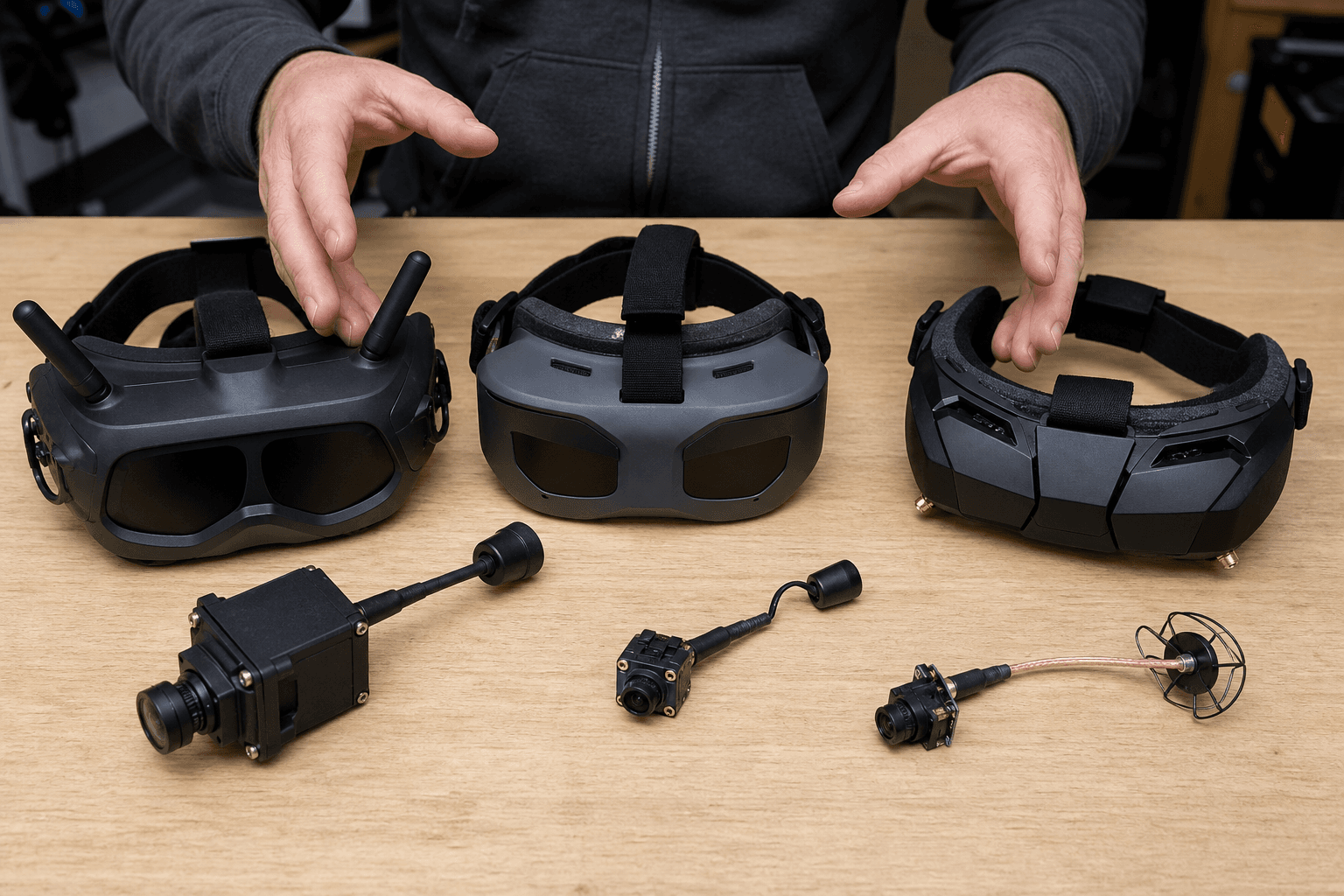
1. Borrow goggles from a friend at a meet, fit beats forums
2. List your quad classes (whoop / 5" / cinewhoop)
3. Search domestic shops for SECOND vtx price + stock
4. Pick stack that passes step 3

If step 3 fails for all three → delay HD or keep analog main quad| Your priority | Lean toward |
|---|---|
| Fewest setup surprises | DJI |
| Module goggles from multiple brands | Walksnail |
| Latency / open tinker path | HDZero |
| Tight budget, one quad | Re-read HD vs analog, analog may win |
Antennas and vtx hygiene (all stacks)
Digital does not forgive bad antenna placement. Vendor-approved stubs matter, random 5.8 GHz leftovers are not interchangeable. Pack a spare stub in your field repair kit.
How to choose without regret
- List what your friends fly: borrowed goggles beat forum opinions for fit and link feel.
- Price the second vtx before you price the first, crashes happen.
- Match your quad class: whoop vtx boards are not universal across ecosystems.
- Read return policy: buying FPV gear in India before you solder a dead-on-arrival unit.
- Configure OSD on the FC side regardless, OSD essentials still apply.
Many pilots run analog on whoops and one HD stack on the main quad, that is valid. Ecosystem lock-in hurts most when you own three half-systems and none have spares.
Whoop and cinewhoop compatibility snapshot
Board size is not universal, verify before you assume your 5-inch vtx spare fits the ducted build.
| Class | DJI O3/O4 | Walksnail | HDZero |
|---|---|---|---|
| 5" freestyle | Strong | Strong | Strong |
| Cinewhoop | Very common | Common | Common |
| 2–3" micro | Adapter boards | Module-specific | Smaller boards, check stock |
| Tiny whoop | Often analog still | Limited | Limited |
If your fleet spans whoop + 5-inch HD, price two vtx ecosystems or accept analog on the smallest quad.
Cost of ownership (12 months, mindset not math)
Year-one HD beyond goggles + vtx #1:
□ Vtx #2 (crash), assume 1× unless lucky
□ Antenna stubs × 2–3
□ Goggle module update? (ecosystem-dependent)
The ecosystem with replacements in stock domestically often wins on total cost even if day-one price is higher.
Firmware update discipline
Digital stacks pair air unit and goggle receiver firmware. Before a fly-day update: read release notes, confirm spare vtx still flies, test DVR on bench after pairing.
See also
- HD vs analog in 2026, when HD wins on feel and cost
- FPV goggles: box, slim, and modular, IPD, module bays, and comfort
- Buying FPV gear in India, invoices, shipping, and DOA habits
Discussion
Comments aren't open on this post yet. Share it with your build group, or start a thread on X.