
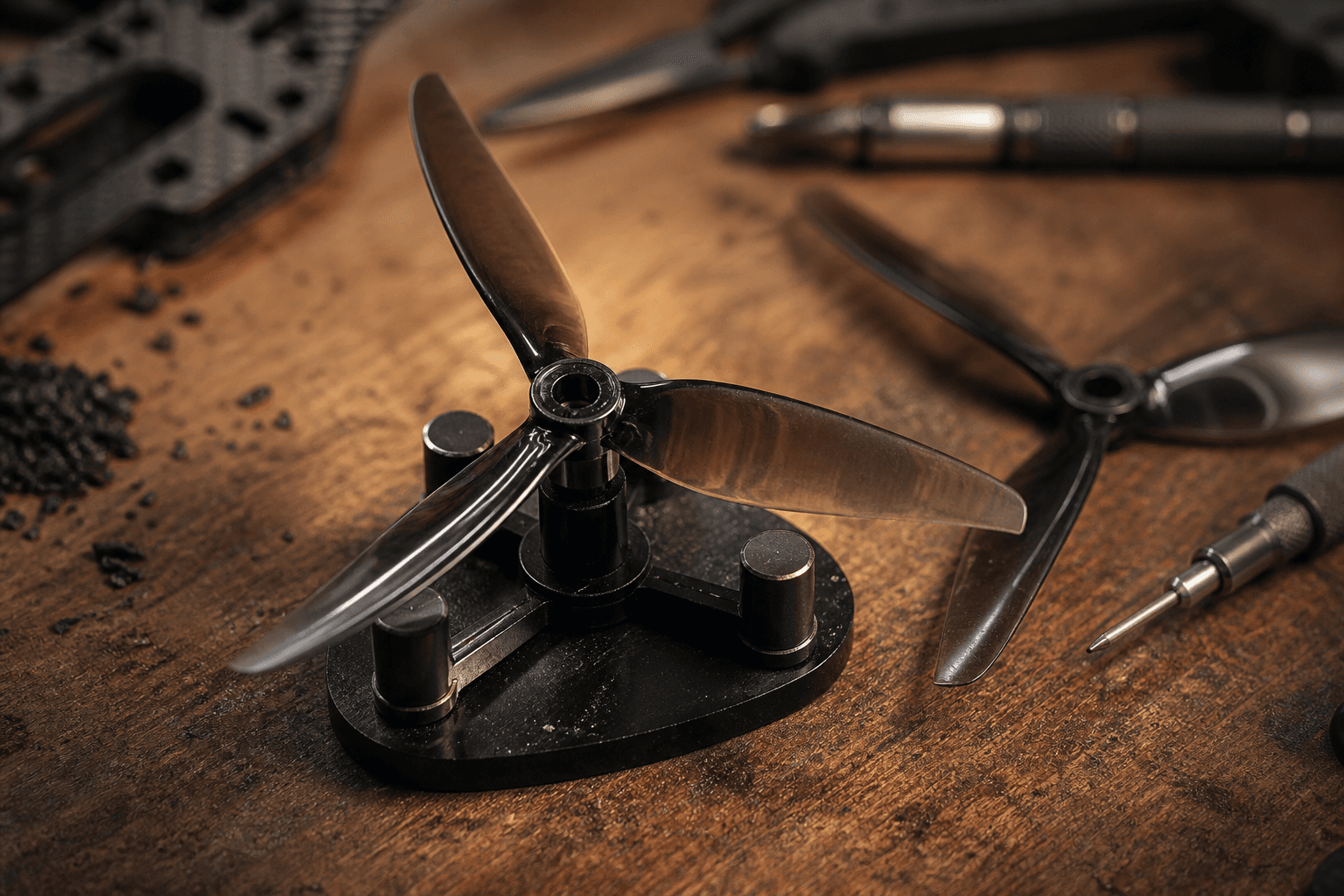
Prop balancing and when it matters

Balanced props reduce vibration, they do not fix bent shafts, loose bells, or bad tunes. Prop balancing is a mechanical hygiene step, not a magic wand. Knowing when it matters saves hours sanding hubs on whoop props that cost ₹50 a bag to replace.
What balancing actually fixes
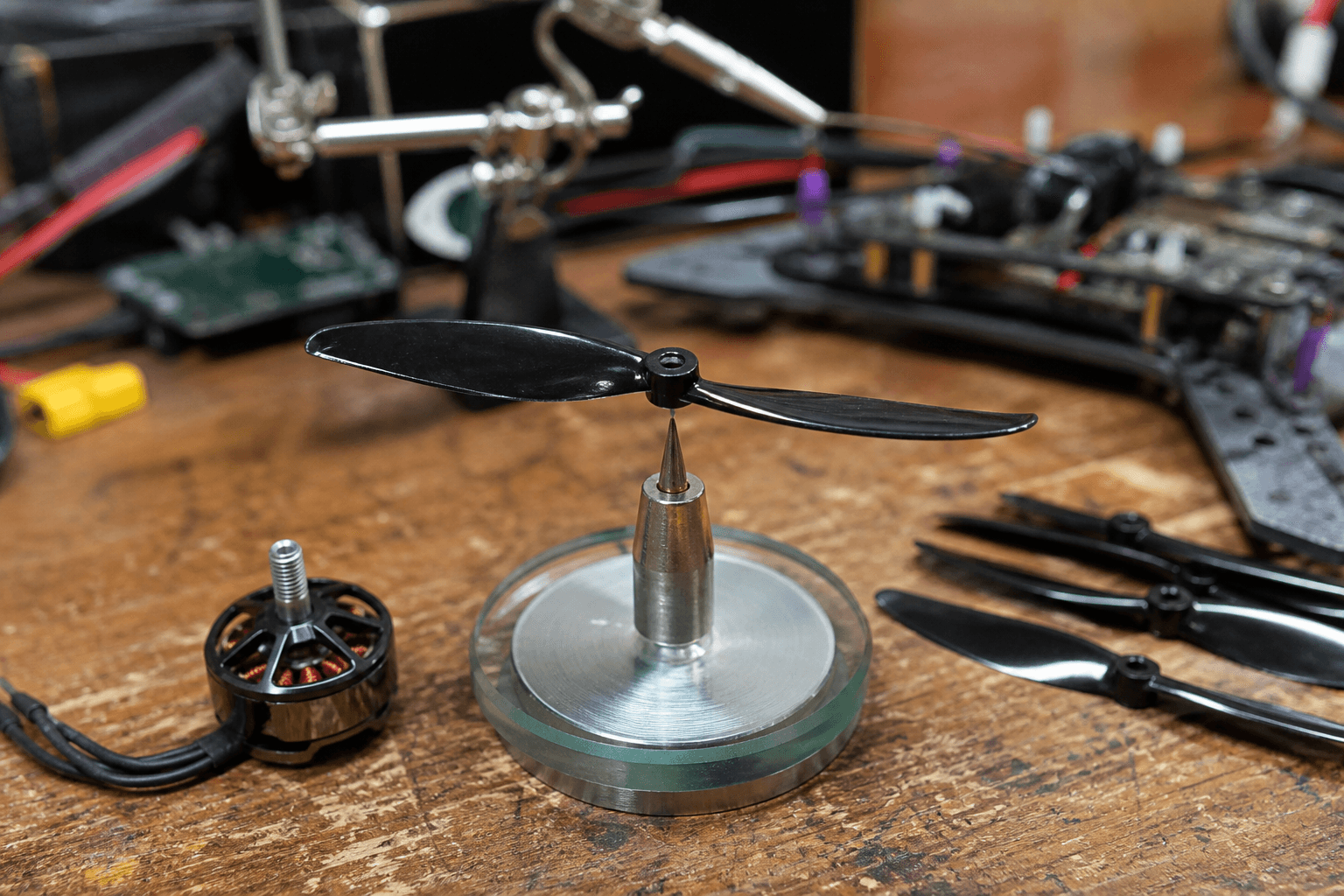
Unbalanced props create periodic vibration at spin frequency. The gyro sees that noise; the camera sensor sees it as jello. Balancing reduces the fundamental shake from uneven mass distribution. It does not fix:
- Bent motor shafts
- Loose motor bells
- Cracked prop hubs from prior crashes
- ESC desync or bad PID
Rule: If the prop is chipped or bent, replace. Do not balance damage.
When it matters most
- Heavy freestyle props on stiff frames
- HD recording where jello shows in DVR
- New prop batch that feels rough idle
Freestyle 5-inch
Large triblades on stiff 5-inch frames transfer vibe to HD cameras and gyros. Balancing a fresh bag after you confirm props are true can smooth idle and DVR. Pair with camera mount check.
Cinewhoop and 3-inch
Medium importance, mass is lower but HD vtx is sensitive. Balance if you see rolling jello at hover after motor check passes.
When to skip obsession
- Tiny whoop props, replace cheaply instead
- Already vibration after crash, fix mechanical first
Whoop economics
Balancing 31 mm props takes longer than swapping a fresh bag. For indoor whoops, stock props and practice beat hub sanding unless you are chasing cinematic DVR on a premium build.
Post-crash rule
Any hard hit, check motors and arms first per crash triage. Balancing props on a bent motor wastes time.
Methods
| Method | Notes |
|---|---|
| Magnetic prop balancer | Common; mark heavy side, sand hub slightly |
| Tape on light blade | Field quick fix, recheck often |
| Premium pre-balanced | Cost per bag; time saver |
Magnetic balancer technique
- Mount prop on shaft cone, same adapter you fly with if possible
- Let prop settle, heavy side falls low
- Mark heavy blade or hub area
- Remove tiny material from hub inside only, never blade edges
- Re-check until prop rests neutral
Sand lightly. Removing grams from blade tips changes pitch and safety.
Tape field fix
Small tape tab on light blade opposite heavy side, works for a session, not a season. Heat and dust peel tape; recheck often. Good for confirming imbalance diagnosis before hub work.
Process
- Mount prop on balancer
- Mark heavy side at rest
- Remove material from hub lightly or add tape opposite
- Re-check on quad idle after mount, hand clear of disk
On-quad verification
After balancing all four props:
Idle vibe check (props on, quad secured):
1. Arm, low throttle spin
2. Hand clear, use tie-down or helper
3. Listen for rough motor vs smooth
4. Feel frame buzz with finger on arm
5. If one motor rough, swap prop to isolate motor vs prop
Never use fingers in the disc. Props cut.
Pair with
Propwash tune only after balance and motor check pass.
Tuning order reminder
Vibration to jello pipeline:
1. True props / new props
2. Motor bearings / shafts
3. Prop balance (if warranted)
4. Camera mount
5. FC mount, soft vs rigid
6. PID / filters
See Betaflight tuning basics for when filters help vs mask problems.
India notes
Humidity swells some prop materials slightly, usually not enough to obsess over, but store props dry per monsoon storage. Domestic prop bags from the Bench mean replacing questionable props is cheap, balance when quality matters, replace when marginal.
Balancer tool buying notes
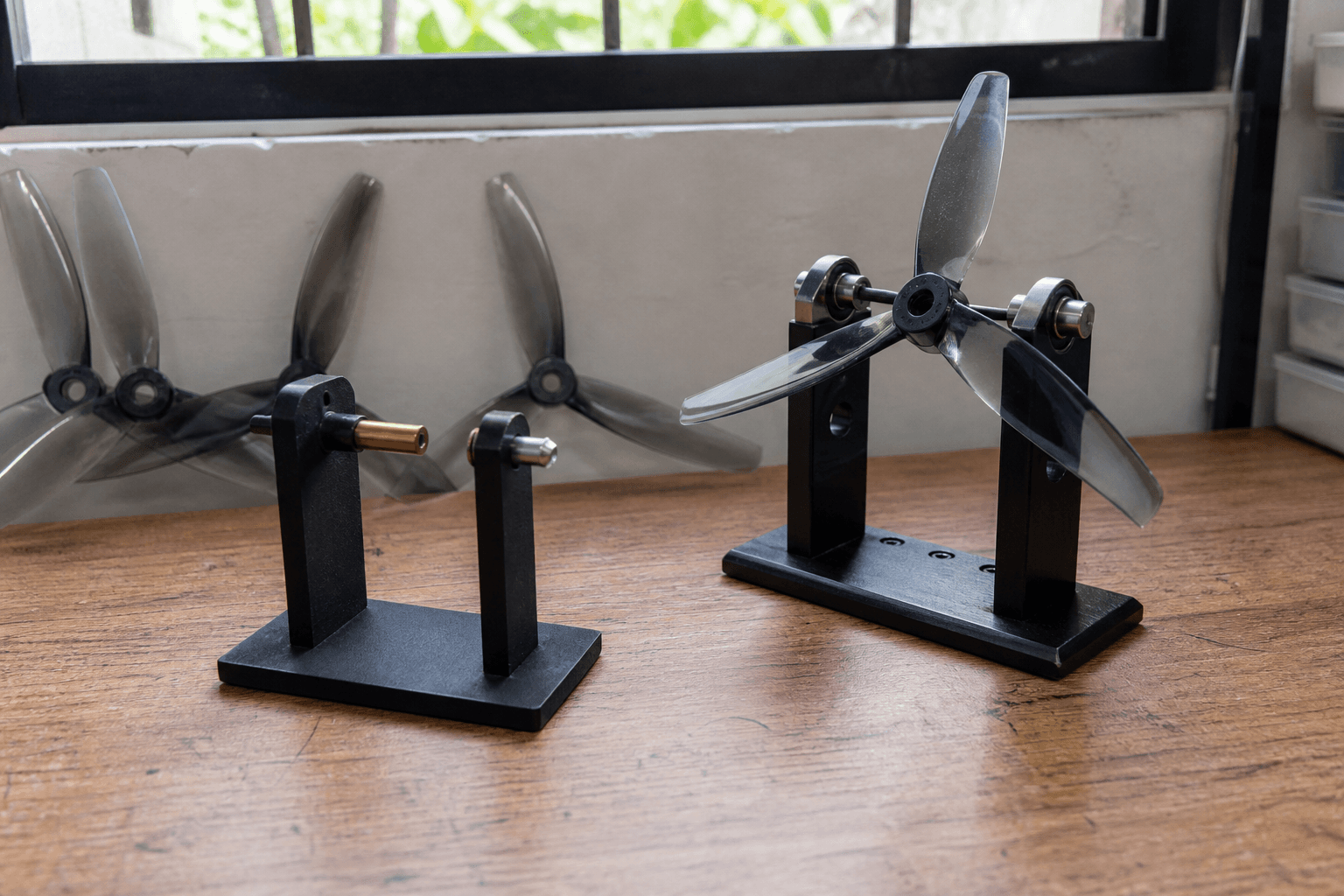
A simple magnetic balancer is enough for freestyle work. Cone adapters that match your prop bore reduce false readings, a prop wobbling on a loose cone looks unbalanced when it is not. Level the balancer on the bench; uneven table skews results.
Do not chase sub-cent perfection on ₹80 props. Good enough means smooth idle and clean DVR at cruise throttle, not laboratory symmetry.
Team or club context
If you fly with friends, borrow one known-good prop on a rough motor to isolate motor vs prop in seconds, faster than balancer when the session clock is running.
New prop batch ritual
When a new prop brand arrives, balance one prop, fly it, then decide if the whole batch needs work. Some manufacturers ship consistently true, balancing every blade before first flight wastes session time.
Seasonal storage
Props stored bent in a hot car take a set. Pull them flat before balancing or flying. Off-season prop audit belongs in winter maintenance, discard unknown-age bags before spring.
When to stop balancing
- Prop hub already thin from prior sanding, replace
- Balance improves balancer but not idle, motor issue
- Spending 20 minutes per prop on whoop, replace bag
- Chipped leading edge, always replace
Balancing is maintenance, not therapy. If vibes persist after balanced true props, look at stack mount and motors.
RPM filter and balancing interaction
RPM filter cleans motor-line noise in software, it does not fix gross mechanical imbalance. A badly chipped prop still shakes the camera even with filters on. Use balancing for mechanical hygiene; use filters after mechanics are sound.
If enabling RPM filter suddenly hides idle roughness, verify props anyway, software masking is not a green light for damaged blades.
HD DVR diagnosis workflow
Jello checklist:
1. DVR at hover only? → mount / props / motors
2. Jello only in turns? → camera lag / soft TPU / exposure
3. Jello all throttle? → bent motor or ESC issue
4. New prop brand only? → balance one, test, then batch
5. After crash only? → [tuning after crash](/blog/tuning-after-a-crash) mechanical first
Record 10-second hover clip before and after balance, phone on tripod at field edge is enough. Guessing from goggles alone wastes sandpaper.
Prop nut torque
Loose prop nuts look like tune failure, vibe at throttle steps, scary in HD DVR. Torque per prop manufacturer; nylon insert nuts need replacement after repeated heat cycles. Check nuts after every hard crash before reaching for the balancer.
Mark balanced props with a dot on the hub, swapping corners without marks wastes repeat work at the field.
Bench
- Propulsion / 5" Prop, replace chipped props before obsessively balancing
- the Bench, balancers and bench tools
Discussion
Comments aren't open on this post yet. Share it with your build group, or start a thread on X.