
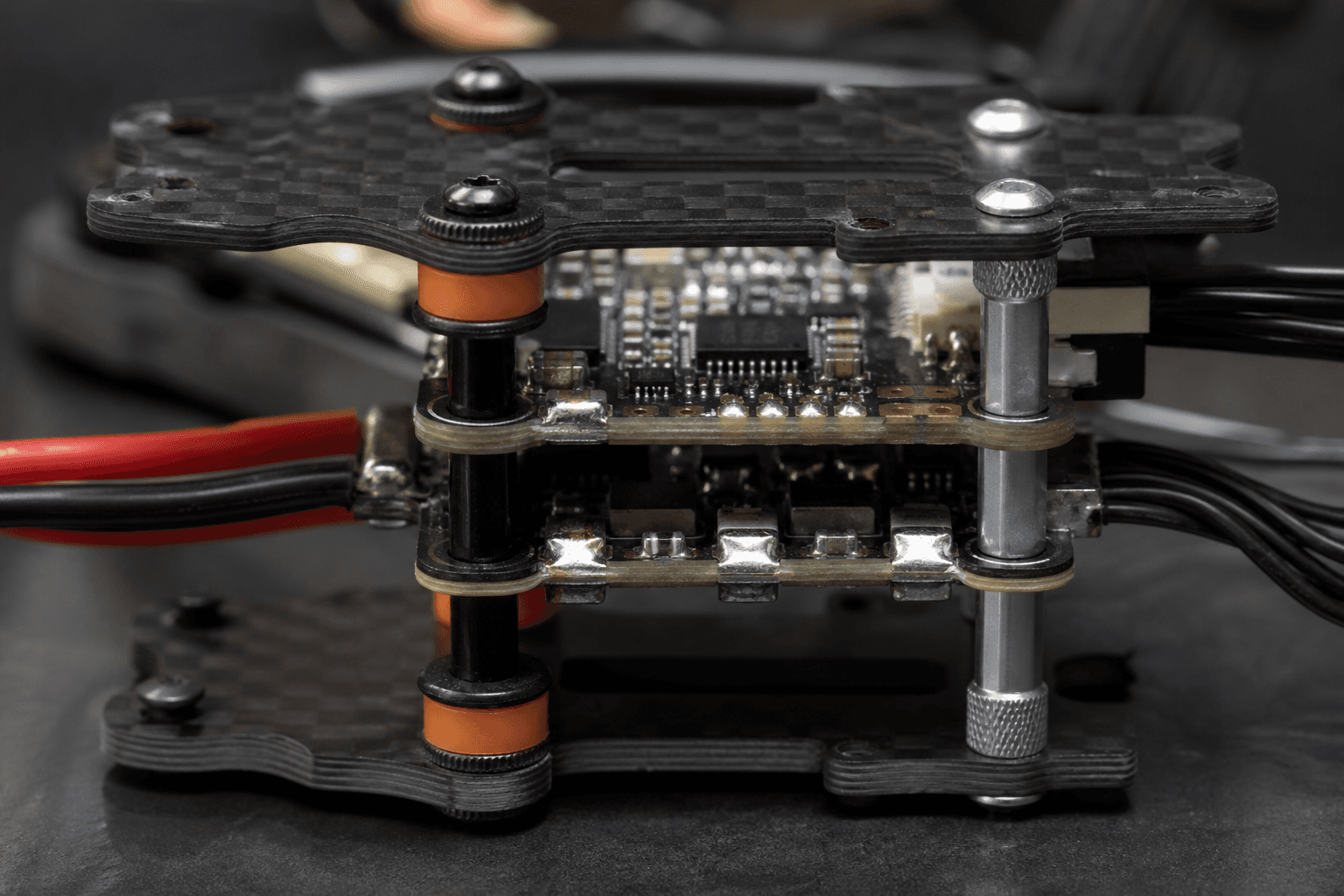
Stack soft-mount vs rigid: when each wins

Soft mount vs rigid is not religion, it is matching FC isolation to frame stiffness and motor noise. The gyro on your flight controller measures angular rate; everything that shakes the FC without shaking the airframe equally becomes noise in your tune. Mount style is one of the first mechanical decisions that affects whether Betaflight tuning feels productive or endless.
What the gyro actually sees
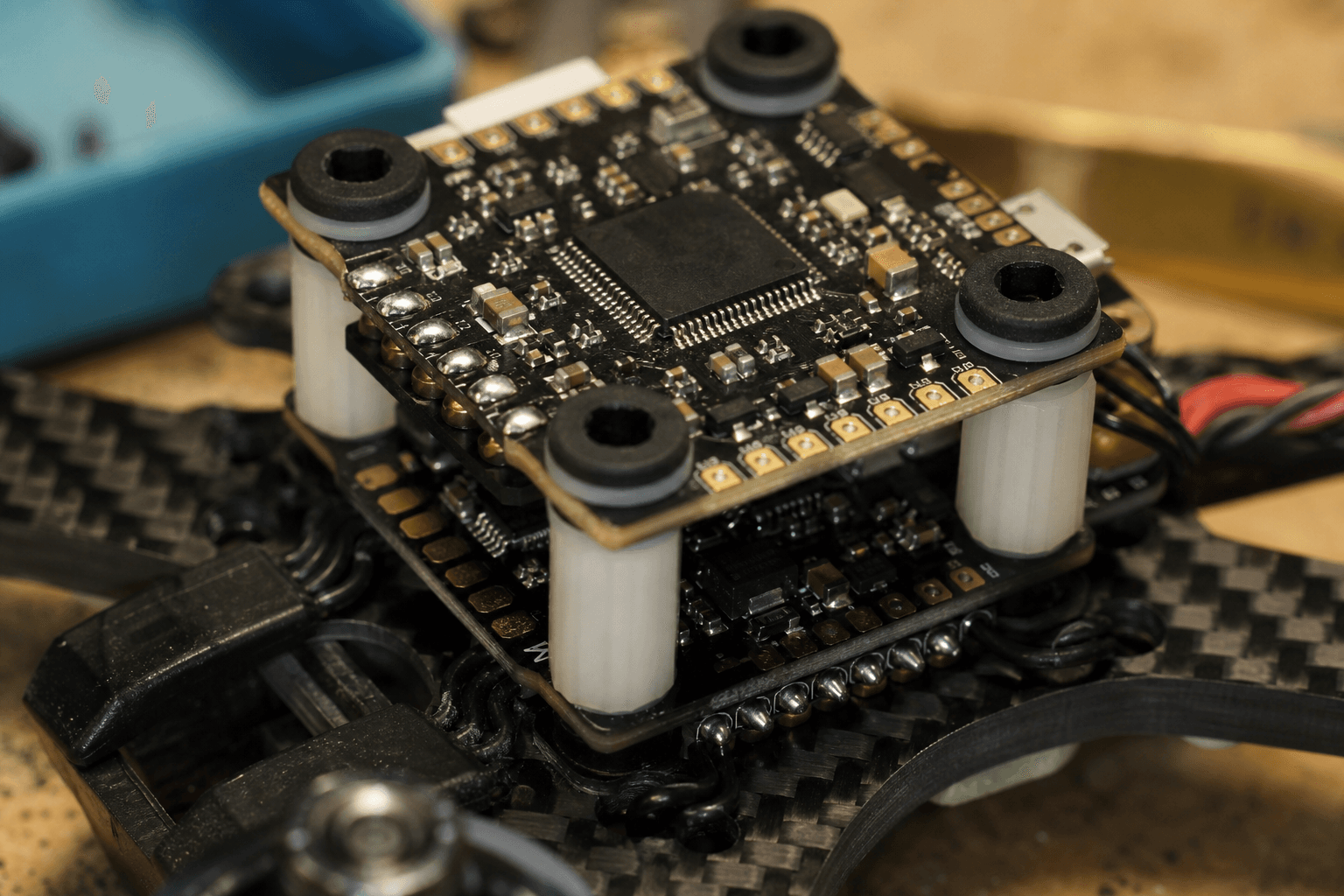
Your FC sits on standoffs or grommets while motors transfer vibration through carbon. Soft mounting tries to block high-frequency motor noise from reaching the gyro. Rigid mounting couples FC and frame so the gyro sees what the frame feels, which works when the frame is already quiet mechanically.
Neither approach fixes bent motors, unbalanced props, or loose camera pods. Fix mechanics first; mount style second; filters last.
Soft mount
Grommets / rubber standoffs between FC and frame absorb high-frequency vibration before the gyro sees it.
Wins when:
- Frame transmits motor buzz clearly in Blackbox
- You run aggressive props on a stiff carbon deck
- Manufacturer designed the stack for soft mounting
Fails when: grommets are crushed, hardened, or overtightened, then soft mount acts rigid with extra slop.
Installing soft mount correctly
- Use the grommet size the frame manual specifies, random o-rings are not the same thing
- Tighten until snug, not until the rubber extrudes and dies
- Check stack height, soft mount can add millimetres that block USB access
- Re-check after five packs, grommets compress over time
Common mistake: Crushing grommets with metal standoffs overtightened "for security." You get rigid mount plus wobble.
Soft mount symptoms (good vs bad)
| Observation | Likely meaning |
|---|---|
| Cleaner gyro trace in Blackbox | Soft mount helping |
| Stack wobbles when you grab FC | Grommets worn or wrong size |
| Low-frequency wobble in hover | Too soft or loose hardware |
| Oscillation after crash only | Replace grommets, they do not heal |
Rigid mount
Direct standoffs, nylon or metal per design: FC moves with frame as one unit.
Wins when:
- Frame and FC are designed rigid (some race builds)
- Soft mount causes low-frequency wobble or loose stack feel
- You have already fixed mechanical noise and still see slop in logs
When rigid is the honest answer
Some stacks ship with metal standoffs and no grommets because the manufacturer tested that way. Ignoring the manual to add rubber "because the forum said so" can make things worse. If Blackbox is clean rigid and flight feel is good, stop swapping hardware.
Symptoms → check mount
| Feel / log | Try |
|---|---|
| Hot motors, fine oscillation | Mechanical first; then filter tune |
| Sloppy stack after crashes | Replace standoffs/grommets |
| Mid-throttle buzz | Props, then mount, then filters |
Diagnostic workflow
Vibe troubleshooting order:
1. Props damaged? Bent motor? Loose bell?
2. Camera mount loose?
3. Standoffs / grommets intact?
4. Soft vs rigid, match frame design
5. Blackbox, noise frequency tells next step
6. Filters, only after above pass
Use reading Blackbox without drowning to tell high-frequency motor line noise from broader mechanical issues. Mount changes show up in gyro traces before you feel them in stick response.
Nylon screws
Great for vibe isolation and crash shear, carry spares in your field kit. Do not substitute random screw lengths; stack height matters for USB access and vtx clearance.
Nylon vs metal standoffs
| Hardware | Trade-off |
|---|---|
| Nylon screws | Shear on hard crash, protects FC; needs spares |
| Metal standoffs | Stiffer; can transfer more buzz |
| Mixed (nylon top, metal bottom) | Some frame designs specify this, follow them |
In India, heat cycles in parked cars can brittle old nylon screws. Replace them seasonally if the stack feels loose before spring flying.
Stack height and vtx clearance
Mount style changes stack height. A soft-mounted FC sitting higher may pinch vtx connectors against the top plate or block antenna exit paths. Dry-fit the full stack, FC, ESC, RX, capacitor if used, before final torque.
Capacitors and stack layout
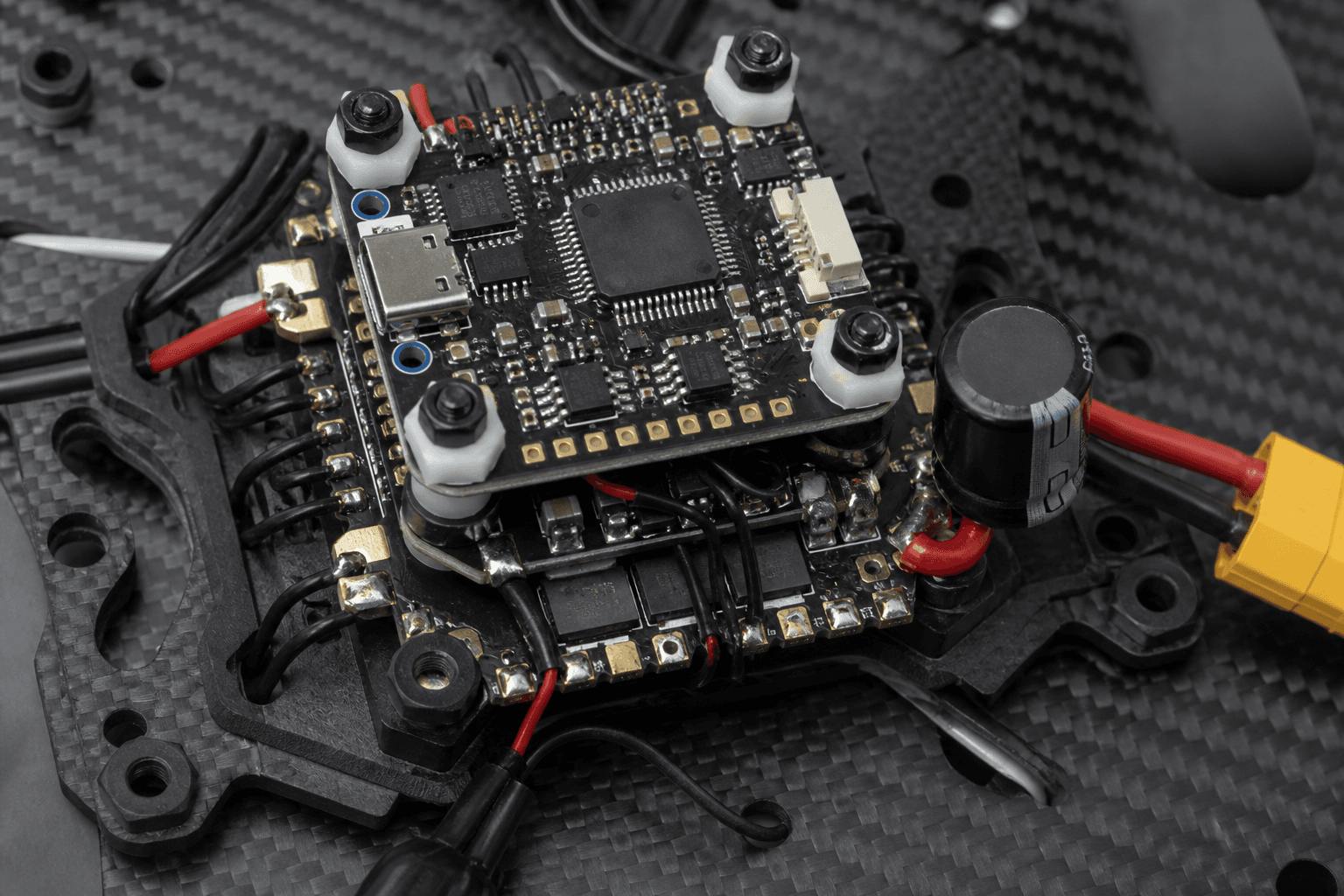
Some builds mount capacitors on standoffs or arms for noise suppression. A heavy capacitor on a soft-mounted FC can defeat isolation by coupling vibration back into the board. Follow frame-specific capacitor placement, community photos are not always tested on your exact stack.
FC gyro orientation
Mount style does not fix wrong gyro alignment in firmware. Confirm board arrow matches physical orientation before chasing grommets. A 180° yaw offset in config feels like tune failure but is a five-second fix.
When to stop swapping mounts
If you have tried both soft and rigid per manufacturer guidance, replaced props, and confirmed motors are healthy, stop mount roulette. The problem may be tune, filter, or a bent component, not another grommet durometer experiment.
Log one change per session. Mount swaps plus PID changes in the same pack teach you nothing.
Re-torque and seasonal hardware
Soft mounts compress; nylon screws creep; metal standoffs loosen after vibe seasons. A light re-torque pass before spring flying belongs in off-season maintenance, not max force, just snug per frame spec.
| Interval | Check |
|---|---|
| After hard crash | Standoffs, grommets, nylon screws |
| Every 20 packs | Stack wobble by hand |
| Season start | Replace crushed grommets proactively |
| Hot car storage | Nylon brittleness, swap if chalky |
Freestyle vs race framing
Race pilots on stiff decks often run rigid mounts with fresh props every event, vibration budget is different from freestyle HD DVR. Freestyle pilots chasing clean gyro traces on stiff 5-inch frames more often benefit from manufacturer soft-mount kits. Copying race rigid mount because a pro runs it ignores different prop mass and camera load.
When in doubt, match the frame vendor's stack photos and tune from there.
Camera pod coupling
A loose HD camera pod shakes independently of FC mount style, gyro can look clean while DVR jello persists. Torque camera bolts before swapping grommets. See camera mount flex in the same diagnostic pass.
Stack screws through nylon or rubber should not bottom out on bare carbon, that bypasses isolation entirely. Use the washer stack the frame kit shipped with.
Bench
- Control / F7, FC/ESC stacks with proper mount hardware
- the Bench, grommets and standoffs
Discussion
Comments aren't open on this post yet. Share it with your build group, or start a thread on X.