
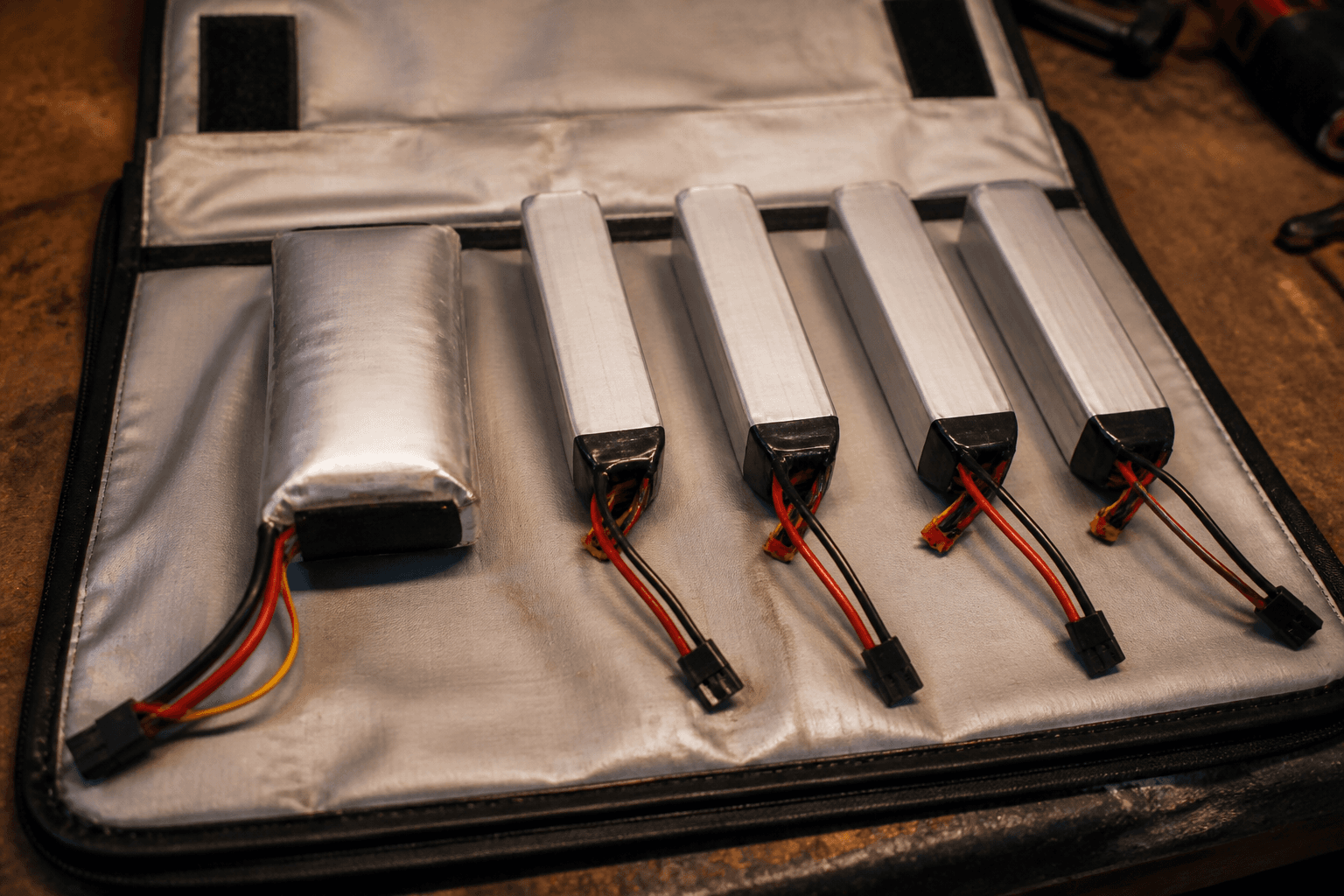
How long do LiPo batteries last

“How long do LiPo batteries last?” hides two questions. Per flight, whoop packs give minutes. Calendar / cycle life, packs last months to a couple of years depending on heat, storage, and how hard you punch. Mixing those up is how beginners expect 15-minute flights from a 300 mAh 1S and then blame the brand.
FPV Grind treats packs as consumables. Plan a small fleet, retire soft ones early, and do not leave charged LiPos in a hot scooter seat.
Per flight: minutes, not mysteries
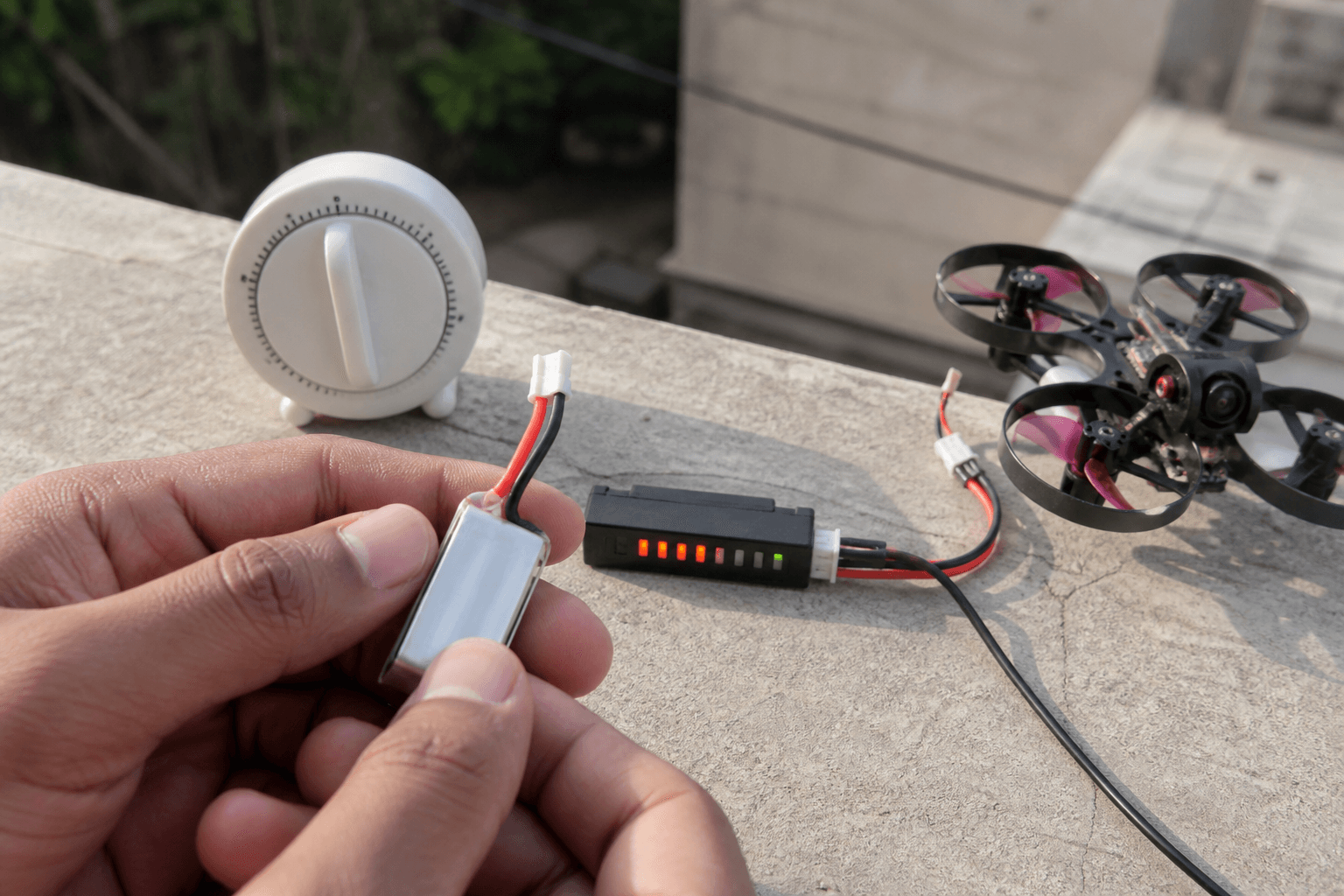
| Factor | Effect on flight time |
|---|---|
| Capacity (mAh) | Higher mAh → longer, heavier |
| Craft weight | HD cams and thick frames shorten packs |
| Flying style | Hover lasts; constant punch dies early |
| Wind / outdoor whoop | More throttle → shorter packs |
| Pack health | Soft packs sag and “feel dead” sooner |
| Temperature | Cold and extreme heat both hurt |
C-rating stickers are marketing more than destiny - C-rating myths. Real whoop sessions are often a few minutes of useful flying. Land with margin instead of riding the sag cliff. If the craft “keeps falling” late in a pack, read why drones keep falling.
Rough expectations (whoop-shaped)
| Pack class | Honest beginner use |
|---|---|
| 1S ~300 mAh | Short indoor drills |
| 1S ~450–550 mAh | Common trainer packs |
| 2S whoop packs | Longer / punchier; still not “gopro hour” |
Numbers vary by tune and props. Your DVR timestamps are more honest than forum screenshots - record DVR.
Calendar and cycle life: what kills packs
| Habit / event | Result |
|---|---|
| Stored full for weeks | Swelling / aging |
| Stored flat / over-discharged | Dead cells |
| Hot cars, summer bags, sealed scooters | Fast death in India |
| Physical crash damage | Internal shorts; retire |
| Habitual deep sag every flight | Soft pack syndrome |
| Wrong charge rate / unattended charge | Safety event risk |
Good habits: how to store LiPos · how to charge safely · LiPo safety overview. End of life: how to dispose of LiPos.
Fleet size beats hero packs
Own 4–6 matched packs so that:
□ You fly more sessions per charge evening
□ Each pack cools between flights
□ One soft pack does not end the day
□ You are not tempted to deep-discharge “the only pack”
India restock is slow and shipping is constrained - LiPo shipping surface-only. Buying a bundle once is smarter than panic-ordering singles after every weekend.
Signs a pack is done flying
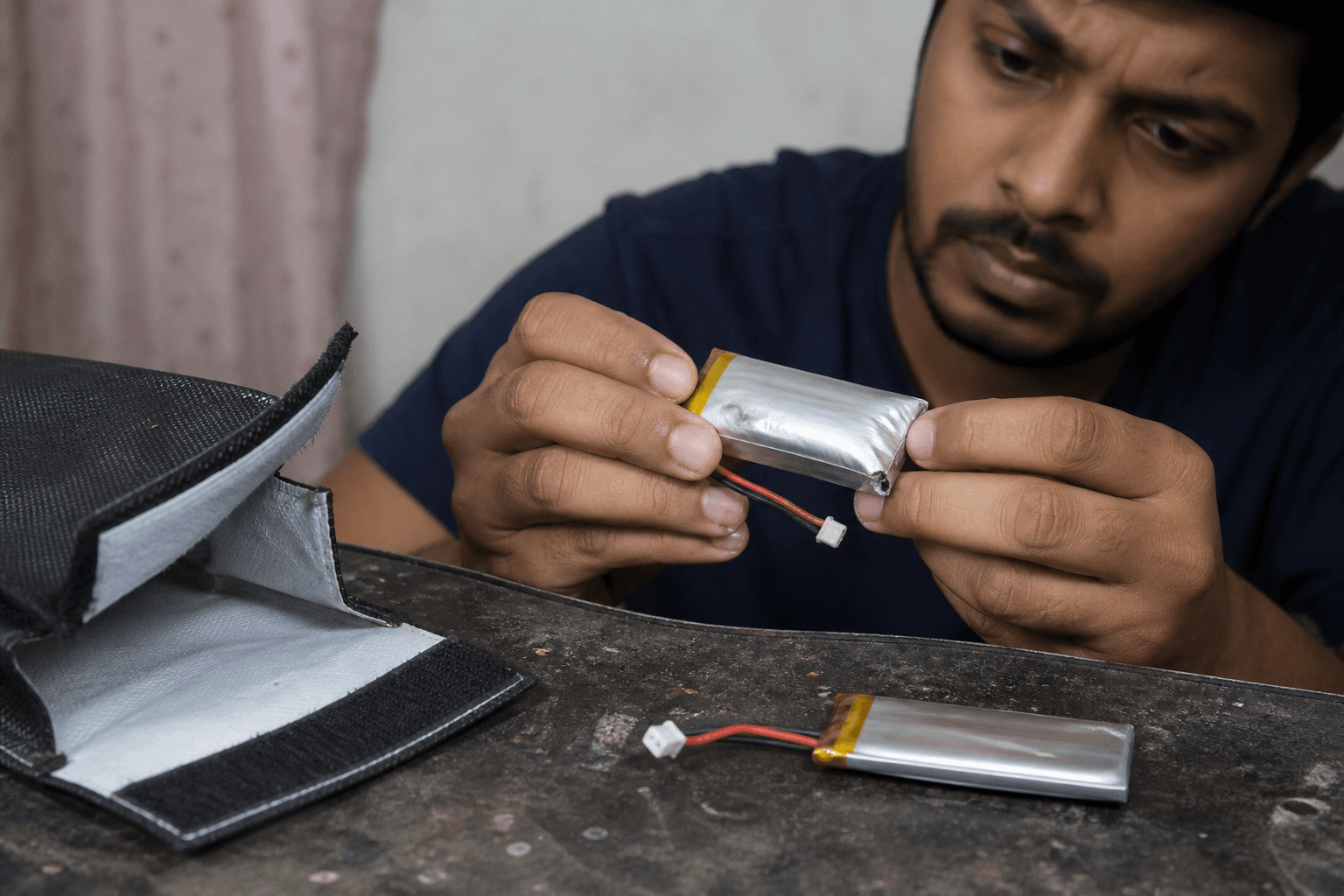
| Sign | Action |
|---|---|
| Puff / swell | Retire; do not charge |
| One cell far out of balance every time | Suspect pack health |
| Runtime half of siblings | Soft; demote or dispose |
| Hot connector / burnt smell | Investigate; likely retire |
| Voltage collapse under light hover | Done |
Do not mix a dying pack into a parallel charge group with healthy packs - parallel charging.
India climate notes
Summer heat is a pack killer. Charge in a safe, attended setup; store at storage voltage in a fireproof container away from beds; never leave flight packs on a dashboard. Monsoon humidity is less dramatic than heat but still argues for dry storage and clean connectors. Field days: summer packing list.
Habit checklist for longer life
□ Storage charge when unused for days/weeks
□ Land before savage blackout sag
□ Let packs cool before recharge
□ Matched connector ecosystem (PH2.0 or BT2.0)
□ Retire puffed packs promptly
□ Keep flight packs out of hot vehicles
Bottom line
Expect minutes per whoop flight, and months to years of calendar life if you store cool, avoid chronic over-discharge, and retire damaged packs. Fleet size and heat discipline matter more in India than chasing a magic C-rating. Treat LiPos as consumables with a safety workflow - not immortal bricks.
Bench
Whoop pack bundles: the Bench. Charge and safety workflows: Grind Lab. Fly without burning packs: /sim.
Discussion
Comments aren't open on this post yet. Share it with your build group, or start a thread on X.