

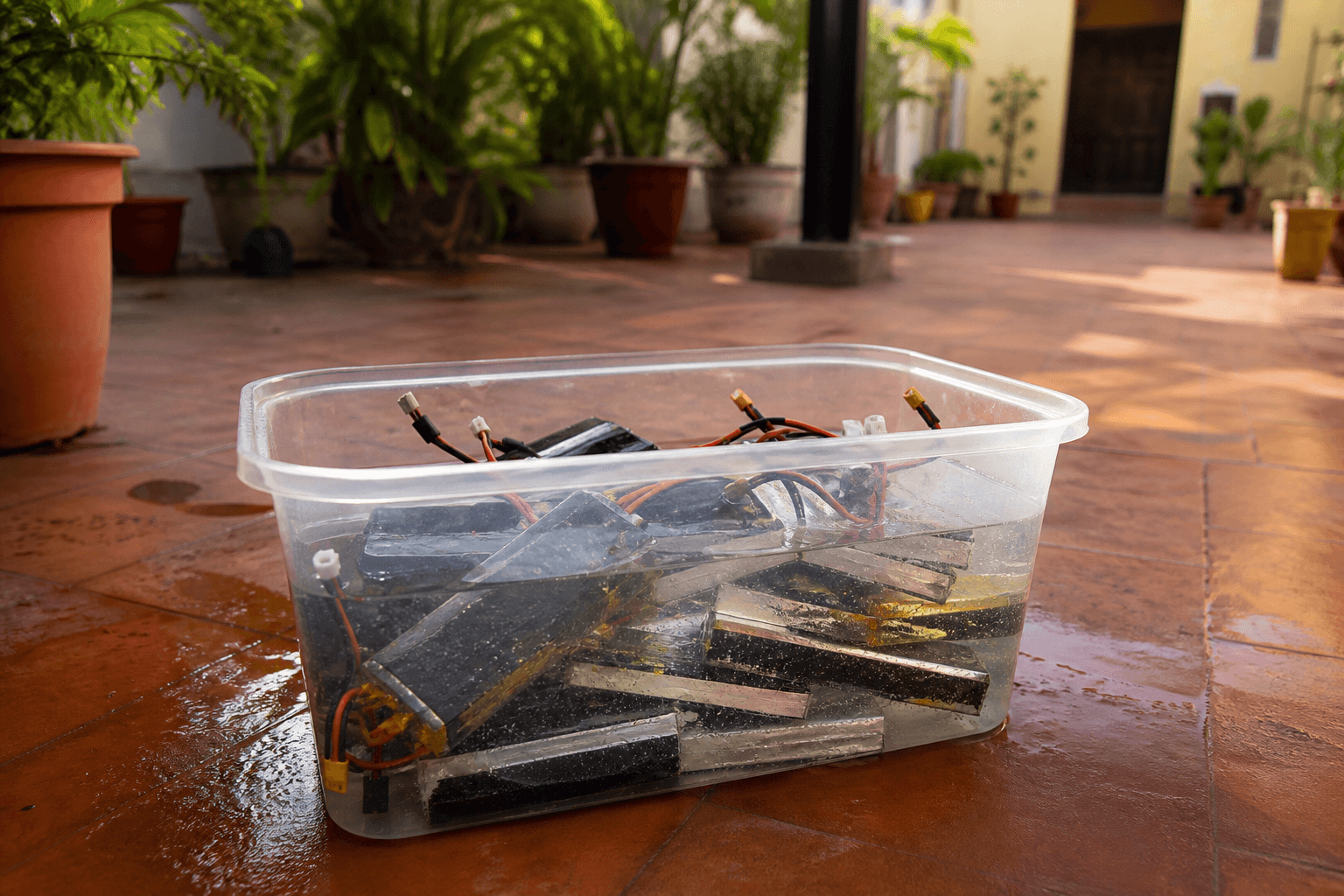
How to dispose of LiPo batteries

Puffed, damaged or worn-out LiPo packs are not household trash. Drop one in a kitchen bin or an apartment garbage chute and it can become someone else’s fire. At FPV Grind we treat disposal as part of owning packs, the same as charging and storage.
This is practical hobby advice for India, not a substitute for municipal rules or manufacturer instructions. When city guidance and a forum tip disagree, follow the city and your charger manual.
When a pack must leave the fleet
| Condition | Action |
|---|---|
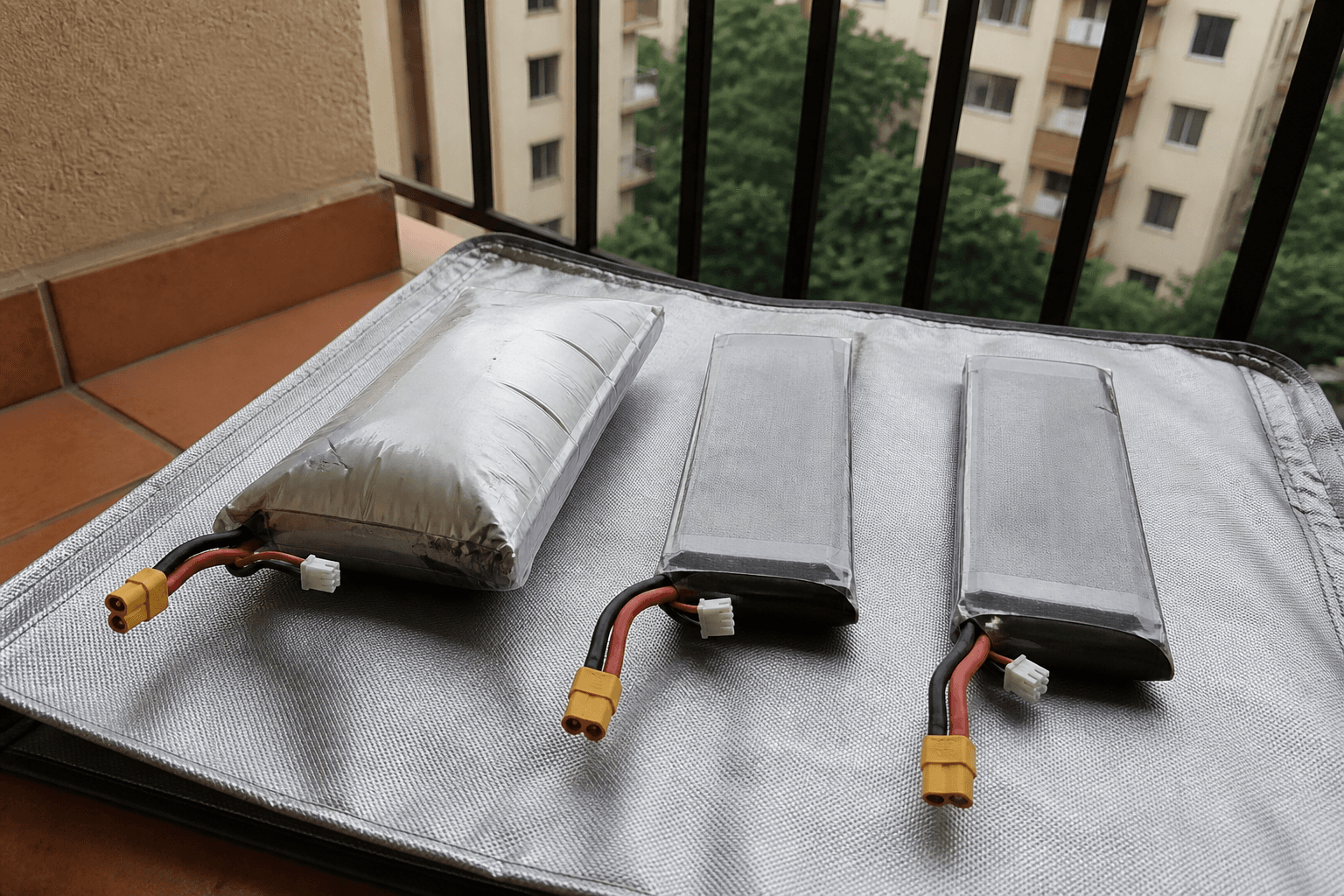
| Puffed / swollen | Do not charge again; queue for disposal |
| Damaged wrap, crushed, punctured | Hazardous; isolate; do not fly |
| Connector melted / burnt smell | Retire; inspect why (short, crash, wrong charge) |
| Voltage will not recover / dead cell | Retire after safe discharge workflow |
| Weak, saggy flights on every charge | Worn out; retire before it fails mid-air |
While a pack waits for disposal, keep it in a LiPo bag or metal tin, away from beds and exits. See LiPo safety.
Safer disposal outline
1. Isolate the pack
   □ Cool, dry place; not in direct sun
   □ Not loose with tools that can short the leads

2. Decide discharge path
   □ Use a charger or discharger with a LiPo discharge mode
   □ Follow the discharge steps in your charger manual
   □ Skip the saltwater method from old guides: it is slow, corrodes the
     tabs and does not reliably empty the cells
   □ Never leave any discharge unattended

3. Confirm the pack is spent for disposal purposes
   □ Never charge a pack you plan to throw away

4. Tape connectors
   □ Electrical tape over XT30 / XT60 / PH2.0 / BT2.0 contacts
   □ Stops shorts in pockets and bins

5. Use a proper channel
   □ A battery or e-waste drop-off your city supports
   □ Some electronics recyclers accept hobby LiPos; call ahead
   □ Never put LiPos in mixed dry recycling
If a pack is hot, smoking or venting, get people clear first. Follow lithium-fire guidance (plenty of sand or water from a safe distance; do not handle it), and treat what is left as hazardous waste.
India practical notes
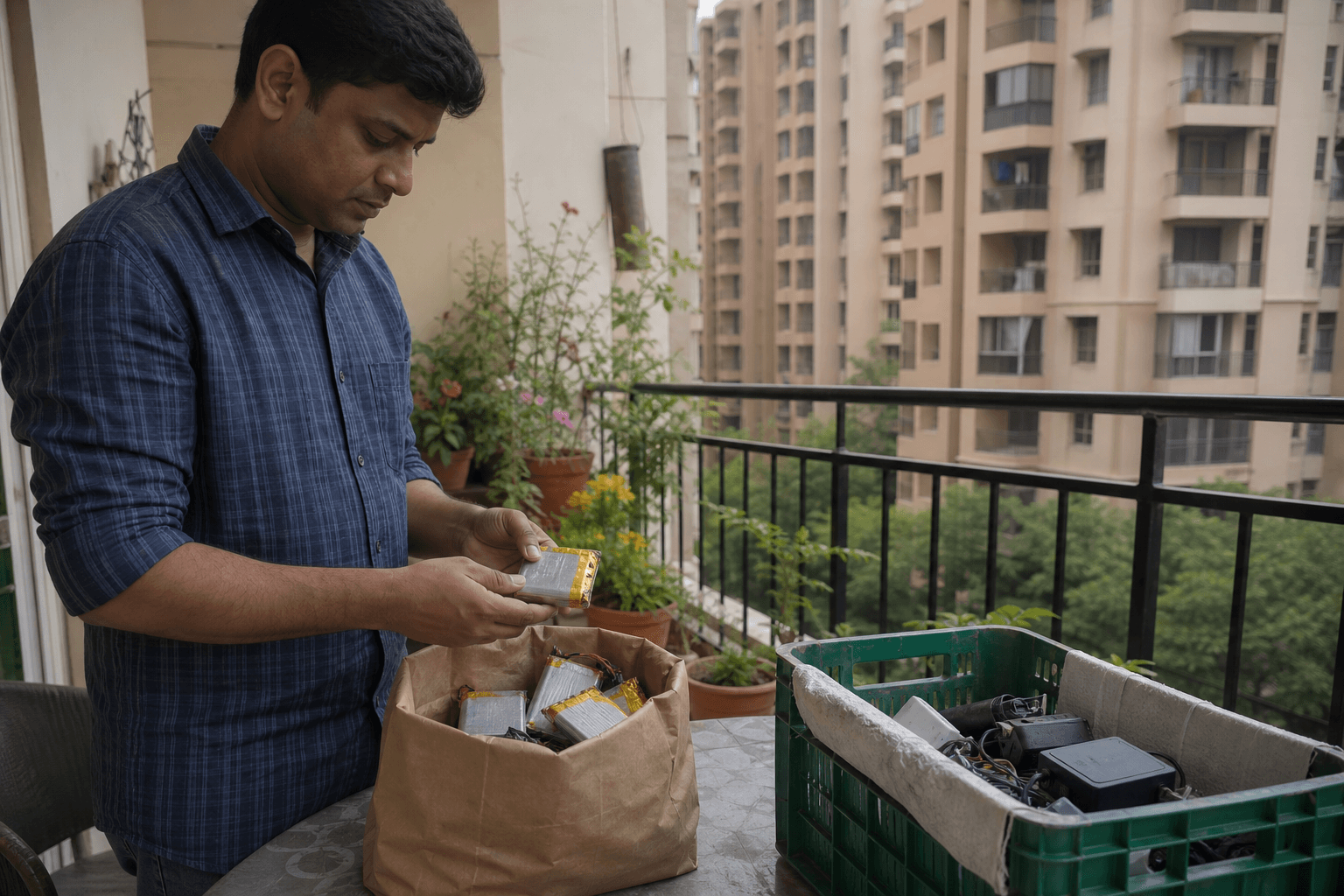
- Municipal e-waste programmes and private recyclers vary by city. Check your municipal corporation’s site for battery or e-waste collection, and ask local FPV groups what they actually use (shops and communities).
- Apartment living: do not leave a bag of dead packs on the balcony in summer. Heat makes damaged cells more unstable.
- Shipping dead packs is still battery shipping, and damaged LiPos should not go by courier at all. Rules are strict even for healthy packs (LiPo shipping in India).
- Label a small box “retire” so dead packs never mix with flight-ready ones in your charge bag.
Prevention beats disposal volume
Most early pack deaths are habit, not luck.
| Habit | Why it helps |
|---|---|
| Storage charge for weeks unused | Avoids sitting full or flat - how to store |
| Charge attended on a safe surface | How to charge safely |
| Land before heavy voltage sag | Fewer over-discharged cells |
| No packs in hot cars | Summer India kills LiPos fast |
| Matched connector ecosystem | Fewer forced “adapter” shorts |
Fleet tip: own enough packs that you are not tempted to thrash the only two you have, and replace old ones before they run out.
Checklist before you leave for the drop-off
□ Packs taped at the connector
□ No mixed “maybe still good” packs in the dispose bag
□ Contained (bag / box) so leads cannot snag
□ Drop-off hours confirmed
□ Flight bag restocked so you do not fly damaged leftovers
Bottom line
Retire damaged or dead LiPos deliberately: isolate, discharge with a safe method, tape the leads, and use a battery or e-waste channel, never household trash. Good charging and storage habits mean you do this less often. When in doubt, do not charge a suspect pack “one more time.”
Bench
Fresh packs when you retire old ones: the Bench. Safety and charge workflows: Grind Lab. Stick practice that does not burn packs: /sim.
Discussion
Comments aren't open on this post yet. Share it with your build group, or start a thread on X.