
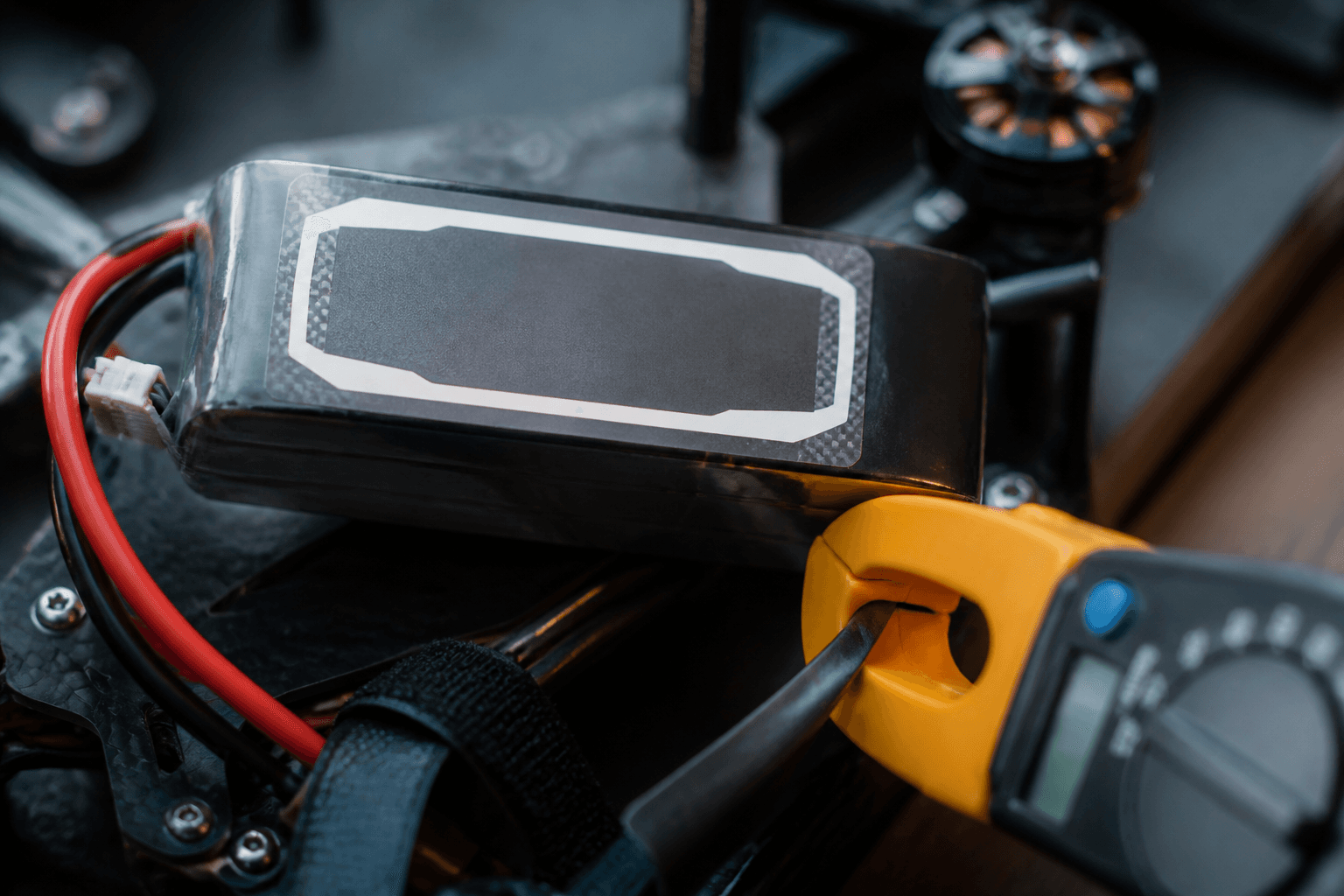
C-rating myths and real current draw

C-rating on a LiPo label is a shorthand for “how hard this pack is willing to try.” It is useful for comparing two packs from the same era and brand; it is dangerous as a single number you bet your ESCs on. A “130C” pack that has been through two Indian summers, fifty punch-outs, and cheap parallel charging will not behave like a fresh 80C pack from a reputable line.
Pilots who only read C-rating order wrong capacity, wonder why voltage sags on the first flip, and blame tune instead of chemistry.
What C-rating actually means (roughly)
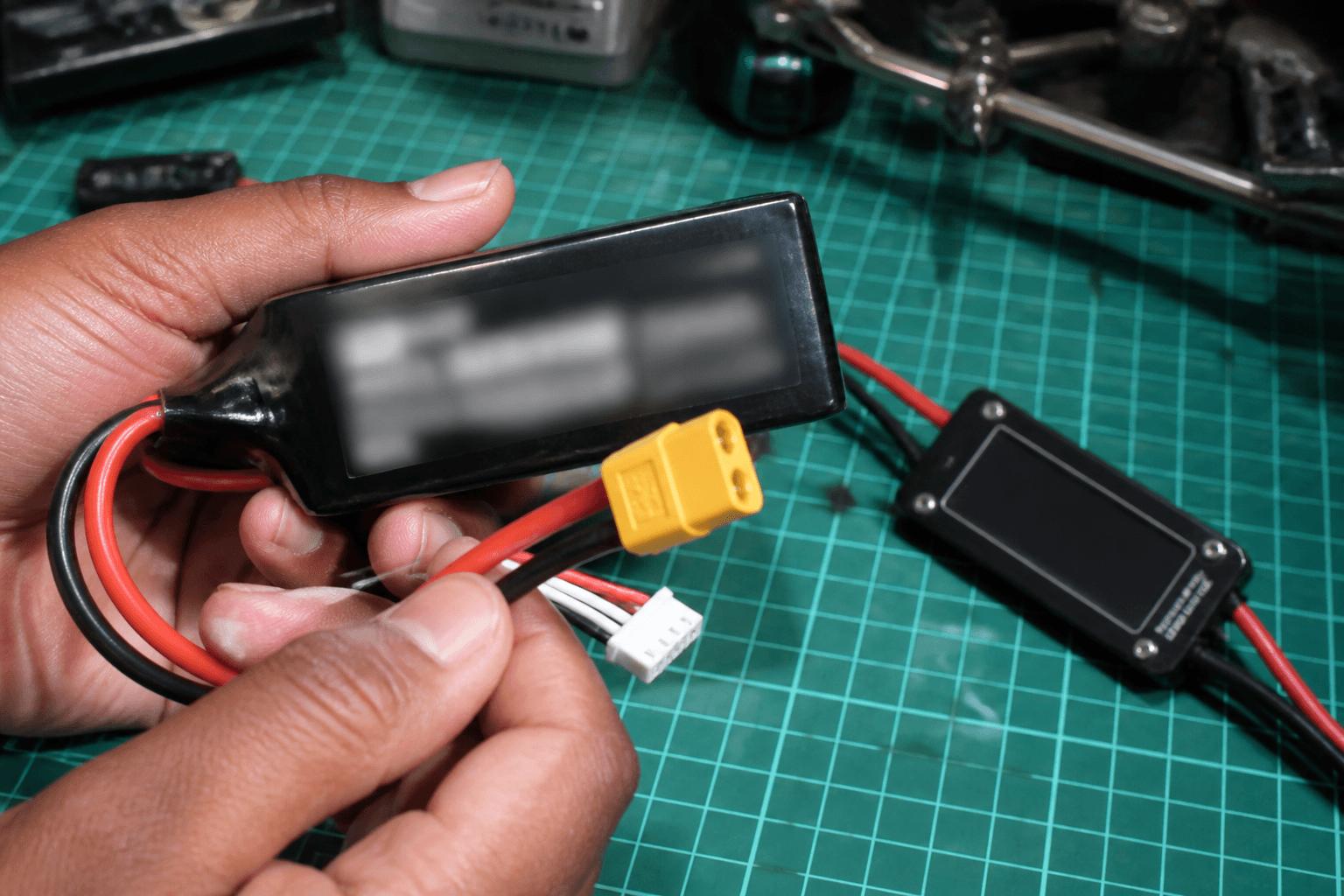
Manufacturers define C as a multiplier on capacity (Ah) to quote a continuous current figure:
- 1500 mAh (1.5 Ah) at 100C → claimed 150 A continuous
- 1100 mAh at 80C → claimed 88 A
There is no single global enforcement standard you can audit in a hobby shop. Treat the number as marketing plus engineering intent, not a lab result stamped on your pack.
| Label | How to use it |
|---|---|
| Same brand, higher C vs lower C | Higher may sag less when new |
| Random ultra-C no-name | Skepticism, often soft cells |
| Old pack, high C label | Label unchanged; performance is not |
Flight reality: burst vs cruise
FPV current is spikey. OSD and loggers show:
- Cruise / line flying: moderate amps, pack looks fine.
- Punch-outs, split-S, propwash corrections: short peaks that define sag and ESC stress.
- Undersized build: pinned high throttle, average amps climb; everything gets hot.
A pack that “handles” gentle hovers but sags to 3.3 V per cell on the first aggressive corner is undersized for your flying, not “bad tune.”
Indian summer factor
Heat raises internal resistance. A pack that worked in winter at 25 °C may sag earlier at 40 °C ambient in a hot field car between sessions. Pair pack choice with filter tuning for hot climates and summer field habits, chemistry and software both move.
Symptoms of wrong pack (or dead pack)
| Symptom | Likely cause |
|---|---|
| Voltage warning on first punch | High burst draw; weak cell; wrong capacity |
| Pack much hotter than siblings same batch | Higher IR; damage; over-current |
| Motors at 95–100% throttle in normal freestyle | Build undersized, motor KV math |
| Swollen or uneven cells | Retire, do not “one more pack” |
Bench vs air
Bench tests without props under-report what flight asks. Spinning motors on a stand is useful for direction checks, not for sizing packs.
Better education paths:
- OSD current on a typical freestyle pack, note peak and average.
- Blackbox if you log, correlate throttle and voltage.
- Compare packs same day, same line, old vs new tells truth faster than C labels.
Parallel charging and C-rating together
Parallel charging multiplies current into multiple packs. Your charger’s amp limit and each pack’s health matter more than the sum of labels. Damaged packs in parallel are worse than one bad pack alone.
Buying habits in India
- Prefer known brands and trusted sellers with real invoices.
- Ultra-cheap “120C” with no community track record, fine for whoop practice, risky for 6S freestyle.
- Buy capacity for flight time and brand for sag: not label peak alone.
- Rotate packs; label purchase date; retire when IR climbs or sag is obvious.
When to retire a pack (regardless of C label)
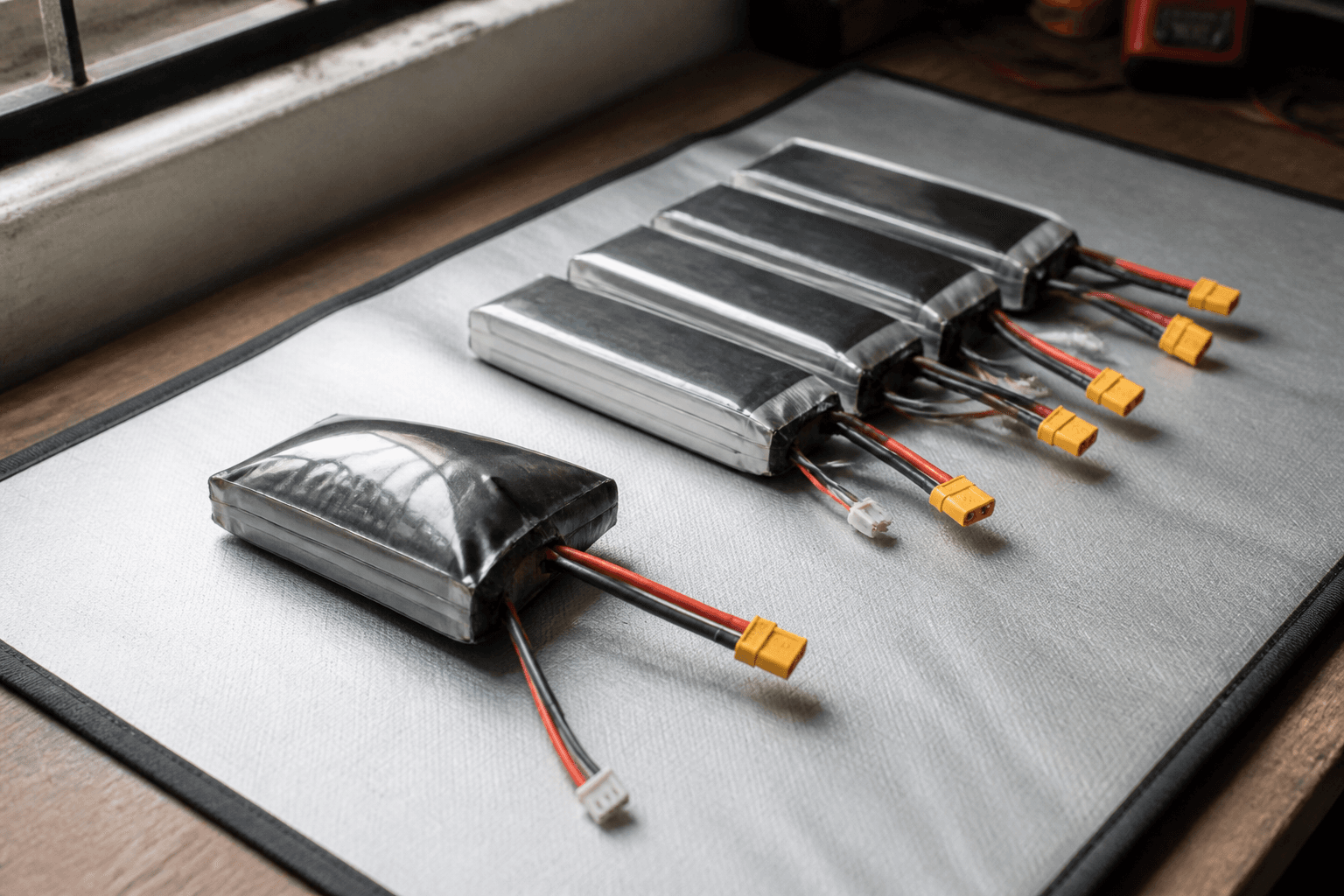
- Visible puffing or damage
- Voltage under load much worse than siblings
- Runs hot while others stay cool
- Charger balance takes forever, cell drift
See LiPo safety for storage and field discipline.
Common mistakes
- Ordering smallest cheapest pack because “C is high.”
- Ignoring 6S vs 4S current difference when reading forum amp charts.
- Charging hot packs immediately after landing in sun.
- Keeping “sentimental” packs for freestyle, use them for bench or retire.
Bottom line
C-rating helps you compare; OSD, sag, and temperature tell you truth. Size packs for your actual punch-outs, buy spares from reputable channels, and retire cells that act tired.
Worked example: sizing for 5-inch 4S freestyle
| Step | Action |
|---|---|
| 1 | Log peak OSD amps on a typical pack, e.g. 95 A brief |
| 2 | Note min cell voltage at that peak, if below 3.4 V, pack is small or tired |
| 3 | Compare 1300 vs 1500 mAh same brand, often 1500 wins on sag, not label C |
| 4 | Summer repeat, heat shifts answer, hot climate tune |
Forum "what C do I need" threads without your amps are guesses.
Import vs domestic for packs
Premium cells sometimes import cheaper per label C, landed cost in import guide. For first builds, domestic LiPo with invoice beats chasing C labels, buying checklist.
Whoop note: 1S packs show C labels too, sag shows as voltage dips on punch even at "75C." Indoor pilots still benefit from known domestic cells and parallel discipline at 1S boards.
Build class sizing (starting points)
C labels do not replace these capacity bands, they narrow choices once you know your amps:
| Build | Typical capacity band | Notes |
|---|---|---|
| 65 mm whoop 1S | 300–450 mAh | Sag shows as brownouts, not OSD amps |
| 3" cinewhoop 4S | 850–1100 mAh | Smooth cruise; headroom for wind |
| 5" freestyle 4S | 1300–1500 mAh | Common sweet spot for sag vs weight |
| 5" freestyle 6S | 1000–1300 mAh | Higher voltage, lower amp draw per watt |
| 7" long-range 6S | 1500–2200 mAh Li-ion or LiPo | Li-ion packs trade burst for endurance |
Undersized packs feel like bad tune. Oversized packs add mass without fixing dead cells, retire tired chemistry instead of compensating with mAh.
Charger amps vs pack health
Your charger display shows input current, not what each cell feels internally. Charging a saggy pack at max label C because the charger allows it heats balance leads and hides cell drift. Slow balance on suspect packs; parallel only matched healthy groups per parallel workflow.
Field habit: note which pack sagged first in the session, that pack gets solo charge and IR check at home, not another parallel slot until it proves equal to siblings.
Discussion
Comments aren't open on this post yet. Share it with your build group, or start a thread on X.