
ELRS in the field: link budget, antennas, and a pre-flight checklist

ExpressLRS (ELRS) won a lot of benches for good reason: open ecosystem, great price-to-performance, and a community that actually documents things. The link still behaves like radio: physics does not care about your sticker.
This guide is field discipline: antennas, firmware pairing, Betaflight failsafe habits, and a checklist you can copy before every session. For choosing ELRS vs Crossfire on a new build, see Crossfire vs ELRS in 2026. For 2.4 vs 900 MHz in Indian cities, see 2.4 GHz vs 900 MHz in urban India.
Link budget in plain English
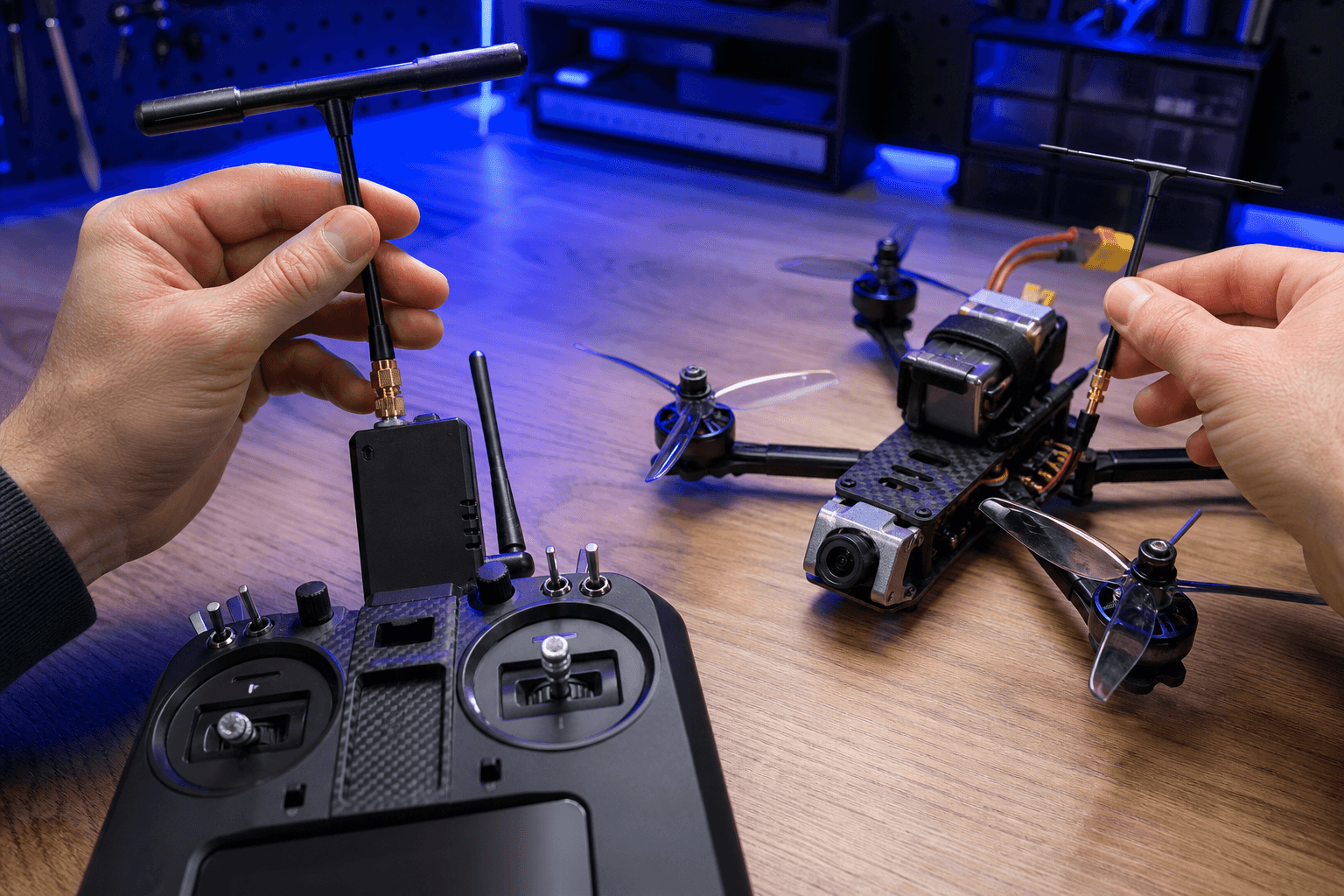
You have a transmitter side (module or integrated radio) and a receiver on the quad. The margin between usable signal and noise + loss is your link budget.
What eats margin fastest:
- Cheap or damaged antennas (bent elements, cracked housings)
- Linear antenna orientation mismatches (vertical TX vs horizontal RX nulls, ELRS uses dipoles, not circular video polarization)
- Shielding problems (vtx or power wiring too close to RX coax)
- Flying behind yourself with a body block at marginal power
- Urban multipath: concrete, terraces, metal roofs
Fix the mechanical stuff before you chase 500 mW on the module.
| Symptom | Check first | Not first |
|---|---|---|
| Short-range failsafe | RX antenna, vtx proximity | Max TX power |
| Directional dead zone | Antenna orientation, body block | New RX brand |
| Intermittent LQ | u.fl pigtail, vibe | Random reflash |
Hardware hygiene
- Torque u.fl connections with care, they are rated for limited mate cycles.
- Strain-relief the RX antenna pigtail off the stack; vibe breaks are common after crashes.
- Match firmware major versions across TX and RX during initial bring-up, then update intentionally, not randomly before an important day.
- Keep vtx coax away from RX pigtail, cross-talk causes ghost failsafes.
UART vs SPI receivers: wiring and troubleshooting differ: receiver UART vs SPI before you blame bind phrases.
Antennas: same physics as video
Antenna placement for vtx applies in parallel. Two antennas zip-tied together for neatness is two antennas interfering. Vertical-ish orientation on both TX and RX is the boring habit that works.
Pack a spare RX antenna in field repair kit Tier 2, bent stubs fail silently.
Betaflight-side habits
- Confirm arm and failsafe in the configurator before the first line-of-sight hop.
- Know your return behavior: GPS rescue is a different feature set than "drop and disarm" failsafe, configure what you actually intend to fly. Read failsafe scenarios.
- Put LQ on OSD: OSD essentials, so you see margin before failure.
Test script (low and slow):
1. Hover 2 m over grass
2. Walk behind obstruction OR follow manual TX-off procedure
3. Observe failsafe, does it match your intent?
4. Repeat after any RX, FC, or firmware change
Power and band choices
2.4 GHz is default for most freestyle and whoop builds, smaller antennas, wide hardware choice. 900 MHz gets discussed for penetration and noisy RF, test at your spots, not YouTube valleys.
| Fly mostly | Starting bias |
|---|---|
| Open club field | 2.4 simplicity |
| Urban terrace / concrete | Test 900 if 2.4 struggles |
| Tiny indoor whoop | 2.4 size wins |
Module bay fitment varies, check radio compatibility before order. Radio gimbals and EdgeTX for model and arm switch discipline on the TX side.
ELRS vs Crossfire?
Most new builds default to ELRS, but Crossfire (CRSF) still has a loyal base, especially pilots with legacy gear or specific module-bay radios. Migration is optional, not moral.
India field realities
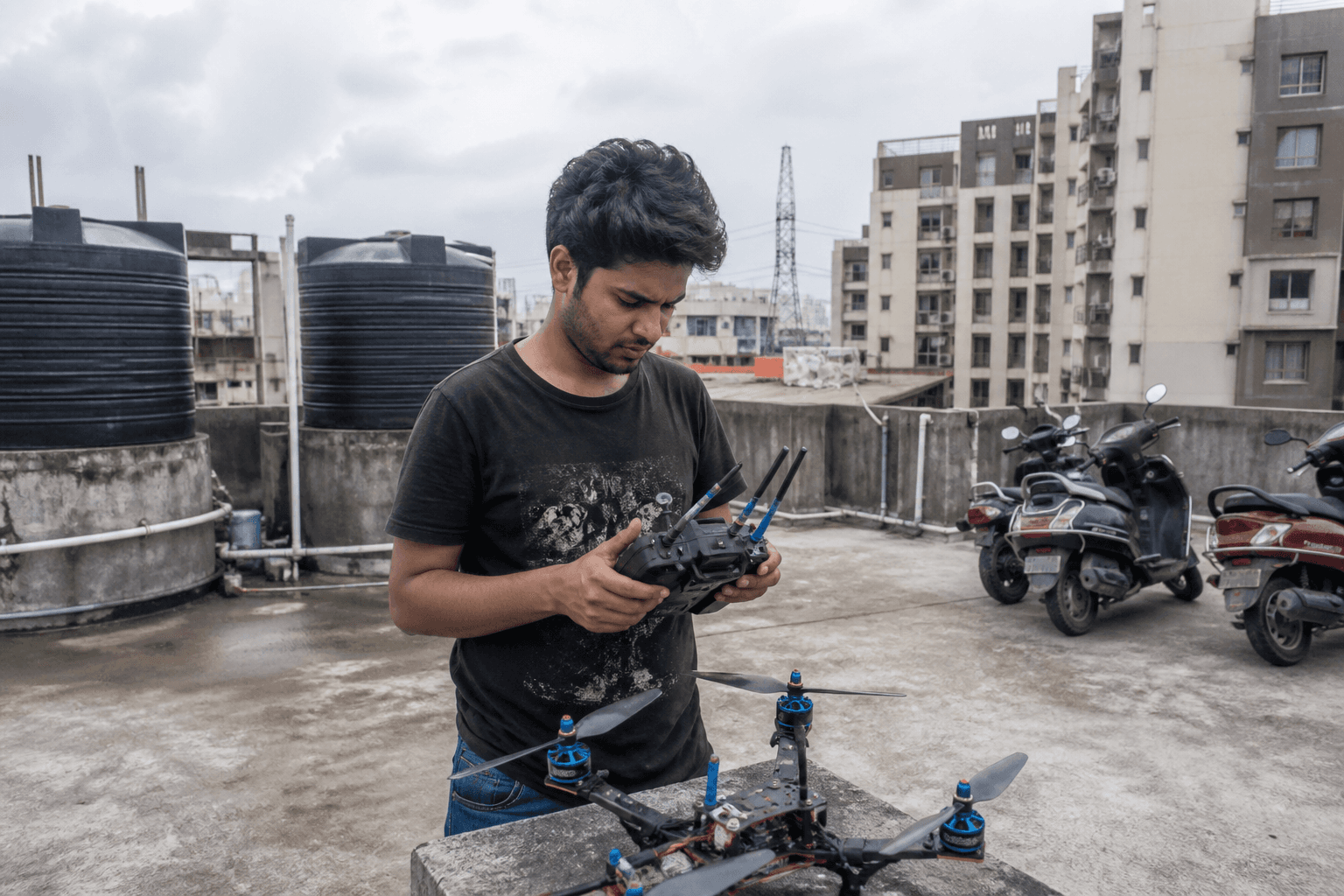
- Apartment Wi-Fi density affects 2.4 GHz, not always fatal outdoors, but terrace tests are worst case.
- Buy modules and receivers from sellers with sane DOA policy: buying FPV gear in India.
- Summer: radios and modules in hot cars, let gear cool before long bind sessions.
Pre-flight checklist (copy to your notes)
1. RX bound + RSSI/LQ on OSD or radio telemetry
2. Failsafe tested at low altitude since last config change
3. Antennas vertical(ish) and secure on TX and RX
4. VTx table / power appropriate for your site
5. Pack voltage healthy, not a "salvage hover" test flight
6. TX module firmware matches RX major version
7. Arm switch requires deliberate action, not bumpable
Common mistakes
- Reflashing TX night before event without bench bind
- Ignoring LQ until RSSI lies to you
- Max TX power with vtx buried in carbon and RX antenna kinked
- Skipping failsafe test because "it bound fine"
ELRS is forgiving until it is not: antenna quality and install discipline are free range.
Packet rate and range (practical, not lab)
Higher packet rates feel crisp on sticks; they can shave margin at distance. Many pilots run a default rate for freestyle and only experiment when tuning long-range. Change one variable at a time and log LQ at your fence line, not at a foreign pilot's mountain video.
If you fly with others, agree whether anyone is on exotic rates before debugging "mystery interference."
Bench bind ritual
1. TX module firmware version noted
2. RX firmware matched (major)
3. Bind phrase documented in model notes
4. Channels verified on Betaflight receiver tab
5. Failsafe stage saved and tested
6. Antennas attached BEFORE first arm
Skipping step six has launched more props into ankles than any firmware bug.
Urban range test (15 minutes, same spot every month)
Use one fence line or known path at your regular field, not a new hero spot.
1. Hover LOS at start point, note LQ on OSD
2. Walk path you actually fly, behind trees, low, not mast height
3. Mark map pin where LQ drops below your personal floor
4. Repeat after any RX, antenna, or vtx change
5. Log in phone notes, "Mar 2026, ELRS 2.4, LQ<50 at south tree"
Trends matter more than absolute metres. If margin shrinks month over month, inspect pigtails and vtx proximity before buying a new module.
Telemetry to radio vs OSD only
| Data path | Pros | Cons |
|---|---|---|
| LQ on OSD | Always visible in goggles | Clutters if layout bad |
| LQ on radio | Glance without OSD edit | Model must map telemetry |
Pick one primary margin indicator and trust it.
See also
- Crossfire vs ELRS in 2026, migration, module bays, and who still needs CRSF
- Betaflight tuning basics, mechanical setup and failsafe discipline on the FC side
- Buying FPV gear in India, radios and modules from domestic sellers
Discussion
Comments aren't open on this post yet. Share it with your build group, or start a thread on X.