
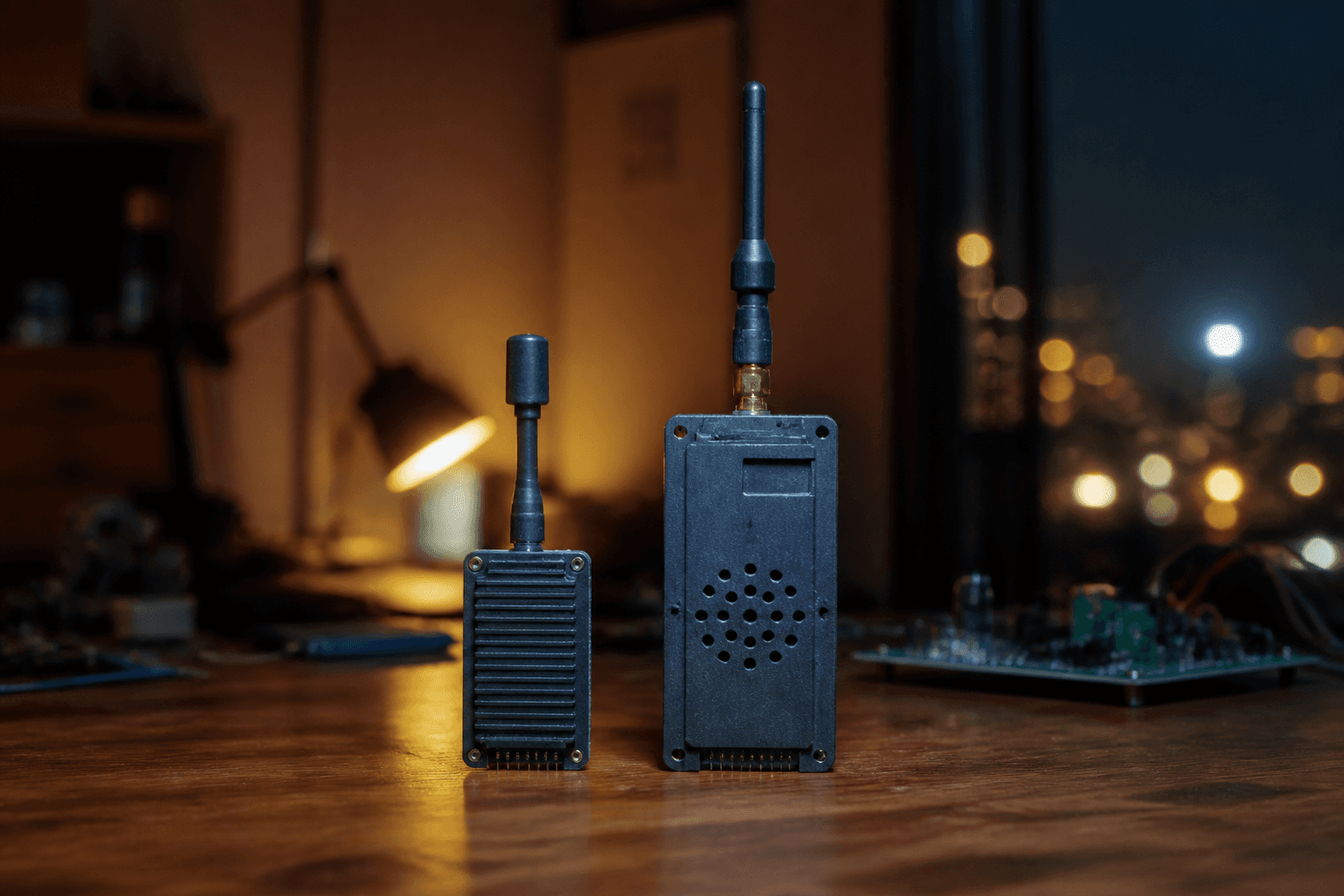
Crossfire vs ELRS in 2026: who still needs CRSF?

ExpressLRS (ELRS) is the default on most new benches, open firmware, sharp price-to-performance, and receivers on every frame size. TBS Crossfire (CRSF) is quieter in marketing but still installed on a lot of legacy radios and long-range rigs.
This is not a range pissing contest. It is: what should you buy next, and when is migration worth the friction.
For antenna hygiene and a field checklist on ELRS specifically, see ELRS in the field. For frequency choice in Indian cities, see 2.4 GHz vs 900 MHz in urban India.
ELRS in 2026
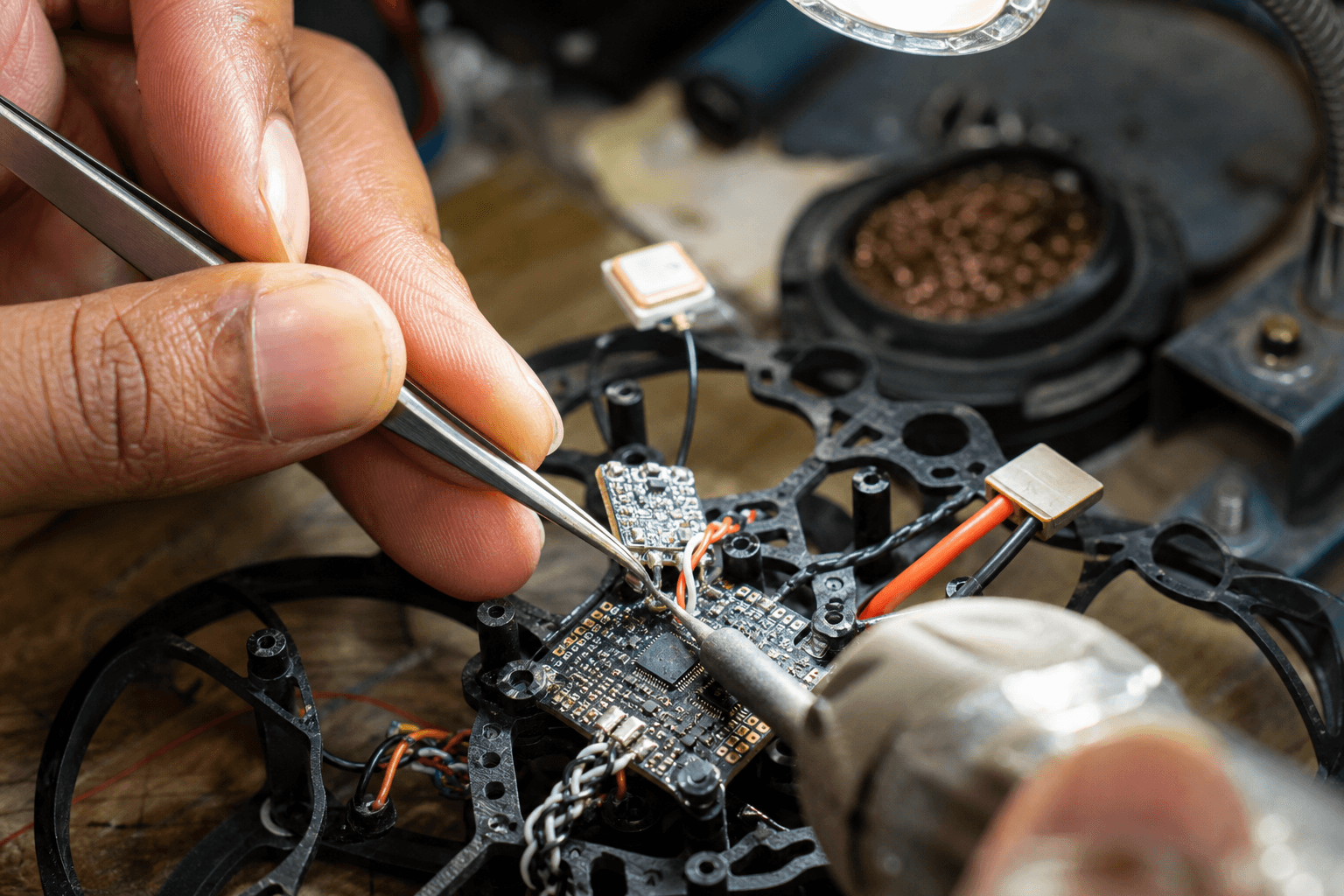
Why it wins new builds:
- Receiver cost and size options from whoop to 7-inch
- Active 2.4 GHz and 900 MHz hardware choices
- Betaflight / EdgeTX integration is boring in a good way
- Community docs and bind procedures are well trodden
Trade-offs:
- Firmware major-version care during bring-up
- Antenna quality still dominates, ELRS does not fix bent SMA
- Module bay sizes vary; check radio fitment before you order
India angle: ELRS gear is widely listed on domestic FPV shops; modules and receivers are often the fastest path from cart to bind compared to niche import-only SKUs. See FPV shops by city for local stocking signals.
Crossfire in 2026
Who still benefits:
- Pilots with CRSF-native radios and no urge to reflash
- Some long-range flyers who trust their existing 900 MHz install and spares bin
- Teams standardized on TBS gear across many quads
Trade-offs:
- Receiver and module pricing vs ELRS on new installs
- Smaller mindshare on new pilot threads, fewer "copy my bind" answers
- Still excellent when already paid for: migration is optional, not mandatory
Side-by-side (practical, not lab)
| Question | ELRS | Crossfire |
|---|---|---|
| Default for new 5" build | ● | ○ |
| Tiny whoop RX selection | ● | ◐ |
| Already own TBS module | ◐ | ● |
| Open-hardware tinker culture | ● | ◐ |
| "I want one checklist online" | ● | ◐ |
| Domestic receiver stock (India) | ● | ◐ |
Range in real life is antennas, height, and environment first, link budget habits apply to both ecosystems.
Purchase decision tree
New pilot, new radio, new quad?
└─ ELRS unless you already own CRSF gear you trust

Own Crossfire module + 6 receivers?
├─ Fly this season on CRSF → migrate when radio upgrade forces it
└─ One dead receiver → ELRS replacement quad is reasonable

Building long-range 7"?
└─ Test YOUR spot on existing band; don't buy MHz religion
    See long-range build notes + 900 MHz urban guide
Migration: ELRS from CRSF
Reasonable path:
- Pick frequency: 2.4 GHz for most freestyle; 900 MHz if your field data says so.
- Match module bay on your radio (or budget a new radio, sometimes cheaper than fighting fitment).
- Flash TX and RX to paired major versions; bind on the bench.
- Retest failsafe low and slow, CRSF habits do not transfer by osmosis. Failsafe scenarios.
- Configure OSD LQ if you did not use it on CRSF.
Keep Crossfire gear as backup until ELRS passes a full day of your actual flying, not just a hover.
Common mistakes:
- Migrating night before a trip without spare RX
- Assuming arm switch mapping copies perfectly, verify in EdgeTX
- Ignoring vtx/RX proximity on new stack layout
Migration: staying on Crossfire
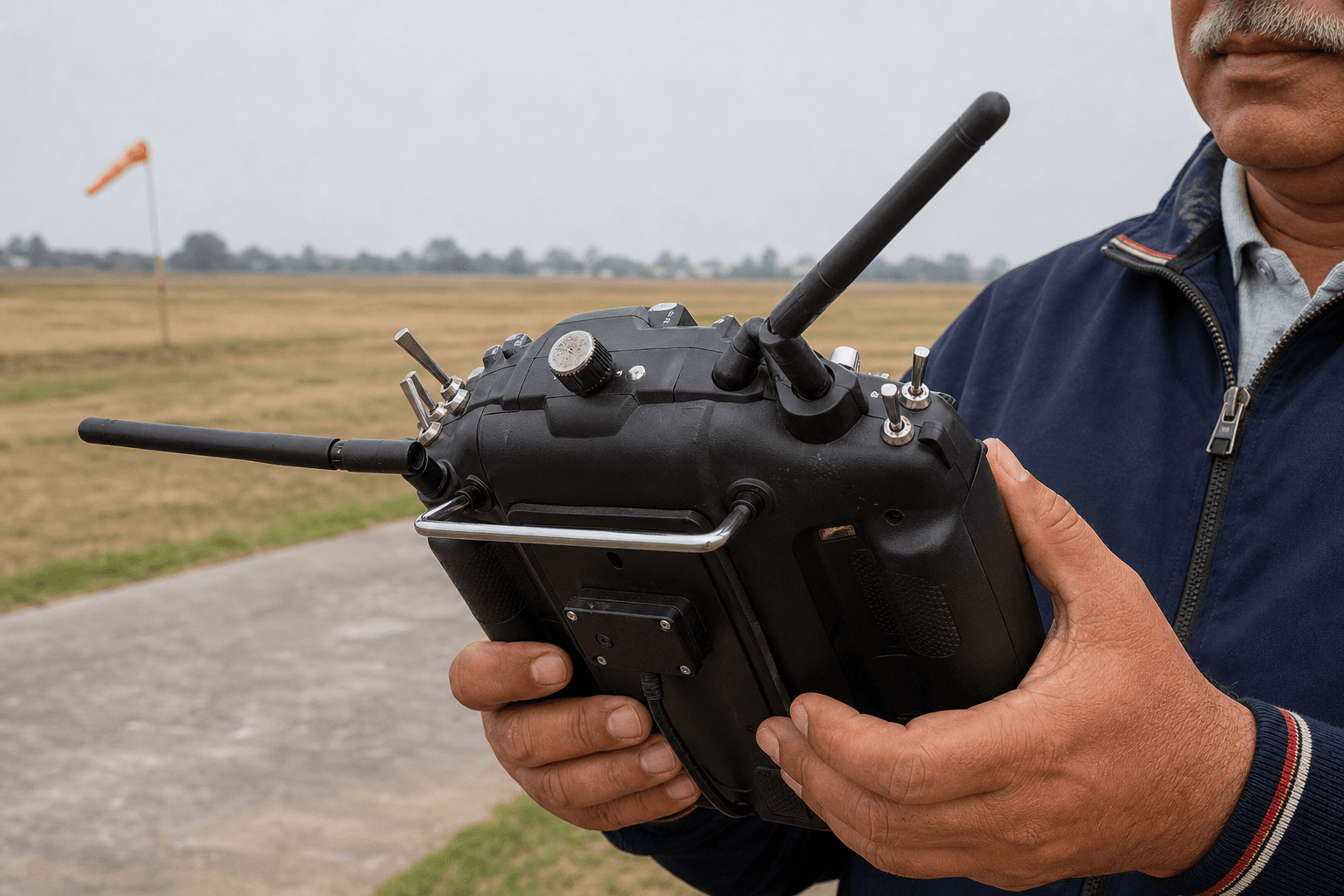
Also valid if:
- You have spares and antennas in the bag
- Your club standardized link testing on CRSF
- Migration cost exceeds one season of flying time for you
Maintain antenna discipline either way, link quality is install physics first. Receiver UART vs SPI matters when you add whoops to a CRSF fleet.
Radio and FC layer
Both systems speak to Betaflight through CRSF protocol on the wire, configuration habits overlap. Failsafe stages, GPS rescue, and OSD warnings are FC decisions layered on top of link choice.
| Layer | Your job |
|---|---|
| TX module | Firmware, bind, power |
| RX | Antenna, uart/spi wiring |
| FC | Failsafe, OSD, arm |
| Pilot | Test low over grass |
Bottom line
New pilot, new radio, new quad: ELRS unless you have a specific CRSF reason.
Deep into Crossfire already: fly it, maintain it, migrate when a radio upgrade forces the question, not because a thread said so.
Buy from sellers with clear warranty, buying FPV gear in India, regardless of logo on the module.
Team and club standardization
If your club runs organized races or group bando days, mixed link ecosystems are fine, mixed failsafe untested fleets are not. Standardizing bind checks and pre-flight ELRS checklist items helps everyone, even CRSF holdouts.
When one pilot migrates ELRS mid-season, run a buddy bench day: bind all quads, verify arm switches, test failsafe on each model before the first crowded spot.
Spares bin strategy
| Situation | Spares logic |
|---|---|
| ELRS fleet | 2–3 RX same size, 1 TX module loaner if you organize meets |
| CRSF fleet | Same, plus 900 MHz stubs if used |
| Mixed | Label RX bags, UART vs SPI, ELRS vs CRSF |
A labeled bin beats a drawer of identical-looking receivers.
Frequency choice workflow (your spot, not forums)
1. Fly existing band 2–3 sessions, log failsafe locations on map pin
2. If margins fine → stay, fix antennas first
3. If terrace/concrete dead zones → controlled 900 MHz test same spots
4. Change one variable, not band + vtx + props same weekend
5. Document model notes in EdgeTX, "5" ELRS 2.4" vs "7" 900 test"
Urban India adds Wi-Fi and building multipath, 2.4 vs 900 guide is context, not a mandate. Your club fence line test beats any overseas range video.
Module bay fitment table (plan before cart)
| Radio style | Typical friction |
|---|---|
| Full-size module bay | Most ELRS/CRSF modules fit, verify pinout |
| Compact / lite radio | May need slim module or external mount |
| JR/Nemo bay adapters | Order adapter with module, not after delivery |
| Internal ELRS | No bay, confirm RF performance vs external |
A module that arrives before you confirm physical fit is a paperweight with good firmware.
See also
- ELRS in the field, link budget, antennas, pre-flight checklist
- Betaflight tuning basics, failsafe and arm discipline on the FC
- Buying FPV gear in India, modules, warranty, and domestic stock
Discussion
Comments aren't open on this post yet. Share it with your build group, or start a thread on X.