

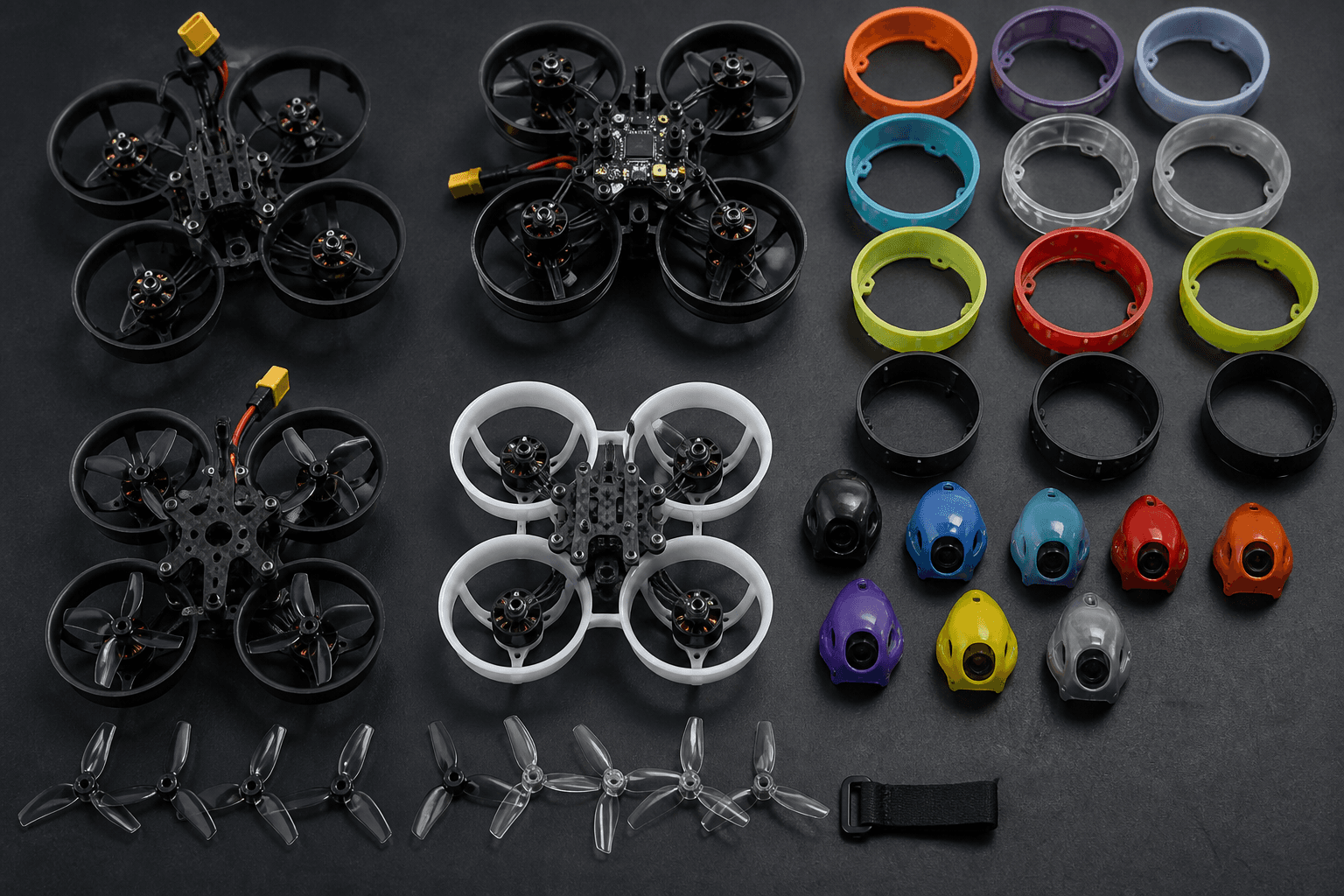
How to choose a tiny whoop frame

The frame decides prop size, duct protection, motor fit and how much your indoor crashes cost. Cameras and tunes matter, but the wrong frame is how beginners end up with props that don't clear the ducts, or open-prop micros that shred on every chair leg.
FPV Grind's default for new indoor pilots: ducted 65 mm, unless you already hover cleanly and know why you want open props or the extra punch of 75–85 mm. Definition of the class: what is a tiny whoop.
Ducted vs open prop
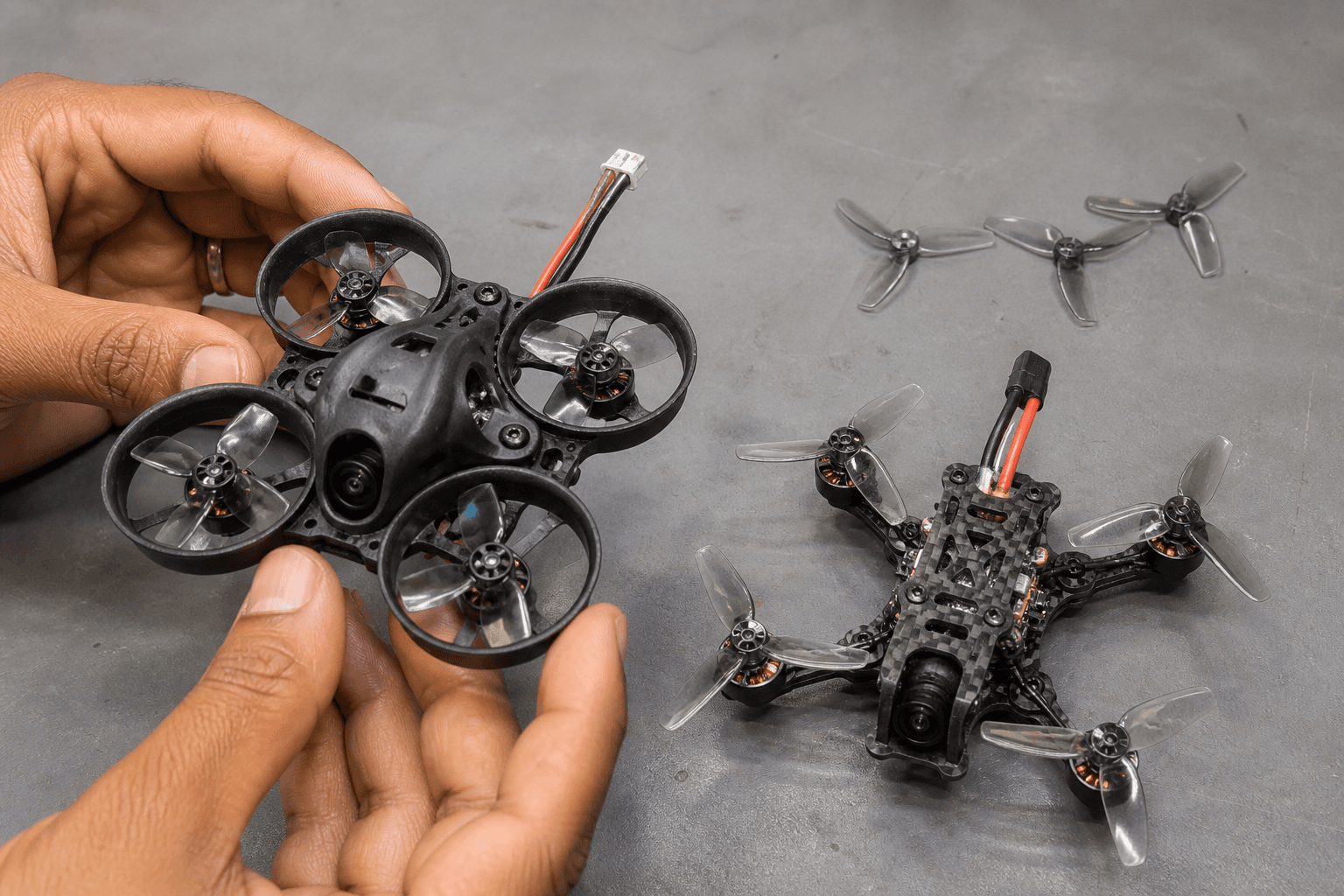
| Type | Best for | Trade-offs |
|---|---|---|
| Ducted | Indoors, furniture, beginners | Slightly more weight; ducts still break |
| Open prop | Lighter, sharper feel, outdoor lines, freestyle micros | More crash damage; more dangerous near people |
Ducts prevent some strikes; they do not make props safe near faces. Keep clear of spectators: kids, pets, spectators.
Size classes
| Class | Typical role | India fit |
|---|---|---|
| 65 mm | Classic indoor trainer | Apartments, halls, flying through the monsoon |
| 75–85 mm | More punch; light outdoor whoop | Parks in calm wind; still not a 5-inch |
| Odd sizes | Specialty builds | Only if spares are actually available |
Bigger isn't automatically better for learning: a 75 mm in a small bedroom hits walls harder. Start from your space: fly indoors · apartments / terraces.
Fitment checklist (before you click buy)
□ Motor size the frame expects (e.g. 0702 / 0802 / 1102 / 1103)
□ Prop size the ducts clear (31 / 40 / 45 mm; check twice)
□ AIO mounting pattern matches your board (25.5 x 25.5 vs 26 x 26 mm)
□ Camera canopy fits your camera (nano vs micro)
□ Battery tray fits your packs and connector (PH2.0 / BT2.0)
□ Spare frames available in India for when you crash
Props: how to pick whoop props. Full build path: how to build a tiny whoop. Connectors: connector guide.
Decision matrix
| Factor | Ducted 65 | Ducted 75–85 | Open 65 |
|---|---|---|---|
| Furniture survival | ● | ◐ | ○ |
| Beginner indoor | ● | ◐ | ○ |
| Calm outdoor | ◐ | ● | ● |
| Parts simplicity | ● | ● | ◐ |
| Crash cost | Low | Medium | Higher |
| Sharper "pro" feel | ◐ | ● | ● |
● = strong · ◐ = workable · ○ = poor default for learning indoors
Beginner pick (and when to break it)
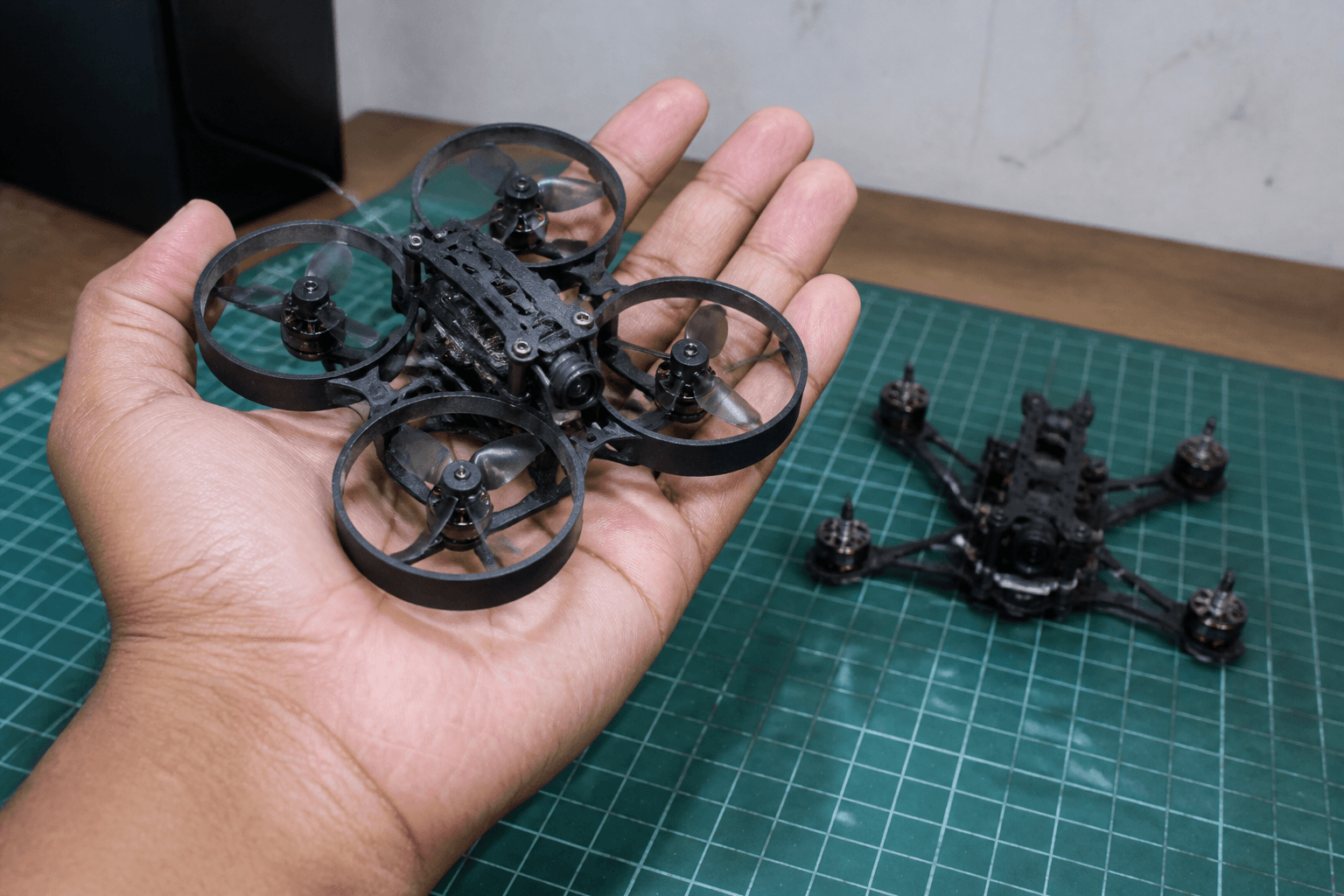
Default: a ducted 65 mm BNF, or a well-known frame that takes the motors and props stocked in India.
Choose ducted 75–85 mm when: you already hover well, fly in parks, and accept slightly higher repair costs.
Choose open props when: you want a freestyle micro feel and have space and spare motors. Not for week-one furniture training.
Beginners usually do best with a BNF first (best tiny whoop for beginners), then replace frames as consumables.
Failure modes of a bad frame choice
| Mistake | What happens |
|---|---|
| Props too large for the ducts | Constant rubbing, heat, a "falling" feel |
| Open props in a cluttered room | Broken props and motors, fast |
| Obscure frame with no spares | One crash grounds the quad |
| HD camera on a fragile 65 mm | Too much weight and canopy stress |
| Mixed motor heights | Props sit at different heights in the ducts |
If flights end in sudden drops after a frame swap, check prop clearance before retuning - why drones keep falling · change props.
India stock and crash tax
Frames are plastic consumables. Prefer designs your local shop or the Bench can restock. Club and city groups know which 65 mm frames actually survive tiled floors: communities by city. Buying overview: buying checklist.
Keep at least one spare frame if you fly hard indoors. Swapping a canopy after every desk clip is normal, not failure.
Workflow: choose in 10 minutes
1. Where do you fly THIS month?
   □ Room / hall → ducted 65
   □ Calm park → ducted 75 is an option
2. Can you hover in the sim without panicking?
   □ No → stay with ducted 65
3. Confirm motor + prop + AIO fitment list above
4. Check spare frame availability before checkout
5. Buy props in multipacks the same day
Bottom line
Pick the frame for your real room, not a YouTube freestyle micro. Ducted 65 mm is the honest trainer; move to 75–85 mm or open props when space, spares and stick skill justify it. Fit beats looks: props that clear the ducts and motors that match the mounts keep you flying.
Bench
Frames and whoop parts: the Bench. Build checks: Grind Lab. Practise in the simulator before you decorate the walls.
See also
- Tiny whoops in India: the complete guide
- What is a tiny whoop
- How to build a tiny whoop
- Cinewhoop, micro, or freestyle first
FAQ
- Ducted or open-prop whoop frame for a beginner?
- Ducted. Ducts absorb the furniture and wall hits that end a first week indoors and are safer around people and pets. Open-prop frames are for outdoor lines and freestyle micros once you hover cleanly and have spare motors.
- Should a first tiny whoop be 65 mm or 75 mm?
- Ducted 65 mm. It fits Indian apartments and halls, costs least per crash and uses 31 mm props that are easy to restock. Step up to a ducted 75 or 85 mm when you fly calm parks and accept higher repair bills.
- What should I check before buying a whoop frame?
- The motor class it expects (0802 up to 1102/1103), the prop size the ducts clear (31 mm, 40 mm or 45 mm), the AIO mounting pattern (25.5 x 25.5 mm or 26 x 26 mm), camera canopy fit, a battery tray that suits your connector (PH2.0 or BT2.0), and whether spare frames are stocked in India.
Discussion
Comments aren't open on this post yet. Share it with your build group, or start a thread on X.