
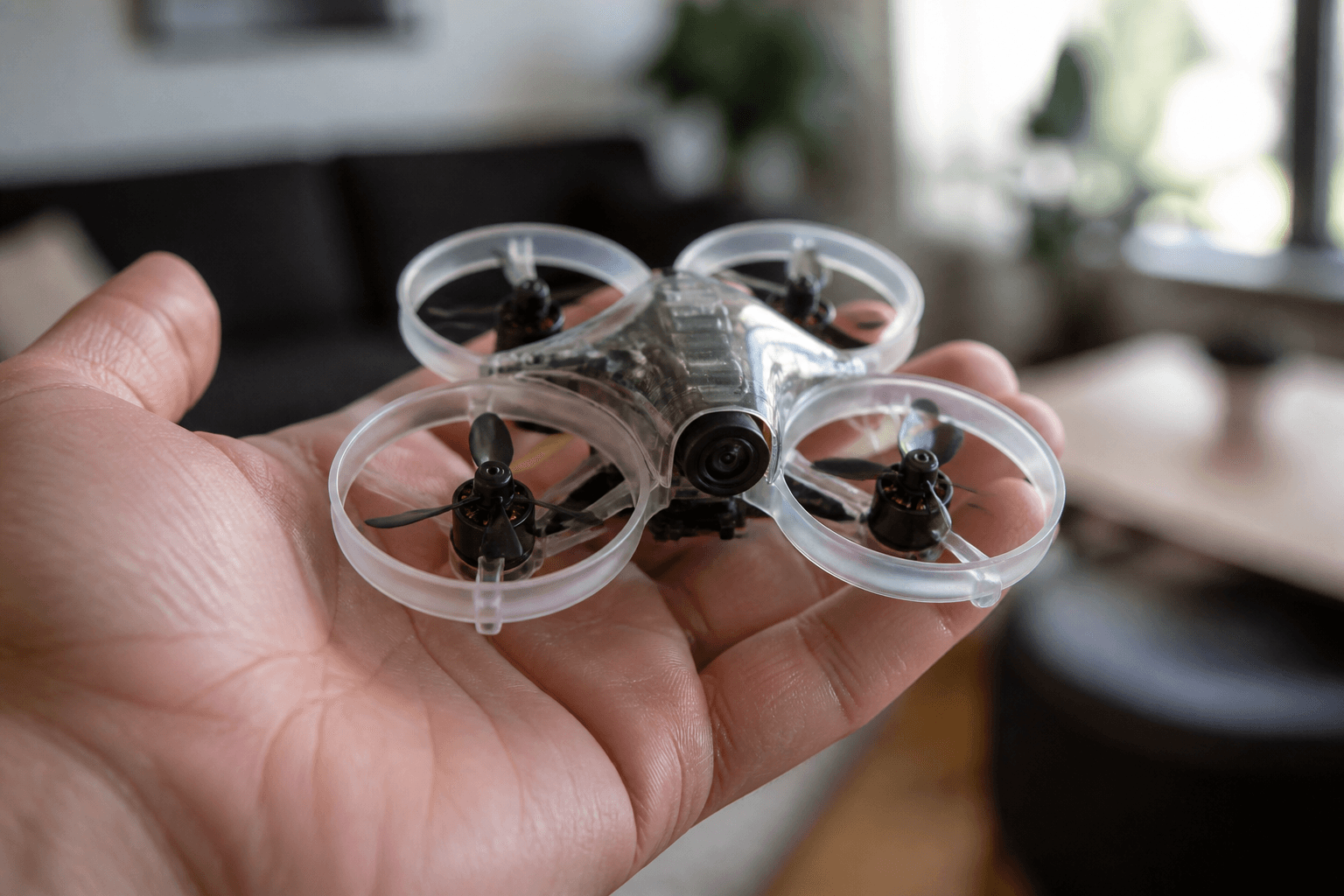

A tiny whoop is a small FPV quadcopter - typically in the 65–85 mm diagonal class - built for close-range flying where a naked 5-inch freestyle quad would be too loud, too dangerous, and too expensive to crash. Many whoops use ducted props (prop guards that form a “whoop” shape) so furniture and walls are survivable while you learn.
If you are starting FPV in an Indian apartment, monsoon season, or any place without a weekly club field, a whoop is not a toy sidequest. It is often the only craft you can fly three times a week. That frequency is what builds stick skill.
Anatomy in plain language
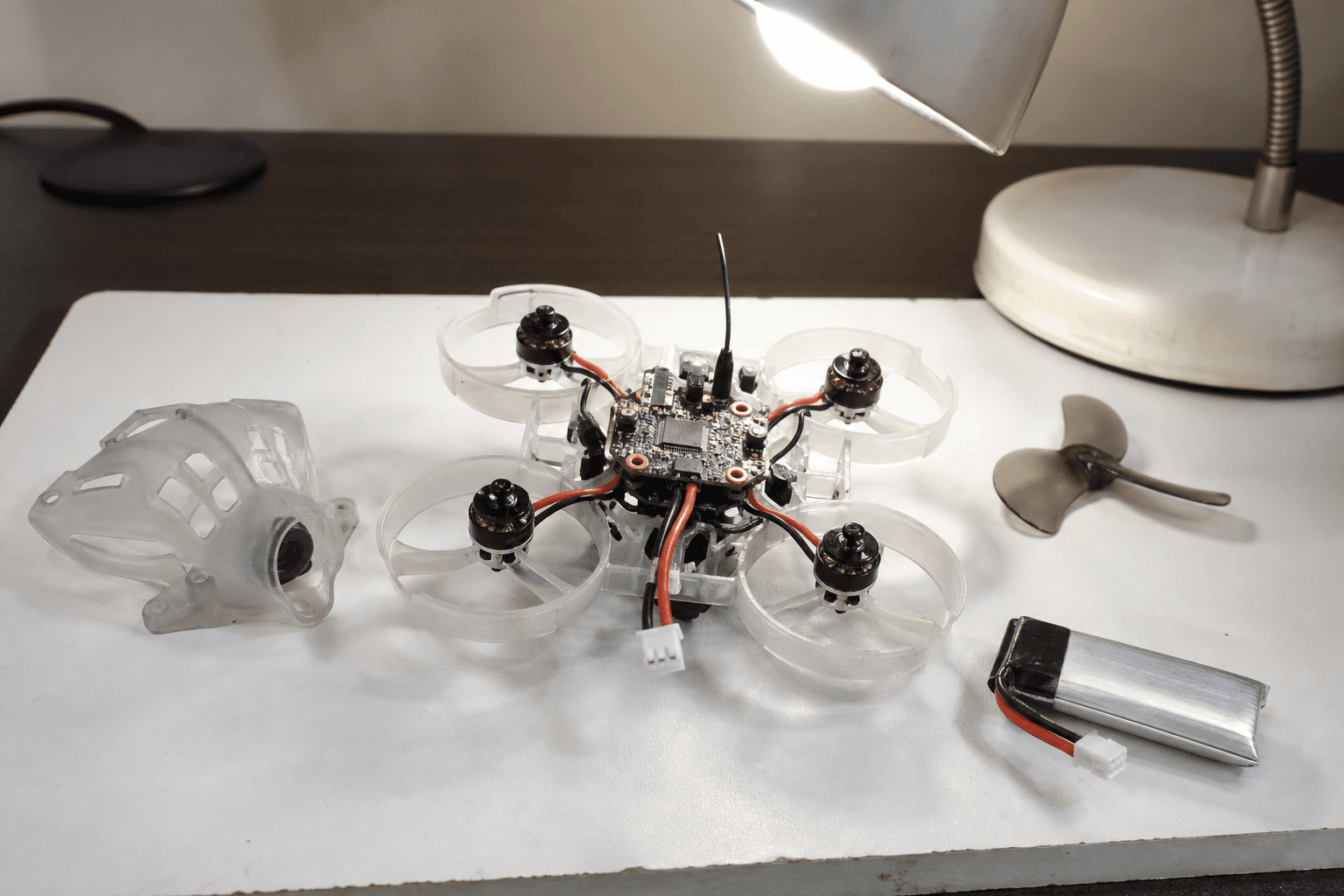
| Part | What it does on a whoop |
|---|---|
| Frame / ducts | Holds motors; ducts reduce prop bites and some crash damage |
| Motors (often 0802–1202 class) | Spin props; cheap relative to 2207s |
| Flight controller + ESC | Runs Betaflight (or similar); keeps it airborne |
| Camera + VTX | Sends FPV video to your goggles |
| Receiver (usually ELRS) | Hears your radio - what is ExpressLRS |
| 1S or 2S LiPo | Flight time in minutes, not half hours |
BNF (“bind and fly”) whoops assume you already own a radio. RTF kits add radio and goggles. Path comparison: which build first.
Why whoops exist
- Crash tax is low - props and motors cost hundreds of rupees, not a weekend salary
- Indoor / hall flying when outdoor fields are hours away - fly indoors
- Monsoon continuity - mud fields cancel 5-inch days; a dry room does not
- Throttle and orientation practice before heavy freestyle craft
- Community on-ramp - many Indian pilots start here, then move outdoors
Whoops still need prop discipline around kids, pets, and faces. Ducts are not magic armor: spectator boundaries.
Whoop vs cinewhoop vs 5-inch
| Factor | Tiny whoop | Cinewhoop | 5" freestyle |
|---|---|---|---|
| Typical size | 65–85 mm | ~2–4" ducted | ~5" props |
| Best space | Rooms, halls, calm parks | Slow outdoor / gaps | Open fields |
| Noise (terrace) | Low–medium | Medium–high | Very high |
| Wind outdoors | Weak | Better | Strong |
| Crash cost | Low | Medium | Higher |
| HD carry | Limited | Strong | Strong |
Full decision matrix: cinewhoop, micro, or freestyle first. First purchase shortlist: what FPV drone should I buy first.
Size classes (what the numbers mean)
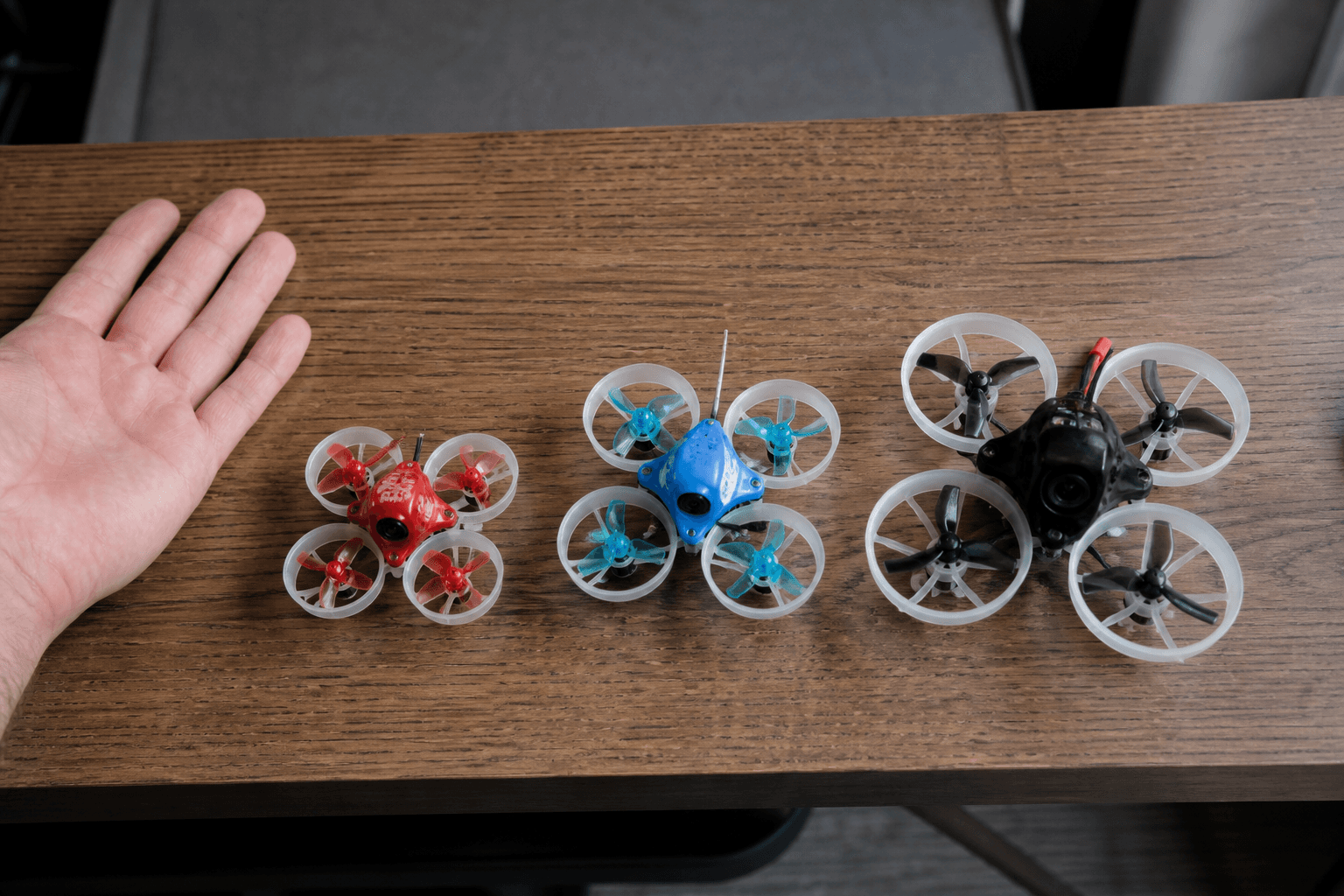
| Class | Typical use |
|---|---|
| 65 mm | Classic indoor trainer; tight furniture gaps |
| 75–85 mm | More punch; often “outdoor whoop” in light wind |
| Open-prop micros | Snappier feel; harsher crash damage indoors |
Frame choice details: how to choose a tiny whoop frame. Beginner BNF picks: best tiny whoop for beginners.
What you need around the whoop
Minimum stack for a happy whoop pilot:
□ ELRS radio (Mode 2) - [EdgeTX setup](/blog/how-to-set-up-edgetx-for-fpv)
□ Goggles or a kit viewer
□ 4–6 matched 1S (or 2S) packs + correct connector charger
□ Spare props and a small driver set
□ [/sim](/sim) hours before you decorate the ceiling fan
Connector mismatch (PH2.0 vs BT2.0) ruins first weeks - connector guide. LiPo habits: charge safely.
India-specific fit
Apartments, society bye-laws, and terrace politics matter as much as thrust-to-weight. A whoop you can fly after work beats a 5-inch that lives in a cupboard. Read flying in apartments and terraces and skim DGCA basics (not legal advice). Find people near you: shops and communities.
Buying parts domestically when stock exists saves customs pain: buying checklist.
Common beginner misconceptions
| Myth | Reality |
|---|---|
| “Whoops are just toys” | Same Mode 2 skills as bigger quads |
| “Ducts mean safe around faces” | Still cut and bruise; fly clear of people |
| “One pack is enough” | You need a fleet; restock is slow |
| “Skip sim, fly real only” | Sim compresses the ugly week - /sim |
| “Jump to 5-inch next month” | Upgrade when access and skill justify it |
Bottom line
A tiny whoop is a small, often ducted FPV quad optimized for practice frequency and cheap mistakes. For many FPV Grind readers in India, it is the correct first aircraft - not a compromise. Learn hover, orientation, and pack discipline here; graduate when you have real outdoor access and repair budget for the next class.
Bench
Whoop frames, BNFs, and kits: the Bench. Build and tune deeper: Grind Lab. Stick time: /sim.
See also
FAQ
- What is a tiny whoop?
- A tiny whoop is a small FPV quadcopter, typically 65–85 mm diagonal, often with ducted props for indoor and close-range flying. Crash costs stay low compared with naked 5-inch freestyle quads, which is why many Indian beginners start here.
- Why start FPV with a whoop in India?
- Apartments, terraces, and monsoon weeks make weekly 5-inch field days hard. A whoop you can fly after work builds stick skill faster than a larger craft that stays in a cupboard. Society noise and bylaws still apply.
- What size whoop should a beginner get?
- Most beginners should start around 65 mm ducted on 1S. It fits furniture gaps, stays calmer indoors, and keeps spare props and motors cheap while you learn hover and soft landings.
- Is a tiny whoop safe around kids and pets?
- Ducts reduce prop bites versus naked blades, but they are not armor. Keep clear spectator boundaries, never fly at faces, and treat spinning props as hazardous even on a small whoop.
Discussion
Comments aren't open on this post yet. Share it with your build group, or start a thread on X.