

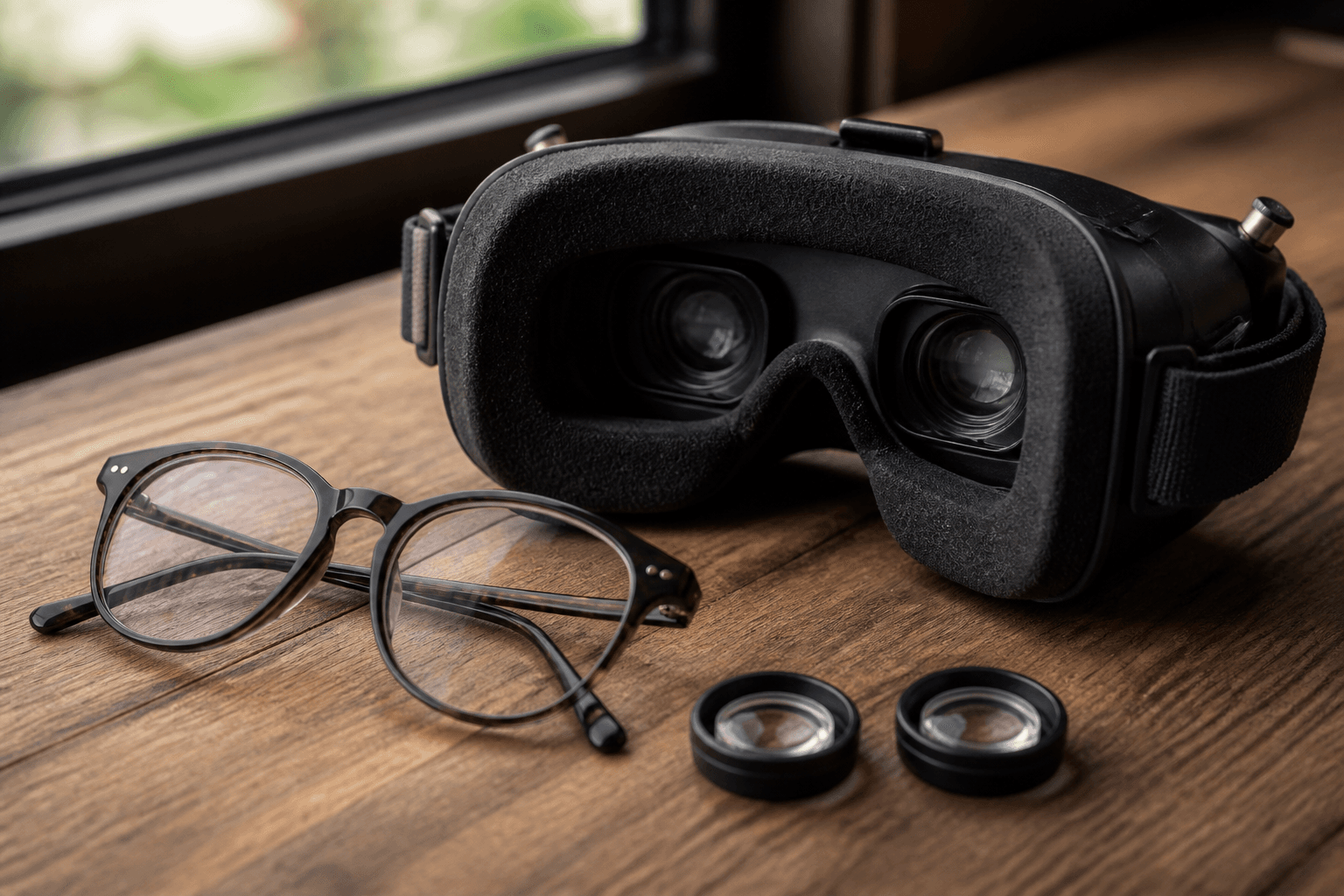
Flying with glasses: goggle foam and diopter options

Glasses under goggles work, as long as you solve IPD, fog and face seal instead of fighting them for six packs. Many pilots give up on FPV not because of link quality but because their face hurts and their lenses fog by pack three. That's a gear problem, and it's fixable.
This guide is about comfort on Indian field days: heat, humidity, and long drives to a spot where you won't fly if the headset is miserable.
Box vs slim with glasses
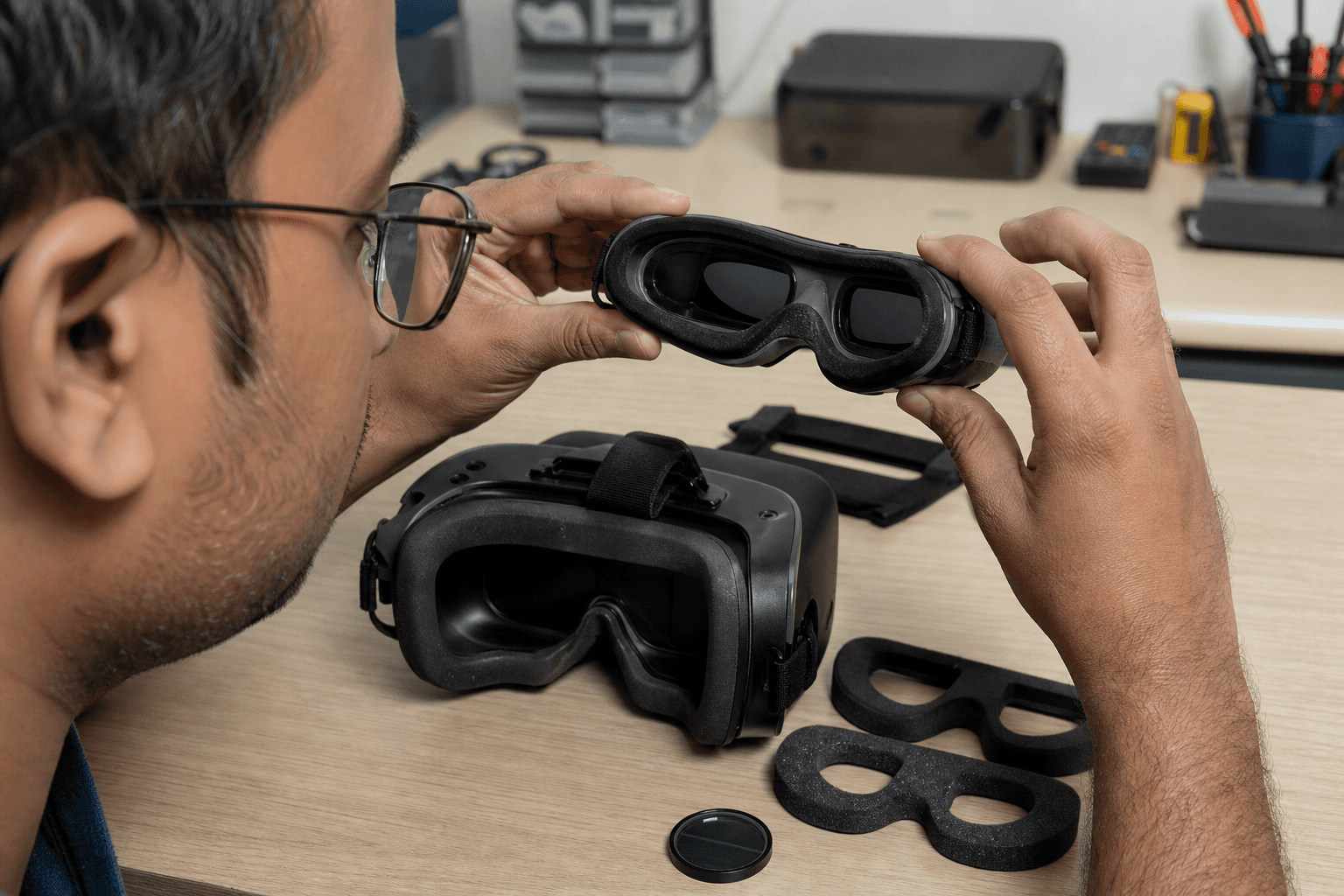
Box goggles often fit glasses better: more internal space, fewer collisions with temple arms. The trade-off is bag bulk, and single-screen designs have no IPD adjustment to tune. For many glasses wearers on a budget, box is the easy path.
Slim goggles have twin displays and usually sit lighter on the face, but need an IPD range that matches your eyes and room for your frames. Some slim sets simply won't work with wide acetate temples; try before you import if you can.
| Form factor | Glasses friendliness | Check before buy |
|---|---|---|
| Box | Often good | Temple clearance depth |
| Slim | Variable | IPD range + frame width |
| Modular | Depends on module | Same as slim once assembled |
Full comparison: FPV goggles: box, slim, and modular.
Purchase decision tree:
Wear glasses every day?
├─ Yes → try box, or slim with a diopter option, first
│         └─ Borrow a friend's set for 15+ min before ordering
├─ Mild prescription → diopter inserts may replace glasses
└─ Strong astigmatism → plan on glasses; verify temple fit
Diopter inserts
Many slim goggles take diopter insert lenses instead of glasses: lighter, a tighter light seal and less fog at the nose bridge. Some digital goggles go further; DJI Goggles 3, for example, has built-in diopter adjustment from −6.0 D to +2.0 D. Match your prescription honestly. Mild short-sightedness usually works; astigmatism may still need your glasses or custom lenses from an optician.
Pros: Better seal, better immersion, less stray light in the Indian sun.
Cons: The wrong strength causes eye strain fast, and inserts don't suit progressive-lens users who need distance and reading zones in one flight.
If inserts work for you, carry a microfibre cloth and treat the lenses like camera glass: scratches are permanent.
Foam, fog, and face seal
Worn foam leaks light, leaks sweat, and fog wins.
- Replace flat or cracked foam; OEM and third-party kits exist for popular goggles
- Goggles with a fan help in humidity; wipe sweat between packs
- Anti-fog sprays help some pilots; others rely on ventilation alone
- In summer heat, carry a microfibre cloth and keep your gear bag in shade
| Symptom | Likely cause | Fix |
|---|---|---|
| Fog inside lenses | Breath leak, bad seal | Foam upgrade, fan, fit adjustment |
| Fog on glasses | Gap at nose | Diopters or better foam profile |
| Light leak corners | Worn foam | Replace foam; check strap tension |
| Jaw pain 20 min in | Heavy set + tight strap | Loosen strap; try lighter slim |
Monsoon note: humidity makes fog the default enemy. See monsoon flying and storage for gear care, and dry the foam between sessions when you can.
IPD and clarity
An interpupillary distance (IPD) mismatch makes a sharp OSD look soft, and your eyes tire compensating. On slim sets, set IPD before judging image quality. On box sets, check that both eyes can see the whole screen with your glasses on.
If your OSD looks sharp without glasses but soft with them, suspect alignment, not the VTX.
Practical test before you buy
Wear the goggles for 15 minutes before buying; jaw pain and temple pressure show up early. Simulate flying: look down at your radio, turn your head left and right, and check whether your glasses shift.
Fatigue ends more field days than bitrate does. An expensive goggle that hurts is worse than a cheaper one you can wear all afternoon.
Buying in India: a domestic warranty and local spares matter when foam kits are hard to find; see buying FPV gear in India. Import-only slim sets with no local foam supply are a long-term comfort gamble.
Field habits for glasses wearers
- Clean both sides of your glasses between sessions; a fingerprint smear looks like video blur
- Strap tension: snug enough to seal, not tight enough to cause a headache
- Review your DVR to confirm framing if your eye position changes the visible field
- Keep a slim glasses case in the bag; lenses scratch in loose pockets
Common mistakes
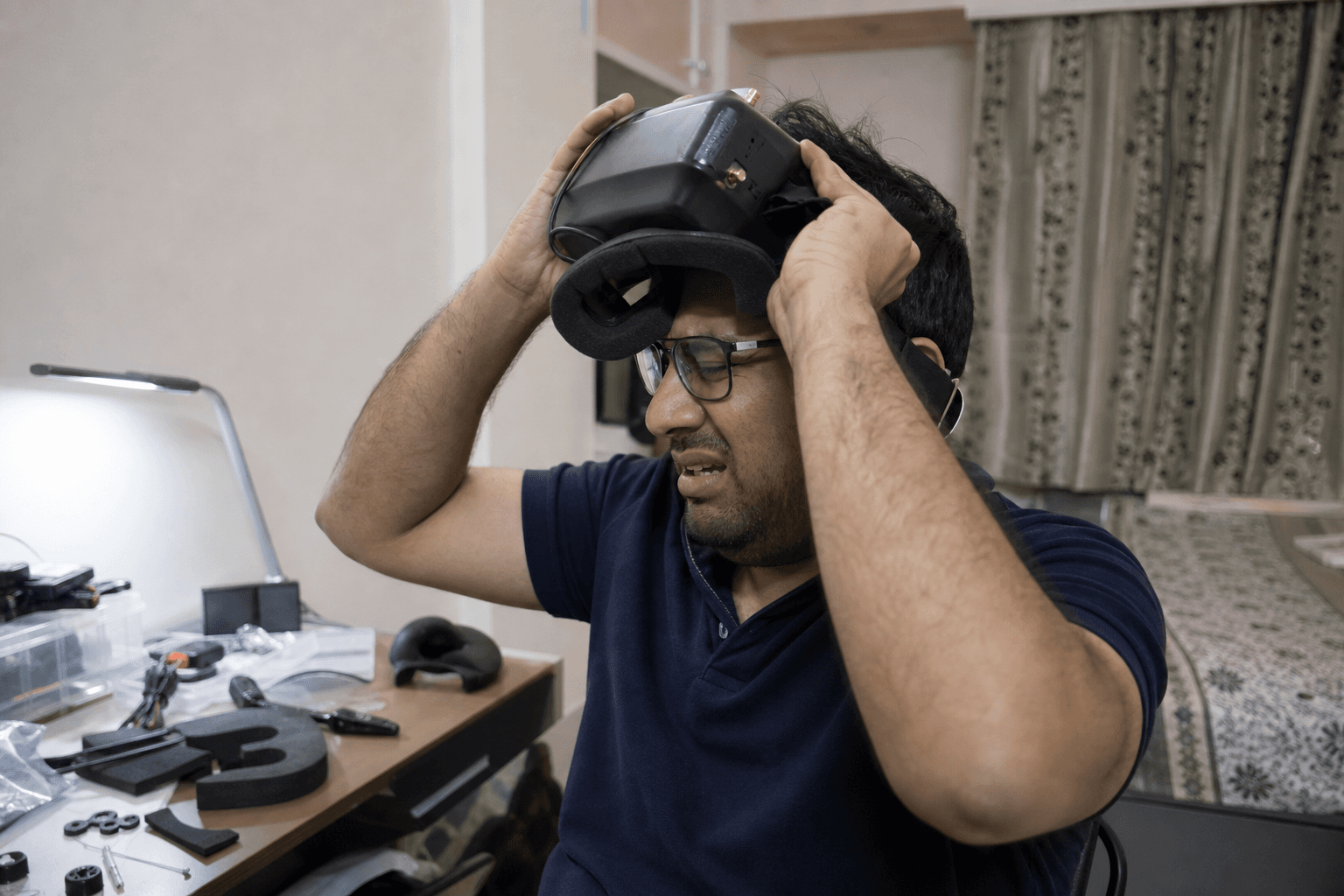
- Buying into an HD system before solving fit: HD vs analog won't fix temple pain
- Maxing brightness to compensate for blurry vision; fix the optics first
- Trying a friend's goggles without adjusting IPD, then blaming perfectly good hardware
Comfort isn't vanity. It's flight time.
Progressive lenses and bifocals
With progressive or bifocal glasses, the clear zone may not line up with the goggles' focal distance. Some pilots keep a cheap distance-only pair just for FPV; if you fly weekly, it's worth an optician visit with the goggles in hand. Bifocal wearers often do better with box goggles.
Sharing goggles with friends
If you lend your goggles, reset IPD and strap afterwards, and expect the foam to fit differently. Glasses wearers notice this most. If you demo often at meets, carry your own faceplate or foam.
Long session checklist
□ Glasses clean inside and out
□ Foam seated, no corner gaps
□ Strap adjusted for nod without slip
□ Fan on if equipped
□ Microfiber accessible
□ Take a break if fog starts; flying through it causes crashes
Humidity workflow (Indian field days)
Monsoon and post-rain grass push humidity into every gap between foam and frames.
| Step | When |
|---|---|
| Pat foam dry with microfiber | Between packs |
| Loosen strap 10 seconds | If jaw ache + fog together |
| Store goggles ventilated, not in sealed plastic | In the car and at home |
| Replace foam about yearly if you sweat a lot | Before fog wins every session |
Anti-fog wipes help some pilots; others find they fog up again within twenty minutes. For most glasses-under-goggles setups, ventilation and fit beat chemistry.
Prescription strength: quick guide
| Prescription | Typical path |
|---|---|
| −1 to −3 sphere, low astigmatism | Diopter inserts often work |
| Strong astigmatism | Keep glasses; verify temple clearance |
| Progressive / bifocal | Dedicated distance pair for FPV |
| Contact lenses | Slim goggles usually work without inserts; watch for dry eyes on long days |
When in doubt, visit an optician with the goggles in hand and ask what correction suits their focal distance. One visit saves months of blurry OSD and headaches.
See also
- FPV goggles: box, slim, and modular
- DVR, Wi-Fi download, and sharing footage
- Summer heat: field day packing list
Fly with pilots near you
Every city page has an open FPV Grind group you can join with your account, plus where to fly, when the weather allows it and what the airspace rules say. Find FPV pilots near you.
Discussion
Comments aren't open on this post yet. Share it with your build group, or start a thread on X.