
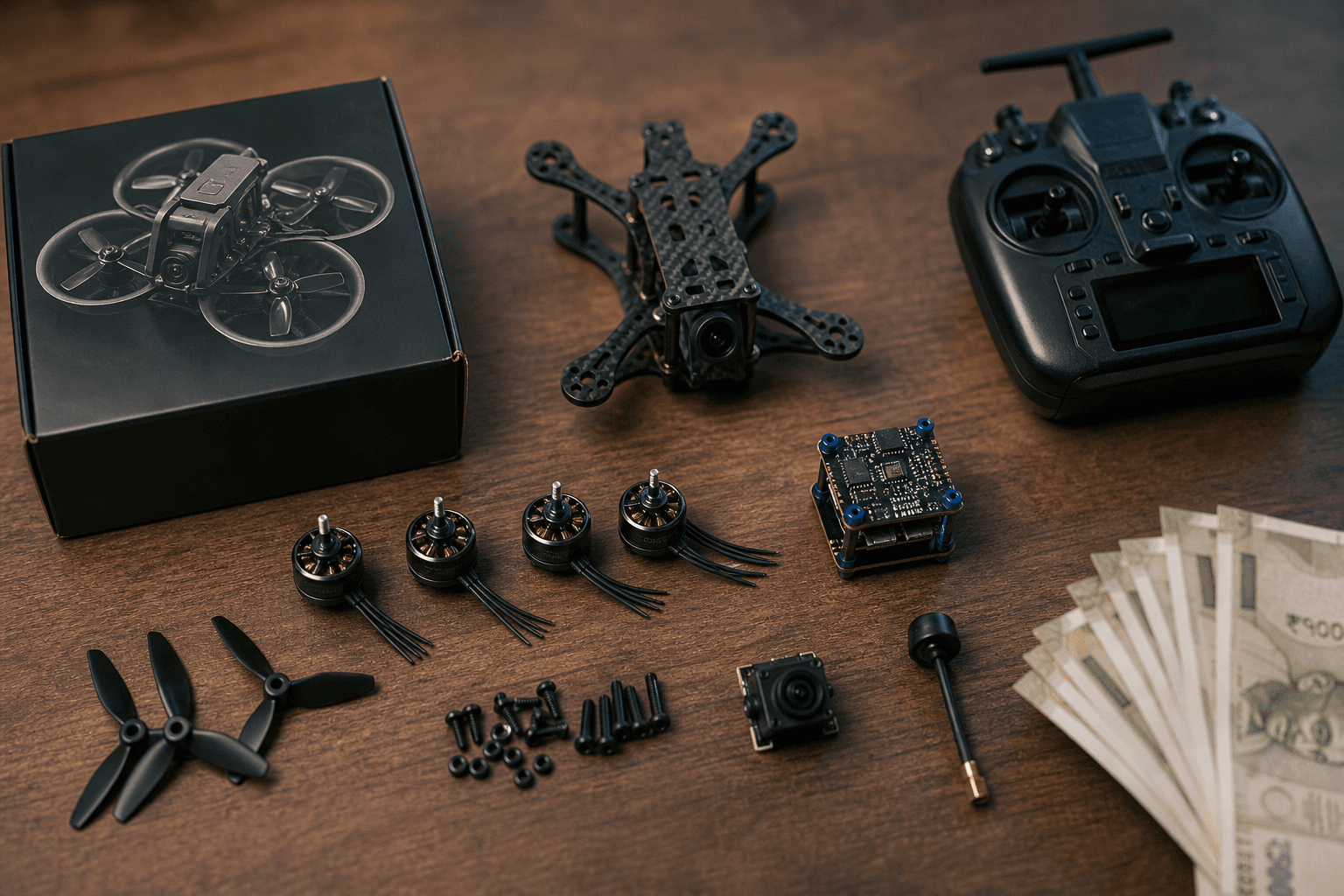
BNF vs PnP vs scratch build: honest cost breakdown

BNF, PnP, and scratch are not just price tags, they are time, failure modes, and how fast you learn. The invoice total on checkout day is the smallest number in the equation. What matters is how many flights you get before frustration, how much you understand when something breaks, and how painful spares and warranty are in your country.
Definitions
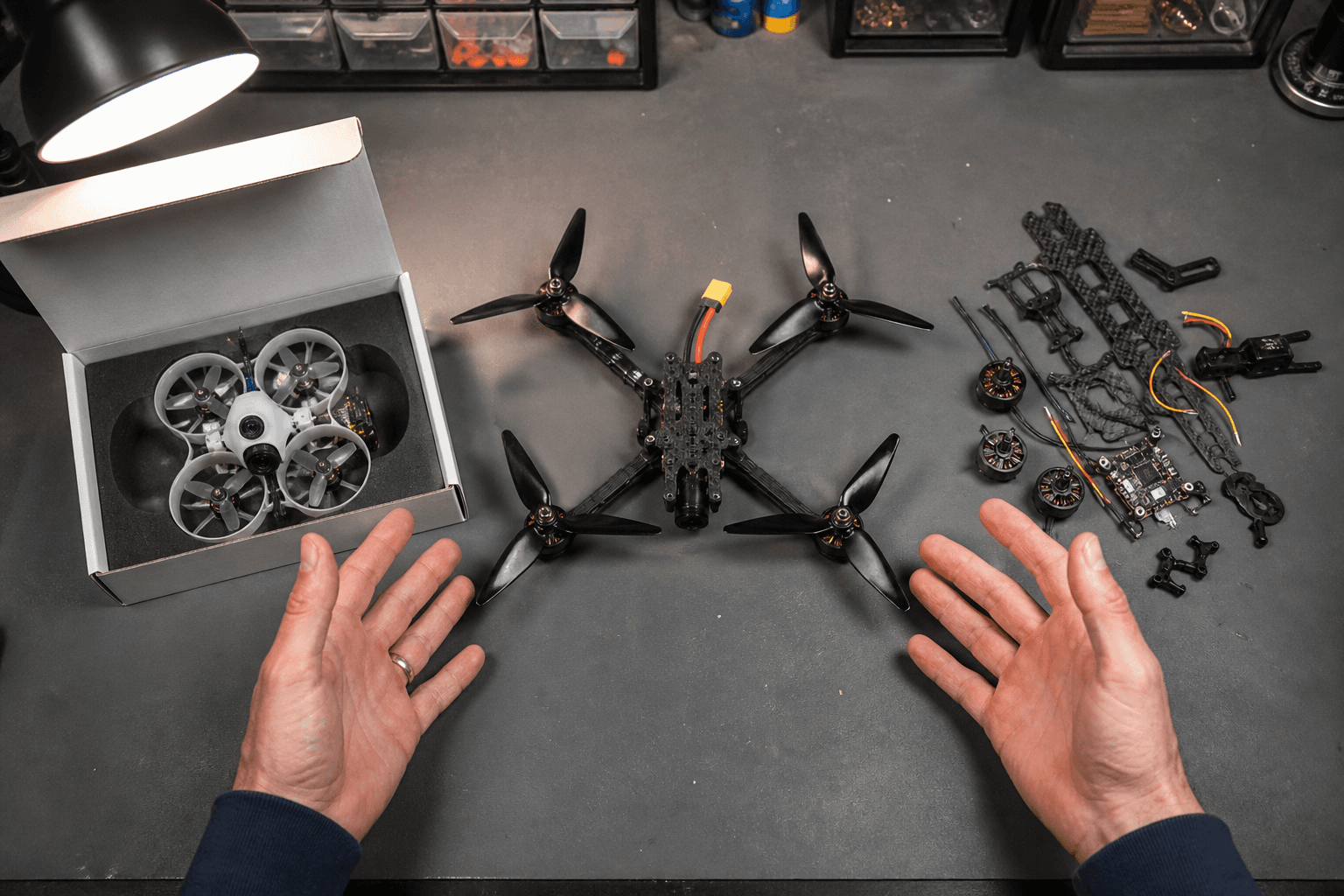
| Type | You supply | Builder supplies |
|---|---|---|
| BNF | Radio, batteries, often goggles | Fully assembled, bound-ready |
| PnP | Radio, batteries, receiver install | Built quad minus RX |
| Scratch | Everything + bench skills | Your mistakes |
BNF in practice
Bind-and-fly quads arrive assembled, often with props, vtx, and receiver installed. You add your radio protocol (ELRS, etc.), batteries, and goggles. Quality varies by manufacturer, document unboxing before first arm.
PnP in practice
Plug-and-play ships without receiver, you solder or plug your RX, configure UART or SPI, and bind. Good middle ground if you already own a radio ecosystem and want control over receiver placement without building the whole stack.
Scratch in practice
You choose frame, motors, ESC, FC, vtx, camera, RX, and assemble. Highest learning, highest early failure risk, lowest mystery when something fails later because you touched every joint.
Cost beyond the invoice
- Scratch: iron, smoke stopper, spare ESC, hours, see first build path
- BNF: spare arms/props immediately; warranty varies, DOA docs
- PnP: RX mismatch (UART vs SPI), receiver wiring
Hidden cost table
| Cost line | BNF | PnP | Scratch |
|---|---|---|---|
| Bench tools | Low | Low | Iron, flux, smoke stopper, meter |
| Learning time | Low | Medium | High |
| First-month spares | Props, arms | Props, arms, maybe RX | ESC, motors, props, arms |
| Debug skill gained | Slow | Medium | Fast |
| RMA hassle | High if import | Medium | N/A, you are the RMA |
Time math (honest)
A scratch build might take 8–20 hours for a first-timer including configurator time. A BNF might fly the same weekend if batteries and radio are ready. If your free time is one evening per week, BNF buys flights while you learn tuning. Scratch buys understanding, choose which deficit hurts more right now.
Who should buy what
BNF: fly this month; learn tuning before soldering. Great with first 10 flights discipline.
PnP: you already own a radio ecosystem (ELRS/CRSF) and want bind control.
Scratch: you want to understand every failure; accept slower first hover.
Decision flowchart (plain language)
Start here:
1. Do you have a soldering iron and patience this month?
   No → BNF or PnP
   Yes → continue
2. Do you already fly FPV and own radio + goggles?
   No → BNF whoop or cinewhoop often wins, see which build first
   Yes → continue
3. Do you want to repair every crash yourself eventually?
   Yes → scratch or PnP
   No → BNF + spare parts stock
Whoop and micro exception
Tiny whoop BNF upgrades are a strong path, the repair tax is low and flight count per rupee is high. Scratch whoop builds exist but are not required to learn FPV.
Quality and support risks
BNF from overseas can be excellent or DOA lottery. Compare landed cost including customs, not cart subtotal. Domestic BNF and parts from the Bench often win when you need an arm before next weekend.
Scratch builds let you standardize connectors, XT60 fleet-wide, instead of living with whatever pigtail the BNF shipped.
Common mistake: Buying the cheapest import BNF, then spending more on expedited spares than a domestic scratch build would have cost upfront.
Upgrade path that works
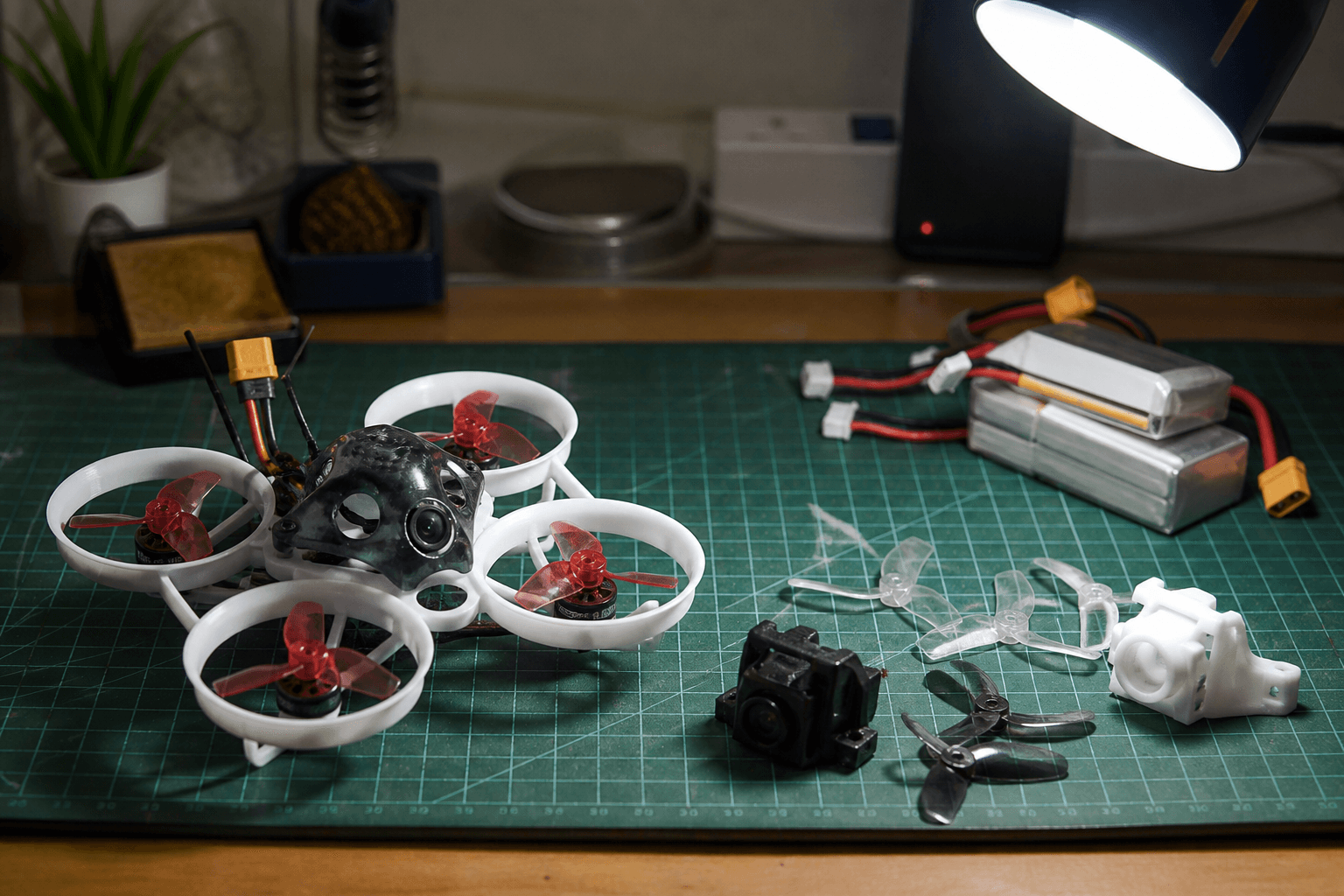
Many pilots start BNF whoop or cinewhoop, learn Betaflight basics, then scratch-build a 5-inch when they have open field access. That sequence respects noise limits, repair budget, and skill ramp. Jumping straight to scratch 5-inch works if you have mentorship and open space, not if you live in a dense terrace colony.
India angle
Import BNF can be cheap until RMA and spares hurt. Domestic scratch parts from the Bench often win on support timelines, compare landed total, not cart subtotal.
Factor GST, shipping, and customs holds per buying FPV gear in India. A ₹15k BNF that sits in customs three weeks while you pay rush shipping on props teaches an expensive lesson.
When scratch wins in India
- You can source ESC and motors domestically
- You fly often enough that repair skill pays back in one season
- You want one connector standard across packs and quads
- Import warranty is effectively useless for your timeline
When BNF wins in India
- You need to fly this month to stay motivated
- Your spot suits whoop/cinewhoop class, see which build first
- Bench space or soldering confidence is not there yet
When to stop debating and buy
If you have compared landed cost, know where you will fly, and still scroll forums two weeks later, pick BNF and fly. Indecision costs seasons. You can always build scratch quad two after you understand what "good" feels like.
Sample first-year cost (illustrative, not a quote)
Numbers shift by brand, use this as structure, not a shopping list.
| Line item | BNF 5" | Scratch 5" |
|---|---|---|
| Quad / parts | ₹18k–35k | ₹12k–25k |
| Radio + goggles (if new) | ₹14k–65k | same |
| Batteries + charger | ₹7k–16k | same |
| Month-1 spares | ₹2k–5k | ₹3k–8k |
| Bench tools | , | ₹2k–6k |
Scratch looks cheaper on parts until you count time and first mistakes. BNF looks expensive until customs eats three weeks of flying.
Monthly ownership habit
| After month 3 | BNF pilot | Scratch pilot |
|---|---|---|
| Can swap arm in field? | Maybe | Usually yes |
| Knows why quad oscillates? | Tuning only | Wiring + tune |
| RMA stress | High on import | Low, you are support |
Post-purchase workflow (all three paths)
Day 1: Document unboxing, video, serials, bench test, no props
Week 1: Bind, failsafe, OSD basics, smoke stopper first arm
Week 2: First 10 flights discipline
Month 1: Log what broke; stock spares before next invite
Skipping day-one documentation on BNF is the most expensive "savings" in the hobby.
Bench
Compare ready-to-fly vs scratch part costs in the Bench before you commit to a build path.
Discussion
Comments aren't open on this post yet. Share it with your build group, or start a thread on X.