
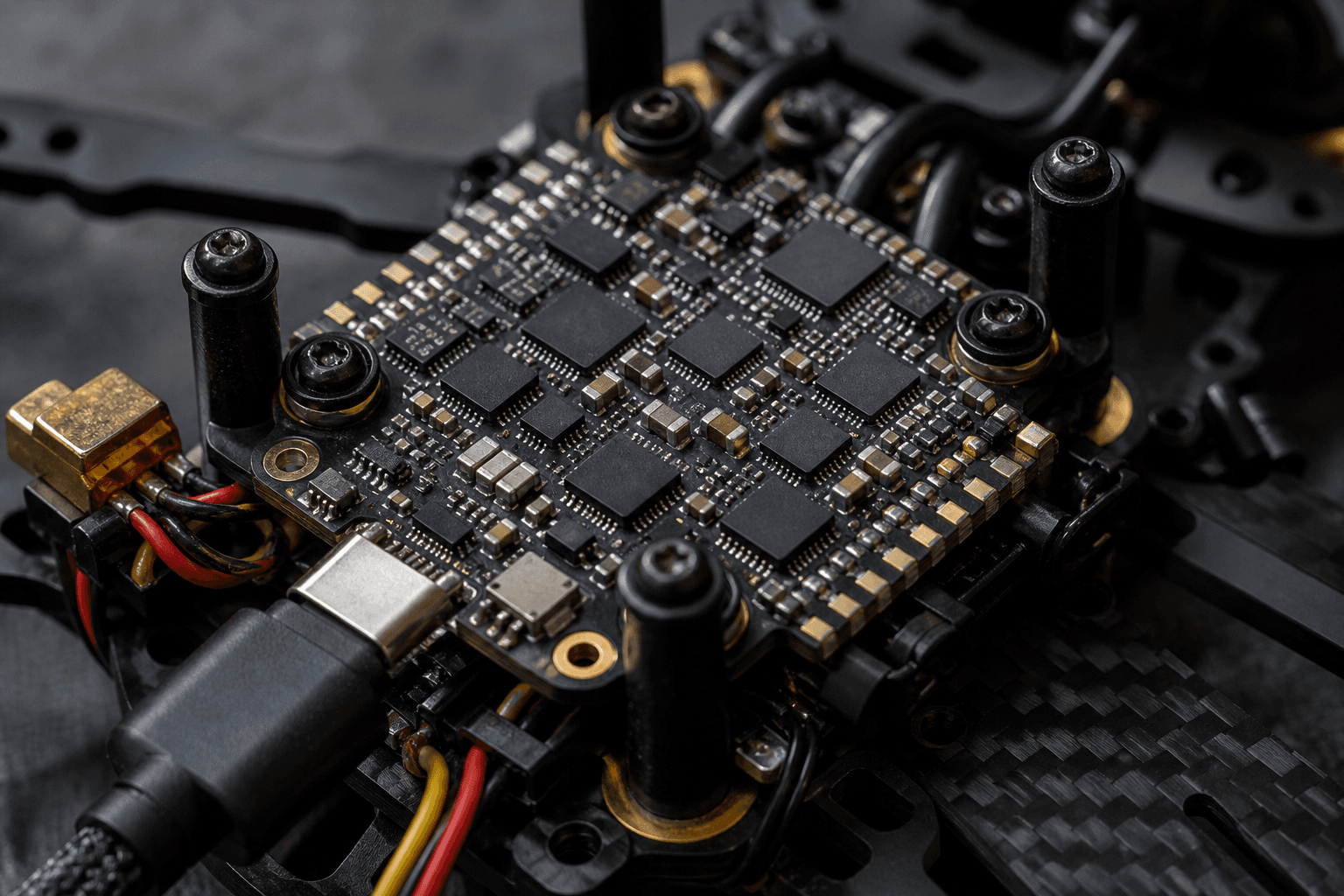
ESC firmware: BLHeli_32 vs AM32

ESC firmware is the boring layer until bidirectional DShot or RPM filter needs telemetry, then BLHeli_32 vs AM32 matters. Until that moment, many pilots fly whatever shipped from the factory and never open a flash tool. That is fine until one ESC desyncs, one channel runs different timing, or you enable bidir and the quad arms into chaos. Firmware choice is not tribal, it is hardware support, flash procedure, and whether you can recover when something bricks.
When NOT to flash
| Situation | Better move |
|---|---|
| Quad flies perfectly, no bidir plans | Leave factory firmware alone |
| One desync, never flashed before | Check caps, protocol, props first |
| Rushing before a field meet | Flash the week before, not morning of |
| Unknown ESC clone, no target listed | Contact seller or replace, do not guess |
| Mixed brands on one 4-in-1 | Match firmware revision across channels |
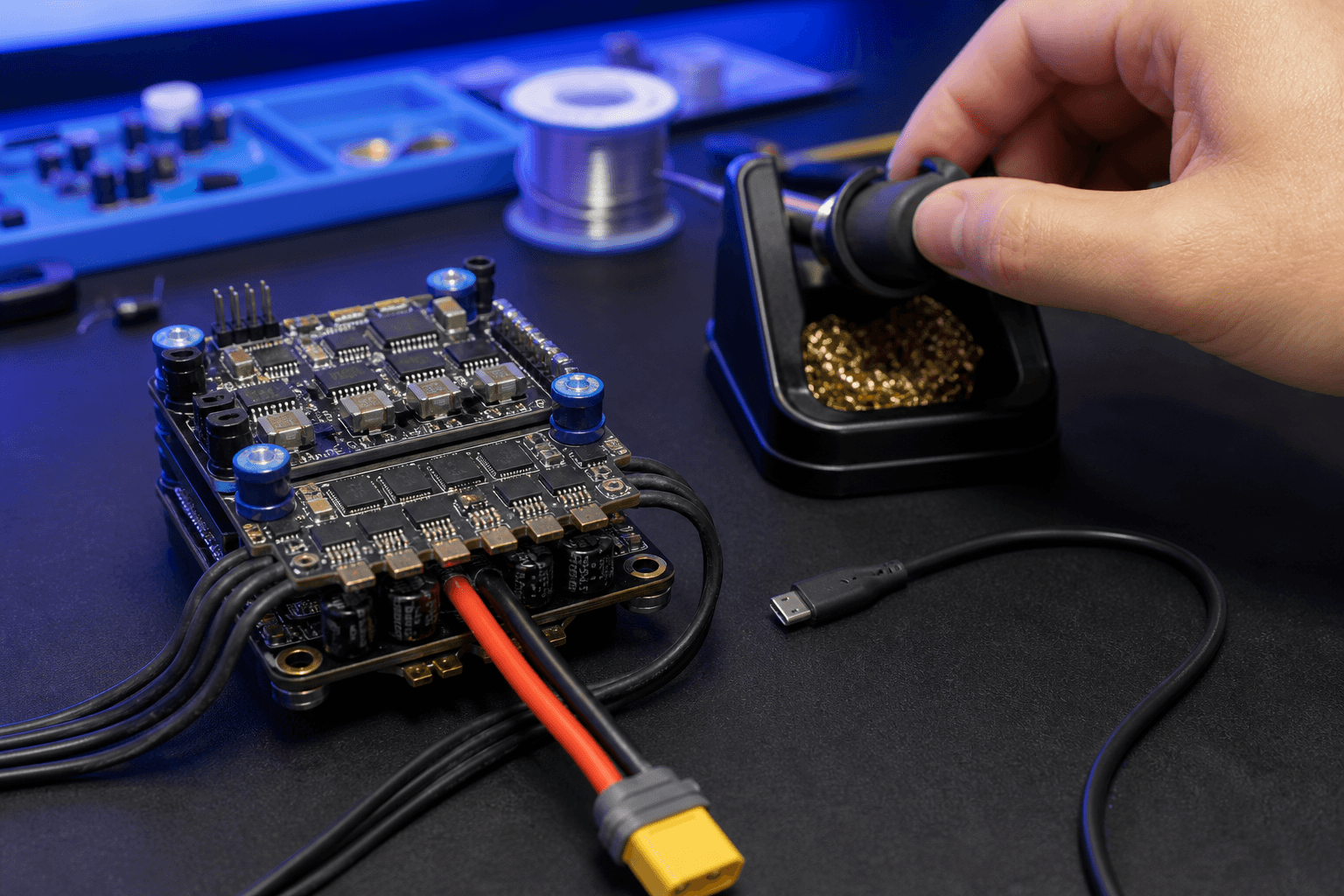
Flashing is maintenance, not entertainment. Have a smoke stopper or current-limited bench supply, see smoke stopper vs multimeter.
BLHeli_32
BLHeli_32 is the mature path on many 32-bit hobby ESCs (4-in-1 stacks, individual 32-bit ESCs).
| Aspect | Notes |
|---|---|
| Tool | BLHeliSuite32: Windows / Wine / VM; read vendor notes |
| Features | DShot, bidir on supported ESCs, timing and demag sliders |
| Community | Large recipe pool for timing issues |
| Licensing | Closed source; vendor-dependent updates |
Strengths: wide hardware support on name-brand ESCs; most tutorials assume BLHeli_32; ESC manufacturers ship it preloaded.
Weaknesses: wrong target selection bricks; some clones lie about compatibility; updates depend on vendor.
Typical workflow:
1. Identify exact ESC model and revision
2. Connect via FC passthrough or direct USB (per ESC docs)
3. Read settings, screenshot motor direction and timing
4. Flash correct target only, verify twice
5. Set motor direction, protocol, timing defaults
6. Test bidir in Betaflight only after clean motor spin
AM32
AM32 is open-source firmware for supported ESC hardware, popular with pilots who want transparency, active development, and features on certain targets.
| Aspect | Notes |
|---|---|
| Tool | AM32 configurator / suite, follow current project docs |
| Features | DShot, bidir on supported targets, active community fixes |
| Hardware | Not every BLHeli_32 ESC can run AM32, check compatibility list |
| Recovery | Bootloader procedures vary, read before flash |
Strengths: open development; some pilots report good telemetry behavior; alternative when vendor BLHeli support ends.
Weaknesses: wrong flash is still a brick; not all clones supported; documentation scattered by target.
Do not flash AM32 because a forum post said "AM32 is better" without confirming your ESC PCB is on the supported list.
Timing and demag (shared vocabulary)
Both suites expose timing and demagnetization settings that affect punch-out behavior. Aggressive timing can feel snappy until a weak battery or hot motor triggers desync.
| Setting | Too aggressive | Too soft |
|---|---|---|
| Timing | Desync on punch, one motor hot | Sluggish response |
| Demag | May help desync | Over-soft feels mushy |
| Motor direction | Wrong spin, fix before props | , |
| Protocol | Must match Betaflight DShot rate | , |
Screenshot defaults before flash. "Restore factory" after a bad session beats guessing what changed.
Choosing between them
| Question | Lean |
|---|---|
| ESC shipped BLHeli_32, flies fine | Stay unless you need AM32 feature |
| Vendor documents AM32 officially | AM32 reasonable |
| Need bidir + RPM filter | Either works if telemetry verified: see RPM filter |
| Learning flash first time | BLHeli_32 often has more hand-holding for your exact SKU |
| Open source priority | AM32 on confirmed hardware |
Firmware does not fix undersized ESC amp rating or motor KV overload. It only speaks the protocol your FC expects.
Shared pitfalls
| Pitfall | Result |
|---|---|
| Flash wrong layout / target | Dead ESC channel, swap or recover bootloader |
| Mixed firmware on one quad | Desyncs, uneven timing, mystery heat |
| Aggressive timing on weak ESC | Desyncs on punch, back off timing |
| Motor direction wrong after flash | Flip or swap two wires, verify before props |
| Ignoring capacitor condition | Telemetry dropouts, brownouts |
| Enabling bidir before testing motor spin | Props off first; always |
Pair firmware work with RPM filter testing, one motor at a time on bench. Props off for initial direction checks.
Telemetry and tuning link
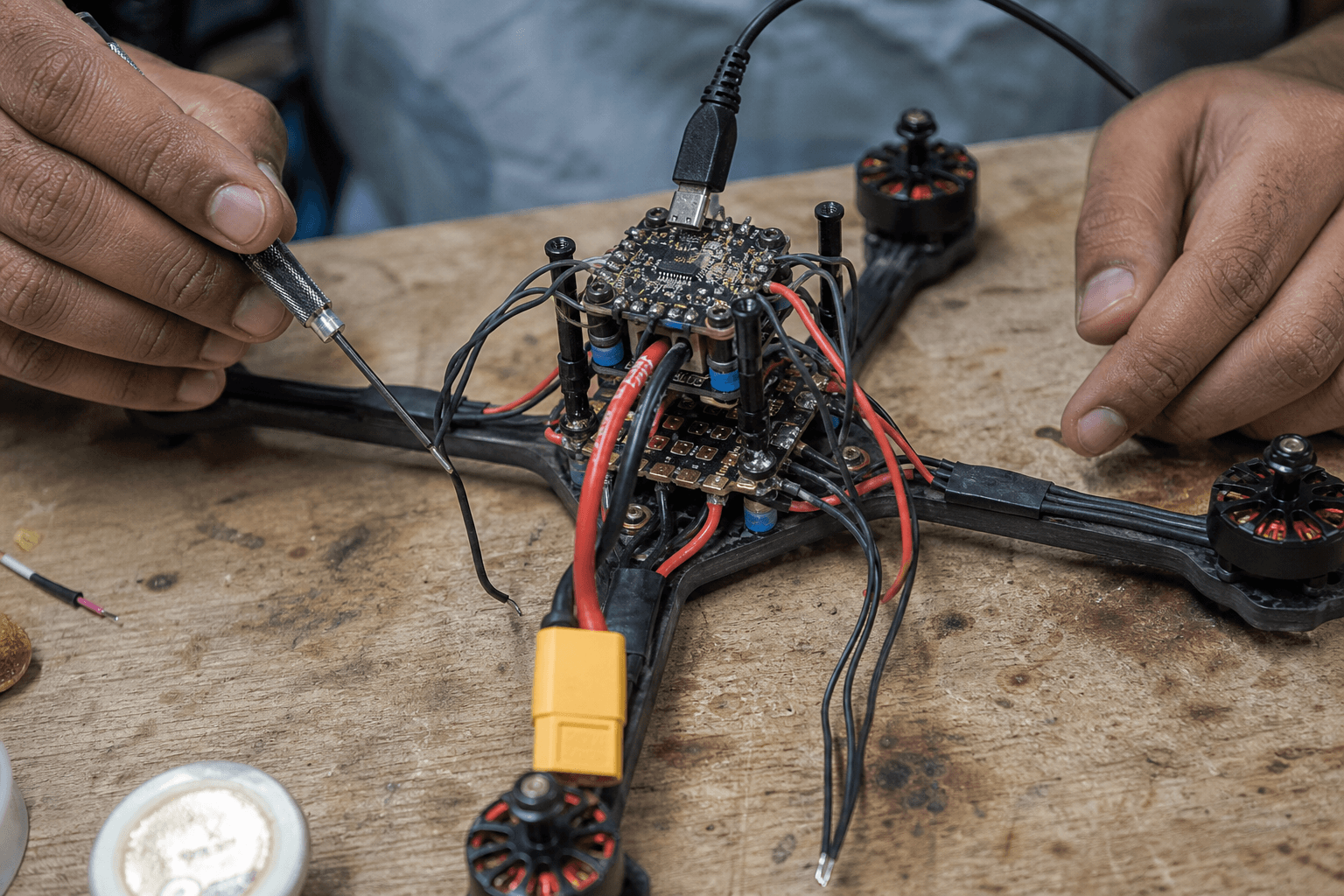
Bidirectional DShot quality depends on ESC firmware and power path. After flash:
- Betaflight: correct DShot rate, bidir enabled
- Hover: no desyncs
- Blackbox: stable RPM trace, reading Blackbox
- Then enable RPM filter
Bad telemetry sends lies to notches, worse than no RPM filter.
Symptom → action map
| Symptom | Check firmware side |
|---|---|
| Desync only on one motor | Reflash that channel; match others |
| Worked until flash | Restore timing / demag defaults |
| Bidir enables, instant desync | Protocol mismatch; DShot rate |
| Motors sync but hot at cruise | Timing too aggressive, soften |
| Intermittent telemetry | Solder, caps, connector resistance |
India practical notes
Replacement ESCs ship domestic faster than re-flash courage, stock a spare 4-in-1 if you are learning flash tools. Field repair kit thinking: one known-good ESC beats debugging a clone at 40 °C in a parking lot.
Summer heat exposes marginal ESCs after flash, an undertimed desync in winter may appear only when motors heat-soak. Test on the hottest pack you plan to fly.
Voltage spikes from long battery wires matter in Indian builds with rear-mounted packs, low-ESR caps at the stack are not optional on many 4-in-1s.
Recovery mindset
If a channel bricks:
- Check vendor bootloader recovery procedure before desoldering
- Document what you flashed, support forums need target name
- Swap to spare channel for field day; debug at home
After crash repair, verify ESC legs and FETs before reflash, damaged hardware will not behave after perfect firmware.
Flash day checklist
□ Exact ESC model + revision written down
□ Screenshot current settings (all four motors)
□ Correct target verified twice in flash tool
□ Props off for first motor spin test
□ Smoke stopper or current limit on bench
□ Betaflight profile saved before bidir enable
□ One hover pack before freestyle
□ Blackbox RPM trace checked if using RPM filter
Flash the week before a meet, not in the car park. A boring flash session is four matching channels and no surprises on arm.
Common mistakes
- Flashing "closest" target name
- Updating one ESC on 4-in-1, leaving three old
- Enabling RPM filter with wrong motor poles after flash reset
- Skipping smoke stopper on first arm after flash
- Blaming Betaflight PID for ESC desyncs
BLHeli_32 and AM32 are both tools. Pick the one your hardware supports, flash carefully, verify telemetry, then tune. The best ESC firmware session ends boring, four matching motors, clean logs, no smoke.
Discussion
Comments aren't open on this post yet. Share it with your build group, or start a thread on X.